Open webinar on Covid-19 Vaccination – 26 Jan

Scottish Care is hosting an open webinar with Prof Jason Leitch and Dr Syed Ahmed from the Scottish Government. This session will focus on Covid-19 vaccination and will take place on Tuesday 26 January at 3PM.

This webinar session is open to providers and frontline staff. Please share this information with colleagues and staff as it is a great opportunity to ask Prof Leitch or Dr Ahmed any questions or raise any concerns about the vaccine.

If you are interested in attending this webinar, please register by clicking the link below. Once your registration is approved, you will receive an email with Zoom details to join.

Registration link: https://us02web.zoom.us/webinar/register/WN_b7si6fGEQDS0so8uqcOyEg

As the Covid-19 vaccination webinar is scheduled on the same day as our weekly Covid-19 surgeries, we have decided to bring the surgery forward to Monday 25 January at 2PM. This will be an in-house session with Dr Donald Macaskill and our Workforce Lead, Caroline Deane.

Details to join this session will be available on the Members Area of our website.

Care homes beyond the headlines: a longing for renewal.

Next week for three days folks will pop in and out of the Care Home Gathering which is Scottish Care’s virtual event for the care home sector. It comes at a time of real continued challenge and uncertainty for all those who are residents, their families and those who work to provide care and support.

A lot has been said and spoken, written and commented upon in relation to our care homes over the last year. The headlines have been full of stories, many of which have been ones of sadness and loss as the vicious effects of the Coronavirus have been felt across the country. People who have never been into a care home have taken upon themselves to comment and analyse, with a real mixture from voices of strident certainty arguing their views to those of a more reflective tone. But whilst others have commented and observed and in the midst of all the debate and blame, the castigation and mud-throwing, there have been the tens of thousands whose homes these places are, whose place of work these communities are, whose loved ones call these places ‘home’. For so many of them there has been a real grief not only for those they have known and lost but also for the very place they call home, for its rhythm and sense of peace.

There is a real sense of grieving for what has been lost and is in danger of still being lost combined with a longing for a restoration and a return to the familiar and the trusted past.

One of the greatest contemporary writers on loss and bereavement, and a huge personal favourite is Brené Brown. Her words on courage, vulnerability and empathy are well worth a look. In ‘Rising Strong’ she wrote:

Grief seems to create losses within us that reach beyond our awareness–we feel as if we’re missing something that was invisible and unknown to us while we had it, but is now painfully gone…Longing is not conscious wanting; it’s an involuntary yearning for wholeness, for understanding, for meaning, for the opportunity to regain or even simply touch what we’ve lost.

‘Longing is not conscious wanting; its an involuntary yearning… to… touch what we’ve lost.’

The tragedy which we have witnessed in the last year tells only part of the story of what care homes are really like. In this job and over nearly five years of doing it I have had the privilege of seeing what care homes really are, small and large, in village and city, on island and in suburb, fragile and strong. No single one is the same as another, any more than the homes we live in are alike.

But in truth they are ordinary places of brick and glass where extraordinary people live; not just extraordinary because of their age or what they have done or who they have been, but because they are people who are still sharing and telling, still creating and giving, still full of life and loving.

I long for the day when we get beyond easy soundbites to understand what a care home really is. It is not a place to be garrisoned from life and risk, to be secluded from loving and the reality of pain. They should not be places of antiseptic cleanliness but the mess of living. They are not places to cocoon older age but to enable people to live out every ounce of breath until their last. They are in no way places where individuals go to die, quite the reverse, they are places where one lives to the fulness of your hours; where compassion sits down beside fear and strokes away hurt with a hand of assurance. They are often amazing places because they are honest – for there is nothing more authentic than in living in the last days of one’s life and doing so in a way that enables you and others still to grow, to achieve, to create new starts and new loves, and to share touch and tenderness.

I long for the day when we can end the silence in care homes. The last year has brought emptiness to care homes, a quietness of absence where we have separated family and resident in the name of safety and protection. This has been an aching and harrowing time for all involved. No one I know in a care home as a manager or staff member wants to be keeping family out, but they are many of them struggling with fear and anxiety that the virus if it comes in will destroy all that is good about the place. They are struggling with being blamed and investigated, fearing being dragged into the court of media and law. So, in the midst of all this fear and fragility, we must together find a way to use vaccinations, robust and trusted testing, PPE and good infection prevention and control to restore relationships and re-unite families. We have just passed ten months of a separation that has saddened and destroyed in equal measure to the virus. We simply cannot continue for yet more time to be lost to individuals who are not ‘visitors’ as if they were casual and occasional observers of life but are rather in many instances the very reason a resident has for living.

I long for the day that we can with confidence address the fear and anxiety of the countless numbers who write to me and who are frightened to go near the care home to visit loved ones because of the dread of the virus. I know these folks need to be supported by assurance and safety to re-connect and return.

I long for the day when we can see activities and entertainment, music and laughter return to care homes. Now I know that staff have been doing an astonishing job to keep the spirits of people up, to keep folks active and engaged, through a whole host and variety of creativity and involvement. But they would be the first to say that we all need other voices and experiences, sounds and songs, to stretch our memories and keep us going.

I long for the day when we start to respect again the skills and professionalism of care home staff, from managers to frontline carers, nurses to cleaners. There are times in the last year when it has felt to far too many workers in care homes that their professionalism, expertise and skills have been cast aside, ignored and neglected. The 50,000 plus staff who work in our care homes are dedicated and trained, compassionate and caring. They know what they are doing and at times it has felt that ‘experts’ from outside have been telling them how to suck eggs. But I have also lost count of how many visiting professionals have confessed to me how they now marvel at and respect the skill of the work which occurs in care homes. So, I hope in my longing for the future that greater collaboration, mutual respect and understanding of roles can be cherished and nurtured.

I long for the day when staff in care homes can have a rest and can be renewed and restored in mind and spirit as much as in body and muscle. This has been a time of emptying the heart, when there have been too many tears shed and moments of real soul-sapping sadness. Frontline staff facing yet more assault from this virus are exhausted and drained and they need space to mourn and grieve, to re-connect with who they are and with those they love.

I long for the day that we stop treating care homes as mini hospitals and that we recognise, because an awful lot of commentators, policy analysts and so called ‘clinical experts’ have wholly failed to recognise, that a care home is first and foremost someone’s home and not an infectious control unit. I am increasingly frustrated when I hear people talking about ‘institutions.’ A care home is NOT an institution it is the gathering together of individuals to live alongside others in a way that they can be supported and cared for, nurtured and loved. At its best it is a living out of being in community and togetherness with others.

I long for the day when the hypocrisy of our political and chattering class is replaced by a reflective honesty which accepts the fact that care homes and social care in general has been for too long the forgotten sector, under-resourced and under-valued. It is astonishing the degree to which some politicians have discovered their voice to comment about care homes when for decades they have at local and national level presided over tightening budgets and restricting terms and conditions. We need an honest debate about how we are to fund and resource our care or we will continue with the complicity we have had which has kept social care out of sight and out of mind, given the leftovers of fiscal allocation. We need a debate which goes beyond easy soundbites and gets to grips with the fact that workers are underpaid for what they do, charities are leaving the sector because they cannot continue to subsidise the State’s failure to fund, and where there is a desperate need to invest in both people and organisations. And let’s not make this about a debate rehashing old lines of defence – let us be honest about the need to work together, to build a care service enshrining the autonomy of the individual at the heart of all we do, rather than the needs of organisations or systems.

I long for the day when we centre the essence of who we are as a community and a nation around the women and men who receive care and support in care home and in their own homes. The way we care is a mark of the depth of our humanity and the extent to which we are open to others. At the moment I think we might be found somewhat lacking.

But most of all I long for smiles and laughter, gossip and rumour, memories and story to return to our care homes. These are amazing places with astonishing lives. I hope that when circumstances permit those who have talked so much about these places of brick and mortar, who have pontificated and judged, opined and observed, will knock the door, be invited in, walk around and watch, listen and learn of the loving and the giving, the sharing and the togetherness, because behind the headlines there is humanity.

We have the chance to restore and renew… lest we forget what we are in danger of losing.

‘Longing is not conscious wanting; its an involuntary yearning… to… touch what we’ve lost.’

Donald Macaskill

Please think of joining the Care Home Gathering for all or part of it – for debate and discussion, honesty and reflection, remembrance and creativity. See https://scottishcare.org/care-home-gathering/ and follow the hashtag #CareGathering.

News release: Scottish Care expresses concerns over anti Covid-19 vaccine campaign

Scottish Care is deeply concerned that there appears to be a concerted campaign to convince care home managers and staff not to receive the Covid-19 vaccination.

Over the last two days the majority of care homes in Scotland have received unsolicited mail from a campaign group which variously has denied the validity of the vaccines and indeed the existence and prevalence of Coronavirus itself. In addition, there has clearly been a targeted campaign on social media to create uncertainty and fear amongst social care staff.

As an organisation we will continue to advocate that all residents and frontline nursing and care staff should receive the vaccine. Being vaccinated not only protects the most vulnerable and fellow colleagues but also protects the individual.

CEO, Dr Donald Macaskill said:

 “I am appalled that care home managers and staff are being targeted by anti-vaccination groups. To be at the receiving end of such a coordinated campaign at a time when many homes are struggling with live Covid-19 outbreaks is wholly despicable.

We all want an end to the helplessness we have been feeling in care homes. We all want to see families reconnected with residents. We all want a restoration of normality. Vaccination is the hope which offers us the potential of achieving all this and anything that insidiously tries to spread mis-information and falsehood, to create fear and anxiety prevents us all from the protection we need to provide for our residents and staff.”


The BBC has published a FAQ on the Covid-19 vaccine that may be useful to members and providers, this can be read here.

Care Home Awards – finalists announced & ceremony postponed

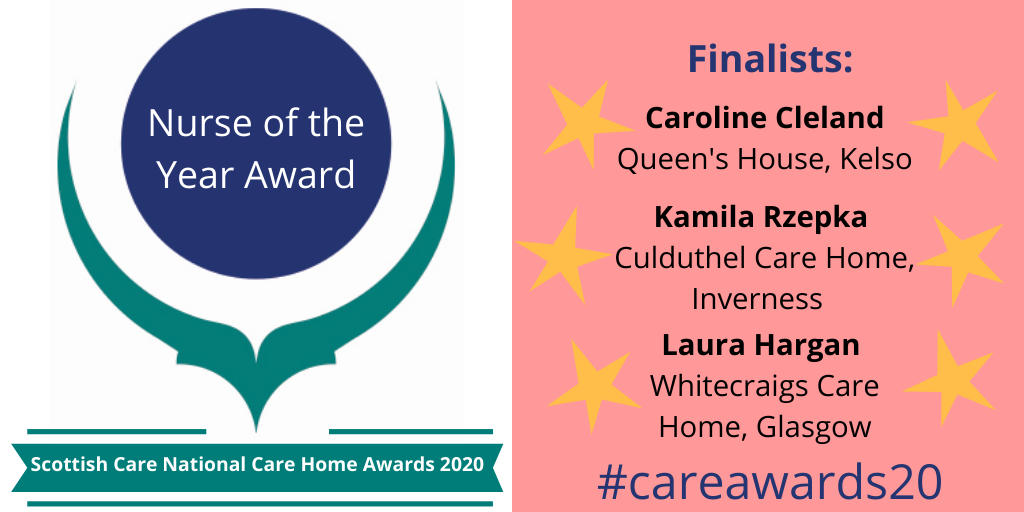
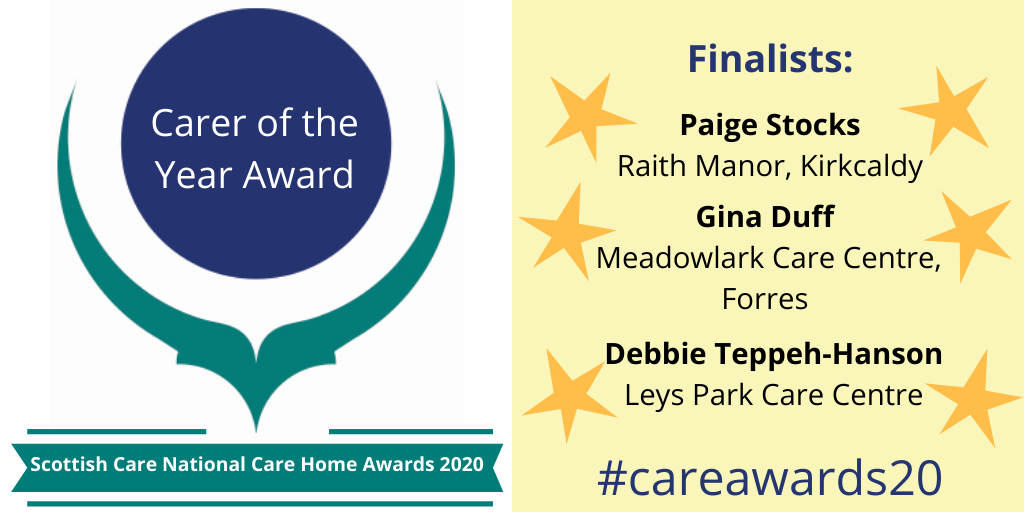
We are delighted to announce the finalists for the Care Home Awards. Thank you to everyone who entered and congratulations to everyone who were shortlisted.

The Care Home Awards were due to take place virtually on the evening of Friday 22 January 2021. However, due to current restrictions, we are unable to undergo filming for this. Therefore we have decided to postpone the awards until it is legally possible for us to start filming the ceremony. We hope to proceed with this in Spring 2021.

We want this event to be a special occasion and for it to be a true reflection of all the hard work from the care home sector this year. We hope that you understand and we will let you know the new date for the Care Home Awards as soon as we can.

“I am weary.” a personal reflection in the new lockdown.

I don’t know about you but for me one word and feeling has come to express the days that have passed since the start of the year – and that is weariness.

My late mother used to describe January as ‘mìos sgìth’ the month of weariness or tiredness. Her oft heard remark in these winter months was “tha mi gu math sgìth” “I am very weary. I am very tired.” A phrase that became the soundtrack to many a day.

The dictionary describes ‘weariness’ as an extreme tiredness, fatigue and debility; a reluctance to see or experience any more of something.’ How better can we describe so much of what so many are feeling right now?

Weariness is not just a tiredness of the body it is a depth of tiredness that gets into the bones much like the damp and cold of this time of the year. It drains us of the energies’ of hope and togetherness, it saps the strength of optimism and confidence.

It is perhaps little surprising that so many of us are weary.

There is a weariness brought about by the announcement on Monday that we were returning to a strict lockdown and indeed around the fear that in the coming days that strictness may need to get tighter yet still.

There is a weariness amongst the care home staff and managers I have spoken to this week. Having got to the point of the end of the year, having overcome outbreaks and working through the exhaustion and emotion of the months that have passed, there was hope that we were turning the corner, then news of the new Kent strain came and it felt that things went back to the beginning. Their weariness and exhaustion has been compounded this week by yet more demands through increased testing of staff and others, tragically many more outbreaks of this deadly virus, staff absence and sickness, loss of individuals now shielding, all adding up to a painful the sense that we are in Groundhog Day yet again. One manager said it all felt like the light going further away rather than getting closer. People are weary beyond description.

There is a weariness amongst family and friends of those in care homes. Ten long months of separation, 300 days of absence, hundreds who have passed away not just from Covid but other conditions, and still for the majority there is no touch, no embrace, no sitting alongside and holding hands; no intimacy and sense of togetherness. We had been getting better in addressing the fear of care home staff, managers and relatives, better by introducing the prospect of lateral glow tests, in slowly opening up care homes to days of closer normality, and then Tier 4 restrictions ended all but essential indoor visits. People are weary beyond description.

There is a weariness amongst the workers and folks who work in care at home and housing support, who are in all weathers, in cold and ice , going out and bringing care and comfort, presence and support to thousands in our communities. They are weary of the continued failure of the others to prioritise their needs, to initiate a robust system of testing asymptomatic staff whilst the new strain runs amok around them; they are weary that all the response of others seems to be a Thursday clap when what they need is recognition, value, resourcing and prioritising in vaccination, testing and in contracts that do not diminish life into 15 minute segmented visits. People are weary beyond description.

There is a weariness amongst health colleagues not least in hospitals. The massive increase in admissions, the growing statistics of those needing intensive care despite new treatments for Covid, and the sad daily reckoning of death and loss, are taking a huge toll on the morale, sapping the energy, and draining the reserves of a workforce and system which has been on over-drive for months. People are genuinely frightened about whether the health and care system can sustain itself unless the wider population begins to act as if we are all infected and to behave accordingly with an urgent cautiousness. People are weary beyond description.

There is a weariness in the wider community. The return to lockdown has meant again the challenges of juggling work and home-schooling and all that comes with that; the strains of keeping children and others motivated and positive when there is little to do. For others this last week of frost and snow has restricted the ability to get out and exercise for fear of fracture and fall. Thousands more are terrified that what they have built up in businesses and the careers they have nurtured over the years, incomes they require to pay bills and simply to live, will be lost the longer we remain under lockdown. There is real raw fear of loss of hope and role, of identity and self-value. The adopted normality of autumn has been replaced by a closed inwardness which is so much harder for so many in these winter months. People are weary beyond description.

There is a weariness for the countless thousands who are struggling with emotions and mental health. The inability to connect with others, to engage in the routines of exercise and activity; to be able to do what keeps you healthy and balanced, has been a devastating blow in the last few days. And what makes all this worse is that we have all been here before. The very predictability of uncertainty, the fear of a never-ending roundabout, is causing a tiredness which empties individuals of positive energy and hopeful spark. People are weary beyond description.

In the face of such weariness, what should our response be? I do not have the answer – but all I can do is reflect back to the weariness I saw so often in my own mother in this ‘mìos sgìth’ ‘month of weariness and recollect her own actions. They were simple, rest, restore, relate and renew. Not her words but upon reflection this is what she did so often

When she got to the point of being tired and exhausted – which was quite often bringing up six children, she would stop, sit and yes typically have a cup of tea. But this was not just an ordinary activity. All her children knew and sensed the moment that she was not to be disturbed, that this was her time for herself. It was the moment which she needed to continue being. It was not that the tea was any different, or what she ate, or the length of time she took. What she did was to dis-connect from the activity and the concern and to retreat into her own space and place of time. For her it meant putting on the radio and listening to the Gaelic programmes. It was an escape in the midst of encounter and activity in order to be renewed and reconnected. It was a charging of the batteries.

I know when I am weary and tired and exhausted I need to do the same. It might be in the genes, but I need to go away from people, listen to some music or read some poetry, and simply sit and rest and be. I think the coming days and weeks we all need to find what it is within us that helps us to rest and be apart from the chaos and concern, to sit and be, to rest and renew. We cannot continue to give and to be present, unless we are able to re-store the energies within us. We all need to find, whether by mindfulness or meditation, exercise or conversation, silence or sound, the spaces and activities, the inaction or moments that rest and renew us. We cannot overcome weariness by the exhaustion of hyper-activity.

The other critical thing that helped my mother deal with her weariness was to re-connect with others. Through relationship she found a solidarity of support which gave energy and assistance. Through conversation and chat, gossip and laughter, on topics unimportant and irrelevant, she found a way to disconnect from anxiety and activity and to be with others. Now I recognise this very ability to relate is diminished by the restrictions we are all living under, but I think again it is critical for us all to re-discover the importance of conversation, of talking through our troubles and airing our concerns, which we were so much better at in the spring. ‘No man is an island’ has never been a more true saying than it is in these dark days of disconnected and isolated January. We have to find ways to converse with difference which drags us out of what we are doing, and which helps to give us a different world view or perspective. It may seem strange but for so many, myself included, the act of talking helps to renew and restore.

But perhaps the most important lesson I learnt about the way in which my mother dealt with weariness was the sense she always arrived at – her awareness that you cannot wallow in weariness but have to work through it to a point of renewal. Even writing that seems glib and dismissive. It is a lesson I took many years to learn and at times still struggle with. It is the insight I saw all around me when I look outside this last week. It’s been a cruel and hard sharp frost where I live, and my garden has been covered in snow and ice. But as I have walked out into it this morning I have noticed with the slight increase in temperatures, an astonishing number of bulbs now showing in pots and borders. Silently, secretly, without notice and regardless of the harshness of temperature and the hardness of earth, the renewal of spring is happening all around me. I have simply not noticed.

So, weariness is ultimately re-energised by a hope of renewal and change. On Monday we started vaccinating using the AstraZeneca vaccine and yesterday we heard the news of the Moderna vaccine and the first positive research showing that the developed vaccines seem to work against both the Kent and the South African strains. This is our bud of hope bursting through a hard soil of anxiety, hopelessness and exhaustion. Vaccination and other activities of precaution will drag us into a spring of hope. These will be hard months and very challenging days indeed, but we are being pulled through by the light of hope into a tomorrow which will be changed and chastened, but which will be better than the sapless emptiness of these times.

So, “tha mi gu math sgìth”  ‘I am weary’, but I know I must, like my mother, sit and rest, restore and reconnect, and remember promise is growing around us silently, urgently, overcoming hard soil and cold days, to give birth to tomorrow.

And to end, as in so many times I find John O’Donohue insightful with some words from ‘A Blessing For One Who Is Exhausted’ :

‘Weariness invades your spirit.
Gravity begins falling inside you,
Dragging down every bone.

The tide you never valued has gone out.
And you are marooned on unsure ground.
Something within you has closed down;
And you cannot push yourself back to life.

You have been forced to enter empty time.
The desire that drove you has relinquished.
There is nothing else to do now but rest
And patiently learn to receive the self
You have forsaken for the race of days.

At first your thinking will darken
And sadness take over like listless weather.
The flow of unwept tears will frighten you.

You have travelled too fast over false ground;
Now your soul has come to take you back.

Take refuge in your senses, open up
To all the small miracles you rushed through.

Become inclined to watch the way of rain
When it falls slow and free.

Imitate the habit of twilight,
Taking time to open the well of colour
That fostered the brightness of day.

Draw alongside the silence of stone
Until its calmness can claim you.
Be excessively gentle with yourself.

Stay clear of those vexed in spirit.
Learn to linger around someone of ease
Who feels they have all the time in the world.

Gradually, you will return to yourself,
Having learned a new respect for your heart
And the joy that dwells far within slow time.’

Donald Macaskill

Scottish Government: Stay at Home Campaign – Stakeholder Toolkit

The Scottish Government has launched the Stay at Home Stakeholder Toolkit.

The Stay at Home campaign is a new public information campaign to communicate the new, tighter national restrictions which took effect from Tuesday 5th Jan. This campaign reinforces the message that the new strain of the virus is spreading quickly and communicates how we must stay at home to protect the NHS and save lives. The campaign includes TV, radio and digital and will run until the 31st January.

View the Stay at Home TV Ad here

Campaign Assets

The Stay at Home Stakeholder Toolkit includes all the assets we have created to communicate the new restrictions and reinforce the importance of staying at home to stop the spread of the virus:

  • 30 second TV Ad
  • 30 second radio
  • Digital asset – videos in 3 format
  • Static assets

Download All Campaign Assets via WeTransfer Here

Social Care Data Forum 3 – notes & resources

We held the 3rd session of the Social Care Data Forum on 3 December 2020, thank you to everyone who attended.

We have developed a paper which follows on from the notes of the previous two meetings, thus concluding this phase of the data forum. The information contained within the papers from the three forum meetings will be developed into a position statement on data for social care.

These notes, along with the session recording and presentation slides are available below.

We also developed a social media template for #datachangeslives, the instructions and template can also be accessed below.

New Year Promises for social care: to break or to last?

Over the last few days I have had the chance to get out and walk a bit more. I am fortunate to be only a couple of minutes from a beach that goes on for miles and with the coming of much colder and frostier days it has been a quieter place. As I walked along the pristine, settled and perfect sand marked only by the currents of the cold sea I was reminded of Jackie Kay’s New Year poem, The Promise:

Remember, the time of year

when the future appears

like a blank sheet of paper

a clean calendar, a new chance.

On thick white snow

You vow fresh footprints

then watch them go

with the wind’s hearty gust.

Fill your glass. Here’s tae us. Promises

made to be broken, made to last.

At the start of 2021 after a year which has brought much trauma and heartache there is indeed a sense of a ‘clean calendar, a new chance.’ There are still inordinate challenges to face in terms of Coronavirus not least in terms of the roll-out of the vaccines and ensuring equity of treatment and response. But the opportunity for a new chance, has perhaps never been more the case than it is for social care services and supports in Scotland. We have the findings of the Independent Review of Adult Social Care due later this month, combined doubtless with significant debate as the political parties gather their policies together to present to the Scottish electorate in May. There will be a lot of talk and chatter about care. So, after decades of political obfuscation and silence, the time has finally come for social care to become a central actor rather than a small walk-on-part on the political stage. This will be a critical year for the future of social care in Scotland. I hope it will be a year where we do not miss the opportunity of making a real difference and where we can also avoid the pitfalls of party-political wrangling where ambition is placed ahead of reality and truthfulness. I hope it will be a year of promises made to be kept not to be broken.

Yesterday Scottish Care launched a further contribution to that debate. It is an encouragement to folks to make it a ‘new year resolution’ to shape the positive future of social care. Back in November 2020, Scottish Care developed the concept of a ‘Social Care Garden’ through its Collective Care Futures programme as a way to imagine and share our vision for the future of social care in Scotland. This was included as part of the ‘What If & Why Not’ submission to the Independent Review of Adult Social Care.

Scottish Care is now taking this a step further by inviting people to be part of this collaborative vision for the future to capture our collective aspirations. To do this they are curating a ‘Social Care Mosaic’ for the Care Futures Garden.

Through the ‘Social Care Mosaic’ they aim to capture the imaginations of the people of Scotland to better understand the values of social care and generate collective action to support the wishes and dreams people have for this context for the future. You can share your ‘tile’ for the mosaic by sending a virtual postcard to  https://scottishcare.org/social-care-mosaic/

So, what would I put on my tile? What are my hopes and aspirations for social care in 2021? What are the promises I want to see lived out?

A promise to people. Social care is first and foremost about people. It is not a series of transactions and tasks; it is not about services and supplies. It is not about ‘doing to’ but working alongside. It is not telling and instructing but listening and adapting. It is not about creating a service and expecting the person to fit into the shape of what you offer and allocate, but changing the system and the services to be shaped around the needs and wants of the individual. This is a huge challenge – this is not person-centred care but person-led care. It is a disempowering of the centre in order to empower and enable the individual to flourish.

A promise to communities. Social care at its best is about creating conditions where communities of people can flourish through the individual contribution and insights of the individual. It is all about relationship – keeping people connected, independent and autonomous whilst reducing loneliness, isolation and despair. It is an authentic working through of problems rather than an illusory attempt to solve marginal concerns. That is why commissioning 15-minute visits for someone which deny them the ability to relate, to talk, to be and which instead treat them as functional units to be attended to, are so abhorrent to me. Relationship can never be achieved by a timepiece it can only be fostered by the freedom of respect and dignity.

A promise to listen. We have as a society become too accustomed to the voice of ‘informed’ commentators who have not walked in the shoes of those who live their lives receiving support and care, those who work at the care face and those who manage and support. I hope that whatever is designed in 2021 originates from, is resonant with, is consistent to the lived experience of those who are most important, the people who are impacted by social care and the systems politicians, commissioners and organisations create. And let us be careful that we do not just listen to those whose voice is loudest and most articulate, it behoves us to search out those whose silence and diffidence resonates with truth, who are not often included in what we have come to create as an industry of consultation and engagement.

A promise to enable choice. Individual choice and control are at the heart of a human rights-based approach to social care. If you remove them, if you limit diversity, if you create a one-sized fits all, take it or leave it approach, then you reduce the capacity of an individual to take control of their life and to be truly independent. Those who want to keep control and power never want to devolve  choice to individuals. they offer instead the mirage of choice which is limited and safe. real choice is a radical ownership of control by the individual. That is why care is a collaborative activity which upends the expectations of those outside by taking heed of the desires, ambitions, and dreams of those who matter most – the person requiring support and care. That is why the individual has to be the navigator of their own journey, the controller of decisions about their own life. Choice is not the enemy of individual rights, but uniformity just might be.

A promise to resource. Of course, during any election period, perhaps especially one after the trauma of a pandemic, the air will be full of aspiration and promise. But if they are promises and commitments made without costing, without a grip on fiscal reality; if they are sold without a price-tag attached then they are empty, vacuous, dangerous and frankly insulting. We cannot continue as a society to buy care on the cheap and cast blame away from those who originate contracts and allocate budgets. We cannot continue to allow the inequity which sees some have to sell their inheritance to care for their family, and others largely unaffected simply because of the lottery of diagnosis. If we are to truly keep the promise to social care in 2021 then we need a grown-up debate about how we are all collectively going to pay for that care. To do other is to take us all for fools.

A promise to value. Will we get to the stage where the value of those who receive care and support is acknowledged; their contribution as citizens fully enabled , and their role as intrinsic to community recognised? We have still too much passive aggressive dismissal of the central and critical role of those who use support to enable contribution. Will we finally not just ‘clap for carers’ but create systems of properly commissioned contracts which reward workers and value them properly, with terms and conditions that are equal regardless of who the employer is. Will we end the shameful hypocrisy of one part of the system lauding itself for being fair in employment and practice yet purchasing care from others in a way that prevent equality and fair work. Care needs to be elevated from an after-thought to become a mirror of our society at its best.

A promise to be ambitious. Ambition here is not about model or structure, about ownership or system. Ambition is about humanity. Will we seek to create a social care system where the citizen has control and autonomy, where power rests with the individual rather than the State, where the ingenuity of inventiveness is encouraged just as much as the predictability of the routine? Will we create a system where the pathway from home to hospital to home or care home is led by the needs of the individual rather than the professional; will ‘professionals be on tap or on top’? Will we create models where the person most affected is the evaluator of quality and where improvement is an exercise of mutual creativity and reciprocal trust? Will we be pulled and stretched by the creativity of our collective ambition or limited by the constraints of the predictable and familiar?

Lots of promises, lots of hopes and all of them rest on our working together not apart, seeking the interests of the many not the few.

 I finish with the words of someone who to my mind is one of America’s greatest living poets, the environmentalist W.S.Merwin. It is a poem on the importance of keeping hope alive, and I really do trust that the promises for social care keep being fulfilled in 2021. I yearn for a year where  the promise of social care to transform our common humanity grows into fulfilment, rather than have that promise lie shattered in the fragments of our hoping:

To the New Year

With what stillness at last

you appear in the valley

your first sunlight reaching down

to touch the tips of a few

high leaves that do not stir

as though they had not noticed

and did not know you at all

then the voice of a dove calls

from far away in itself

to the hush of the morning


so this is the sound of you

here and now whether or not

anyone hears it this is

where we have come with our age

our knowledge such as it is

and our hopes such as they are

invisible before us

untouched and still possible


W.S. Merwin, “To the New Year” from Present Company (Port Townsend, Washington: Copper Canyon Press, 2005). Copyright © 2005 by W. S. Merwin.


Donald Macaskill


Care Futures – Launch of ‘Social Care Mosaic’ for 2021

Make it your New Year’s resolution to share your aspiration for a positive social care future 

 In November 2020, we developed the concept of a ‘Social Care Garden’ through our Collective Care Futures programme as a way to imagine and share our vision for the future of social care in Scotland. This was included as part of our What If & Why Not’ submission to the Independent Review of Adult Social Care. We are now taking this a step further by inviting people to be part of this collaborative vision for the future to capture our collective aspirations. To do this we are curating a ‘Social Care Mosaic’ for our Care Futures Garden.   

Through the ‘Social Care Mosaic’ we aim to capture the imaginations of the people of Scotland to better understand the values of social care and generate collective action to support the wishes and dreams people have for this context for the future. We intend to create a dedicated online space on the Scottish Care website to share these anonymously. We would appreciate your support in getting our mosaic started. 

We invite you to share your ‘tile’ for our mosaic by sending us a virtual postcard: https://scottishcare.org/social-care-mosaic/ 

You can also take part in Phase 2 of our programme where we are continuing to collectively build a vision for the future that enables wider dialogue around key actions, people and infrastructure required to enable change.  

Help us build an aspirational vision, by taking a couple of minutes to share your ambitions for the future of social care: https://studioandthen.typeform.com/to/oHbVvDUN 

Find out more about the Care Futures programme here.

A lament for 2020: loss and grief in a pandemic year.

In this last blog of 2020, I find it difficult to do anything other than reflect on the events of the last ten months.

Throughout my childhood I was brought up with an awareness that remembering the past in all its joy and pain, putting together the stories of sadness alongside memories of happiness, was not escapism and delusion, but rather essential and intrinsic to living life to the full. Indeed, failing to do so prevented you from moving forward into both a personal and a collective future.  Remembrance is essential for a person and a people to be and become whole.

In my upbringing I was reminded of the truth of this reality every time I looked out of the window of my mother’s croft house in Glendale, Skye, towards the distant hill on the other side of the glen beyond which was the small township of Borreraig. In that clachan of crofts, the great MacCrimmon family had for generations lived and held sway. They were the exemplars of the great tradition of piobaireachd music for the Scottish bagpipes. “MacCrimmon’s Lament” is perhaps the most famous and is often played at Highland funerals, dating  back to the Jacobite uprising of 1745. Within piobrocheead the classic theme of the music is one of lament, which itself is a form in literature, art and music that constitutes some of the oldest creativity in the world.

Lament is not a wallowing in the pain and distress of the past, but rather a gathering up of the threads of brokenness until they are woven into a rhythm of resonant recollecting. To lament is to mouth or sound out one’s pain, to seek to make sense and to simply be present in grief. Its insight is that the act of grieving and remembering are woven into our humanity. We cannot have hope unless we remember.

At the start of the year when in February along with colleagues I was writing a Guidance document for Coronavirus for the care sector, few of us could have imagined the nightmare which would begin to unfold both across the world and in Scotland. Most of us thought that as we went into lockdown that we would be talking a few weeks at most – never many months. None of us could have fathomed the depths of loss and desolation that would become the experience of thousands  especially in our care homes.

There will be time for examination and investigation, for Inquiry and Review, but as this year comes to its closing, I earnestly believe that it is more important than ever that we take time to remember every single individual who has lost their lives both directly to the virus and as a consequence of the pandemic and our precautions.

Throughout this year and in this blog I have shared stories of dozens of folks, some I have known, others who started as strangers, but mostly of those who have struggled with grieving and loss, with absence and loneliness in these Covid times. I have never been so privileged as to have become the companion of such lives.

The daily arithmetic of statistics on TV or media can sometimes deaden our appreciation of the truth that behind every single number there is a story of a man, woman and child; a mother, father and brother; a lover, husband and wife. Each one known to someone or maybe to too few, some sadly known to me personally but most of them people whose parting and death have brought aching emptiness and sorrow.

Behind every number there is a face which will never again break into a smile of recognition or with glinting eye welcome family and share laughter.

Behind every number there is a life cut short, stories and tales untold, ambitions and dreams unfulfilled.

Behind every number there was someone who mattered, who lived and breathed, who left a mark on the earth they were bound to and to which they will return.

Behind every number, there was someone who was the whole of life, the totality of everything, the purpose of someone’s loving.

Behind every number was someone who still had laughter to share, forgiveness to offer, and a future to unfold.

Behind every number was someone who was birthed into being through pain and love and now is no more.

And therefore, we must never forget or be allowed to simply grow accustomed to the numbering of loss and the predicability of this pandemic.

I lament not just for those who have died from Covid but all who have died in a year unlike any other without the assurance and strength, without love and family.

I lament for those who have been unable to celebrate the lives of those they have lost and be together in love through ritual and recollection.

I lament for those who have lived their lives cocooned in protection but hidden from love, absent from the touch of family, distant from the reach of embrace.

I lament for those who have struggled with the anguish of losing their jobs, of disappearing self-worth, whose sense of self and purpose has disintegrated.

I lament for those who have been confronted by the demons of addiction and the anguish of their inner self, wracked by mental distress and trauma of memory.

I lament for those frightened by the fear of this pandemic to a point that they have lost their joy and hidden themselves away from hope.

I lament for those who are simply tired and weary of worrying and protecting, of masking and distancing, of working and encouraging, of being there, and being present for others.

There is much to lament for and there is necessity to do such.

2020 demands from us the spirit of lament, not one that settles in the distress of days gone by but one that seeks through that recollection to give energy to a determination to do things differently, to be better, and to change our future.

In my mother’s tongue December which is bringing this awful year to its end is called an Dùbhlachd, which means literally ‘blackness.’ But in the oral tradition of my grandmother, it is also a word which has within itself the sense that December is a time which also brings us the stirring of the seeds of hope and renewal. This last week I have watched the winter solstice and the slow turning of the seasons towards the lengthening of days. There is within an Dùbhlachd a sense of renewal and turning. Nothing stays dark forever. There is nothing more powerful than the flicker of light in the deepest darkness.

So, the day after we have celebrated Christmas, which for many was the strangest and saddest of days, and in the between time of our festive celebrations, I will lament and mourn, I will remember and grieve … but over time the words and the music of such sadness and loss which 2020 has given will become distant and disappear into silence. Tomorrow and the next day I know that I will need – as all who grieve – to turn my face to the dawn, to rise up and to face that future. The lament will become an echo, a memory, but one whose sound will remain inside for ever.

Lament

Being old did not define them
the lives they lived
the lives they gave and made
through hardship and hard work
with few if any luxuries.
The loves they loved and gave,
the hugs, the smiles,
some tears, much laughter.

They were our mums and dads.
We gave them the joy of our children
to make them great and grand for another generation.

This is who they were.
They were not expendable.

We are not the herd.

In memoriam for Pat Cooper b 14.09.1925 d 28.03.2020

Trish Davies
Deputy Chair, Relatives & Residents Association


Donald Macaskill