Pass on the story and create a new chapter: social care as storytelling.

This past week I finished telling one story and then started another. I find that one of the joys of being a parent is the time I spend at the end of a day in reading to my daughter. Despite her advancing years we continue the ritual of me reading and her listening, and then she reads on her own or creates a story for herself. There is a lovely rhythm in sitting still and shutting out the world and resting into a book; a peace which comes from words and simply holding the space of imagination between yourself and the listener. I have never read or heard the same story twice without it saying something different to me.

I would not give up those times for the treasure of the world not least in that I am very aware of all those parents who yearn simply to be with their child who is no longer here or parents who ache for their world to be peaceful and safe enough to grant them the space to read and rest.

Being able to tell a story, being safe enough to listen are privileges we too easily forget.

National Storytelling Week starts today. It is a yearly event run by the Society for Storytelling that celebrates the tradition of storytelling and aims to inspire a whole new generation of storytellers.

I have reflected many times in this blog about the power of human story and today I want to briefly highlight the potential of storytelling and listening in the care and support relationship.

I start from the premise that a story does not belong alone to the teller. The power of the oral tradition is that the listener to a story is compelled to pass that story on, to write the next chapter of its transmission in the ears of the listener who makes it their own and who gives it new life. Stories are not possessions to be trapped and locked in our memory they are tales which to which we are charged to give flight and life so that they become meaning and truth for another. That means for some stories that it is the responsibility of the listener to act on what is heard. Not to grasp the story but to pass it on.

There are very few roles in life where we are privileged with hearing the stories of the lives, the experiences, and the memories of those older than ourselves, and those who are coming to the end of their lives. That is one of the very real privileges of social care and healthcare in care home and community. We are honoured to be the listeners of the moment, we are honoured to hear the personal narratives of individuals, we are listeners to truth and anecdote filled with insight and wonder.

I recently read an excellent research article by Prof Lucy Dipper about the power of storytelling in social care. Lucy Dipper is a clinical linguist, and her research has shown the extent to which storytelling can improve older adults’ communication skills and wellbeing. She and her team established a project called Storytelling for older Adults in Residential Settings (STARS), a unique, group intervention for older people to practice telling their personal stories. Its results were remarkable.

I am sure I am not the only person who has witnessed the breathtaking power which story has to enable a person to share their deepest fears and to unlock the pain that lies within them. I have seen and heard people open up and use the trust which deep listening offers to tell the story they have spoken to no other; to share the story that perhaps they are telling themselves for the first time.

Social carers are listeners and tellers of the heart of the human story – it is a story of the essence of humanity … What we need to do is to create the environments of time and space that enable people to tell their story, to pass on the stories of self, community and heritage which are so easily lost in the din and noise of contemporary living.

But as I have often been told the best stories including personal narratives are not tales of the improbable or unlikely, they are not imaginings of the mysterious, but rather they tell of the ordinariness of human community. And in that very ordinariness, in the mess and contradiction, in the fragility and brokenness, is the extraordinariness of humanity. Human community is created when we are all of is enabled to be truly honest and authentic, when our hurts and wholeness, our tears and laughter are able to be shared in equal measure, and who we are is validated for who we are.

The social carer knows the power of human storytelling to enable someone to be truly their authentic self, but they also know the power of a story which is shared, to re-shape and change the world around us.

It is in the community of storytellers and listeners that a different ending is created, and the potential of new direction and changed outcome is realised.

So this storytelling week I hope despite the challenges facing those who care and support others and those who receive that care and support that we can begin to tell a story of a world that is better than ours; of compassion and care resting in reality and rooted in time. I hope we can find energy in the stories of our lives to change the malaise and apathy which suggests things will never get better and that new direction cannot be found. I hope we do not just listen to but tell again the stories we are privileged to hear and start to act their truth out in our living and loving.

I’ve always loved the words of the folk singer Mike Jones who wrote a song inspired by the work of his friend, Taffy Thomas. I hope we can all become storytellers of social care truth.

The Storyteller

 I’m a teller of tales, a spinner of yarns,

A weaver of dreams and a liar.

I’ll teach you some stories to tell to your friends,

While sitting at home by the fire.

You may not believe everything that I say

But there’s one thing I’ll tell you that’s true

For my stories were given as presents to me

And now they are my gifts to you.


My stories are as old as the mountains and rivers

That flow through the land they were born in

They were told in the homes of peasants in rags

And kings with fine clothes adorning.

There’s no need for silver or gold in great store

For a tale becomes richer with telling

And as long as each listener has a pair of good ears

It matters not where they are dwelling.


A story well told can lift up your hearts

And help you forget all your sorrows

It can give you the strength and the courage to stand

And face all your troubles tomorrow.

For there’s wisdom and wit, beauty and charm

There’s laughter and sometimes there’s tears

But when the story is over and the spell it is broken

You’ll find that there’s nothing to fear


My stories were learned in my grandparent’s home

Where their grandparents also had heard them

They were given as payment by travelling folk

For a warm place to lay down their burdens

My stories are ageless, they never grow old

With each telling they are born anew

And when my story is ended, I’ll still be alive

In the tales that I’ve given to you.

The History Press | The Storyteller: A poem about the art and practise of storytelling

Photo by Nong on Unsplash

Donald Macaskill


Using Your Voice Assistant

We’ve written a short blog about using voice assistants. Everything in bold is a skill your voice assistant can do. Give it a try by saying the wake word of your voice assistant (“Alexa” or “Hey Google”) and then the bits in bold below! 

Having a voice assistant may seem like a space age futuristic bit of technology to some, but they are increasingly becoming a part of our daily lives rising from 20% use in household in the UK in 2019, up to 50% in 2021. Using a voice assistant may seem a bit daunting but we’re here to let you know how you can best use your voice assistant to support you and your loved ones. 

When we were working with people to see how technology could support them, one of the things people consistently wanted support with was maintaining their independence. A voice assistant can be a useful tool to support this. We can all get forgetful every now and then, but with a voice assistant you can set reminders, manage and receive notifications of appointments in your calendar and set alarms and timers. This way you can stay on top of daily tasks as independently as possible!  

This can also be important in terms of staying safe. With a voice assistant you can set reminders for medication or if you need a wee nudge to take a drink of water every so often. This will help you keep on top of your wellbeing.  

You can also create shopping lists and to-do lists to help you keep on top of things. A really cool feature of voice assistants is that you can set a routine whereby the assistant carries out certain tasks at certain times. For example, at 8am (depending if you prefer a lie-in!) your voice assistant can tell you the date and time, new headlines and start playing your favourite radio station to help you start the day right! 

An important feature that often gets overlooked is the ability to contact people. With voice assistants you can call, text and video call (depending on the type of model) your loved ones to help you stay in touch with them. It is so simple and means that you don’t have to faff around with mobiles and telephone numbers. There is also a drop in function which means even if you are not so confident calling out with your voice assistant, as long as certain people have the right permissions, they are able to call in to your voice assistant and speak to you directly, without you having to do anything like answer the call. This is really helpful if you have a loved one who you maybe struggle to stay in contact with. With a voice assistant you are also able to call for help if you are in trouble either to a loved one or the emergency services. 

We can also have fun with our voice assistants! They are a fountain of knowledge and can answer any questions on trivia or your favourite celebrities or sporting heroes. They can play music, audiobooks, podcasts and radio. A lot of people ask their voice assistants for information on the weather to help you plan your day and they can be very good (or bad depending on your humour) at telling jokes. Voice assistants can talk you through a workout or meditation and can play relaxing sounds which can be great for people with sensory issues. We have found playing music through voice assistants can be a great way to deescalate situations to promote positive behaviour. 

Overall voice assistants are a great help around the house and can help people feel more independent and safe, and keep them busy and connected with loved ones.  

Business Energy Scotland Briefing Webinar – 15 February

Free energy-saving support and £30k cashback grant

We are delighted to invite you to a special energy-saving briefing with Business Energy Scotland

Business Energy Scotland is funded by the Scottish Government to provide free, impartial support and access to funding to help small and medium-sized enterprises (SMEs) save energy, carbon and money.

Previously known as the Energy Efficiency Business Support Service from Zero Waste Scotland, Business Energy Scotland launched in April 2022 and is managed by Energy Saving Trust.

To help you tackle rising energy costs, Scottish Care has arranged for staff from Business Energy Scotland to provide a special briefing on the energy-saving support and funding that is available right now.

Book your place at this briefing and you will:

  • Learn how you can help your organisation minimise the impact of rising energy costs and reduce its carbon footprint.
  • Find out about the interest-free loans currently available – now with up to £30k cashback grants.
  • Learn about the fully funded, expert consultancy advice and support available to SMEs.
  • Understand how you can grow a greener, more competitive organisation.
  • Hear about care homes that have already acted, what they did and how they have benefited.

Business Energy Scotland’s advisors have already identified over £200 million worth of savings for Scottish businesses, with a massive 24% average energy saving per business. 9 out of 10 businesses that have had support would recommend it to others.

“We have saved on both gas and electricity with the building being more energy efficient.”
Gillian Martin, Clinical Director, Perth Physio

“I can’t recommend Business Energy Scotland enough. Approaching them for support was a game-changer.”
Colin Watt, Managing Director, Carrbridge Hotel

“Because of the interest-free loan and cashback we were able to invest more money back into the business to bring the store up to a 5-star standard.”
Richard Cook, Operations Manager, MC Stores

Who should attend?

This event is a must for managers, directors and owners who are responsible for business improvement, competitiveness and sustainability.

Further information

For further information, please email [email protected] or call 0808 808 2268.

Book your free place here

Care at Home & Housing Support Awards 2024 – Open for Entry!

Submissions are now open for the 2024 National Care at Home and Housing Support Awards! This prestigious event offers a great opportunity to acknowledge the accomplishments of our dedicated homecare workforce and supported individuals.

Scheduled for the 18th consecutive year on Friday 17 May 2024, at Radisson Blu, Glasgow, the awards ceremony will be hosted by Michelle McManus and our CEO, Dr Donald Macaskill. There are 10 award categories, including the new Care Innovation Award.

Nominations close on Monday 11 March 2024, at 5:00 pm. If you know of deserving individuals, teams, or services, please nominate them.

Find out about the awards and enter here.

Being present is an act of care: the value of time.

For a long time, January has been my tidying month. A month where instinctively I feel the need to tidy cupboards and remove the nagging guilt of messy drawers and overfilled space. It’s also a time when I try to get rid of so many of the virtual and physical papers and notes I seem to build up over the year. It’s a cathartic process which is achieved in fits and starts and doesn’t always work as well as it should.

In the middle of going through one of my many notebooks this past week I came across this quote which was relating to a phone call a couple of months ago:

“I worry that in all the pressure to save resources that we are being pushed to cut time spent with people to the barest minimum.” Beside it I had written – ‘stealing time robs presence.’

I’ve often reflected in this blog about the nature of social care and support as being a dynamic which is centred around the forming of real, meaningful, and authentic human relationships. Intrinsic to that is the truth that relationships don’t just happen, but they have to be nurtured and attended to, like plants in a garden they require to be nourished and supported. Fundamental to this is time, that most precious of human commodities which gives space for encounter to occur and exchange to grow. The flourishing of social care is the depth to which a relationship enables real communication and sharing to take place.

Presence is critical to social care. It was one of the bywords of the disability civil rights movement a few decades ago as it campaigned to close long stay asylums and institutions that without people being physically present, without folks being there in the midst of community then they would inevitably be excluded and at risk of harm. Out of sight, out of mind. But on its own presence is not sufficient – being there is pointless unless it results in the person feeling that that presence makes a difference.

Recently the Scottish academic nurse/theologian John Swinton has been undertaking work with the social care sector in Australia. He has published some of the findings in a paper entitled ‘Being Present and Meaningful Engagement for Aged Care Residents Living With Dementia.’ The paper describes the findings of a project which sought to ‘understand care workers’ experiences of providing care to residents, the challenges they face in being present with residents and [the] support that enable them to be more present and provide person-centred care.’

The study of care workers across three care settings showed the critical importance of presence for residents living with dementia, it highlighted the value staff saw in being present whilst at the same time acknowledging the barriers which prevented this from happening at real depth including ‘staff shortages, competing demands of the role, and time-related impediments.’

The research recognises that there is no shared understanding of how we define presence in a care and support relationship but that two commonly held elements seem to be meaningful engagement and person-centred care. The research has two key findings, namely that the establishment of trust is key to the maintaining of relationships and that presence does not just happen but has to be organised, supported and structured as a priority with adequate supporting resources and adequate staffing levels so that individuals and the wider community can be sufficiently cared for. Importantly the research concluded that:

‘Our findings suggest that care worker presence has the potential to contribute to both the physical and emotional health and well-being of residents living with dementia, and to the well-being of the staff that care for them.’

In wider society there is a growing emphasis on the importance of ‘being present’, of recognising the key contribution to relationships which results from time being spent with another. But time has to be rich in focus and attention rather than overfull with distraction and avoidance. We are encouraged to cease or limit the distractions which get in the way of our being with other people. Coincidentally in the United States this day is one which is being celebrated and recognised as #NoPhonesAt HomeDay – a day when people are asked to set aside the distractions of their mobile phone and engage simply in ‘doing things’ or ‘being’ with family. I can sense the tremors out there!

We need presence to enable us to tell our story, to be listened to and to be heard. That is not just important in dementia care and support or in our closest relationships, but rather it is fundamental to all engagement and togetherness. There is a massive difference between listening to someone and enabling them to feel that they are heard, of worth and value through your presence.

I fear just like my note at the start of this blog that stealing time will indeed rob presence, that we will starve our encounters of paid care of the sufficiency of time because we consider that simply being present is unnecessary or not a priority. But as we all know time is an essential ingredient for people to open up and form a relationship with us, and it is also the essential prerequisite for preventative, watchful care and support. If we crowd out our presence by care activism, then we give no space to enable our presence to bring forth real support and compassion.

The beautiful nature poetry of Nan Shepherd reminds us that we are all charged with the responsibility of incarnating presence. Social carers in care home or homecare do that every day – it ill fits our humanity if we seek by contract and cost constraint to limit the encounter of our humanity by reducing the ability of staff simply to ‘be present.’

In her poem ‘Real Presence’ Nan Shepherd writes:

Clear as the endless ecstasy of stars
That mount for ever on an intense air;
Or running pools, of water cold and rare,
In chiselled gorges deep amid the scaurs,
So still, the bright dawn were their best device,
Yet like a thought that has no end they flow;
Or Venus, when her white unearthly glow
Sharpens like awe on skies as green as ice:

To such a clearness love is come at last,
Not disembodied, transubstantiate,
But substance and its essence now are one;
And love informs, yet is the form create.
No false gods now, the images o’ercast,
We are love’s body, or we are undone.

from In the Cairngorms (Edinburgh: The Moray Press, 1934).

https://www.scottishpoetrylibrary.org.uk/poem/real-presence/

Photo by Brett Jordan on Unsplash

Dying while waiting for care: Scotland’s shameful social care failure.

It has been an astonishingly busy week in terms of national media and much of it has centred around the injustices experienced by Post Office postmasters and mistresses and the political fallout from an amazing ITV drama. With such a busy media week it can often be the case that some stories are lost to attention and wider audience, and it is one of these which I want to focus on this week.

A few years ago, in 2006 the late MND campaigner Gordon Aikman used the Freedom of Information legislation which exists in Scotland to expose the sad reality and truth that there were many individuals who were deemed as requiring social care packages but who died before they were able to receive this support and care. There was understandably at the time an outcry and real shock when this truth became apparent to the wider public.

This past week the Times journalist Elysia Taylor-Hearn published an article on the back of a similar exercise which she and colleagues had undertaken. I was asked to comment on the results and did so by sharing one of the many stories which I am aware of.

The Times research showed that the number of people who died while waiting for a social care package (either in a care home or in their own home) had doubled in the last six years and that in 2022 a total of 632 people had died. (Indeed, this is unlikely to be the total given that not all areas reported data.)  At this present time in Scotland there are thousands of people who are awaiting a social care assessment.

In my experience and involvement in social care I have never known the levels of unmet need to be as high as they are now, and that is just the tip of the iceberg because in the last few years the level at which you are able to get support has risen and risen. The high level of eligibility means that there are hundreds more today who are not even on the waiting list for assessment who would have been on these lists a decade ago.

The last few weeks have seen a significant increase in the number of my colleagues who have spoken to me about the length of time it is taking to get an individual assessed and able to enter a care home, and the length of time it is taking to assess someone as qualifying for a package of care in their own homes. Shortage of assessment staff is one of the reasons as is their exhaustion, but the primary reason is the lack of financial resources to be able to pay for care and support the whole care system from assessment to delivery.

The statistics are terrible, and I would suggest a shameful indictment on the state of social care in Scotland at the present time. But what is more upsetting and inducing of anger is the fact that these are people not numbers; that behind every story of a delayed care package is a life limited and put on hold or indeed at its worst a life lost. This is horrendous for the person living with dementia or any condition that requires professional care and support, but it is an exhaustive nightmare for the thousands of family carers who are bled dry of energy and on the verge of their own breakdowns and health collapse.

I mentioned in the Times article the story of a 95 year old who had spent months waiting to be assessed and approved for a place in a local care home and had died before she ever got there but in truth hers is not an unusual story and it is heart-breaking for care providers and staff who know the level of support that someone is desperately needing to then discover that that person has died before they can be better supported and cared for.

This is a whole system failure. It is a failure to prioritise social care, to work with all partners towards the alleviation of need where it is happening – which is in our communities. It is a fruit of an obsessive concentration on the needs of the acute NHS, on hospital discharge primarily, at the expense of the health of the whole social care and health system. It is both the fruit of failed planning and perverse priority.

At the start of another year I fully expect to hear the mantra of ‘We’ve never invested as much money as we are doing’ – a truth which has a hollow echo when it is weighed up against the truth of people dying waiting to receive care and support. Okay we have never invested so much but it is clearly and obviously simply not enough or at best it is going into the wrong priorities and targets. The investment into social care is simply not saving the lives of the hundreds who are dying whilst waiting. And I cannot but also note another ‘quiet’ media story this past week which shows the current costs of the National Care Service (which to date has not made a difference to one citizen and their social care needs) are running at £800,000 a month.

We have to start to do things differently and better. Every day somewhere in Scotland nearly two people are dying without the care and support they need. That is shameful. It is evidence of the abandonment of social care provision and need. It is not reflective of a society that prioritises in the right way and that values all regardless of age or condition.

Donald Macaskill


Save the Date – Care at Home & Housing Support Conference 2024

We are excited to announce the upcoming 2024 National Care at Home & Housing Support Conference. This year’s event is titled “Care Revolution – Time to Act”, join us on Friday 17 May 2024, at the Radisson Blu in Glasgow.

More details and registration information will follow soon. Be prepared for insightful discussions, industry insights, and networking opportunities.

Save the date and be part of this transformative event shaping the future of care!

STV Expert Voices Media Training for Women Members

Calling all women members.

We are working with STV and their Expert Voices team to organise a free, in-person media training event, so please mark Monday 26th February, 11:00 am – 1:00 pm in your calendars.

The STV Expert Voices initiative is designed to increase diversity and representation in the media, providing media training to expert women, with the aim to improve gender equality in the news.

We are looking for around 50 members to attend this event which will be held at STV studios in Glasgow. The Expert Voices team will walk through the ins and outs of media training – from breaking down how an interview would work, how it is edited, and sharing some tips and dos and don’ts – this free event is open to all women members of Scottish Care but numbers are limited so save the date and register your interest on the Members Area of this website.

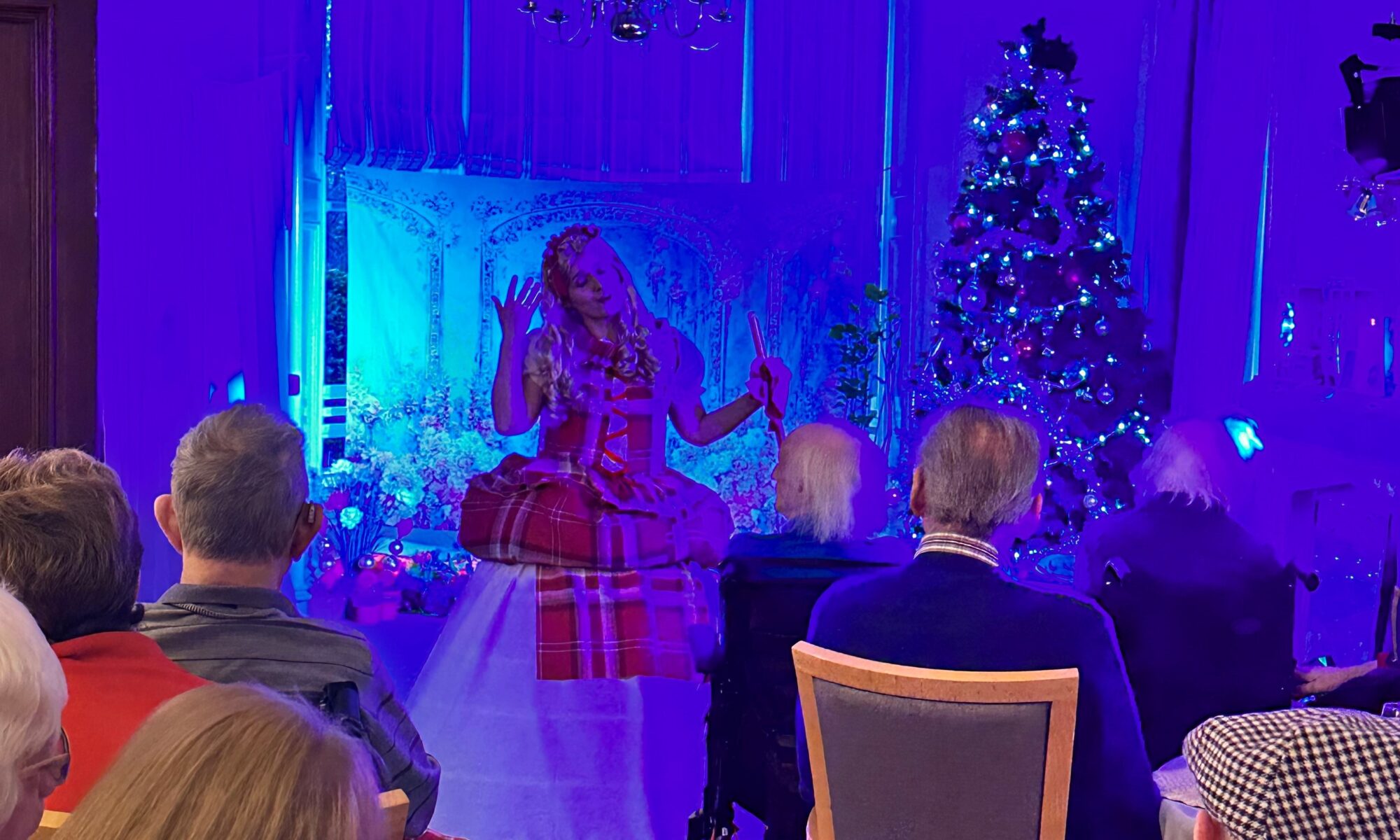
Hawkhill Cinderella Pantomime

Once upon a chilly December evening in the cosy town of Hawkhill, the community gathered in anticipation for a magical event as the staff prepared for a Cinderella Pantomime on December 22, 2023.

This enchanting production wasn’t just about dazzling costumes and lively performances; it was a heartfelt initiative to support a local charity, Aberdeen Foyer, a charitable organisation supporting young people in the North East of Scotland towards independent living, learning and work.

The stage was adorned with twinkling lights and festive decorations, creating an atmosphere of holiday cheer.  As the curtains rose, the magic of Cinderella unfolded on the stage, transporting the audience into a world of fairy godmothers, glass slippers, and charming princes. The energy and passion of the performers, all staff members of Hawkhill House, shone through, making it a truly memorable experience for everyone present.

As the final curtain fell and the performers took their bows, the sense of accomplishment was palpable. Our residents, their families, our staff, and guests expressed their joy, stating that they thoroughly enjoyed the show and the fundraising efforts had not been in vain.   The Cinderella Pantomime had successfully generated a total of £230 for Aberdeen Foyer, funds that would go towards providing second chances, learning, and development opportunities for the young people of the North East.

The spirit of giving and community solidarity lingered in the air, turning this Cinderella Pantomime into a heart-warming tale of generosity and goodwill.

Aberdeen Foyer will visit Hawkhill on the 8th January along with some of the young people they support to meet us and discuss how we can work closer together.

And so, as the town of Hawkhill bid farewell to this magical night, they did so with the knowledge that their support had help create a brighter future for the youth in their community, proving that the magic of Cinderella went far beyond the confines of the stage.

Epiphany – a day for compassionate care?

Today is the 6th January and from my time in Sunday school all those years ago I can remember it as the day (twelve after Christmas) when the three Wise Men or Magi were celebrated as bringing their gifts to the Christ Child. It was also the day by which, I seem to remember, all the Christmas decorations had to be taken down for fear of a year of bad luck. Mind you the latter might have had more to do with a maternal desire to get life back to a non-tinsel normality than any ancient divine retribution for stray baubles or lingering trees.

It wasn’t until I was a bit older and had started to listen to the stories of the Gaeltacht or to those I heard as I did a bit of travelling that I discovered that the 6th of January had and has a much wider significance. I was reminded by this when watching the Channel Four Great British Bake-off Festive television special over the holidays when the contestants were challenged with making a “galette des rois.” I won’t put any spoilers out there but the galette is a French cake for and eaten on Epiphany right across western Europe. With links to the pre-Christian Saturnalia festival the cake contained a “fève” which was a lucky charm, usually a bean, and which was hidden in the round golden cake to be a reminder of the sun bringing its light back into the darkness of winter.

There are other customs around this time of year. In Ireland there is Handsel Monday which was celebrated on the first Monday of the New Year and was a day on which children would visit neighbours and relatives to ask for a ‘handsel’ – a small gift of money. It was bad luck to refuse a child this gift.

In Skye in the childhood of my grandmother, though I don’t remember her directly talking of this, there was a much older tradition which associated Epiphany as being the ‘Little Christmas’ or Là Challuinn and Nollaig Bheag in Gaelic. Indeed, the tradition of celebrating the coming of the Christ-child on the 6th January (as is still the case today in the Orthodox Christian tradition and those who follow the Julian calendar) is one that survived for many generations in the north west of Scotland.

The characteristic of the 6th January ‘Christmas’ or Epiphany seems to have been very different and some of this is still seen in Ireland where it is sometimes called ‘Women’s Christmas’, particularly in Cork and Kerry. The day takes this name from the tradition of men taking on the household duties for the day. In traditional rural and agricultural communities there were few days where women were not involved in working, doing household activities, the acts of weaning, child-rearing and of caring for family. This was one day when the role of women was valued and the men took over the caring, cooking, and cleaning. This allowed women to go out and meet with friends and to enjoy themselves. It was their Christmas!

In parts of Irish spirituality this day became a symbol of the intrinsic value that should be given to women and even more so to the critical activities which enabled society to function and which were culturally associated with women.

We are a long distance from such times but it is interesting to note in Irish media even in this last week a fair bit of discussion about the importance of continuing to revive the idea of a ‘Women’s Christmas.’

I am not going to get into the rights and wrongs of such a discussion, but I do find that it fascinates that on a day when many celebrate the ‘Wise Men’ that there is in some old Celtic traditions a space for recognising the contribution and role of the female and the criticality of acts of care, compassion and community.

Just six days into 2024 is it too much to hope for a year where compassion and care takes centre stage and topples the ‘wisdom’ of the priorities of our traditional economy and politics? Is to too much to hope for the turning of the tables of expectation to the extent that people who require and need care and support became centre stage of focus rather than an afterthought of priority? Is it too much to hope that epiphany could be the manifestation of goodness rather than the continuation of commerce?

The start of a new year with all its celebrations and activities, all its fresh starts and new beginnings can be especially hard for those for whom this will be yet another year without. It is in those without times when memory aches the heart and the absence of a loved one cuts into your soul, that we need to all of us hold onto the hope that can drag us into the dawn. Maybe that’s why I like the 6th and Epiphany, seeing it not as an end but a dawning, a start, a re-orientation which places a crown on care and gifts the foolishness of compassion a centre stage for the coming year.

Whether today we celebrate the coming of wisdom or the Women’s Christmas it is in the words of John O’Donohue a time to slow down.


This is the time to be slow

This is the time to be slow,

Lie low to the wall

Until the bitter weather passes.


Try, as best you can, not to let

The wire brush of doubt

Scrape from your heart

All sense of yourself

And your hesitant light.


If you remain generous,

Time will come good;

And you will find your feet

Again on fresh pastures of promise,

Where the air will be kind

And blushed with beginning.


By John O’Donohue. From  Benedictus: Book of Blessings

Time to be slow – Poems on the Underground


Donald Macaskill


Photo by Damien Creatz on Unsplash