Finalists Revealed for the 2024 Care at Home & Housing Support Awards!

We’re thrilled to announce the finalists for this year’s Care at Home and Housing Support Awards! A big thank you to everyone who submitted nominations, and congratulations to all those who made the shortlist!

Join us for the Awards Ceremony, hosted by Michelle McManus and Dr Donald Macaskill, on the evening of Friday 17 May 2024, at the Radisson Blu, Glasgow, following the Care at Home & Housing Support Conference.

Interested in booking an Awards Table? Click here for more information.

Home is where the health is

Home is where the health is … ageing well in place.

The following is a shortened edited version of a talk given to the Edinburgh University Advanced Care Research Centre (ACRC) Spring Symposium on Monday 15th April.

Whether tenement flat, bungalow, farmhouse, or croft virtually every piece of research I have read or conversation I have held with folks over the years has articulated a desire to age in place, remain in place and to die in place – if all else is equal.

Space and place are intrinsic to not only our psychological sense of wellbeing but also to our physical health, not least in a community such as Scotland where health inequalities are so influenced by geography and economy. In the lottery of location, location, location where you live matters for how healthy you are or are not.

Over the years I have written and spoken a lot about what it means to belong to somewhere, and the influence that such a sense of place can have upon your health and wellbeing, or even more critically what happens to you when due to no fault of your own you are unable to ‘remain’ in your locale or when ‘you lose your independence.’

There is a rich history of research on the desire of people to live independently in their own homes for as long as possible. There is an accepted presumption of the truth of that sentiment, albeit that we also have growing evidence to show the clear health benefits of congregated or shared living when an individual may reach a particular age in life or stage of frailty.

The presumption of home first is part of the DNA of our social care policy and delivery. It is articulated in the Scottish Government’s post pandemic Statement of Intent on the ‘Health and Social Care of Older People.’ in the following terms:

‘Our vision for Scotland

We want people to enjoy a high quality of life as they grow older. Our ambition is to make Scotland the best place in the world to grow old. We want to achieve this through safe, integrated, person centred health and social care. Everyone should be able to live independently, and drive the decisions about their health and wellbeing; with their human rights respected and their dignity protected…’

All this underlined further when it states:

 ‘Home first approach

 People have told us that they would like their care and treatment to be delivered in their home or local community as much as possible. Our health and social care services must reorganise themselves to better support people to live well and independently in their communities as they age.’

Health and social care for older people: statement of intent – gov.scot (www.gov.scot)  (March 2021)

Laudable, clear, and factual in statement and intent. Hard to disagree with it.

And we can all recognise similar aspirations, notably the desire for independent living – throughout the years of policy of Scottish national government, whether in the seminal work of the key learning disability report ‘The Same As You?’ of 2000 which hastened further the closure of our long stay institutions, or the more recent passion behind the Feeley Report, the Independent Review of Adult Social Care (2021) – people time and time again have stated the desire to live as independently for as long as possible.

The ageing-in-place agenda posits that the preferred environment for older adults to age in is the community, where they can remain active, engaged, socially connected, and independent.

The question is – have we as a society paid more than lip service to that aspiration? Have we fostered and nurtured the civic and care capacity to respond in full to that desire or have and are the visions of ageing in place becoming rooted in the soil of delusion? How prepared is Scotland to enable people to age healthily in place?

I want to explore this issue of healthy ageing in place – through three perspectives, namely legislative, finance and the built environment.

1.

The first is legislative. It is sometimes lost amidst all the talk of reform and reshaping, of new creation and novel development such as the National Care Service, that Scotland already has some of the most progressive health and more specifically social care legislation in the world.

The Social Care (Self-directed Support) (Scotland) Act 2013 (SDS Act) sought to bestow upon the individual who required support and care new rights guided by the principles of participation and dignity, involvement and inclusion, informed choice and collaboration. It aimed to change practice from assessing what someone needed to maintain and survive life to determining what outcomes would enable that individual to flourish and thrive. Budgets were to be in the hands of the supported person; new models of innovative, community-based supports would be developed as flexibility, creativity and diversity were written into Guidance and advice. It was all designed to allow folks to live the ordinary lives they wanted and to participate as full citizens of their local communities. In essence it was about enabling ageing in place (before the term became commonplace.) This was primary and preventative health care dovetailing into community-based social care.

Derek Feeley 8 years later in his Review told us what those of us on the ground knew already namely that the implementation of the SDS dream had failed.

It was clear from his Review that from the experience of many of the stakeholders who had engaged in its processes that the implementation of Self-directed Support (SDS) was symptomatic of the failure to embed progressive social policy within the existent political and governmental systems. SDS failed and is still failing in part because of the impacts of austerity and economic downturn and later the pandemic but in truth the faultiness are a lot more local. Social care as delivered today and Self-directed Support as initially conceived has been and is hampered and limited by the current model of local government in Scotland and by the desire to entrench power and control within the hands of those who finance and contract rather than bestow control and choice to citizens.

SDS provides the foundation stone for a re-shaping of social care that enables the person to be in control, to utilise autonomy and exercise choice not only of the decisions made around their life but of the outcomes they want to achieve.

The legislation already exists to enable place-based healthy ageing – the commitment around implementation is what is lacking. We are paying lip service to individual choice and personal control.

2.

The second influencer upon any assessment of ageing in place must be the fiscal reality of the current moment. Folks like me who have been around this social care world for more years than we would wish to confess recognise that we have never before seen the drastic levels of savage cuts to social care provision we are facing now. What is happening in our local communities across Scotland today rides a coach and horses through legislative intent and political aspiration.

In the days and weeks that have recently passed I have come across numerous instances where individuals are having their packages of support and care reviewed, reassessed and stopped. Indeed, I know of several authorities which have established review teams ostensibly to make sure people are getting the right support but in reality to cut the majority of packages and find savings. Now in a context of fiscal waste I can understand such a measure – but we are already talking about a population who only receive services at the level of critical and emergency need. How many people do you know who as they age require less support? A few yes but the majority – no way.

Despite the self-assurance rhetoric of commissioners and local officers in health and care partnerships what we are witnessing is frankly a grotesque cost saving exercise which is putting people’s lives at risk or at best is serving to limit and diminish those lives.

Indeed, the CEO of Age Scotland Katherine Crawford warned about the precarious state of social care in Scotland, stating that:

“The longer people wait for care, the more acute their needs can become. Distressing figures from last year showed that hundreds of people died while waiting for care packages to start. For others, it is unsafe for them to be at home without the care they need, resulting in poorer health, increased hospital admissions and yet more pressure on the NHS as people are trapped in hospital.”

“The crisis in social care in Scotland is fast becoming a national scandal.

More than 10,000 people waiting for social care at home (agescotland.org.uk)

She is of course right because the latest figures from Public Health Scotland found that 6,811 people are waiting to be assessed for social care at home, with a further 3,393 waiting for a care package to be delivered. The vast majority of these are older Scots.

Because those who age in place are largely invisible, because they don’t form queues in ambulances outside hospitals or in A and E corridors – they have become the easy collateral of the phoney war which is going on in our communities. A war which proclaims a political rhetoric of more investment and funding in health and care whilst the truth on the ground is of stripped back services, packages of support being removed (often with only 72 hours’ notice) and people being quite frankly abandoned to age unhealthily. The vast majority of additional resource is helping to pay workers a better wage which is fundamental, but it is not adding to the level of support in any significant way.

We’ve turned away from an aspiration to enable people to be supported by preventative care to enable them to age in place and potentially thrive and flourish into a system which is about maintaining people. There is no dignity in a life which simply breathes in and out but whose choice, wishes, feelings, desires, and dreams are negated.

3.

There are of course other dimensions which also need to be addressed if we are to achieve a healthy ageing in place.

Central amongst these is our built environment, not least our housing stock.

In 2018 I was writing and speaking about how important it was that we started to re-design our city centres to enable them to become once again places where people of all ages were able to call home and to do so in a manner that was truly inclusive. To some extent this has and is happening, but I fear that it is a process of re-design which excludes the potential of ageing in place. But do we have an urban environment which validates and values ageing in place?

I was intrigued by the research of three Scottish based academics Brunelli, Smith and Woolrych in a paper ‘High streets, ageing and well-being’ published in the Journal of Urban Design at the start of this year. In it they explore three Edinburgh ‘village’ high streets.

Full article: High streets, ageing and well-being (tandfonline.com)

They start from the premise that ‘despite their perceived decline, local high streets in the UK remain valuable central and well-connected places that can foster ageing in place, yet their potential to sustain well-being in old age has been overlooked.’

Analysing their qualitative and quantitative data they explore older people’s well-being in four key dimensions: social well-being, sense of place, enjoyment and feeling active and sense of purpose and mastery of the environment.

Their findings include an assertion that to make these locales more age-friendly and to support older people’s well-being:

‘it is desirable to: make the public realm more inclusive, pedestrian-friendly, and integrated with public transport infrastructure; actively support the clustering of amenities, shops, services, and bus stops, anchored to a day centre/local hub; encourage attractive shopfronts to support a welcoming and safe atmosphere including the externalization of activities, for example, adding opportunities to sit outside; and increase the provision of affordable housing near and/or on the actual high streets.’

It can be achieved with collective coherent inclusive involvement of all voices in town planning, in architectural design and in urban investment. I really do believe our cities and towns can become age friendly and dementia confident. To do so we in part need to challenge the bias in the construction industry which effectively buys out ‘social housing’ targets – when did you last see a bungalow built? We need to address the issues of pavement furniture and shared pavements; of traffic lights that are far too fast, a lack of seats and public toilets, poor visual signage and so much more.

We also need to challenge the ghettoization of ageing which creates villages for those with dementia equivalent to the asylums of the Victorian era – age out of sight out of mind even in a luxury environment. Ageing in place also requires a collective reframing of workforce skills and abilities to make all retail, commercial and community staff, both in the public and private sectors confident around age and all it brings including dementia rather than simply aware.

But as the Centre for Ageing Better made clear in a report last year:

‘ simply changing the built form is not sufficient to create a more inclusive environment for ageing since places are more than physical spaces. Viable environments are articulated through a strong sense of place, defined as the social, psychological and emotional bonds that people have with their environment. A strong sense of place results from having access to supports for active participation, opportunities to build and sustain social networks, and assuming a meaningful role in the community. In contrast a feeling of displacement or ‘placelessness’ is associated with alienation, isolation and loneliness, often resulting in adverse health and well-being outcomes, particularly amongst vulnerable older adults.’

To conclude if home is really to be where the health is, where people can age in a manner that allows them to grow and change, thrive, and flourish, then it requires the collective will of designers and architects, planner and politicians, economists, and employers to create the spaces and places that allows for that. It demands a vision of ageing where those who age are in control, not just at the centre of someone else’s concern. Technological innovation can take us part way down that road but without the societal willingness and political investment it will be a wasted journey.

Donald Macaskill

Photo by Katie Barrett on Unsplash

The devaluing of care: the stress of caring.

The month of April is Stress Awareness Month which has been held every April since 1992 and which is designed to increase public awareness about both the causes of and cures for what in many parts of the world is a stress epidemic.

Stress has been a topic and theme that has always interested me both in a personal and professional way. My interest probably started when as a teenager I was aware of two adults in my life who were deeply affected by stress. One was an individual who worked constantly and relentlessly – people around him tried to get him to slow down, to take a break, to look after himself by eating better and not drinking so much. All of it was to no avail as he powered on to the get the next task done with an invisible deadline focussing his mind and work pressure dominating his priority. He used to dismiss concern by saying he was a ‘workaholic’ and he needed therapy not criticism.

He quite literally worked himself to death because one day he dropped dead in his late fifties of a massive heart attack. At his funeral people talked about how his stress and workaholism had killed him with someone in my earshot opining that “There are too many in this graveyard who are there because of stress.”

The other person I’m thinking about was someone who was continually anxious and who was always concerned that what they did or how they performed was never good enough. They had held down a good job but over time they got more and more anxious and their life and relationships began to be deeply affected by the pressures they felt they were under at work. Despite very real and honest attempts by managers and employer they continually felt that they were falling short and what started as occasional days off work morphed into days and weeks. After a while they were in the language of the time ‘signed off with stress.’

Two very different instances but with one common link – stress. After this I went on to study the nature of stress and in particular occupational burnout and its relationship to self-identity. After conducting just short of a hundred interviews I realised just how complex the whole nature of stress was but just how devastating it could be not just for occupational role but for your very health and wellbeing and the relationships you were or were not able to have. Stress really was and is a killer and can change lives dramatically.

According to research in 2022/23:

  • There were 875,000 cases of work-related stress, depression or anxiety.
  • Stress, depression or anxiety accounted for 49% of all work-related ill-health cases and 54% of all working days lost due to work-related ill-health.
  • The main work factors cited as causing work-related stress, depression or anxiety include the demands of the job, lack of control, lack of information and support, work relationships, and roles and responsibilities.

There is a huge amount that organisations and employers can do which not only fulfils a legal duty, but I would argue a moral one, to ensure the health and wellbeing of their employees. Doing so as the HSE argues is good for business as it increases productivity, reduces sickness absence and nurtures staff.

In the last few years, we have seen across the board an increased awareness in targeted resources and support to improve mental wellbeing for the workforce not least after the pandemic.

Having said all that – and we certainly need to continue to resource and develop practical work-based mental health supports – I think there is much more to reducing stress than responding with support after stress has occurred – there are clear preventative approaches.

One of the few insights I have gained over the years in researching and reading about stress is that there is an inextricable relationship between the stress one experiences in work or life in general and the extent to which your role or job of work is valued or you feel valued personally in life or relationships.

When I interviewed people nearly three decades ago about what made them stressed – yes the volume of work, lack of structure of support, financial and other pressures all were commonplace – but what was highlighted more than anything was the extent to which they felt they were not valued in their role.

Jump forward to conversations I’ve been having in the last 4 weeks, and it has felt to me as if I’ve turned back the clock. Time and time again home carers, nurses in care homes and managers in care services have told me that what affects them and their colleagues more, what adds to the stress is that they feel the job they do is not valued, understood, respected, or considered of worth by others around them. Put simply they are saying to me that a significant part of the stress they are enduring is because of a perceived lack of worth and value impacting on both occupational and personal self-esteem.

The pandemic brought about the moment of the clapping syndrome – where every Thursday (eventually for social care) people would gather in the street or on their front steps and visibly thank key workers by clapping. But no sooner had the claps echoed into silence, frontline care staff fell into the old routine and habit of being told they were ‘just a carer’; of others being more rewarded by pay increases, of struggling to get people to consider that social care was just as important as the NHS. People like me go on about this imbalance a lot – for instance how we have a ministerial role which talks about NHS Recovery but not one for the equally if not more pandemic traumatised social care world and workforce. At the frontline, workers are stressed to an extent and degree that I and others haven’t witnessed – it is a set of system harms resulting in real illness, fatigue and burnout.

But for many it isn’t just about salary and reward, about systems and models, it is about how society does or more honestly does not value the job and role, the professionalism and expertise entailed in the role of frontline care work.

Collectively we will only address the burnout and stress, the breakdown and despair at the heart of both paid and indeed even more so unpaid care, if as a whole community and society we start to value care and support as the heart of our being community with one another.

I know that many carers love and find huge personal satisfaction from their job and what it brings and means to the people they support – the truth of that is seen in the long service and dedicated professionalism of thousands of women and men who would be capable of earning so much more in other sectors. But we also, I would suggest, have to recognise those we lose to care, those who leave and give up, those who are stressed and burnt out because they simply don’t feel valued or wanted by wider society. As one put it to me recently. ‘“What I do is who I am. I can’t imagine not being a carer. But there are so many who think my job is of no consequence and who brush me aside. When that happens, I feel so empty and just want to scream.”

If we are to address workforce and personal stress in the care sector, we must surely start by valuing the very essence of the role of care and support? Sadly, we have a long way to go on that journey but it has to start sometime.

Donald Macaskill

Photo by engin akyurt on Unsplash


Digital Mindset Session – Fully Funded Opportunity

The Digitally Enabled Workforce (DEW) team at NHS Education for Scotland has an upcoming opportunity – Digital Mindset Sessions. This fully funded opportunity is open to those in board-level roles across health and care organisations in Scotland (including executives, non-executives, trustees, elected members), see information below. More information can also be found on the Leading in the Digital Age Board Development site or for any other questions, or specific requests please contact the team direct by email at [email protected].

Spaces are available from April to June.

DigitalMindsetSessionInfo

Scotland can’t wait… social care needs to act about Parkinson’s

On April 11th there will be a global coming together for what for a number of years now has been recognised as World Parkinson’s Day. It sits within Parkinson’s Awareness Month which is designed to increase knowledge about and awareness of the condition. Like many people Parkinson’s has touched my life professionally and personally. It is a condition which affects around about 13,000 people in Scotland and every week it is estimated that around 30 new people are diagnosed with Parkinson’s. Anyone working in social care services and supports will be aware of the extent to which this condition affects the daily lives of so many across the country, and also how poor our response to the condition has been and still is. Those of us working in social care recognise the truth that Parkinson’s is the fastest growing global neurological condition.

This was exceptionally well argued in the latest report from Parkinson’s UK in Scotland, which was published in January 2024. The report is entitled ‘Scotland can’t wait’ and is a cogently argued, data packed document listing the many gaps in support for people living with Parkinson’s and affirming the truth that these people and those who support them cannot continue to wait for the issues of failure to be addressed.

It is, sadly, a very familiar story to so many people who live with neurological conditions in Scotland today. Whether it is dementia, or MND or Parkinson’s there is a systemic failure to respond to conditions which can be significantly supported and alleviated were the right support to be in place. We may as a system and nation be good at publishing plans and strategies but our implementation and driving of real change that makes a difference on the ground falls woefully short. This truly is a failure to care.

The ‘Scotland can’t wait’ report has a whole host of recommendations for NHS Boards, on investment in medication, on workforce development and increased capacity and much more. It is worthy of both reading and wider dissemination. A section which particularly interests me is one which emphasises the need to do more around mental health and in relation to those who live with Parkinson’s who develop dementia.

Parkinson’s manifests itself in diverse ways and no two people demonstrate and evidence  the exact same responses to the disease. It is estimated that there are over 40 distinct characteristics that make up the Parkinson’s condition. The NHS website describes it in the following terms:

Parkinson’s disease is a condition in which parts of the brain become progressively damaged over many years.

‘The main symptoms of Parkinson’s disease are involuntary shaking of particular parts of the body (tremor); slow movement and stiff and inflexible muscles.

A person with Parkinson’s disease can also experience a wide range of other physical and psychological symptoms. These include depression and anxiety, balance problems (this may increase the chances of a fall), loss of sense of smell (anosmia), problems sleeping (insomnia) and memory problems.’

In Scotland it is estimated that 30% of those living with Parkinson’s have dementia and an estimated 50% need support with daily activities. The conversations I have with both care home and care at home providers and front-line staff illustrates that supporting people with Parkinson’s is increasingly also about supporting people who are living with Parkinson’s and dementia.

The recommendations of the Scotland report highlight the gaps and they range from a lack of awareness amongst NHS generic mental health professionals about the nature of Parkinson’s; the need to increase the neuropsychology and neuropsychiatry workforce to meet the needs of people with neurological conditions to the need to develop better support for future care planning (including Powers of Attorney) before someone develops dementia.

Over the years I have noted a growing relationship between some Parkinson’s services and the social care and dementia service sector, but this occurs more often than not through local relationships and professionals committed to working collaboratively around the needs of a person. The Parkinson’s UK Scotland report quite rightly argues that such collaboration and co-ordination needs to be much more systematic, planned and adequately resourced. At the moment I very much fear that people living with Parkinson’s who develop dementia are being doubly excluded and not achieving the level of support and care for their dementia that they rightly deserve. The idea of joint clinics and the inclusion of Parkinson’s specific education within general social care dementia training are two good examples of how progress could be made.

In speaking to a family member recently she remarked to me how she thought she was well prepared and aware of what the Parkinson’s journey was going to mean for her partner but that she had been blind-sided by the changes in him which she now (with hindsight) recognised as his developing dementia. These included him starting to have bad and frightening dreams, his inability to make a decision and keep to an agreed plan or action; that he was finding basic activities like getting dressed or using the TV remote control really difficult. She had not known of the significantly increased risk of developing dementia if you have Parkinson’s and neither, she told me, had most of her friends in support groups been aware of this factor.

A real legacy of this year’s World Parkinson’s Day would be for there to be positive action at all levels, not least national government, to address the recommendations of the Scotland can’t wait  report and for those of us who work in and deliver social care supports, not least dementia, to better understand the consequences of a condition which is still so misunderstood and sadly all to frequently ignored.

Over the last couple of years, the Parkinson’s community shared hundreds of poems with Parkinson’s UK for World Parkinson’s Day 2022 and 2023. They were happy, funny, sad and thoughtful and told the world how Parkinson’s has affected individuals. Here is one which demonstrates the positivity of so many I have known who have lived with Parkinson’s. But that positivity demands Scottish society and care and health leadership to play its part because Scotland truly can’t wait.

Shiona from Dumfries and Galloway  wrote:

I can still breathe

I can still bend

I can still laugh

I can still love

I can still fly

Donald Macaskill

International Recruitment in Social Care Survey Findings

Survey Reveals Urgent Concerns Over International Recruitment in Social Care 

Scottish Care, the representative body for independent social care providers in Scotland, has conducted a survey revealing significant challenges faced by care providers in recruiting and retaining internationally recruited staff. The findings shed light on the potential risks to social care service delivery across Scotland due to recent decisions by the Home Office regarding international recruitment pathways.

The survey was initiated in response to Scottish Care member reports regarding increasing difficulties in international recruitment. The Home Office’s decision to request additional documentation and communication issues exacerbated concerns among care providers, particularly around Certificates of Sponsorship.

Data gathered from the survey revealed several key insights:

  • Over 66% of Scottish Care members are currently recruiting staff from overseas, indicating a heavy reliance on international recruitment pathways.
  • However, 68% of respondents expressed reluctance to consider international recruitment in the future, due to concerns over sustainability and financially viability.
  • Respondents from 14 Local Authority areas indicate that care providers employ over 15% of staff from overseas, with 7 areas reporting over 25%.
  • Alarmingly, some care providers reported between 95 – 100% of staff being internationally recruited, posing significant risks to service sustainability.

These findings highlight a serious concern over the sustainability of social care delivery in Scotland. The potential loss of internationally recruited staff could intensify the existing vacancy challenges and impact overall service provision.

Scottish Care urges policymakers to address the urgent issues facing social care recruitment. Immediate action is needed to protect social care service provision and support the sector’s workforce.


Scottish Care has prepared a Briefing Paper for the International Recruitment Survey Findings, which is available here.

Highland Care Home wins best traditional Shortbread competition

In a heartwarming victory for tradition and taste, David Macdonald, head chef at Crossreach Oversteps Care Home in Dornoch, clinched first place in the best traditional shortbread category at the recent Highland Shortbread Showdown. What makes this win even sweeter is that David achieved this feat using his grandmother’s cherished 80-year-old heirloom recipe.

Oversteps Care Home, represented by David, was the only care home in the competition,  making the win all the more remarkable.

The Manager from Oversteps said “we’re all really pleased with how well David did in the competition.  Oversteps was the only care home represented there, so it was a real boost”

Congratulations to David and the entire team at Oversteps Care Home for this well-deserved recognition!

Find out more about the Highland Showdown here: Businesses Triumph in Highland Shortbread Showdown | The Highland Times

Oakbridge Care Home – Afternoon Tea with Horses

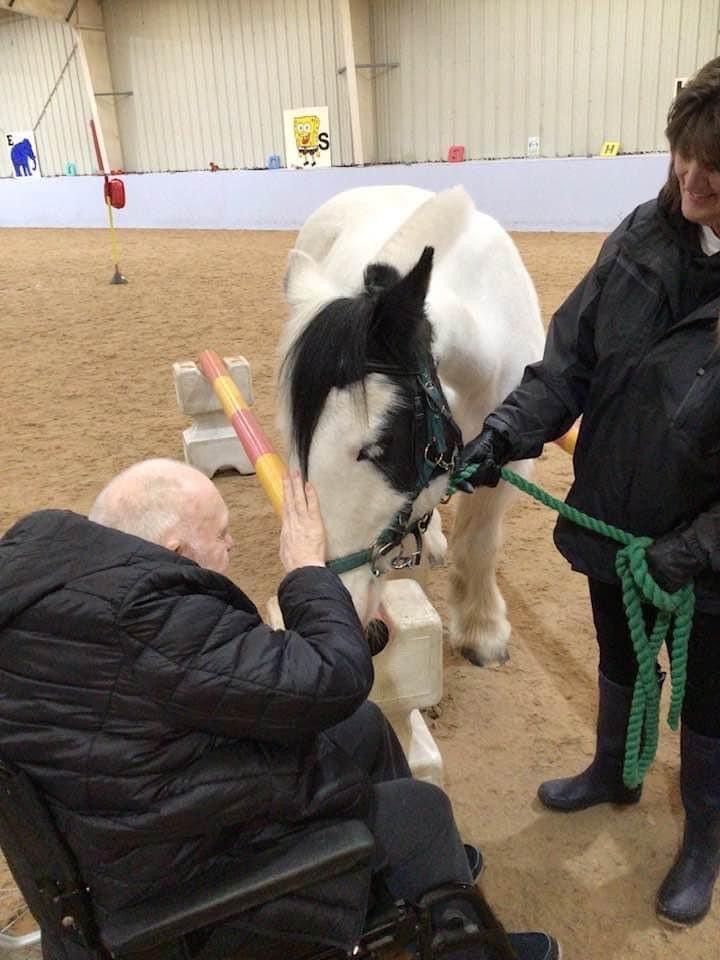
Oakbridge Bridge Care Home in Glasgow recently had a truly memorable experience—they enjoyed tea with a special guest, a horse, courtesy of the remarkable charity, RDA Glasgow Group. It was an immersive afternoon that left a lasting impression on everyone present.

The gentlemen at Oakbridge fully embraced this unique sensory experience with Jake, the gentle and intuitive horse. They expressed their heartfelt gratitude to the dedicated volunteers for their kindness and hospitality. The participants left feeling elated, calm, and truly in awe of big Jake.

Global Workforce Report Launched

The National Care Forum (NCF) in collaboration with the Global Ageing NetworkScottish Care and UKRI has published a report resulting from the Social Care International Workforce Summit held as part of the Global Ageing Conference last year.  

The report’s publication also marks NCF CEO Professor Vic Rayner as the new board chair of the Global Ageing Network, a role she will hold for two years. 

Professor Vic Rayner said: “Co-hosting the Global Ageing Conference with colleagues from the Global Ageing Network and Scottish Care was a huge honour and one which I am thrilled to continue as I take over the leadership of the Global Ageing Network board. I relish the opportunity to nurture the international connections that have been made and set a course, together with members and partners, to tackle the issues affecting the care of older people around the world and ensure their rights are represented.  

“The work we will be doing together reflects the enormous change taking place throughout the world that has a bearing on the daily delivery of care and support to older people, particularly the impacts of mass migration on the global care workforce. Our discussions at the conference included insights from 14 different countries and collectively reached a series of conclusions and recommendations. It is now time for us to communicate these outcomes via this report and demand action and funding from our governments and policymakers to help ensure each territory is empowered to develop a robust care workforce, attract new talent while rewarding the dedication of current care workers, and continue to transform the lives of older people with excellent, professional care.”  

CEO of the Global Ageing Network, Katie Smith-Sloan commented: “Without an adequate, trained and well supported workforce, there is no care. Throughout the world, we are facing enormous challenges in attracting, retaining, training, compensating, and elevating the profession of care workers. A global challenge needs global solutions. To this end, the Global Ageing Network and our members, as a global community dedicated to the well-being of older adults, are committed to raising awareness and driving the public and private sector towards urgently addressing the workforce crisis. There is a way forward if we work together.” 

The report is available to download here.