Scottish Care/Wagestream Webinar – 14 August 2025

Upcoming Webinar for Scottish Care Members

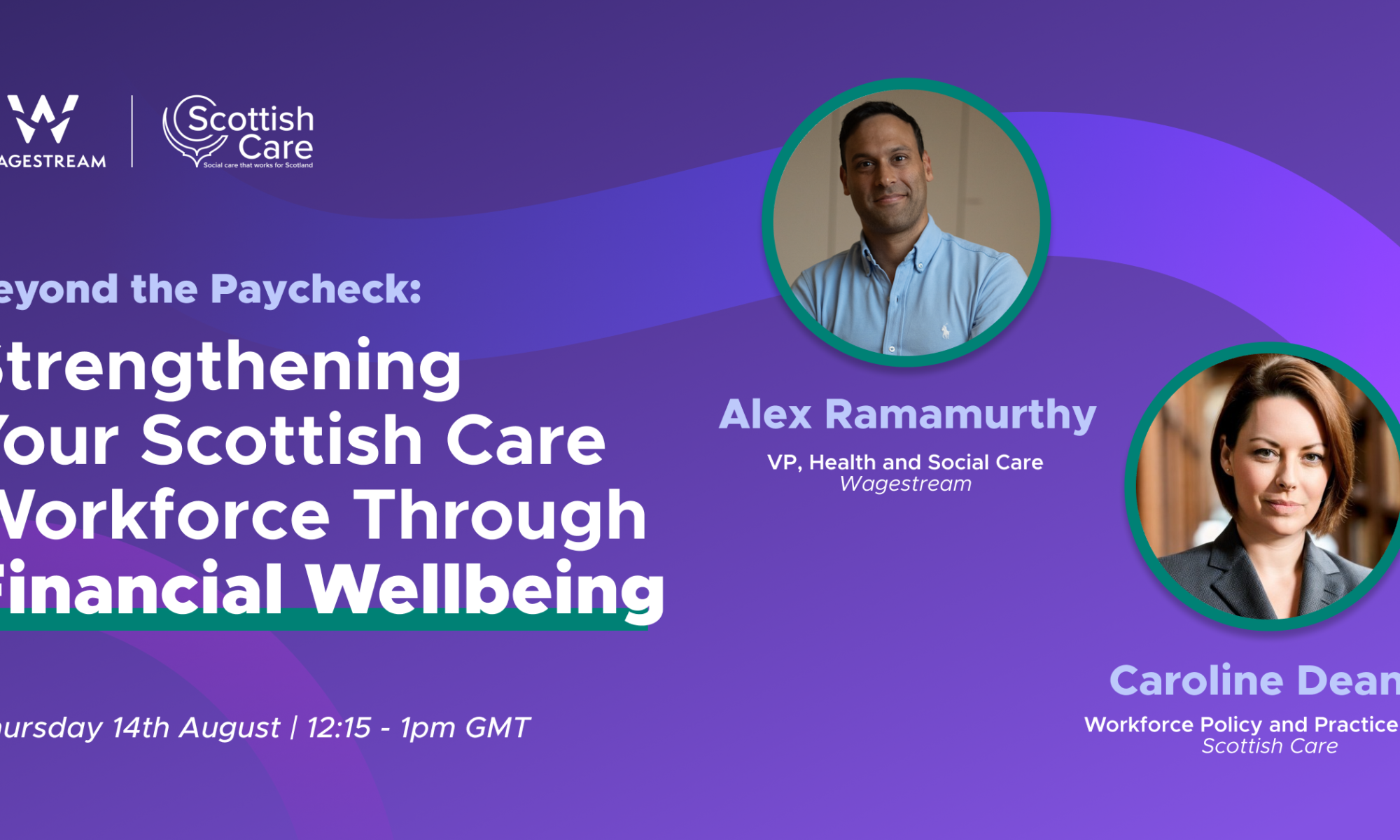
Beyond the Paycheck: Strengthening Your Care Workforce Through Financial Wellbeing

Date: Thursday 14th August, 12:15pm – 1:00 pm
45-minute session with Q&A

Join us for an exclusive Scottish Care member webinar in partnership with Wagestream, our commercial partner, focused on building a resilient, empowered care workforce.

This session will explore how investing in employee financial wellbeing can help address sector-wide workforce challenges from high turnover and recruitment struggles to absenteeism and burnout. Discover practical tools, proven outcomes, and real-life impact stories from care providers.

What you’ll learn:

  • Why financial stress is driving disengagement and turnover in care
  • How Wagestream’s tools, from flexible pay to budgeting and savings, are improving workforce stability
  • Case study insights: 16% lower turnover, 27% faster recruitment, and up to 32% reduction in agency spend

Who should attend?
CEOs, owners, HR and Finance Directors, and senior leaders in Scottish Care member organisations.

Don’t miss this opportunity to future-proof your workforce.

Register via the Members Area to secure your place!

The quiet art of listening.

Yesterday (July 18) was World Listening Day, which was established on the birthday of Raymond Murray Schafer, a Canadian composer and environmentalist who is seen as the founder of acoustic ecology. Born in 1933, he developed his World Soundscape Project, which laid the fundamental ideas and practices of acoustic ecology in the 1970s.

World Listening Day was established in 2010. To be honest I had not heard of the day or the World Listening Project but it started me off reflecting upon just how critical listening is in all human exchanges and relationships, but especially the case in older person care and support, when both the way in which we listen often changes with age and that the criticality of listening and memory plays such a part in ageing.

I have always been intrigued by listening, both the physical act and the power of the experience. There is a silence that sits between the words we speak. A pause. A breath. A moment of being present. But what has always fascinated me over the years and what I have found myself thinking a lot about is not noise or speech, but about the spaces in between – the almost sacred moments when we truly listen.

Listening is an act we too often underestimate in social care. It is not passive. It is not simply the absence of speaking. Listening is an ethical stance. It is a political declaration. It is a human right. In the cacophony of policy papers and targets, of assessments and checklists, listening often becomes the first casualty of our busyness. Yet it is only by listening that we come close to understanding another.

In social care, listening is the glue that binds us. It is the art of presence. A care worker crouched by a bedside, hearing more in the tremble of a breath than in a thousand words. A manager who pauses long enough to really hear the fear in a family member’s voice. A system that slows down just enough to hear the hopes and hurts of those it serves.

To listen is to love. To listen is to dignify. To listen is to recognise the voice behind the silence, the soul behind the sound.

But listening changes over time, certainly the way I have listened has.

As we grow older, our ways of listening shift. Not just physically, as hearing fades, but emotionally and spiritually. Age does not only soften the body; it often sharpens the spirit. The older we become, the more we learn to hear what is not being said.

In my experience of being with many older people I notice that listening becomes less an action of the ears and that other senses are used much more. Listening happens with the eyes. With touch. With memory. Listening becomes textured with the colours of past pain and joy. It becomes an act of remembrance, of legacy, of presence. But all too often, older voices are filtered out, dismissed, or reduced to whispers in the policy halls.

If a day like World Listening Day means anything it should help us to focus better on the central priority of listening in social care, and also to help us confront the systemic deafness to older age. We must, I think, re-tune our ears to voices shaped by decades of living, by grief and by grace. And that is all the more the case when we consider the role of listening for those living with dementia.

Because when dementia enters the room, listening takes on new hues. The linearity of conversation may dissolve. Time may warp. Words may wander. But the need to be heard remains as fierce and vital as ever.

Listening to someone living with dementia demands that we listen not with our ears, but with our whole selves. We listen through gestures, through repeated phrases, through the cadence of a familiar song or the shape of a gaze. We listen knowing that meaning is not always in the sentence, but in the connection. We listen for the emotion beneath the word. We listen not to fix, but to witness.

If social care is to be truly human, it must become a listening culture. One that places time before task. One that honours silence as much as speech. One that accepts that the people we support are not problems to be solved, but stories to be heard.

We need systems that make space for listening – not just in individual interactions, but structurally. Listening must be embedded in inspections, in commissioning, in care planning, in leadership. For if we do not listen, we do not know. And if we do not know, we cannot care.

But let us be honest in recognising that that aspiration seems a very far distance from the realities of the moment, where we are shamefully increasing the contracting of 15-minute visits which strip people of dignity and compassion and certainly give no space for listening which is surely the most essential component of preventative care and relationship formation.

The whole of the social care system, not just those at the frontline, needs to learn to listen better and to commit to a deeper listening.

In the words of the poet:

‘To Listen”

after the quiet of care


I have sat beside the hush of pain

where words refused to come,

and heard in silence

what speech could never carry.


To listen

is not to wait your turn,

but to offer your breath

as shelter.


It is the soft art

of placing ego

at the foot of another’s need.

Not to fix,

but to witness.

Not to solve,

but to stay.


I have listened with my eyes

when memory was a maze,

when time no longer followed rules,

when a name could not be found –

yet love, somehow, was still recognisable

in the reach of a hand.


I have listened through repetition,

through the rhythms of dementia –

where truth is not in sequence,

but in sincerity.

And each telling

is its own kind of courage.


To listen

is to lay down power.

To hold the weight of another’s moment

without trying to reshape it.


It is a kind of prayer –

not always spoken,

but always heard

if we choose to be present.


So today,

before we speak,

let us listen –

with our ears,

our eyes,

our time,

our hearts.


For in the act of listening

we offer the most human gift of all –

recognition.


Donald Macaskill

Photo by Brett Jordan on Unsplash

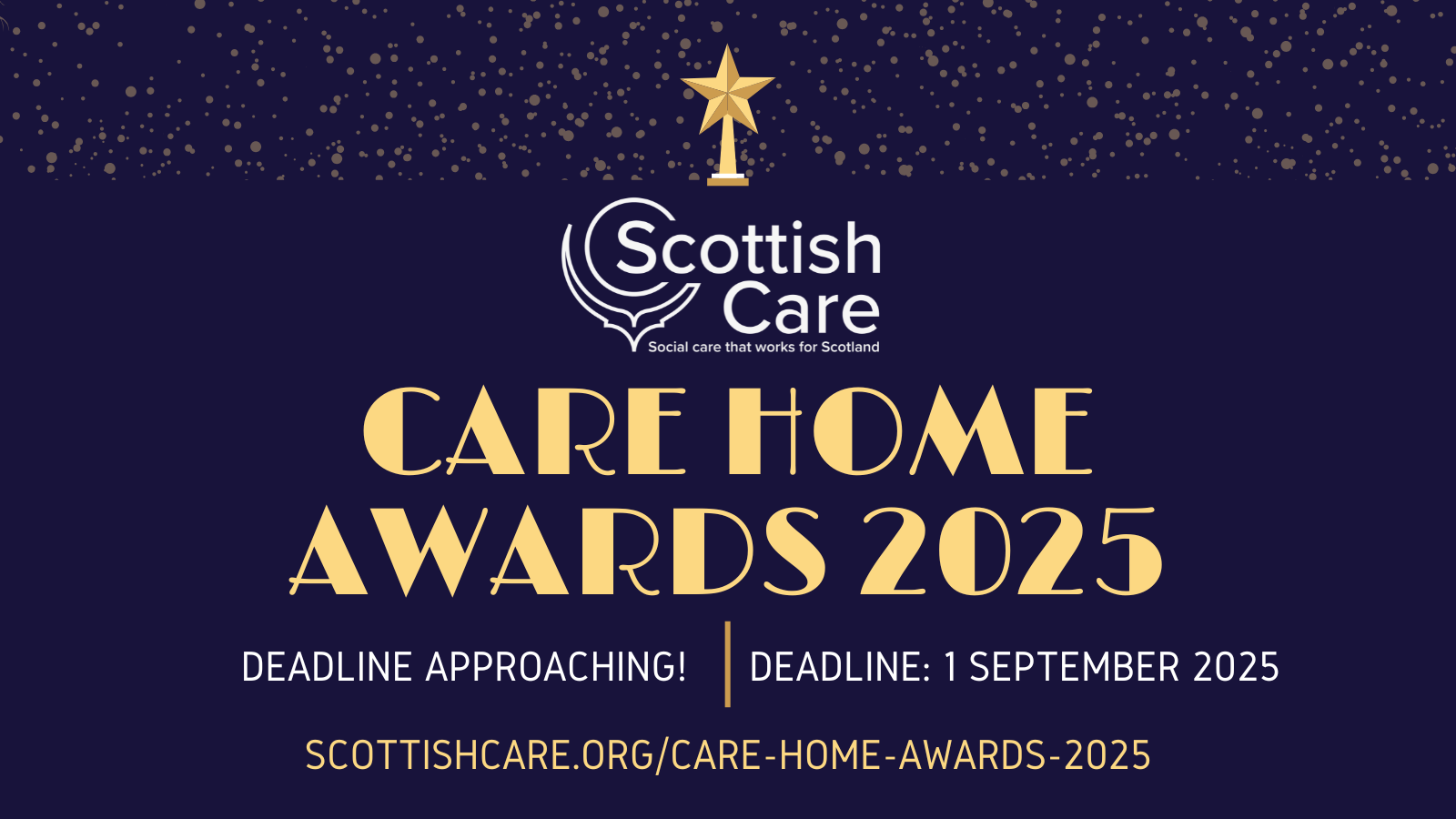
Care Home Awards 2025 – Nominations Now Open!

We’re delighted to announce that nominations are now open for the Scottish Care Home Awards 2025!

These annual awards celebrate the outstanding dedication, creativity, and compassion shown by care home staff and services across Scotland. It’s your chance to shine a spotlight on those making a real difference every day.

The Awards Ceremony will take place on:
Friday 14 November 2025
Hilton Hotel, Glasgow


2025 Award Categories include:

  • Ancillary & Support Staff
  • Nutrition & Eating Well
  • Meaningful Activity
  • Training, Learning & Staff Development
  • Emerging Talent
  • Outstanding Achievement
  • Leadership
  • Palliative & End of Life Care Practice
  • Nurse of the Year
  • Care Worker of the Year
  • Specialist Service/Unit of the Year
  • Care Home Service of the Year
  • Care Innovation Award

Key Dates

  • Deadline for entries: Monday 1 September 2025 (close of play)
  • Awards Ceremony: Friday 14 November 2025, Hilton Hotel, Glasgow

Help us recognise the individuals and teams who go the extra mile in care homes across Scotland.

We can’t wait to read your inspiring submissions!

Find out more on how to enter here

A Special Bond: Marion and Alice Give Back Together

At Abercorn House Care Home, meaningful moments often start with small acts of kindness, and the inspiring story of Marion and Alice is no exception.

Earlier this month, the sisters began volunteering together at the Salvation Army Charity Shop in Hamilton, turning a shared experience into something truly special. What began as a simple weekly commitment is now blossoming into a growing community initiative, with more residents set to join them.

Read on to discover how this beautiful act of giving back is strengthening family ties, building community connections, and bringing purpose and joy to everyone involved.


At Abercorn House Care Home, we are proud to support meaningful opportunities that enrich lives of our residents, and the story of Marion Conquer and her sister Alice is a beautiful example of that spirit.

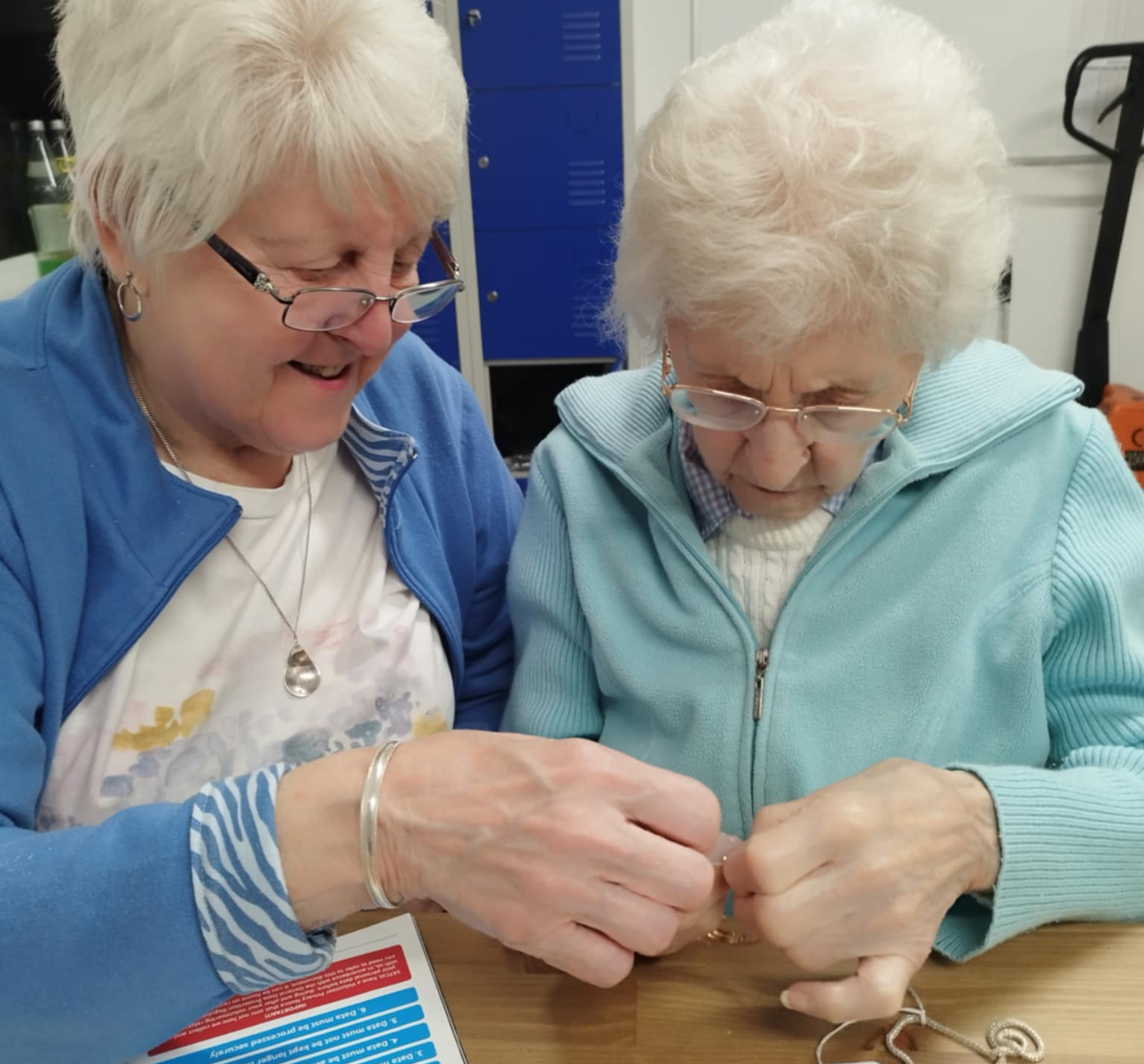
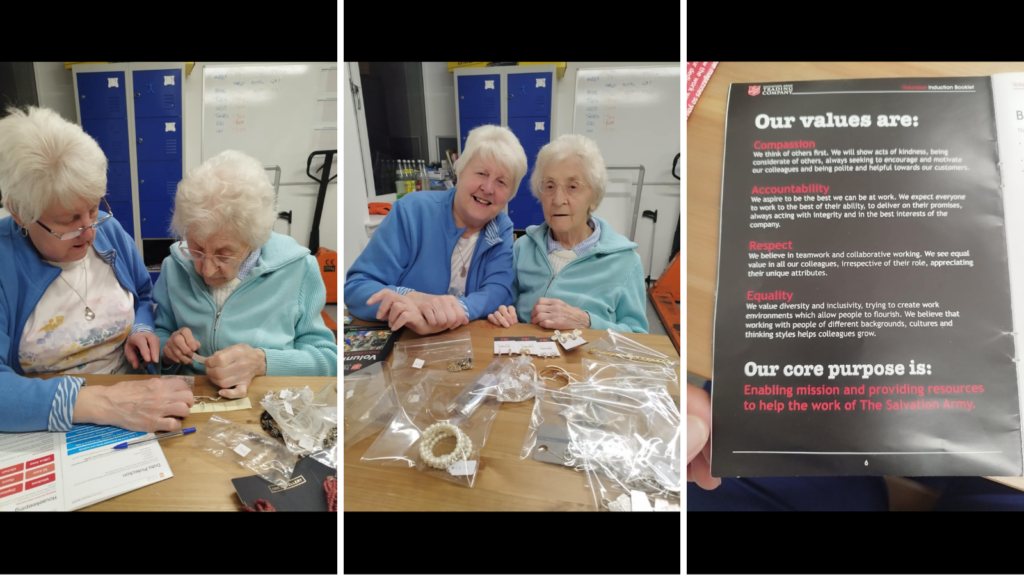
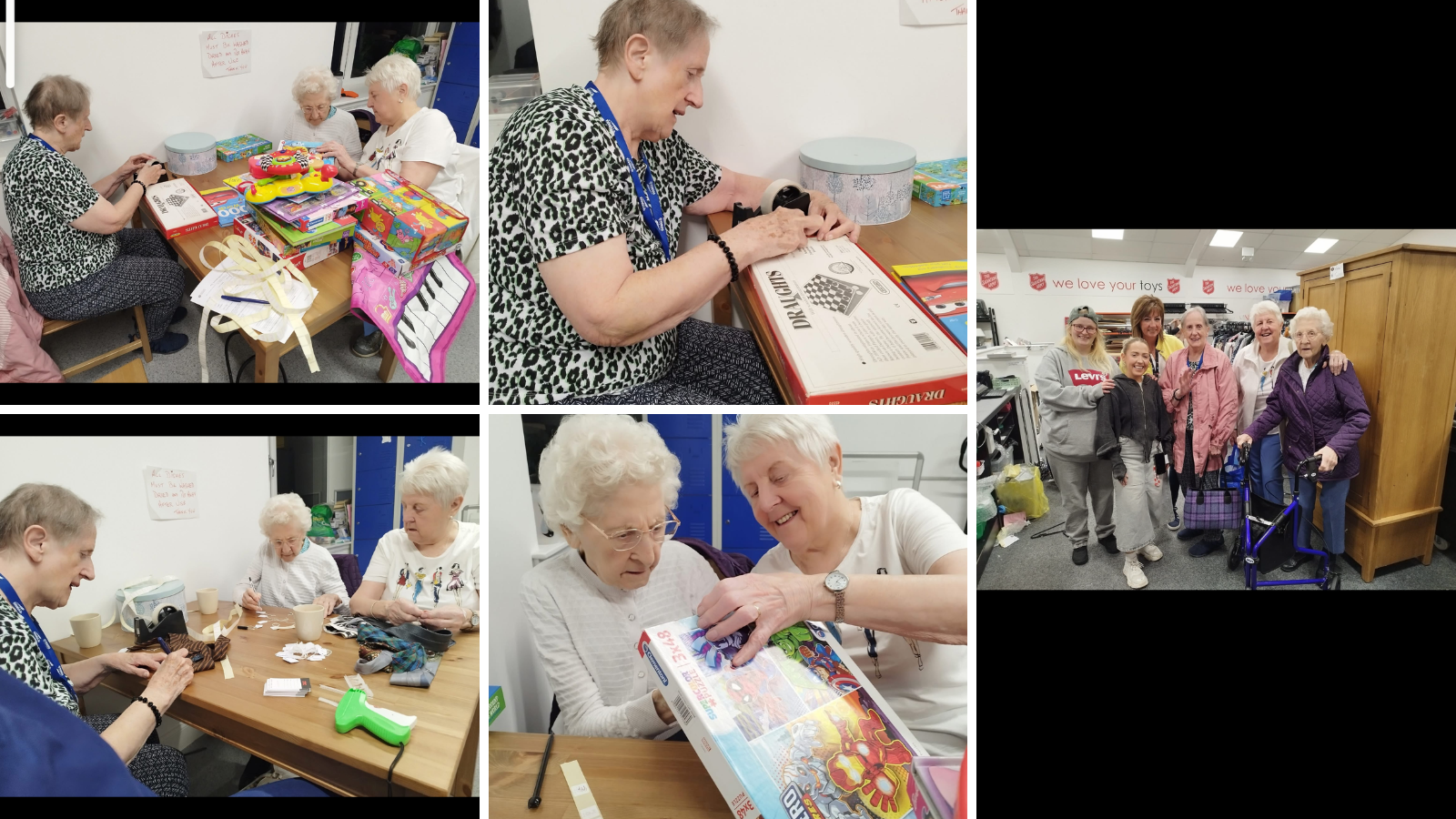
On 9th of July 2025, Marion and Alice began their journey as volunteers at the Salvation Army Charity Shop in Hamilton, following their induction. Together, they now volunteer once a week, sorting through jewellery and helping with pricing, a small act with a big impact.

For Marion, this isn’t just about volunteering, it’s about staying connected to her faith, her community, and most importantly, her sister. For Alice, it’s a chance to spend precious time with Marion in a meaningful way. Their shared experience is strengthening their bond and bringing purpose and joy into their week.

What makes this story even more special is that more residents from Abercorn will soon be joining them in this wonderful initiative, turning this act of kindness into a growing circle of community involvement and connection. Recently welcoming another resident, Drina to take part, below are pictures from their latest volunteer day.

We are incredibly proud of Marion and Alice and excited to see how this small, heartfelt act continues to blossom, touching not only their lives but the lives of those around them.

Summer grieving: the harshness of the sun of loss

In Scotland, where summer is let’s be honest somewhat fleeting – a brief burst of light and warmth between long winters and now seemingly over by May – the summer season here as elsewhere can sharpen grief for people. While shorter days are often linked to loneliness, the pressure to “make the most” of Scotland’s precious sunny months can make bereavement feel even more isolating.

Being honest I have probably never thought of summer as a hard season for those who are bereaved until I was stopped in my tracks the other day by someone who said to me that they hate summer – not because of the weather – but because the long days and nights makes their loneliness more intense. And there was me thinking that the cold winter days were the hardest season for grief.

But then I began to think of my own childhood holidays and upbringing. No sooner had the school bell beckoned the end of the term – and sometimes even before – I was packed off with a few clothes onwards to Skye and long days on beach and croft.

For many older Scots, summer once meant Highland holidays, Doon the Water adventures, garden gatherings, or coastal walks with family and loved ones. Now, the same light highlights an absence for many. Norman MacCaig captures this well in ‘Memorial’:

“Everywhere she dies. Everywhere I go she dies.

No sunrise, no city square, no lurking beautiful mountain

but has her death in it.”

Published in 1991 the poem laments the loss of his sister Frances and described how his loss is ever present, in season and out. It is constant.

Summer is often portrayed as a season of joy – long days, family gatherings, and the warmth of the sun. But for many older people, especially those who are bereaved, summer can amplify loneliness rather than ease it. While winter is frequently associated with isolation and depression, the expectation of happiness in summer can make grief feel even more isolating.

Grief does not fade with the seasons. Grief does not melt in the sun. It lingers. For older adults, summer’s sensory richness – the scent of cut grass, the sound of children playing, the warmth of the sun – can trigger vivid memories of loved ones no longer present.

A 2023 report by the Mental Health Foundation Scotland found that 28% of over-75s felt lonelier in summer, citing “seeing others socialise” as a trigger. Age Scotland’s 2022 survey revealed that 42% of bereaved older adults avoided summer events (e.g., community galas) due to grief reminders. And in my own memory corners research from the University of the Highlands and Islands highlighted that older bereaved adults in rural areas face compounded loneliness in summer, as tourism and visitor traffic contrast with their static sorrow.

Further still research from the University of Stirling found that seasonal changes can trigger memories, making anniversaries of loss more acute in summer. The contrast between external vibrancy and internal sorrow can lead to what psychologists’ call “disenfranchised grief” – sorrow that feels unwelcome or unacknowledged in a world that expects happiness.

It seems inescapable then that summer is hard and I suspect our targeting of issues such as loneliness lacks seasonal considerations. Indeed, organisations offering grief support such as Cruse Scotland report higher demand for counselling in June-August.

One of the challenges of bereavement in older age is that it often goes unseen. A 2020 study by the University of Manchester found that older people are significantly less likely to seek formal bereavement support, despite reporting high levels of prolonged grief and emotional distress.

In care homes or supported housing, expressions of grief may be muffled by a desire not to burden others, or silenced by the myth that older people are somehow “used to death.” Nothing could be further from the truth. Every loss is unique. Every goodbye leaves its own scar.

And in summer, the world’s brightness only sharpens the shadow of absence.

Added to this much of our cultural language around grief is shaped by stages and steps like with neat boxes of denial, anger, acceptance. But grief, particularly in older age, is cyclical, tidal. It comes in waves that make nonsense of calendars.

A warm June day might bring unbearable heartache for someone whose partner died last summer. A July sunrise may spark memories that lead to tears over breakfast. As researchers like Stroebe and Schut argue in their dual process model, healthy grieving involves oscillating between loss-oriented and restoration-oriented experiences.

In other words, older people grieve and live at the same time. They water the garden and weep for who are not there to see it bloom.

So how can we, as communities, care providers, neighbours, respond?

First, by acknowledging. By refusing the polite silence that often follows death, particularly in older age. We need to create cultures in our care settings – and in wider society – where grief is not only allowed but welcomed, named, shared.

Second, by creating opportunities for ritual and remembrance. Summer is a perfect season for memory walks, remembrance gardens, shared poetry readings, and intergenerational storytelling. We need not wait for anniversaries or official memorials to honour those who are gone.

As the poet Mary Oliver wrote in When Death Comes:

“When it’s over, I want to say: all my life

I was a bride married to amazement.”

Older people carry with them lives of amazement, love, and loss. We owe it to them to witness the whole of it, especially in seasons that hide sorrow in sunshine.

In our policy and practice, we talk about trauma-informed care. Let us also be grief-informed, attuned not just to clinical depression but to the slow ache of bereavement. Let us train staff not only in medications but in listening; not only in safeguarding but in soul-holding.

And let us never forget that love, when lost, does not disappear. It becomes memory, it becomes pain, it becomes the quiet pause in a summer afternoon when an older person turns toward a seat that used to be filled.

Grief does not fade because the sky is blue.

But neither does it mean the absence of joy forever. For even those in sorrow, there can be glimpses of laughter, tastes of delight, moments of music.

And sometimes, that is enough.

The Skye poet Eilidh Watt (nee Macaskill) brought up in the village next to where I spent so many summer holidays, once wrote:

“You were the tide in June, full and fierce,

And now I walk the shore alone,

Seaweed in hand, memory on skin,

And no echo of your voice in the gull’s cry.”

Donald Macaskill

Photo by Elly M on Unsplash

If these themes interest you – you might want to join the Scottish National Bereavement Charter Group at a free event in Glasgow on the Future of Bereavement on 28th August 20025 – more details here https://scottishcare.org/the-future-of-bereavement-support-in-scotland-28-august/

Holding hands with tomorrow: technology, care, and humanity.

The following is based on a talk which opened the inaugural Scottish Care, Care Tech Assembly held in Glasgow on 19th June 2025.

I want to share a few personal thoughts about technology within social care and to do so under a human rights umbrella. And I want to do so from the perspective of someone who has been fascinated by tech and its potential to enhance human connection and humanity for an awful long time.

And I suppose I am also making a bit of an assumption as I start these reflections that I am among people who believe that technology, when rightly held, can serve humanity rather than diminish it.

The Past: listening to the echoes

Let me take you back to a room in a care home in Glasgow’s west end, many years ago. I remember as a student sitting with Mary, a former schoolteacher, now living with dementia. She was holding a photo of her late husband. It was tattered at the corners from love and remembering.

There was no iPad. No voice assistant. No tech-enabled reminiscence therapy. Just two humans, sharing a moment.

Technology hadn’t yet found its way into her world – but care had. Deep, relational, person-led care.

That care home was just along the road from the school I went to and the school she had once taught in. We were on the edge of the University campus – the same University where years earlier I had walked with my classmates one afternoon to visit the Computing Dept. I’ve spoken before about that experience – about how our class was invited along one afternoon to see what was, at that time, reputed to be one of the world’s fastest computers.

It was a whirring series of metal cupboards which literally filled a room with a standard screen and keyboard to operate them. This was well before the era of the ‘mouse’, so all instructions were laboriously typed in by complicated code.

What struck me then was the sense of sheer wonder with which the technicians and scientists viewed their work and its creation. It filled me with both a lifelong fascination for, and indeed a fear of, the power and potential of technology to change the world I inhabit for good and ill.

One of the men working on the computer at the time mentioned that when we had reached his age – an elderly 40! – the computer we saw that day would be the size of a cigarette packet. We laughed then. Nearly 50 years later after my flirtations with a BBC computer, an Amstrad, and an enduring love affair from the earliest Apples, loads of floppy discs and CD-ROMs, I am no longer laughing. The truth of a processor 1000s of times faster and more powerful than the machine that filled that Glasgow room is in the laptop I carry every day and the smartphone whose presence is, reluctantly, my essential life tool.

But sitting with Mary just along from that room and maybe not much more than a decade later we were to a large extent in a technology free zone.

And I suppose if you had asked me then in the past, I would not have even contemplated that tech could be so contributive to and could potentially enhance care. It wouldn’t have been in my worldview.

Then over time myself and others would have expressed fears that technology let loose would replace that care – that somehow, warmth and connection would be coded out of our lives.

I reflected that in my own writing in 2017-18 when I wrote Tech Rights where I explored the interplay of human rights and the potential of machine learning, Ai and the internet of things and suggested that there was as much promise as well as danger in the future.

So, what of the present?

The Present: dancing with change

Today, we stand in a time of rapid digital transformation. In Scotland, digital social care records are becoming the norm, not the exception. We’ve seen technology bridge gaps, not widen them – when done well.

Care homes have used iPads to reunite families over FaceTime. Sensors now help monitor health in the background, offering dignity and safety without intrusion. People living in their own homes are using smart tech to remain independent for longer.

But the truth is, this progress wasn’t born from a boardroom or a policy paper. It was born from pragmatic intent and a ground-up desire to do things differently – and yes let’s be honest also to do things with an economy of time and cost. The current and I suspect the future design of tech will be responsive and reactive to circumstance and to need more than planned intent and policy.

And when the history of tech in care is written the influence of the pandemic will be clear and transparent.

Our present was born from a pandemic – from necessity, from desperation, and yes sometimes even from love.

We had to learn quickly that technology must never be the master of care. It must be the servant of humanity- and especially of the most valuable.

What does the future hold?

It holds possibility. But only if we choose it wisely and in some places that future is already happening…we are already witnessing circumstance where an older person’s voice activates not just a light, but a lifeline of connection and assurance. We are and can create a future where digital tools aren’t cold, but compassionate. Where artificial intelligence doesn’t make decisions for people, but with people. A future where every innovation asks not “What can this do?” but “Whom does this serve?”

But it is how we build that future, design that tomorrow, which is all important and which an event like today contributes so much to.

Many of you will know of the work of the Oxford Institute for Ethics in Ai and the Digital Care Lab and how after over a year of creative collaboration and co-production, a framework for the responsible, ethical and rights based use of Ai in social care has been developed. That work is progressing, growing and becoming even more influential and I would commend it to you.

But the art will be, the essential requirement will be, how do we turn such frameworks and models into the automatic and instinctive actions of a system and of stakeholders who in straitened economic times and faced with the demands of immediacy might be tempted to take short cuts, go for the cheapest or easiest option, both of which usually risk the rights, autonomy, control and agency of the citizen?

The Oxford work and others have shown that the critical way in which you embed an ethical and human rights-based approach has to be through the democratising of design and the granting of control and agency to citizens. Too often I fear we pay lip service to this fundamental principle – the sense of individual citizen control over data – even a discussion I had this week on the principle of revocability – showed just how hard it is for systems which get too big, too distant from the user, from the citizen whose story is the data, to be open to approaches where citizens can re-write, change, edit and remove their data.

The excuse often given for the radical individualising of control around Ai, tech in general as well as in care and support, is that it is too difficult to get to the individual level – that’s an excuse I heard so often during the blanket decision making of the pandemic – and it is today tosh and nonsense.

A colleague recently told me about the work of Pol.is and the more I have looked at it the greater its potential for democratising decision and consent seems to me. Some of you might know of the Pol.is work which has been going on and developing in Taiwan.

Pol.is is a digital tool used in Taiwan to facilitate large-scale public deliberation. It was notably employed by the Taiwanese government as part of the vTaiwan and Join platforms to gather public input on complex policy issues.

‘How it works:

  • Citizens respond to open-ended questions and vote on other people’s comments.
  • Pol.is uses machine learning and data visualisation to group participants based on shared opinions, highlighting areas of consensus and disagreement.
  • Unlike traditional polling, it avoids polarization by encouraging constructive dialogue and surfacing common ground.’

It is a tool which already has helped to bring democracy and decision making to very small and local community levels – its adaptation and use in settings such as residential care, community groups has, I think, huge potential, not least in its approach to inclusivity and achieving consensus and agreement.

Just imagine how such an adapted tool to enable individual participation and decision making could be used in a social care context around data control, management and use?

When I wrote my extended thought piece on TechRights I was very clear that the future developments of Ai, machine learning, the Internet of Things and robotics could and should only be enabled through a robust and ethical human rights framework – everything I have seen in the intervening 8 years convinces me even more of the validity of that assessment.

Human rights have to be the baseline not just bolted on; we need person led tech not just person-centred design.

And we continually need to re-design how we implement rights in technical practice. I think it is the task of all of us, no matter where we are in the pathway of design and development, in use and implementation in care environments, to consider our human rights and how they impinge in the use of tech and digital.

Here is my latest musing: a Human Rights Framework based on the acronym H.U.M.A.N.I.T.Y.

H.U.M.A.N.I.T.Y. Framework

H – Human Dignity

  • AI must enhance, not replace, relational care.
  • Systems should respect inherent human worth, prioritising the individual over efficiency.
  • Insist on the truth that care is a human act, not a mechanical function.

U – Understanding

  • AI must be developed with contextual awareness of care realities.
  • Systems should reflect the lived experience of people receiving and giving care.
  • Understand the cultural, emotional, and social nuance, which are vital to ethical care.

M – Moral Responsibility

  • Those designing and deploying AI must act with ethical integrity.
  • Care providers have a duty to ensure AI is used in ways that align with care ethics and human rights.
  • There needs to be a stress on values-led leadership and responsibility in the care sector.

A – Autonomy

  • Individuals have the right to make informed choices about how AI affects their care.
  • AI systems should promote control and consent, not paternalism.
  • Autonomy is essential for citizenship and empowerment in care.

N – Non-Discrimination

  • AI must be designed and tested to eliminate bias and promote equity.
  • It should support inclusivity, particularly for those often excluded: older adults, disabled people, ethnic minorities.
  • There should be a built in commitment to social justice and fairness.

I – Integrity

  • Use of AI must be transparent, honest, and accountable.
  • Integrity means being able to explain and justify AI decisions, especially when they affect people’s lives.
  • Create a sense of moral coherence in digital and care governance.

T – Trust

  • Build trust through co-design, openness, and clear communication.
  • Trust is sustained through relationships, not just systems.
  • Trust is the glue of good care and support – and it must be protected in tech use.

Y – You-Centred

  • AI in care and support must be person-led, not system-led.
  • It must serve the individual’s rights, values, and story – not just operational efficiency.
  • Care and support are affirmed as a deeply personal, relational, and human experience.

Last year, I visited another care home. There, a woman named Ishbel had started using a voice assistant. She said, “I call her Alexa, but I treat her like she’s my lassie. I tell her goodnight, and sometimes, she tells me the weather. But mostly, she makes me feel I’m still part of the world.”

That’s the heart of it.

We’re not building devices. We’re building belonging.

So, as we look ahead, let us walk forward not with fear of what we might lose, but with hope for what we can gain.

Let us shape a future where digital doesn’t dim the light of care, but reflects it—brilliantly, boldly, and beautifully.

Let us- together- hold hands with tomorrow.


Donald Macaskill


Photo by Robs on Unsplash

Diamond Home Assist’s ‘Shine’ Group

We’re delighted to share a heartwarming good news story from Diamond Home Assist, a support company and valued Scottish Care member based in West Lothian. Led by registered manager Emma Hurry, their weekly ‘Shine’ social inclusion group is making a real difference in the lives of those they support.

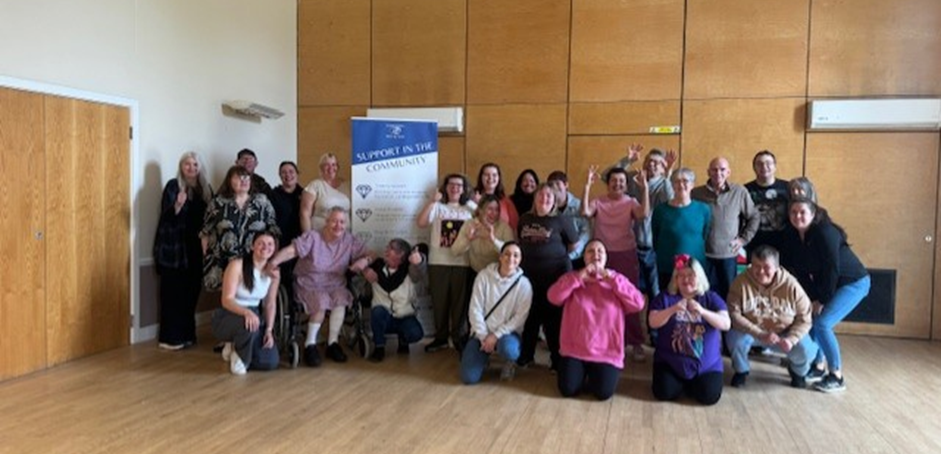
Held every Wednesday morning, Shine offers a welcoming space for service users to come together through their 1-to-1 support, meet others in the community, and take part in a range of fun and meaningful activities. From conversation and creativity to connection and confidence-building, Shine is all about bringing people together in a supportive, inclusive environment.

Read on for an article from Emma to see how this small group is making a big impact.


Shine (Bright Like a Diamond): A Celebration of Connection, Growth, and Joy

In June 2024, we proudly launched Shine (Bright Like a Diamond)—a social inclusion group created to bring our Diamond service users together in a welcoming, supportive space where lasting friendships and meaningful connections could blossom.

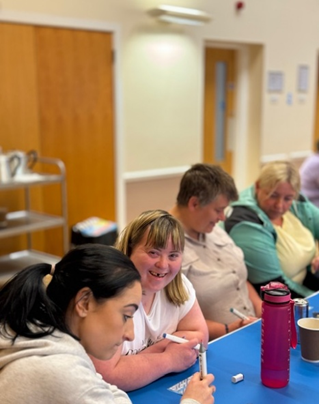
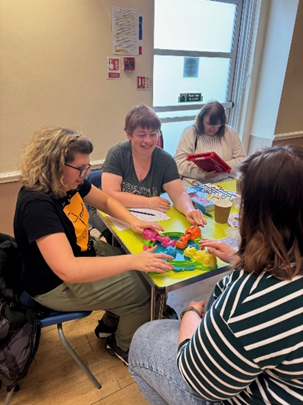
From the very beginning, Shine has offered a vibrant mix of weekly activities designed to spark creativity, build confidence, and develop key life skills—all while ensuring our service users remain in 1-to-1 support. Whether it’s a lively game of bingo, a morning of crafting, dancing to favourite tunes, or a relaxing round of dominoes, every session is filled with smiles, laughter, and a sense of belonging.

Each week, we introduce something new to keep our sessions fresh and engaging. We’ve gone on Easter egg hunts to build observation and numeracy skills, held sports days that encourage teamwork and coordination, and introduced new colouring sheets every week—a clear group favourite!

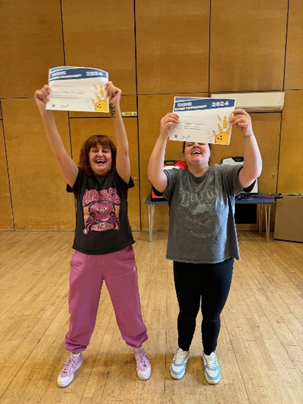
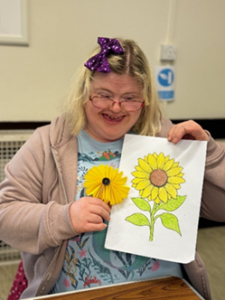
In fact, research shows that colouring can be a powerful tool for reducing stress and anxiety. It’s not just fun—it’s healing. Just ask Kirsty, one of our incredible service users, who proudly shows off her colourful creations and sunflower made with support from our team.

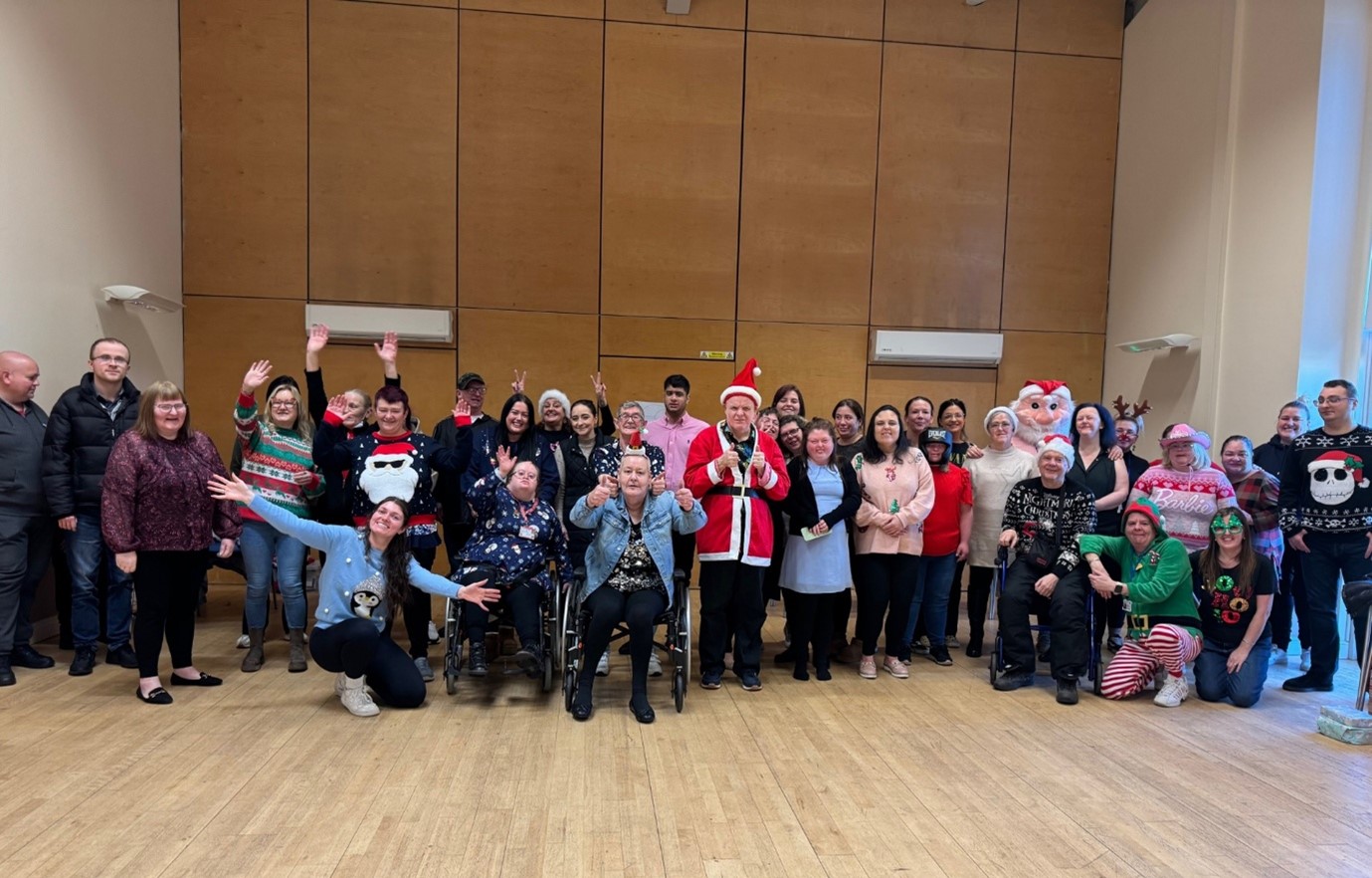
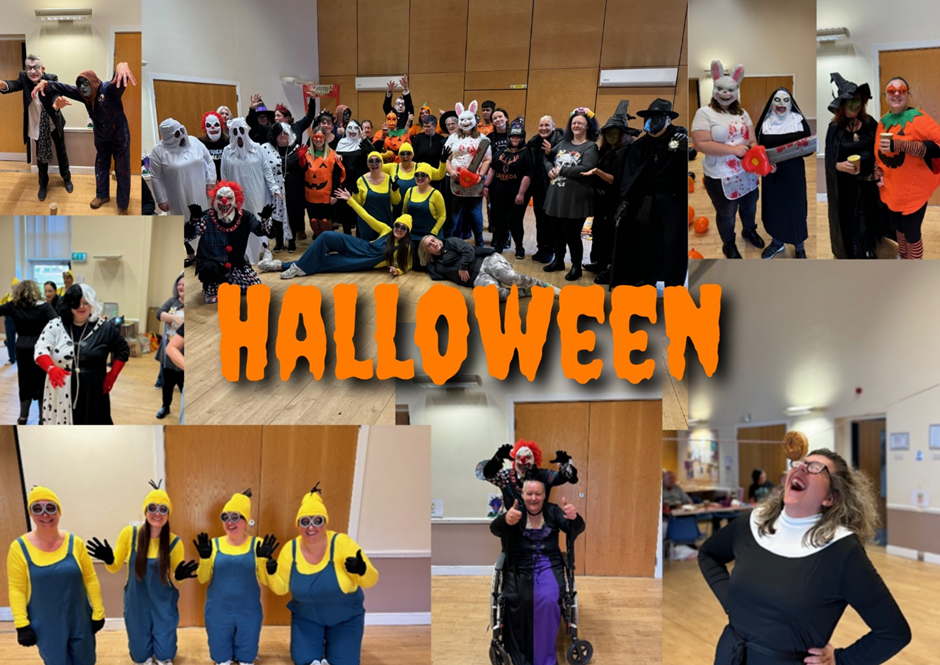
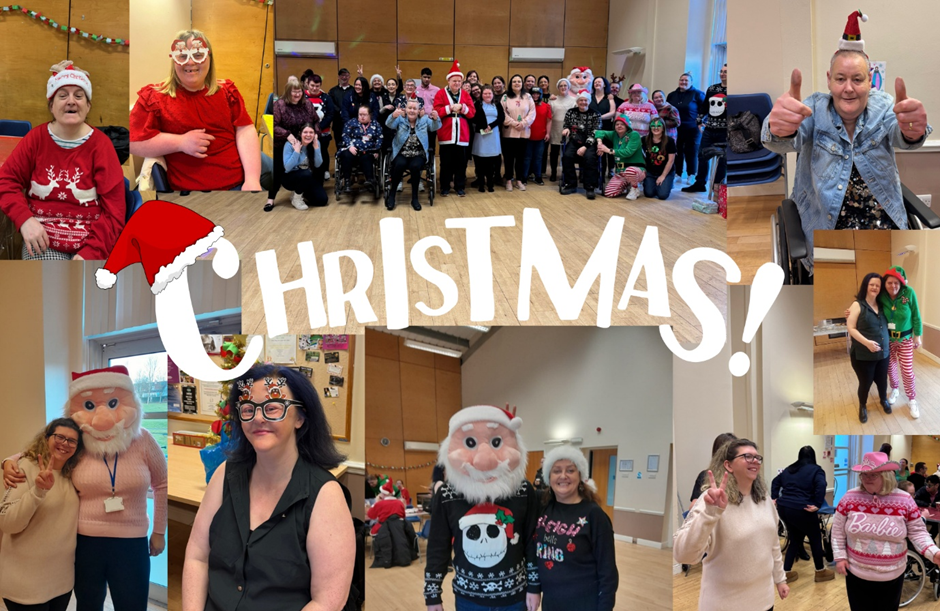
Our celebrations go beyond weekly sessions. We’ve hosted unforgettable Halloween and Christmas parties, filled with fun, laughter, and unforgettable memories. Halloween saw our service users in their spookiest costumes, enjoying apple dooking, “donut on a string,” and dancing the Time Warp.

For Christmas, DJ Disco John (a talented service user) kept the dance floor alive with music, while party games, a festive buffet, and a surprise visit from Santa made the season even brighter.

But the true magic of Shine lies in the remarkable personal transformations we’ve witnessed.

One young woman with a learning disability struggled deeply with emotional regulation and social interactions when she first joined. She expressed discomfort with anger and outbursts, often shouting at staff or acting out physically. One difficult moment involved her hitting another woman with a trolley simply because she felt overwhelmed and didn’t know how to communicate it

Today, she greets others with warmth and kindness, using polite language and asking for space when needed. She’s even taken on a caring role, looking after another group member with Down Syndrome—offering her a drink, making sure her wheelchair fits comfortably at the table, and singing alongside her during karaoke. Her growth in empathy, emotional control, and communication is extraordinary.

Another remarkable story comes from a 59-year-old service user with a severe learning disability, living independently in the community. When he first joined Diamond, he suffered from deep loneliness and anxiety, which led him to pick at his skin and furniture. All he wanted was to “make friends.” Now, he arrives at Shine every week with a cheerful hello for everyone. His anxiety has decreased dramatically, and he’s no longer self-harming or damaging his home. Instead, he’s our beloved karaoke star, lighting up the room with his joyful rendition of “Gimme! Gimme! Gimme!”.

Week after week, Shine has become more than just a group—it’s become a community. A place where friendships are forged, laughter is shared, and growth is celebrated. The positive changes we’ve seen in our service users have been nothing short of inspiring.

We are endlessly grateful to our dedicated and compassionate staff, whose care and commitment make Shine possible. Looking ahead, we hope to grow this beautiful community even further — welcoming more service users, adding new ideas, and creating even more opportunities to celebrate individuality, achievement, and the power of human connection.

At Shine, everyone is welcome, and everyone shines.

Celebrating Nicola Dow’s Impact

Celebrating Nicola Dow: A Champion for Care, Collaboration and Digital Innovation

As Nicola Dow steps down from her role as Branch Chair for Scottish Care’s East Renfrewshire and Renfrewshire region, we reflect on her exceptional leadership and her contributions to both local advocacy and innovation. Nicola has been a passionate voice for social care, a supportive colleague across the sector, and a key player in driving forward meaningful digital change at Pacific Care.

Nicola will soon leave her home manager role at Stanely Park, a residential care home in Paisley, and take up a new role managing a larger, nursing-led care home—a natural next step in a career. We are grateful for her time, energy and insight as Branch Chair, and wish her the very best in this new chapter.

Advocating for Change: Why She Stepped Up

Nicola became involved with Scottish Care after completing her Queen’s Nursing Programme, seeing an opportunity to use her skills and voice beyond her immediate workplace.

“It felt natural for me to branch out to the wider care home community so I could champion the amazing work happening in our sector—and try to influence the change needed to improve care home environments.”

Her time as Branch Chair helped her develop new levels of confidence and leadership, particularly in advocating for social care at a local and national level:

“I’m most proud of my personal growth. I now feel confident speaking up for social care—something I wouldn’t have done before.”

“This experience has helped me believe in myself and in my ability to lead. It’s opened doors to new professional opportunities I never thought possible.”

Leading Pacific Care’s Digital Transformation

Alongside her advocacy work, Nicola played a key role in Pacific Care’s digital transformation—an organisation-wide project that has reshaped how care is delivered and managed across all five sites. ­

In 2024, Pacific Care moved away from paper-based systems, introducing tools like Person Centred Software (PCS) for digital care planning, and RotaCloud for staff rostering. This shift was designed not only to improve efficiency, but also to enhance resident outcomes and staff wellbeing.

As highlighted in Pacific Care’s January 2024 feature article, Nicola’s leadership and digital expertise—alongside the dedication of several other key team members—played a vital role in supporting staff across multiple homes to embrace and adapt to the organisation’s digital transformation.

“Having worked in a fully digital environment before, I knew the benefits—but also the fear that comes with such a shift. Some staff were so anxious they considered leaving,” Nicola recalled.

“By being open about my own learnings, giving them time, and providing hands-on training, I helped build their confidence. Watching them go from overwhelmed to capable was one of the most rewarding experiences of my career.”

One standout improvement has been the implementation of RotaCloud, which gave staff greater autonomy over their shifts while reducing stress and out-of-hours communication.

“Everyone’s time is precious. RotaCloud allowed staff to manage extra shifts on their terms. It improved wellbeing and even had a positive financial impact.”

Care delivery has also improved thanks to real-time digital care notes, leading to more consistent documentation and allowing staff to spend less time on admin and more time with residents.

“The quality of record-keeping has gone up, and because it’s in real time, it reflects the care actually being given—not just what we remember at the end of a shift.”

Looking Ahead: Technology and the Future of Care

Nicola is a strong believer in the potential of technology to enhance both care delivery and resident engagement:

“We have residents FaceTiming their families and even placing their own Just Eat orders. Digital tools have brought families closer and helped us deliver truly person-centred care.”

“Technology isn’t just about efficiency—it’s about connection, confidence, and quality of life.”

With Thanks

Nicola’s time as Branch Chair has made a real and lasting difference. She has uplifted colleagues, advocated for better systems, and led by example—always with humility and warmth.

We extend our deepest thanks to Nicola for her commitment to Scottish Care and to the wider sector. We look forward to seeing what she does next—and we know she will continue to lead with purpose and heart.

Original article: https://www.pacificcare.co.uk/news-events/2025/january/2024-pacific-care-s-digital-transformation/

Video interview with Nicola on the Queen’s Nursing programme: https://youtu.be/eSmYy4VfJ4o

2025 Social Care Nursing Survey Now Open

We’re pleased to launch the 2025 Social Care Nursing Survey, which was last undertaken in 2021. This important survey aims to gather unique and invaluable data on the numbers, experiences, and support needs of nurses in social care, as well as the organisations that employ them.

The insights gained from this survey will provide crucial nursing data not available elsewhere, helping to shape future strategies, advocacy and policies to better support nurses in social care. Your participation is crucial in ensuring we capture a comprehensive picture of the current landscape.

The survey is designed to be comprehensive yet straightforward, taking approximately 15-20 minutes to complete. To facilitate the process, having some basic information about your service, staffing and nurse employment in the last 12 months on hand before you begin will likely be helpful. Please ensure someone with sufficient knowledge completes the survey on behalf of your organisation.

Please click on the link below to access the survey: https://www.surveymonkey.com/r/socialcarenursing25

We encourage all services that employ nurses to complete the survey by the 31 July deadline. You are welcome to complete the survey at a service or organisation level, but please ensure there are not multiple responses which duplicate data.

If you have any questions or need assistance with the survey, please get in contact with Becca Young – [email protected].

Thank you for your continued support and commitment to improving social care through active membership of Scottish Care.

Renewing from the ground up: some observations and aspirations.

The last few weeks and indeed the month of June has seen a hive of activity in the world of policy and politics around health and social care. From the passing of the Care Reform Bill to the publication of the Health and Social Care Service Renewal Framework alongside the Population Health Framework there has been no shortage of meaty content for the policy and political anoraks to feast upon. Sometimes these actions can seem very distant from the delivery of care and support and even more so from the recipients of social care and health services. Just occasionally the words are worth taking note.

In what follows I want to reflect on some of the major events and key publications. Admittedly this is an initial reflection because I think it will take some time for the full range of ideas and plans to come to their fullest fruition.

The aspirations of the Health and Social Care Service Renewal Framework (2025–2035) are to be admired. Its aims are to take a fresh, strategic leap toward a future where Scotland’s health and social care are integrated, prevention-led, and digitally enabled. Few of us would find fault with this – grounded as they are on the almost forgotten work of the Christie Commission. They are anchored by five principles – Prevention, People, Community, Population, and Digital. Again, few would object to such a focussed analysis and the aspiration and tone which desires a decade of transformation.

Meanwhile, the Population Health Framework commits to closing health inequalities, shifting resources to upstream social determinants, and embedding place-based prevention. Together, these documents sketch a bold vision: health and care built not just for people, but around them.

I read both reports against the backdrop of the discussions I and others have been having which were contained in an Open Letter published in The Scotsman. This letter co-signed by leading clinicians and practitioners across health and social care in Scotland, and informed by Enlighten, argues that our system is “unsustainable, overly complicated, difficult to navigate” and goes on to demand long-term, collaborative reform.

I am therefore pleased that taken with the two published reports there seems to be an emerging ground for consensus and indeed collaboration.

The shared and consensual path forward seems to be growing, it is one which envisages:

  • Shifting services upstream, reducing reliance on acute care, and investing in community-based surroundings – all hallmarks of smart, modern reform.
  • Principled planning -moving from siloed service design to networked, population-focused approaches.
  • Digital-first ambition – a necessary catalyst for efficiency, access, and personalisation.
  • Cross-sector unity, echoed in the Open letter’s plea for independent, third sector and community partners to be full co-designers of reform.

There is real potential therefore in the work that has been and is being done, but it would be disingenuous of me to not also comment about what strikes me as being missing so far, not sufficiently emphasised and what steps, I believe, could make progress upon the shared aspirations more likely to succeed.

Bold though it is, the Framework underplays the significant contributive role which social care can deliver for Scotland and most importantly from my context for the health and wellbeing of all, not least older Scots. At times both documents are written too narrowly from an NHS centric lens – maybe inevitable given their origins, but I think they can also be improved by using a more communitarian and social care lens.

Take for instance Scotland’s world-leading and seminal legislation and basis of accessing social care, the Self-Directed Support (Scotland) Act (2013, amended 2025) and the new Care Reform (Scotland) Bill (passed June 10, 2025). Both I would suggest offer powerful mechanisms to enhance the Service Renewal Framework and the Population Health Framework – especially for improving care for older Scots in care homes and at home. Allow me to illustrate some examples:

Self‑Directed Support Act (SDS)

Choice and control are central and key principles of the way in which social care is delivered in Scotland. We have not always got it right and have not always adequately empowered those who use supports – but be that as it may – that these two principles are central is of very real importance and should not be brushed over or set aside. There was a long struggle to shape the SDS legislation and to base it on principles of greater personal autonomy, control, and empowerment. SDS enshrines the rights of people who receive care to shape how, when, and by whom it’s delivered – vital for older Scots wanting autonomy in diverse settings. The absence of its centrality in the new reports is more than disappointing.

One of the major goals of the new Framework is to re-align service provision – SDS if properly embedded (and not in the resource deprived and patchwork way of the moment) can genuinely shift services upstream by centring individual needs, supporting the Prevention, People, and Community principles of the Framework. The recently renewed statutory guidance for SDS can be used to extend SDS into care homes, enabling residents to even more than they do now to better direct elements of their own daily lives – activities, meals, visits – empowering both dignity and quality. Others and I have long argued that to limit the ability of older people in residential care to have full control through SDS is a limitation of their rights.

Then when we consider the Care Reform (Scotland) Bill again there are numerous and very real opportunities to bolster the reform goals.  This is most obviously the case in the new rights to respite for unpaid carers. Indeed, one of the glaring omissions of the Strategic Reform Framework is the virtual absence of recognition of the critical role unpaid carers pay in the whole health and social care economy. The new law mandates Councils to assess carers and provide funded breaks which aligns with the emphasis within the Framework upon prevention (by reducing burnout) and People (supporting caregiver health). It directly serves older Scots living at home.

The new Bill also furthers the aims of the new Frameworks in its emphasis on the continuity of care which secures stable care packages even if individuals move across local authorities -reducing disruption and supporting independence and long-term care planning, which is again in line with Population Framework aims.

But it is perhaps in the wider area of reform that there is an emphasis which can potentially help to properly achieve the aims of both the Frameworks. There is a real opportunity over the next few weeks and months for the whole system to build on the Bill’s emphasis on ethical commissioning, to embed Fair Work standards, sectoral bargaining, and clear progression ladders – all key to staffing stability across both home and residential care. And most obviously the significant digital and data achievements and innovations of aged care in both homecare and residential care have much to teach the wider acute, secondary and primary care communities.

The SDS Act and Care Reform Bill aren’t just legal formalities- they are levers to deliver the visionary ambitions of the Frameworks. When applied strategically, especially in care homes and homecare, they can drive real change, embed prevention, increase autonomy and frame stability and sustainability.

The Frameworks show we’re on track. The open letter tells us we have to be bolder, faster – and more inclusive. But without a social care turnaround and emphasis, I fear, this ambition remains incomplete. That will inevitably mean that we need political courage across the Parliament in making fiscal decisions that truly see the balance of care and support, move from the acute and secondary NHS hospital sector to community health and social care. We have talked about this for a long time and now we must see action rather than aspiration. How that is done and whether additional funding comes from re-alignment of other priorities is clearly a political decision, but the necessity of action should be inescapable. We cannot continue to see social care solely through an NHS lens, care and support in community offers true preventative advances and it is that we need to focus on rather than a singular obsessive focus on delayed discharge. Social care is more than that.

It is surely our mutual collaborative responsibility to now start to transform strategy into practice and go beyond grand vision to tangible improvement in the daily lives of older Scots. I am certain the independent and third social care sector is up for that task.

Donald Macaskill

Photo by Alex Skobe on Unsplash