Taking down a book at all ages: a reflection for Book Lovers Day

I’ve always been fascinated by reading and by books – yet they need not necessarily be one and the same. For at a very early age of life the idea of libraries intrigued me so much so that before I even went to school I had taken over part of the hall cupboard in my family tenement and together with my twin brother we had started to arrange and catalogue a few books in the house – we had created the Macaskill Library – less interested in what the books contained but more interested in them as physical objects of story and attraction.

As I got older, I began to develop an interest in the words inside the books, and part of that was confirmed when along with my classmates I was taken along the road to become one of the first members of the junior section of the newly opened Hillhead Library on Byers Road in Glasgow. I had never been in a building quite like it – modern, designed and technological and yet at the same time an oasis for somebody who wanted to learn and to gain knowledge.

Over the years my initial fascination with libraries has deepened and I’ve had the pleasure of visiting some of the most amazing libraries in the world, from the Vatican to the New York Public Library on 5th Avenue, to the Bodleian in Oxford and of course the beautiful National Library of Scotland in Edinburgh.

I find myself thinking about libraries and their meaning today because it is Book Lovers Day. And as I reflect I cannot but think of one of the libraries which has left a significant mark upon me and that is the Public Library in Kirkwall, Orkney where I spent many a day over 30 years ago exploring the shelves, sitting quietly reading and chatting to some of the regulars.

One of the folks I met there was called John who was well into his eighties when I met him and yet virtually every day he came to the library. It was in truth partly because of the social aspect of seeing familiar faces and friends; it also meant that he managed to get a bit of warmth in the day, but it was more than that and when I got to know him a little bit I asked him why he came every day. Immediately his response was because “I want to read something new every day until I cannot read anymore. I used to think that reading was for the bairns, but I now know that reading is for all ages.”

What a truth there is in that statement and yet I cannot but reflect on the fact that the ability ot exercise such an aspiration these days is affected by the closure of so many public spaces for reading – our libraries – which sadly are amongst the first public services to be reduced or cut in times of austerity – there are a fewer and fewer places for all people, of all ages to simply sit and read and to enjoy the experience.

Libraries in Scotland have long been engines of community, learning, and social mobility. Yet as I said above, we are losing them at a terrible rate with recent reports showing closures – 42 since 2014 – and cuts to staffing and funding across rural and urban areas, raising alarm among authors and older age advocates.

This is I think is more than disappointing because in many senses we’ve lost an understanding of just how significant reading is for individual and community health and well-being.

I don’t think it was by accident that Scots were famous for the requirement that every child should be able to read and write and that reading had been central to our cultural and national character. Parish schools, universities and public lending libraries like one of Scotland’s first- the Kirkwall Library, established in 1683 – ensured that books became a public resource for growth and learning.

This tradition continues: cultural engagement research in Scotland shows that people aged 75+ are more likely to read than younger groups – underlining that reading remains a valued practice well into older age.

Insights from Scotland’s contemporary wellbeing research emphasise reading’s role in mental and emotional health. A Scottish Book Trust/University of Edinburgh project found that reading fiction in older adulthood evokes hope, nostalgia, humour and identity – helping build meaning and emotional connection. Reading for pleasure also promotes empathy, resilience, and psychological health across the lifespan.

Intergenerational schemes like Scotland Reads unite school pupils and older adult volunteers in reading and story‑sharing. These projects strengthen confidence, literacy, empathy and social networks in both generations – with older volunteers especially reporting increased self‑esteem, new friendships, and purpose through engagement.

Reading is not merely a pastime – in later life it becomes a profound lifeline. Our response to the challenges of ageing and cognitive decline are rightly sophisticated and technological these days but also have to acknowledge and recognise that the simple art of reading has huge benefits to individuals of any age.

Indeed a 14-year Taiwanese study found that older adults who read weekly had about half the risk of cognitive decline compared to infrequent readers – across all education levels. Reading strengthens memory and a US study has shown that engaged leisure reading can improve older adults’ memory skills, laying a foundation for longer-term mental resilience.

The truth of John’s statement to me in Kirkwall is that we keep ourselves healthy by remaining curious and by stretching our imaginations and few things enable us to do that better than by reading books – and as one study in the Times showed a couple of months ago – that while general curiosity declines with age, specific curiosity – such as learning through reading – actually increases after midlife, with benefits for brain health and well-being. You really can teach an old dog new tricks!

We have of course to recognise that there are very genuine barriers which prevent older people from keeping reading alive in their lives or even starting to read for the first time. One of those is the loss of public spaces for people to come together and what that means for the loss of social learning and exchange, but there are also practical issues which older readers face – but none of them cannot be addressed or dealt with.

Age-related eye changes – macular degeneration, contrast sensitivity and fatigue – make fine print and small font difficult so why are we printing less Large-Print books? While digital devices could help, many older adults feel anxious or lack confidence in using them; insufficient support leaves them preferring print – even if e-books might help access. We could improve lighting and produce more audiobooks and age sensitive podcasts which could all help overcome visual barriers and fatigue, making reading more accessible.

Even more critical and often ignored is the real prospect of developing geragogic learning and digital training. Older‑adult focused design education (geragogy) invites learners to set their own curriculum, with practical relevance and peer learning. Tailored support from digital educators helps older folks overcome technophobia with patience and practice.

On this August 9 – Book Lovers Day – let us affirm that reading in older age is far from a fading echo of youth. It’s a living presence: sparking curiosity, protecting memory, anchoring community, and offering lifespans richer in heart and mind.

Let us consider care facilities developing partnerships with public authorities or charities or businesses to have a small mini library open not to residents alone but to the wider community, including children and young people, not least in remote and rural parts of the country.

The challenges are real – vision, lack of location with the loss of libraries, technology, logistics – but the rewards, when older people are supported, are profound.

Reading isn’t a luxury – it is a potent companion for those years when wisdom and imagination can still flourish. As the poet W. B.Yeats, said in “When You Are Old”:

When you are old and grey and full of sleep,
And nodding by the fire, take down this book,
And slowly read, and dream of the soft look
Your eyes had once, and of their shadows deep;

How many loved your moments of glad grace,
And loved your beauty with love false or true,
But one man loved the pilgrim soul in you,
And loved the sorrows of your changing face;

And bending down beside the glowing bars,
Murmur, a little sadly, how Love fled
And paced upon the mountains overhead
And hid his face amid a crowd of stars.

So let us to take down the book in the later years – to read slowly, to remember, to dream – and in doing so, to live again the fullness of a life shaped by love and letters.

Donald Macaskill

Care Inspectorate – Digital Transformation Project

Please see below for the latest updates from the Care Inspectorate on Stage 2 of their Digital Transformation Project.


We’re on a digital transformation journey 

At the Care Inspectorate, collaboration is at the heart of everything we do. That same approach is guiding us as we move through our Stage 2 Digital Transformation Project, a major step forward in building a more efficient, secure, and sustainable way of working.

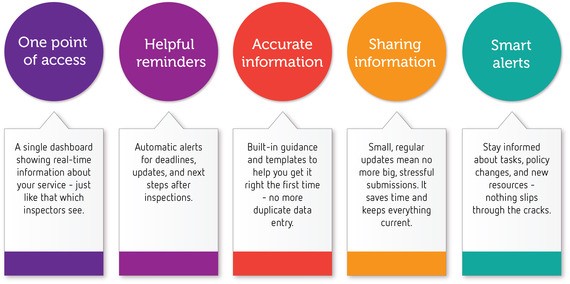
We’re replacing outdated systems with a modern, easy-to-use digital platform that will support key functions like registration, complaints, notifications, and inspections.

It will:

  • make collaboration easier
  • improve how we manage and use data
  • help us spot issues early and respond faster
  • strengthen public confidence in care services.

We’re currently testing early versions of the new platform with real users to make sure it meets your needs. This is a shared journey, and your input is helping shape a system that works better for everyone across the sector.

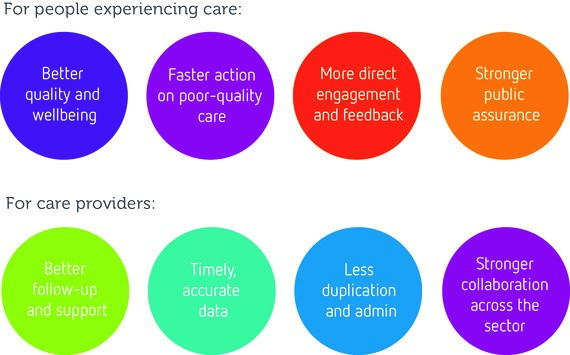
Benefits at a glance

Designed with you, informed by you

We’ve followed the Scottish Approach to Service Design, starting by mapping how things work now, then listening to providers to understand what’s working, what’s not, and what needs to change.

Your feedback has shaped the new platform, especially the Service Portal, which will be your main hub for working with us.

What’s coming next


What you told us during Notifications service design

When we carried out service design on the notifications system, you told us it’s hard to search, unclear, and not mobile-friendly. Here’s what you said you need:2

  • a simple way to find past notifications
  • clearer language and guidance
  • mobile access and a more intuitive layout
  • smart tools to help pick the right form.

We’re using your insights to build a system that’s easier, faster, and works the way you do.

How to get involved

Your voice has shaped this work, and we want to keep it that way.

We’re keen to hear from anyone with an interest in shaping the future of our digital services. Whether you’re a care provider, a manager, someone who’s recently registered a service, or someone with accessibility needs, your perspective matters.

If you’d like to take part in our user research or testing, we’d love to hear from you.

To get involved, just email us at [email protected] or complete our short form on Microsoft Forms.

We’ll keep you updated throughout the project and continue to involve you as we build and improve. We can’t wait to hear what you have to say!

Courageous Leadership: Leading with conscience, curiosity and commitment

Not for the first time and I suspect not the last – I found myself standing in an airport bookshop a few weeks ago – looking at the array of books to entice the traveller to summer reading. I was struck as I always have been by just how many books there are out there on leadership and management – indeed it is a theme I have spoken and written about a fair deal in the past. This year, however, one word seemed to be commonplace both on the covers and inside some of these books and that is ‘courage’ or ‘courageous’. Everywhere I looked there seemed to be work on courageous leadership. It started me off on a spell of reflection and consideration as to what if anything such concepts might mean for or speak to social care in Scotland at this time.

One online definition from Google – much changed by Ai this past week- told me that:

‘Courageous leadership is a concept in leadership thought that emphasises the moral and ethical bravery required to lead with integrity, especially in the face of risk, uncertainty, or opposition. The main aspects include, moral courage, authenticity, resilience, an empowerment of others and long-term vision over short-term gain:’

Not much to disagree with there and indeed concepts of courage in leadership are age old even if books on the theme only started to appear with volume in the 1990s onwards.

But what does the recent resurgence of the idea of ‘courageous leadership’ have to say to social care and Scotland today?

We are certainly living in days of fragility and uncertainty. Every other day I get an email from someone either working in or providing services which raises concerns about the state of the sector and a sense of despair that no-one seems to be doing anything about it, except talking.

Indeed this past week I got an email from colleagues at Alzheimer Scotland which highlighted that their own ‘Stop the Cuts’ online campaign and petition had reached 10,000 signatories – a campaign which I would commend to you and which is seeking to draw attention to the withdrawal of critical support and care from thousands of individuals across the country – all of it happening out of sight and out of mind – as a result of savage cuts to budgets.

And yet in these days of intense uncertainty, when so much feels fragile, it is easy to lose ourselves in the immediacy of crisis and miss the deeper task that lies before us. That task, in Scotland today, is I believe first and foremost to ensure that older people are not only cared for, but valued, cherished, and enabled to flourish. Achieving this will demand not just competence, not just vision, but courageous leadership – in our politics, in our social care, and in the communities where older people live their lives.

Brené Brown, in one of the better recent books on courage in leadership, Dare to Lead, reminds us that:

“The courage to be vulnerable is not about winning or losing, it’s about the courage to show up when you can’t predict or control the outcome.”

That, I would argue, is precisely the challenge facing leaders in Scotland today. We cannot predict the future of social care funding, of demographic change, of the pressures on health and wellbeing. But we can – and must – show up with honesty, humility, and bravery. The problem all too often is a denial of truth, a willingness to take the easy route and arrogance of false assurance.

Too often, our discourse around older people drifts into deficit: cost, dependency, burden. This is not only morally wrong, but also socially and economically short‑sighted.

Courageous leadership, then, is the willingness to confront the uncomfortable truths: that our current systems are not adequate; that too many older Scots live with loneliness, poverty, or untreated ill‑health; and that tinkering at the edges will not suffice.

How you move from the inadequacy of the here and now to a future orientation is what matters and simply more of the same will not do the job. Something political leadership needs to be hearing as we move towards an election next year. Because courageous leadership in social care requires political bravery rather than tramline party conformity. It means telling hard truths about taxation and public spending. It means resisting the seduction of short-term fixes in favour of long-term transformation. Olaf Groth, writing in The Great Remobilization, warns that leaders in our time cannot simply manage disruption – they must anticipate and re design for it. Scotland’s ageing population is not a looming crisis to be feared, but a predictable reality to be planned for with creativity, compassion, and courage.

Another writer I have come across, Kirstin Ferguson, in her recent work Head & Heart: The Art of Modern Leadership, calls on leaders to bring both rational clarity and deep empathy to their roles. This balance is essential in social care. We must be analytical about budgets, workforce planning, and integration with health services – but we must also be profoundly human, listening to older people’s voices, respecting their dignity, and recognising their aspirations.

I often say that leadership in social care is not about heroic acts, but about everyday bravery. The carer who chooses to stay an extra 15 minutes with someone who is lonely. The manager who challenges unfairness even when it risks unpopularity. The politician who argues for investment in prevention, knowing the electoral rewards may be minimal. These are acts of what Brown calls “whole‑hearted leadership.”

But let us be clear: the stakes could not be higher. If we lack courage, we will condemn too many older Scots to lives of diminished wellbeing. If we embrace it, we have the chance to create a Scotland where older people not only live longer, but live better – where health, dignity, and purpose are not privileges, but rights.

We cannot avoid the realities of ageing. We cannot skirt around the inadequacies of current provision. We must go through – with vision, with honesty, with courage. And in doing so, we may yet build a Scotland where ageing is not feared but celebrated, and where courageous leadership makes older people’s wellbeing a cornerstone of our shared future.


As the great contemporary Nigerian born poet Niyi Osundare writes in ‘The Leader and the Led.’:


The Lion stakes his claim

To the leadership of the pack


But the Antelopes remember

The ferocious pounce of his paws


The hyena says the crown is made for him

But the Impalas shudder at his lethal appetite


The Giraffe craves a place in the front

But his eyes are too far from the ground


When the Zebra says it’s his right to lead

The pack points to the duplicity of his stripes


The Elephant trudges into the power tussle

But its colleagues dread his trampling feet


The warthog is too ugly

The rhino too riotous


And the pack thrashes around

Like a snake without a head


“Our need calls for a hybrid of habits,”

Proclaims the Forest Sage,


“A little bit of a Lion

A little bit of a Lamb


Tough like a tiger, compassionate like a doe

Transparent like a river, mysterious like a lake


A leader who knows how to follow

Followers mindful of their right to lead”


© Niyi Osundare 2

THE LEADER AND THE LED (Niyi Osundare)


Donald Macaskill
Establishing an Older Persons Budget Group (OPBG) : an extended thought piece.

Scotland is experiencing significant demographic change. By 2045, one in four Scots will be over the age of 65. This shift demands a fundamental rethink of how we plan, deliver, and finance public services. Many bodies not least the Scottish Fiscal Commission alongside the Accounts Commission have argued that such change is urgent and immediate.

Yet despite their increasing numbers and contributions, older people are often marginalised in fiscal policy debates. Or at worst are the object of casual stereotype and victimisation.

National and local government budgets are drafted and analysed with limited attention to how public spending affects the diverse lives of older people – especially those experiencing poverty, disability, rural isolation, or multiple disadvantages. Or if they are considered it’s solely through a health or social care lens and priority.

While organisations such as Age Scotland and Age UK campaign for the rights of older people, there is currently no independent group in Scotland, or the wider UK tasked specifically with analysing the impact of public budgets on older people in the way the Women’s Budget Group (WBG) does for gender.

In this slightly extended thought piece, I am presenting one argument, namely that the establishment of an Older Persons Budget Group (OPBG) would fill a glaring gap – providing independent, evidence-based analysis and promoting age-inclusive policy development across all levels of government.

A Scotland (and UK) where public budgets and spending decisions reflect the rights, needs, and contributions of older people – ensuring equity, dignity, and inclusion for all in later life should surely be the aim of any or all political and civic leadership.

I started this thought from the premise that Scotland’s governments were not spending enough on our older citizens given their demographic weight. But in truth that’s not as simple argument to make as it might appear.

On the one hand the Scottish Government and local authorities commit significant sums to older Scots. Amongst other areas of spend we have Free Personal Care for older adults alone which costs around £900 million per annum. Local authority adult social work and care budgets rose from £4.3 billion in 2023-24, and £1.7 billion was specifically allocated for social care and integration in the 2023-24 budget. This integration involves 31 health and social care partnerships managing almost £9 billion of health and social care resources, according to Health and Social Care Scotland. Recent announcements on Winter Fuel payments to pensioners account for £100–300 million, targeted at over one million older Scots.

These figures sit within a total Scottish Budget of roughly £59.7 billion for 2024-25. On the face of it, then, older people represent large recipients.

But it’s not quite as simple or perhaps as positive. Currently, adults aged 50+ make up about 40% of Scotland’s population, with those 65+ being around 22%. If spending mirrors population share, older age groups would attract 22–40% of budget allocations. But the reality is more complex. Free personal care and concessionary travel skew toward older cohorts. Health and social care combined outstrip many other areas.

However, other demographic groups also benefit: children’s services, education, rural subsidies, universal benefits. On a strict per capita basis, older people receive robust support – but not overwhelmingly so.

So are older Scots being discriminated against in terms of fiscal spend?

Discrimination implies unfair under-provision, the absence of appropriate support, or a lack of inclusion. On pure expenditure, older Scots are not neglected. Yet any regular reader of my blogs will know how frequently I bemoan the reality that age-based barriers persist in healthcare treatment, social inclusion, and service access. That many older people – especially older women – face loneliness, digital exclusion, and precarious housing. That even at policy levels such as the Equality and Fairer Scotland Budget Statements which promise assessment of impacts on protected characteristics – often age and in particular older age are rarely singled out

Thus, while older people benefit from universal schemes, equality of outcome and lived experience may still fall short.

The House of Commons reported that the Public Sector Equality Duty often fails older people, and protections are weak. Ageism in services is still widespread: and it stated that in the NHS older patients report lack of dignity, de-prioritisation, and negative stereotyping.

This isn’t overt financial discrimination but a systemic, subtle form of injustice, rooted not in budgets per se, but in how budgets are shaped and lived.

Spending on older Scots is not negligible – it is significant, even generous. But generosity without insight risks injustice. Older people are not a homogenous mass of pensions and care. They are individuals-  diverse, local, living incomplete lives.

Similar arguments have been in the past made about women and these led to the formation of Women’s Budget Groups across the UK.

The Scottish Women’s Budget Group (SWBG), echoing the UK-wide WBG, has long scrutinised the gendered effects of budget decisions, embedding gender-responsive and care-led analysis into fiscal debate.

Their approach has both been to undertake impact-focused scrutiny: asking how spending/policy affects different genders. They have presented a robust evidence base which has sought to link budget lines with outcomes not least on care, justice and equality. And they have done all those with consistent advocacy both in parliamentary terms and in the media.

I would contend that an Older Persons Budget Group (OPBG) could usefully apply this model.

There could be many benefits such as a re-elevation of social care, health, social isolation, housing – all key ‘aged’ lenses for budgeting. Just as the WBG surfaces gender gaps, an OPBG could uncover how budget lines – like transport, digital access, social care – tangibly affect different older-age cohorts.

It would help to ensure that age becomes an explicit equality consideration in impact assessments. And importantly it would promote targeted support for older subgroups such as unpaid carers, the very old and the digitally excluded.

It would also act to accelerate inclusion into existing duties. Scotland’s advancing Public Sector Equality Duty (PSED) would benefit from formal mechanisms to assess how policies affect older populations – much in the way WBG urged for gender.

An Older Persons Budget Group (OPBG), inspired by the Women’s Budget Group (WBG), could be a transformative body in Scotland – or across the UK – providing independent, evidence-based fiscal analysis to assess how public spending decisions affect older people. Here’s how such a group might operate, structure itself, and create impact, drawing from proven models and the specific needs of ageing populations.

The practical formation and focus of an OPBG would be important.

I would suggest it needs to be an independent, and non-partisan organisation perhaps hosted by a civil society or academic institution (e.g. linked to universities, Age Scotland, or a foundation). With open membership representing the breadth of age and interests from older age advocates, gerontologists, care providers, industrial and employment interests, the creative sector etc, the OPBG would require a mix of funding sources to ensure independence and sustainability.

I’m imagining a scenario I come across all too frequently for such an OPBG.

Let’s say the Scottish Government proposes a £2bn increase in health spending but flattens social care funding. An OPBG could show that older people will benefit little from hospital-focused funding if care-at-home support declines and becomes unsustainable. It could highlight rural inequalities – where older people might be cut off from services due to reduced transport spending. It could publish a budget equity audit, noting that older women carers are disproportionately affected. And in turn it could advocate for reallocation: e.g. £100m redirected to community care and tech access for isolated pensioners.

The measure of a mature democracy is not in how loudly it applauds the aged, but in how honestly it budgets for their dignity. If we can gender our budgets, why can’t we age them too? An OPBG would not simply count pennies; it would count people – in their wisdom, their contribution, and their human worth.

So, let’s start the desire for a more equitable budgetary process which considers age as essential. And in words I have often quoted let us remember Joe Biden when he said: “Don’t tell me what you value, show me your budget, and I’ll tell you what you value.”

Donald Macaskill

Photo by Jakub Żerdzicki on Unsplash

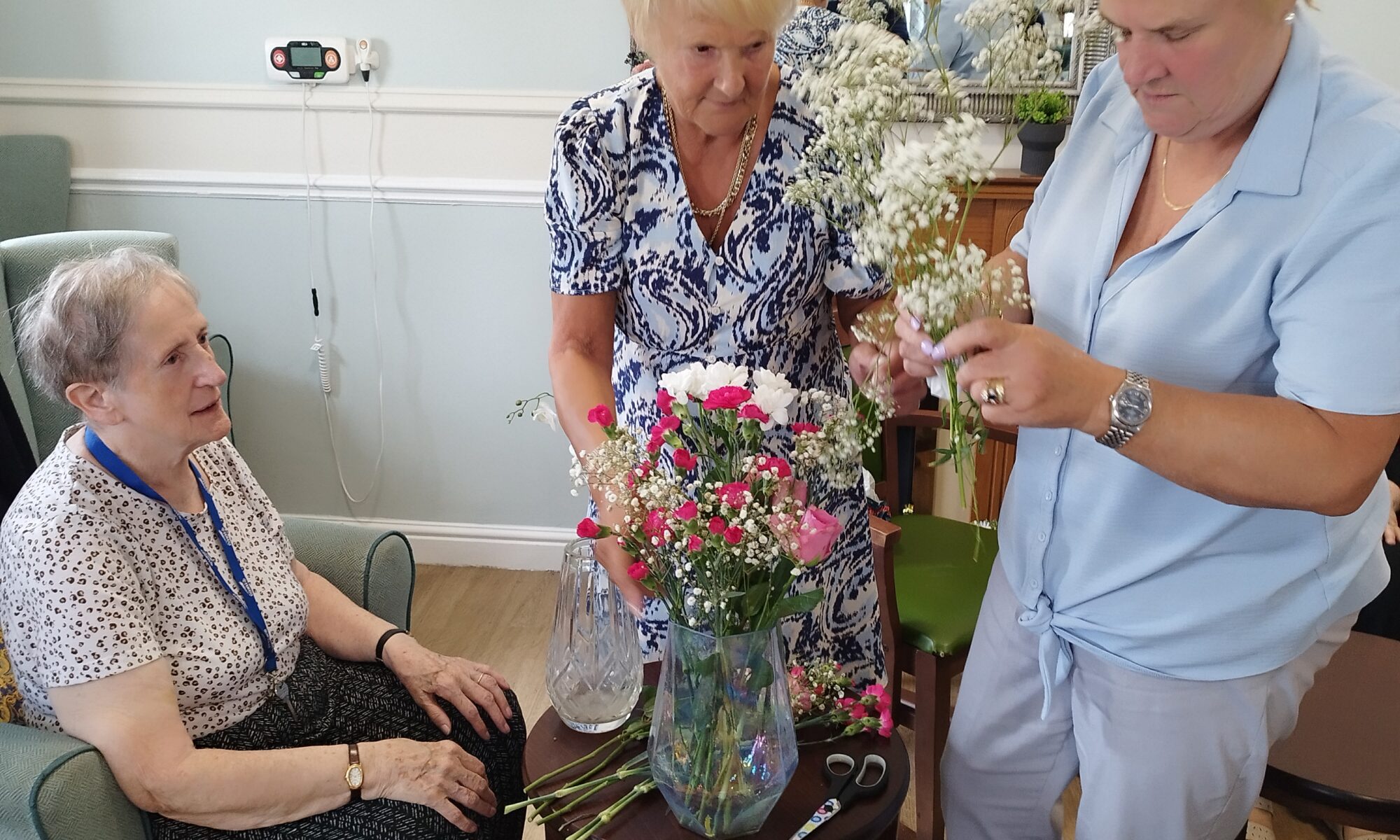
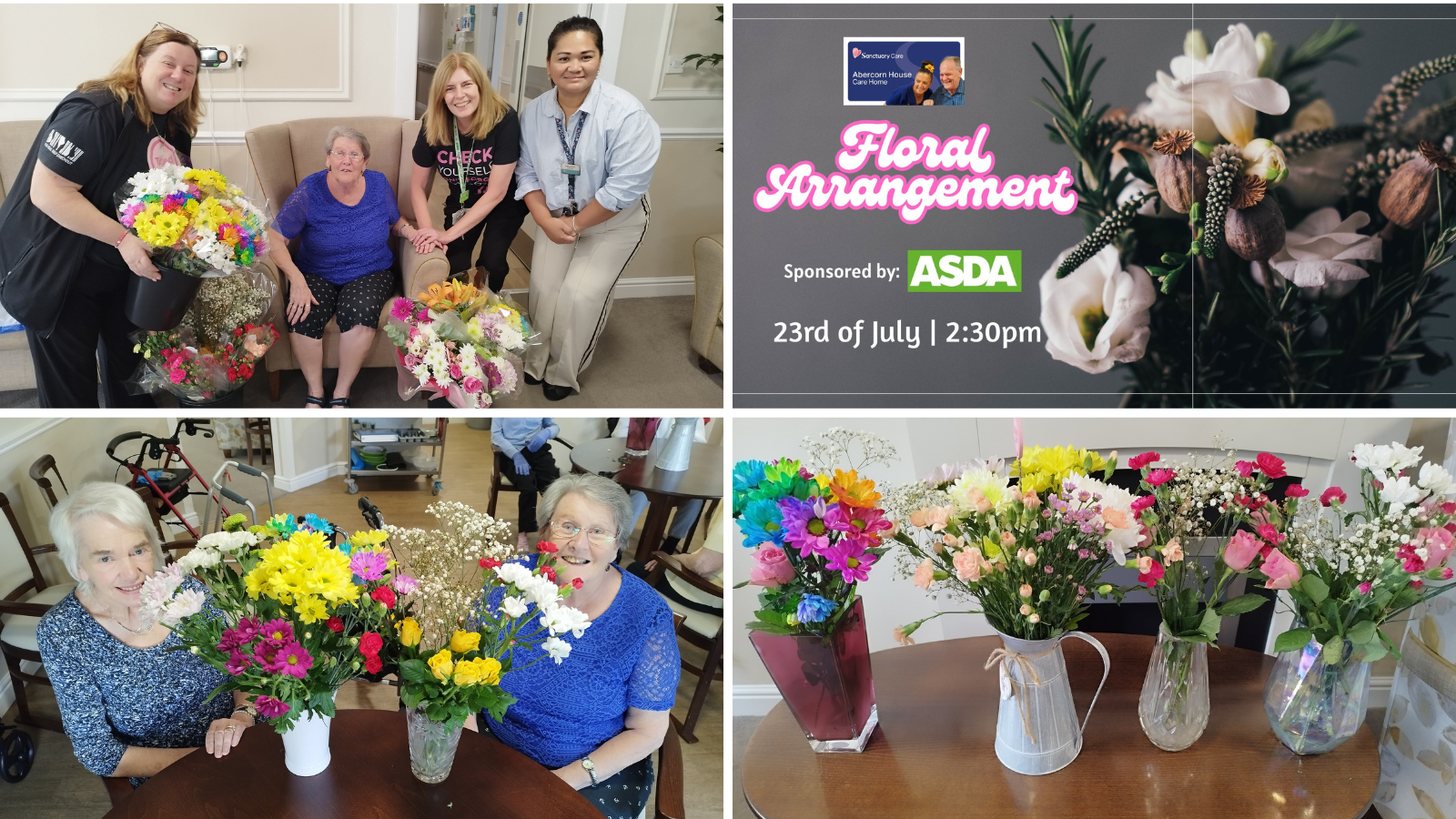
Flower Arranging at Abercorn House Care Home

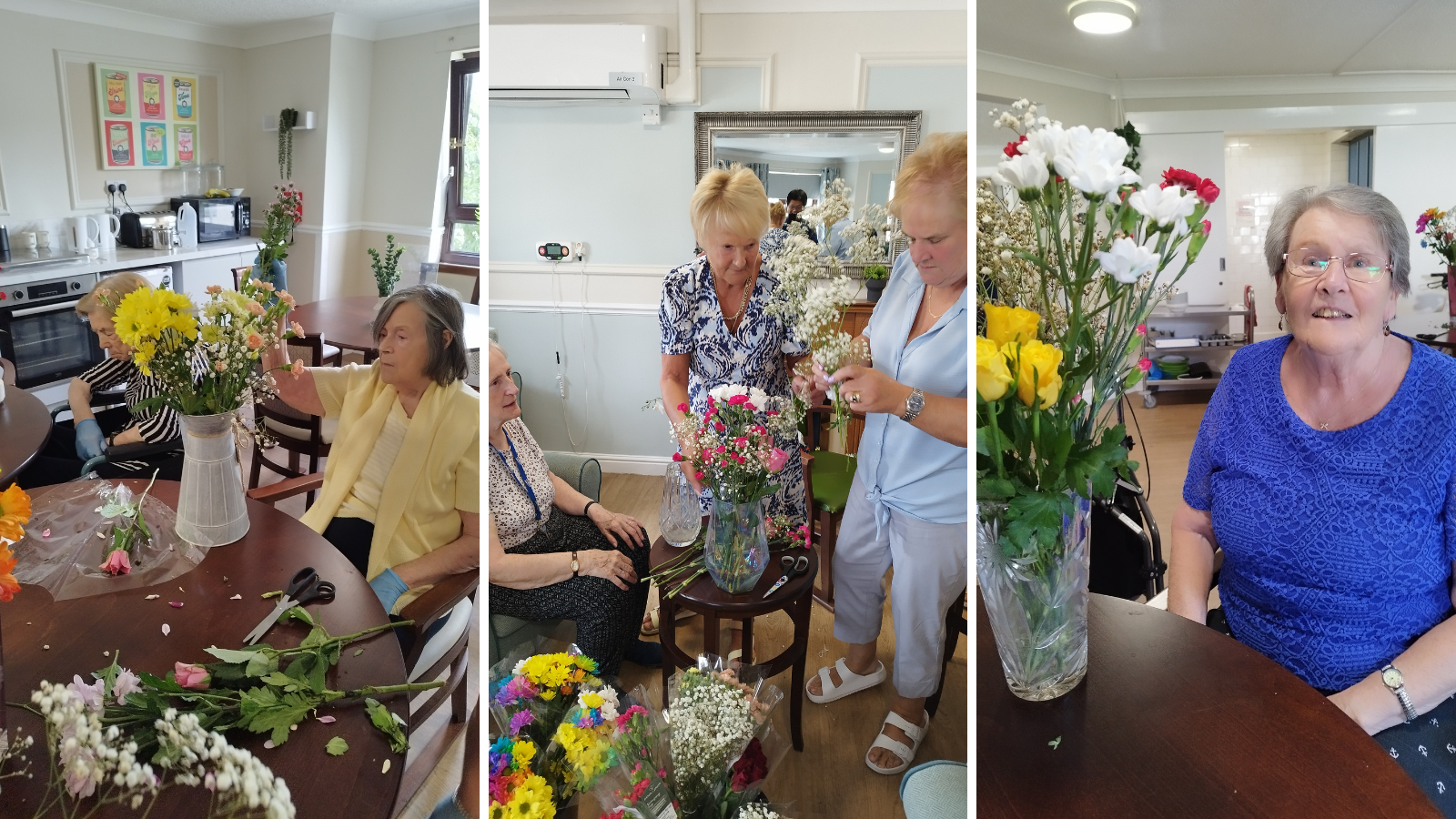
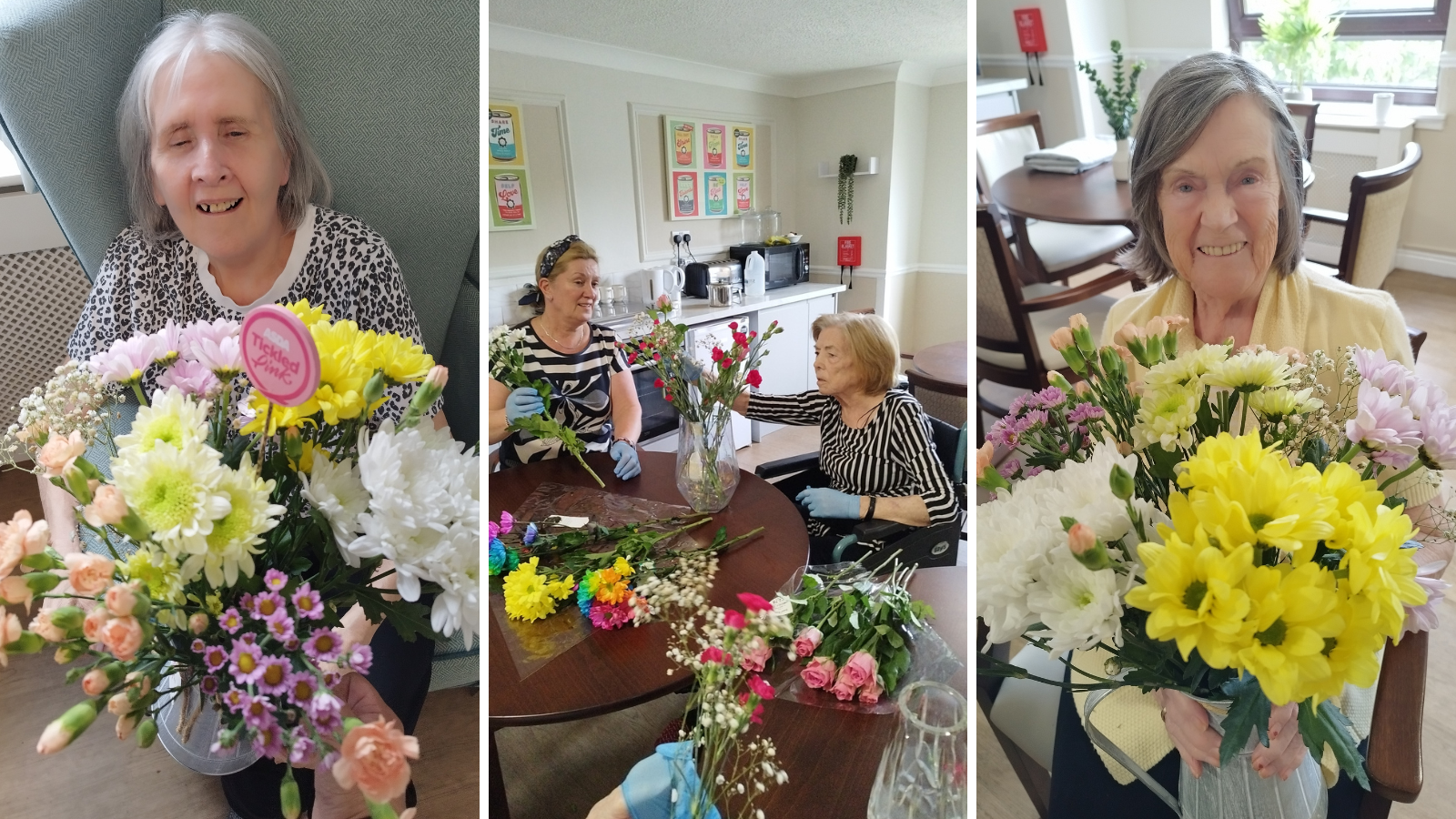
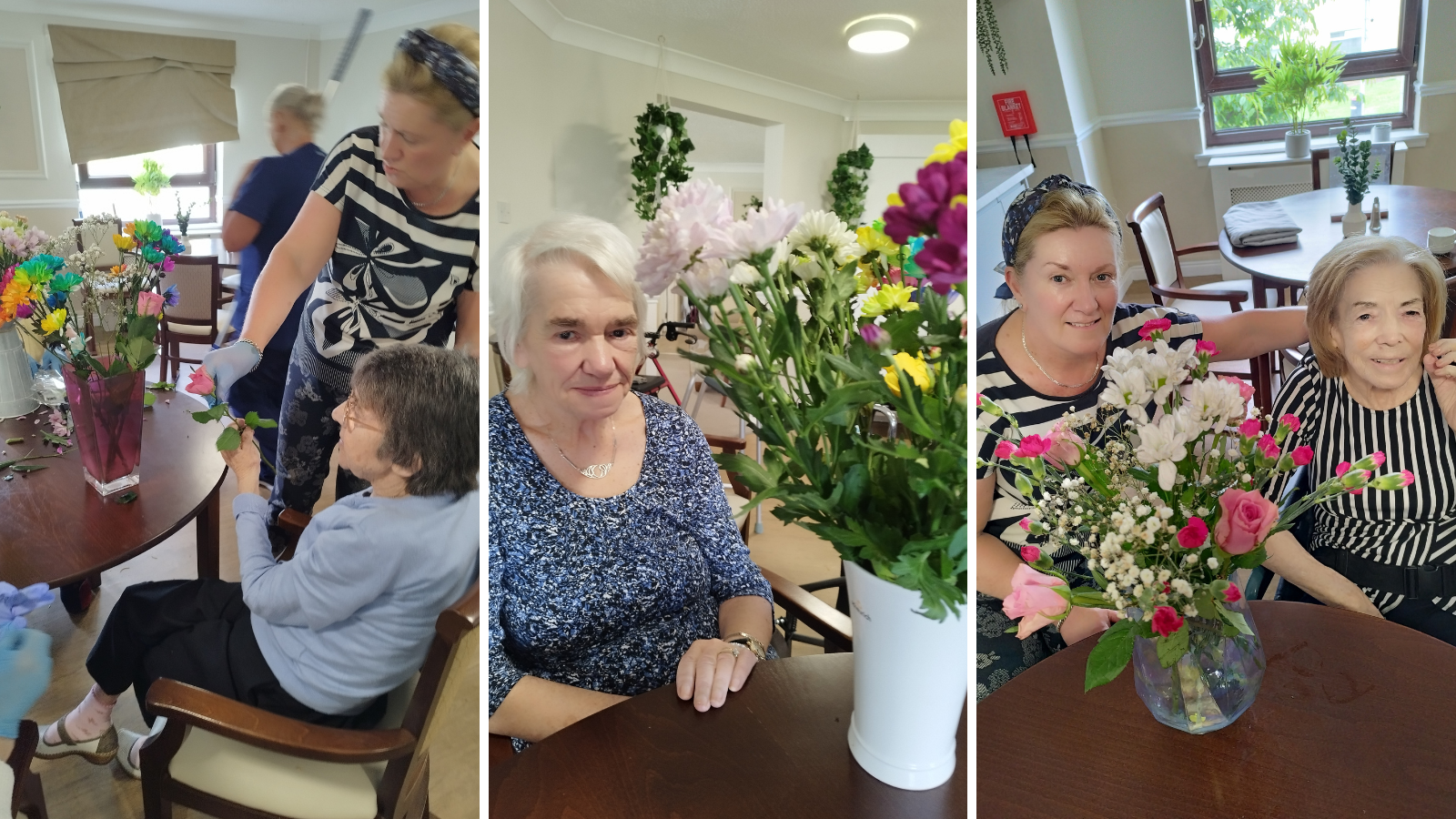
A big thank you to Asda Hamilton for helping make a recent flower arranging day at Abercorn House Care Home truly special. Residents, families, and staff filled the home with colour, conversation, and creativity, all thanks to the kind support of local store manager Gillian, who personally delivered the flowers and joined in the fun.


Bringing Joy in Bloom: A Special Day of Flower Arranging at Abercorn House Care Home

On Tuesday 23rd of July 2025, Abercorn House Care Home was filled with colour, fragrance, and joyful conversation as we hosted a special flower arranging day for our residents and their loved ones, a heartwarming event made possible through the generous support of Asda Hamilton Branch.

Thanks to the kindness and community spirit of Gillian, the store manager at Asda Hamilton, the day became more than just an activity. Gillian personally delivered a beautiful selection of fresh flowers and supplies to the home, and took the time to chat with our residents, bringing smiles and warmth that stayed long after the flowers were arranged.

Residents from both of our units participated in the event, joined by their families and the care team, turning our lounge into a vibrant workshop of creativity and laughter. For many, the activity stirred fond memories of gardens, favourite flowers, and times spent arranging blooms in years gone by. The presence of loved ones made the occasion even more meaningful, reinforcing the connection between care, community and personal well-being.

This event is perfect example of how partnership with local organisations can create special moments for those we care for. We are truly grateful to Gillian and the Asda Hamilton team for helping us make the day so memorable.

At Abercorn House, we believe that everyday offers an opportunity to enrich lives, and on this day, we did just that, one flower at a time.

A Winning Day Out for Abercorn House Residents

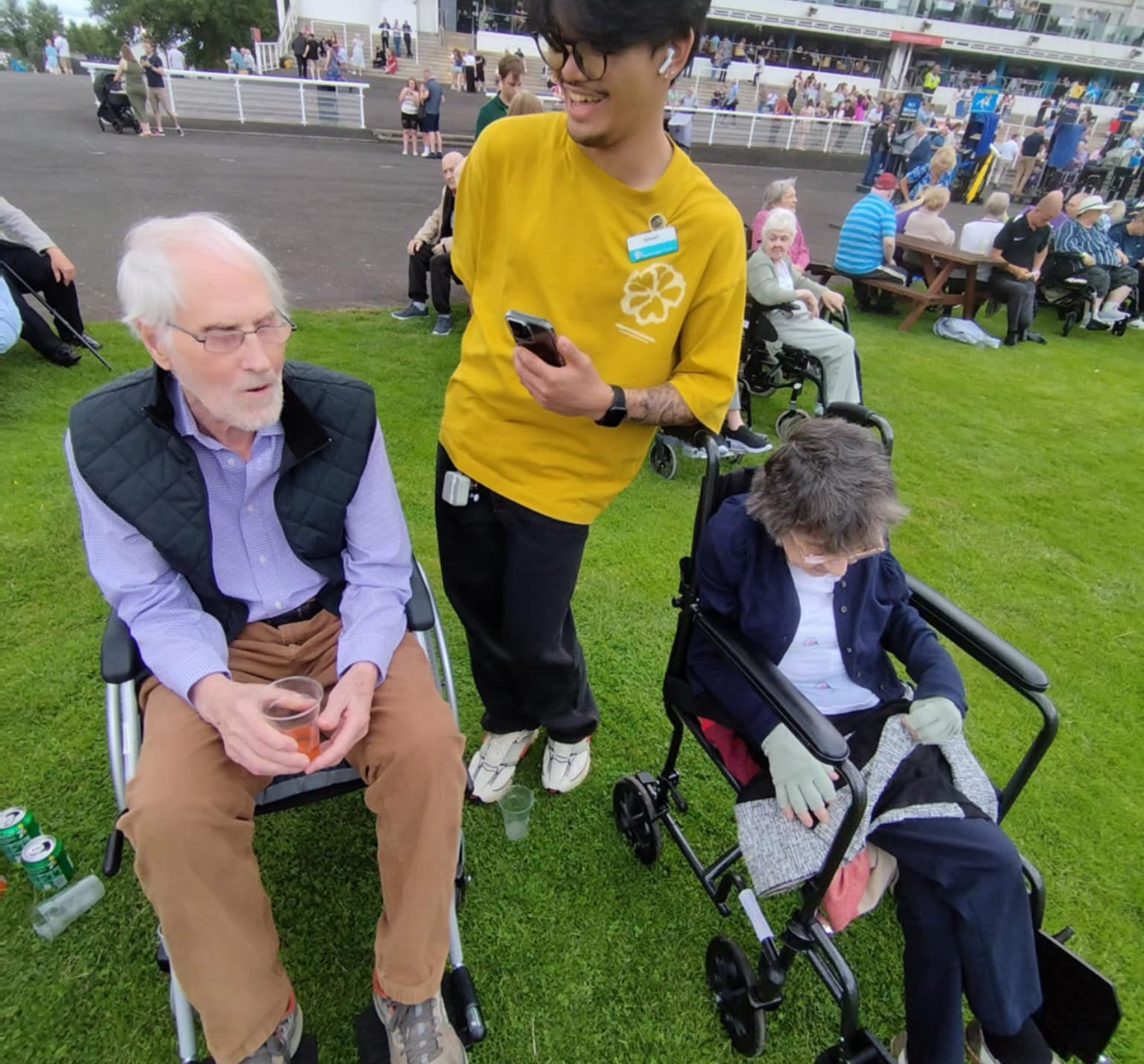
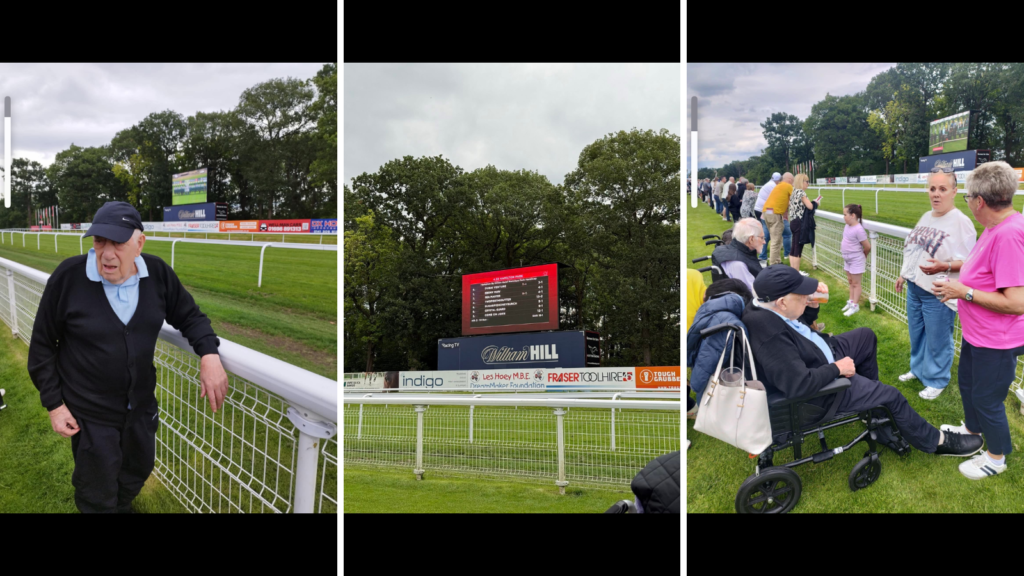
We’re thrilled to share a joyful story from Abercorn House, where residents enjoyed a fantastic day at Hamilton Racecourse, joined by the dedicated activities team.


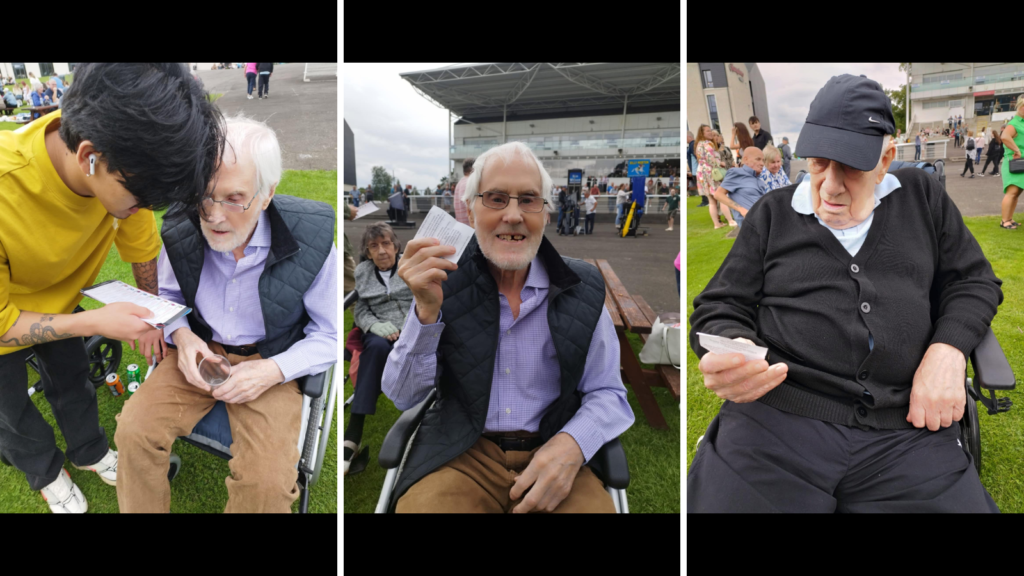
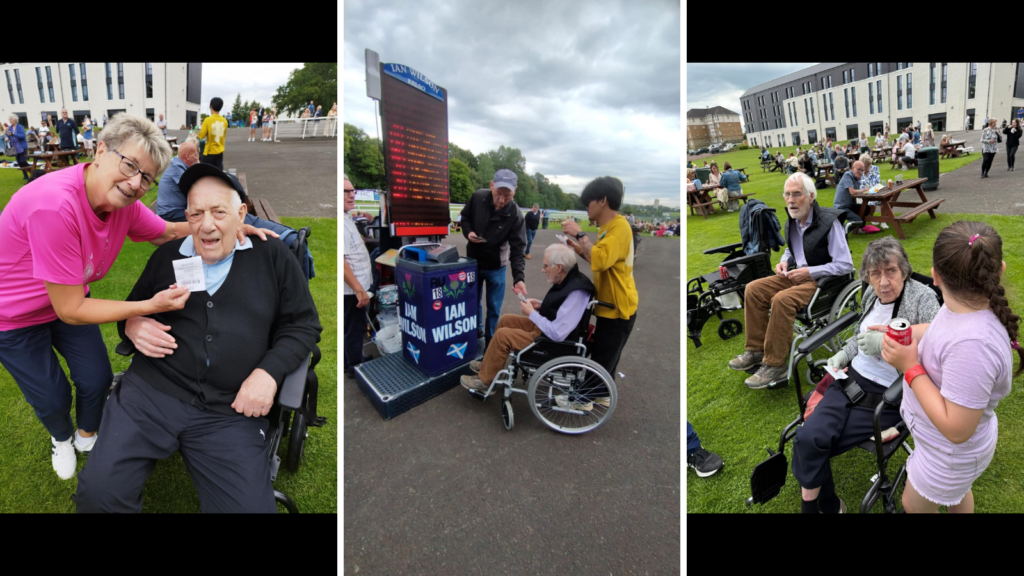
A Day at the Races-Bella, Tom, Jim and Joan Join the Betting Bachelors at Hamilton Racecourse!

Last Friday (18 July 2025), spirits were high as Abercorn House residents Bella, Tom and Jim enjoyed an unforgettable day out at Hamilton Racecourse, joined by our fantastic activities team members Von and Rohwell. The outing brought joy, laughter, and a special kind of magic that made it a truly memorable day for all involved.

Tom, who hadn’t been feeling his best in the days leading up to the trip, had a noticeable lift in his mood. Being out in the fresh air, surrounded by good friends, and soaking in the lively atmosphere of the races truly brought a spark back to him. And that spark turned into full blown cheer when he and Rohwell picked the winning horse in one of the races! With cheeky grins, the pair proudly dubbed themselves the “betting bachelors” and they’ve been reminding us of their victory ever since!

Jim was joined by his loving wife Joan, and seeing them together was a joy. They held hands, cheered on the horses, and shared warm moments that reminded everyone of the strength of their bond. Joan beamed as she said, “It feels just like the old days”.

Bella brought her usual sunshine to the group. Elegant and engaging, she made new friends among the crowd and encouraged others to clap and cheer along. She later shared, “I haven’t laughed this much in a long time”.

Von made sure the day ran smoothly, supporting everyone while capturing special moments and sharing in the laughter. His energy and compassion helped make the trip not just an outing, but a truly meaningful experience.

After the races, the group gathered for drinks and treats, reflecting on the day with smiles and stories. Jim called it a “perfect day”, joked that he’s now officially Abercorn’s racing expert.

This day out wasn’t just about horses, it was about connection, joy and the simple moments that make life special. We’re so proud to see our residents living life to the fullest, and we’re already looking forward to the next adventure with the Betting Bachelors leading the way!

Abbotsford Nursing Home – Namaste Care

We’re delighted to share how Abbotsford Nursing Home has been delivering the Namaste Care programme, please read below to find out more.


In Abbotsford Nursing Home we have implemented a Namaste Care programme, founded by Joyce Simard. ‘Namaste’ comes from the Hindu greeting and expresses a wish to honour the essence of an individual person.  Namaste Care believes, that despite the ravages of dementia on the brain, the ‘essence’ and ‘spirit’ of the person remains.  The challenge is to find ways to connect to the individual’s spirit, to enrich everyday life experiences and doing so improve quality of life.

The principles of the Namaste Care programme include creating a calm and comfortable environment, providing activities and interactions with an unhurried, loving touch approach, and using other elements to engage the senses. This all leads to creating an environment and atmosphere to allow space for positive and meaningful connection.

Abbotsford nursing home was the second home in Scotland to implement Namaste Care following a supportive educational programme developed initially in 2011 by Dr Lorna Reid, formally of Accord Hospice and now Prince and Princess of Wales Hospice, in 2013 Fiona Irvine joined form the Ayrshire Hospice.

In 2013 Lorna and Fiona further developed the Education Programme resulting in a four day face to face experiential pilot course.  Part of this course provided a placement day within the only care home in Scotland to have successfully implemented Namaste Care with the support of Lorna.

Due to Abbotsford attending palliative care courses run by the Ayrshire Hospice we were asked to join the pilot.  The successful implementation of Namaste Care was initially supported by the Ayrshire Hospice through regular support meetings from Fiona.  Our activity organiser, Lianne Lieser attended the pilot and immediately saw the benefit that Namaste Care would bring to our residents who did not actively participate or engage in activities within the Home.  Through, trial and error we adapted the criteria on occasions to suit the needs of our residents, we have looked at residents with levels of distress, anxiety, low mood.  The feedback from residents, families and staff were very positive and encouraging. Staff have also reported that residents appear more alert, more relaxed and eat and drink more after a session at Namaste.

Margaret Chisolm, aged 83 lives with Parkinson’s disease which affects her dexterity causing her to be stiff and sore at times, she is unable to lift a glass independently.  However, after a session of Namaste, she is able to pick her glass up and with the use of a straw take a drink independently.  “I feel much more relaxed after Namaste, I especially enjoy the massage

One relative said, “My wife is more alert and smiling, which I haven’t seen for a long time”.

We have been committed in implementing Namaste Care with the residents since, 2014 and pre-pandemic they welcomed participants from future courses on placement days.  The project has demonstrated the effectiveness of collaborative working between hospices and care homes to improve the quality of life for residents and their families living and dying with various life limiting co-morbidities including advanced dementia.

We are now one of the few homes who continue to provide Namaste Care in Ayrshire and recently we were approached by Fiona Irvine and Dr Lorna Reid who were looking to restart the Namaste Care training following the unsettling time after the pandemic. We were asked by them to  get involved, by making a sort film as a testimonial to improve communication about Namaste Care and inform others about the benefits of  Namaste care so they could promote their new training programme and encourage other care homes to develop Namaste Care within their homes.

Intergenerational Connections at Abbotsford Care Home Ardrossan

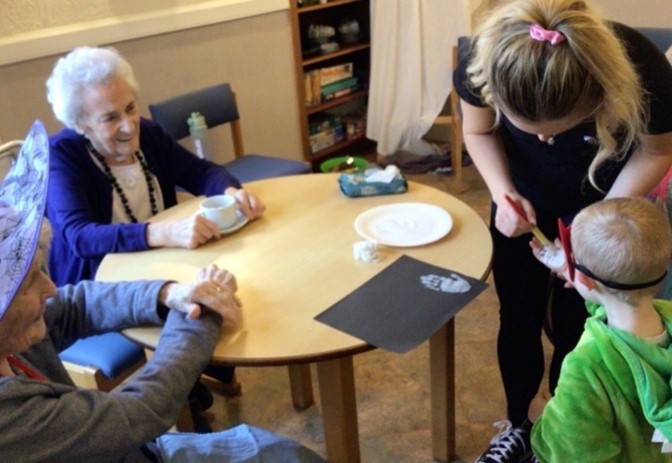
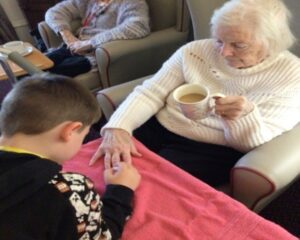
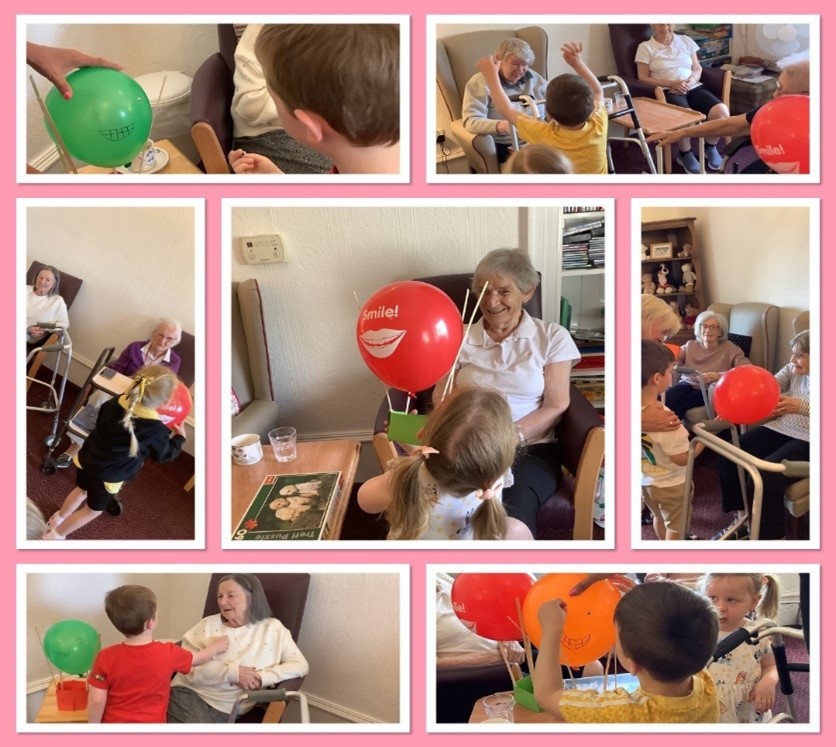
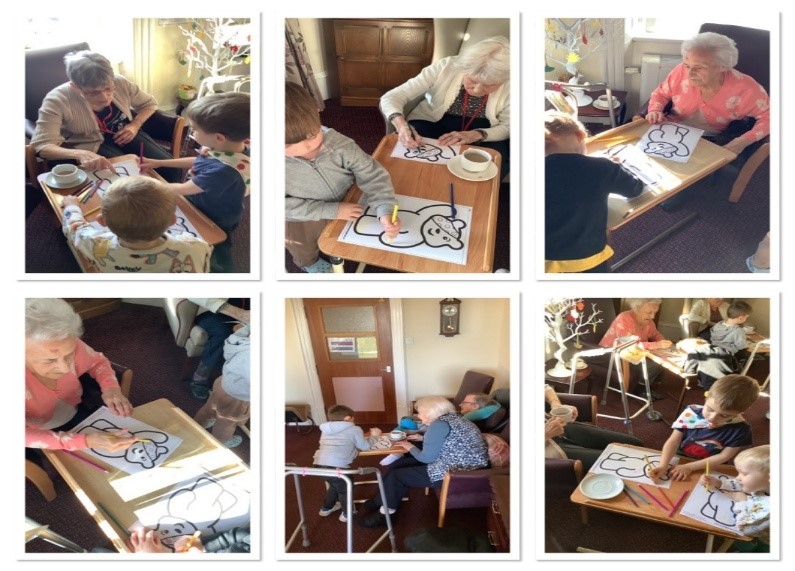
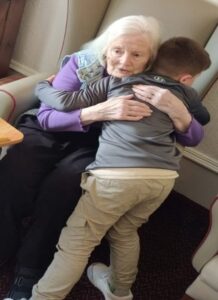
Busy Bees and Abbotsford Care Home have worked together for many years to create an age inclusive group where children and older adults can make social connections to enhance their wellbeing and self-confidence (incorporating Curriculum for Excellence and SHANARRI).

Busy Bees offer a friendly and professional childcare services for all children aged 6 weeks to 5 years old. Since being established in 1994, the Busy Bees team put the children in their care at the top of their priority every day.  Both groups recognised the opportunity of coming together with older adults in the care home and the benefits intergenerational activities could have for all participants.

The Busy Bee friends have been visiting Abbotsford Care Home since 2001, and in the last couple of years it’s become  every Thursday morning.  Participants include seven children between the age of three to five and around seven to ten of our residents . Since the group started, children, their teachers/carers and older adults have created a special bond, shown through the children’s excitement coming to Abbotsford each week, and the laughs they share together. Abbotsford staffs’ children and grandchildren have been part of this journey over the years and they share fond memories of visiting the home.  These relationships were not made overnight, but through consistency in the sessions which allowed everyone to get to know each over time. Each session follows a theme such as gardening, families and friendships, seasons, etc, singing songs together and storytelling, followed by an activity such as board games, jigsaws and parachute games.

They celebrate cultural events together to promote diversity and inclusion and understanding among the children and older adults.  It helps them develop a sense of respect and appreciation for different cultures and traditions, it also offers the opportunity for everyone to learn history, geography and social studies.

A staff member has said:  “My grandson was in the Nativity play and it was lovely to see how he interacted with everyone, and the joy the children brought to the residents”.

Lucy’s mum said that “Lucy loved going to Abbotsford and telling me all about what she got to do there.  This is a really valuable experience for the children, getting to interact with older people”.

On 23rd June, 2025,  they celebrated the Busy Bees childrens’ graduation, where the children end their chapter at Busy Bess and move on to primary school, but their story is not over as we have close links to the local primary schools Caledonia and Stanley Primary school and we continue to foster these relationships.

Freya a Busy Bee pupil said, “I liked we were getting to read a book with Marion

Freya’s mum commented, “ Freya has really enjoyed her visits to Abbotsford and talks about the ladies and gentlemen she has met and what she has done”.

Heather, a Busy Bees staff member said, “This has been an incredible experience for all involved.  Such a great way to bring generations of people together to form positive relationships.  An amazing learning opportunity for our early years class and you can really see the importance of these visits for the residents”.  Heather herself hopes to further her relationship with the residents who do not have many visitors by writing them letters and popping in with her own daughter for a visit.

To understand the benefits that intergenerational connections brings to both parties Carol-Ann and her sister Jillian (owners of Busy Bees nursery), state:

Personally, Jillian and I have a very strong connection with the staff and residents of Abbotsford as we have been part of their family for so many years now.  We have been working in partnership for 20+ years and we would be lost without our visits.

When we visit and we see a friend (resident) who may be feeling sad/low…, the children walk in and their mood lifts almost instantly.  The glow on the faces are priceless and the fun begins.

When the children get to know the residents through our weekly visits the bonds that are made are unbreakable.  When we draw up in our ‘Bee Bus’, the children are so excited to get into see which friends they will be spending time with today.

The intergenerational learning where the children and friends (residents) learn from each other is an important part of life long learning, where the generations work together to gain skills, values and knowledge providing opportunities for unrelated people different generations to interact with each other.

Through our connections with the residents of Abbotsford we feel this :- helps reduce ageism and stereotyping between generations and improves relationships between early years and the older generation, brings joy and happiness to all  involved…..Residents, Children, Nursery staff and Care home staff.

We all love our visits/work with Abbotsford staff and residents and hope it continues for many more years”.

Pauline’s from Birch House Races For Life

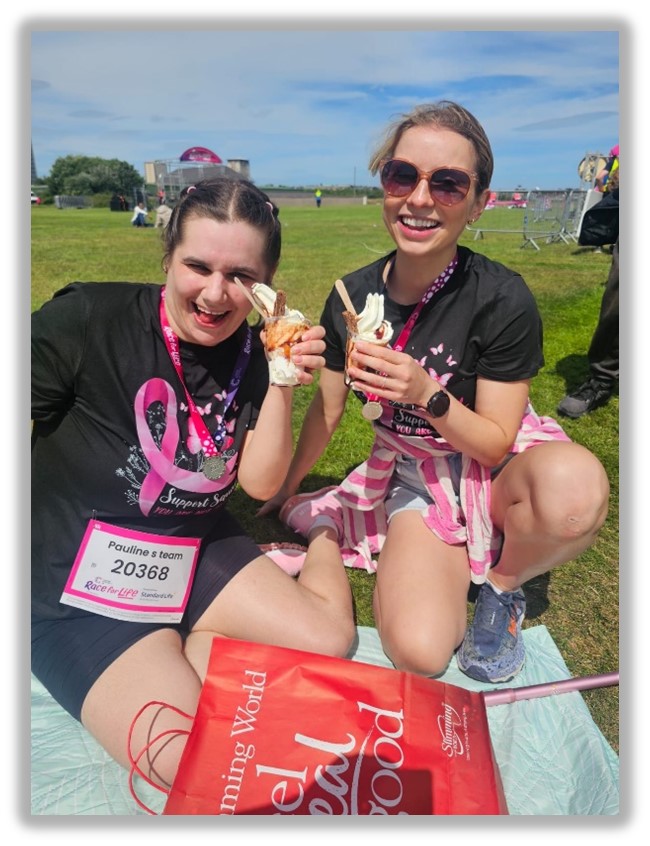
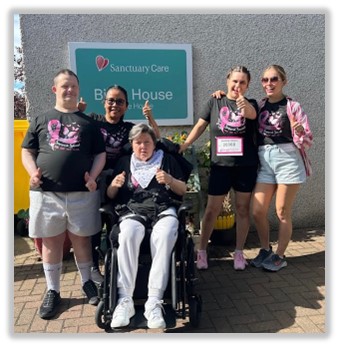
Scottish Care is delighted to share an inspiring story from Birch House in Peterculter, Aberdeen, where resident Pauline recently completed the Race for Life, which is a remarkable personal achievement.

Pauline first expressed interest in taking part in the Race for Life in May 2024. However, with only a few weeks until the event and no time to train, the team at Birch House encouraged her to aim for the June 2025 race instead, giving her a full year to prepare.

Living with ataxia and using a walking stick, Pauline took on what she describes as one of the hardest challenges she has ever faced. She committed herself to a year of training, with regular exercise and going on long walks at least three times a week to build up her stamina and strength.

The team at Birch House actively promote positive risk-taking, encourage residents to push through barriers, and foster a mindset focused on growth, wellbeing and achieving goals. On race day, Pauline was cheered on by ‘Team Pauline’, a supportive group including fellow residents Laura Will and Matthew Watt, Support Worker Pimjuta McNamara, and Deputy Manager Kasia Grimble. The team all wore t-shirts with the message: “Support Squad – You Are Not Alone.”

Pauline proudly crossed the finish line and shared,

“It was hard, but it felt good to go through the finishing line.”

She raised £320 for Cancer Research UK, a cause that means a great deal to her. Her close friend Alison is currently undergoing treatment for bowel cancer, and Birch House’s Home Manager is a breast cancer survivor. Pauline wanted to give back to an organisation that helps so many affected by cancer  and now wears her medal with pride around the home.

 A huge well done to Pauline and the team at Birch House. All of us at Scottish Care are incredibly proud of you!