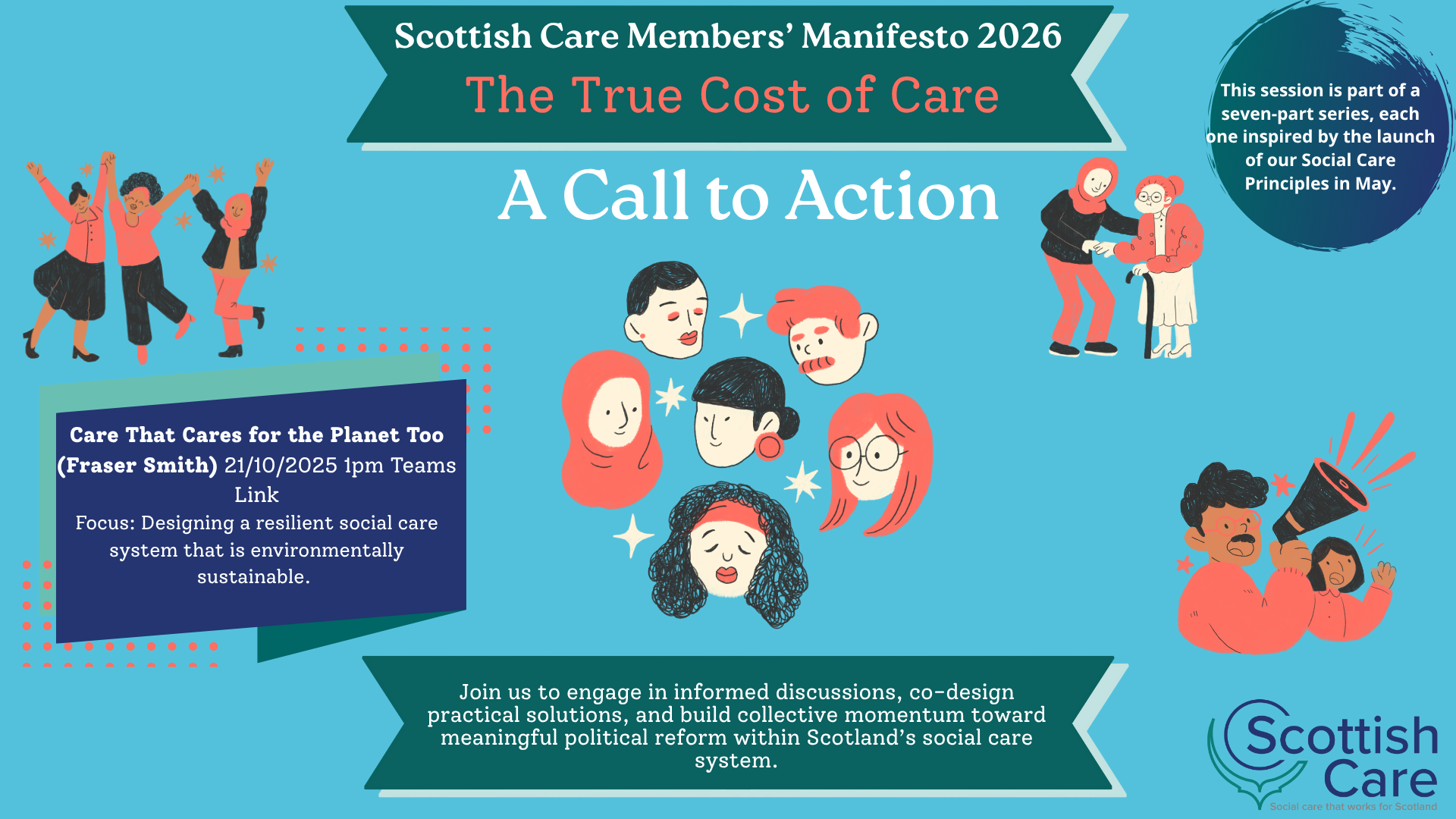
Manifesto 2025 Session 6: Care That Cares For the Planet Too

Session 6: Care That Cares For the Planet Too

Tuesday 21 October 2025, 1:00 pm

This sixth session in our seven-part series continues the momentum of the Scottish Care Members Manifesto: The True Cost of Care – A Call to Action.

In this session, we’ll focus on Sustainability and green practices in care settings, co-designing two key asks from Scotland’s social care sector. Our discussion will advocate for:

  • A resilient social care system that is environmentally sustainable
  • Practices that actively reduce ecological impact while delivering equitable, efficient, and climate-conscious care for all

This is an opportunity to shape the future of care by championing sustainability, innovation, and justice in how social care is delivered across Scotland.

Open to all Scottish Care members, please register via the Members Area of this website.

Oomph! App brings Laughter & Connection at Abercorn House

BRINGING LAUGHTER AND CONNECTION THROUGH THE OOMPH! APP AT ABERCORN HOUSE CARE HOME

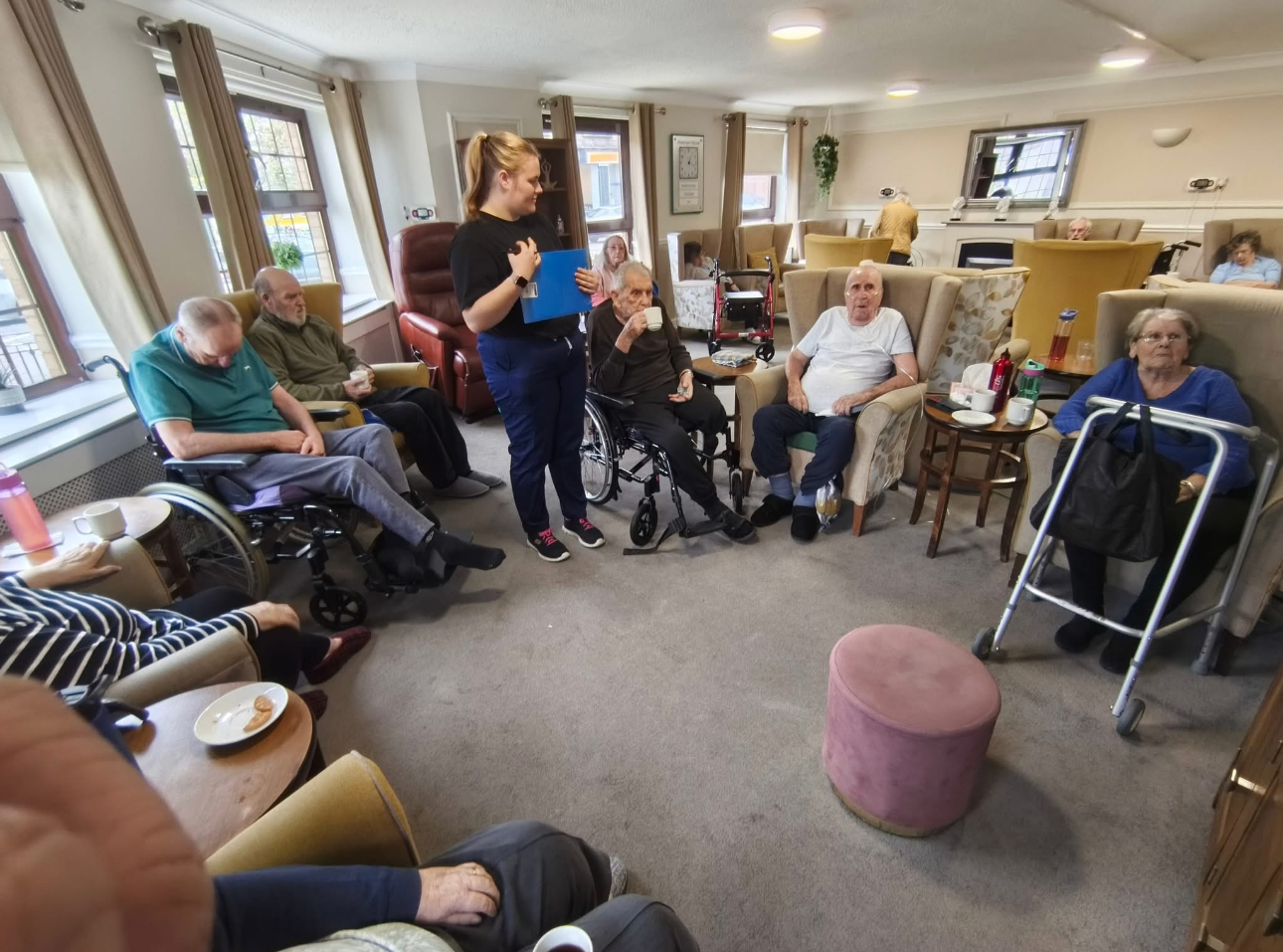
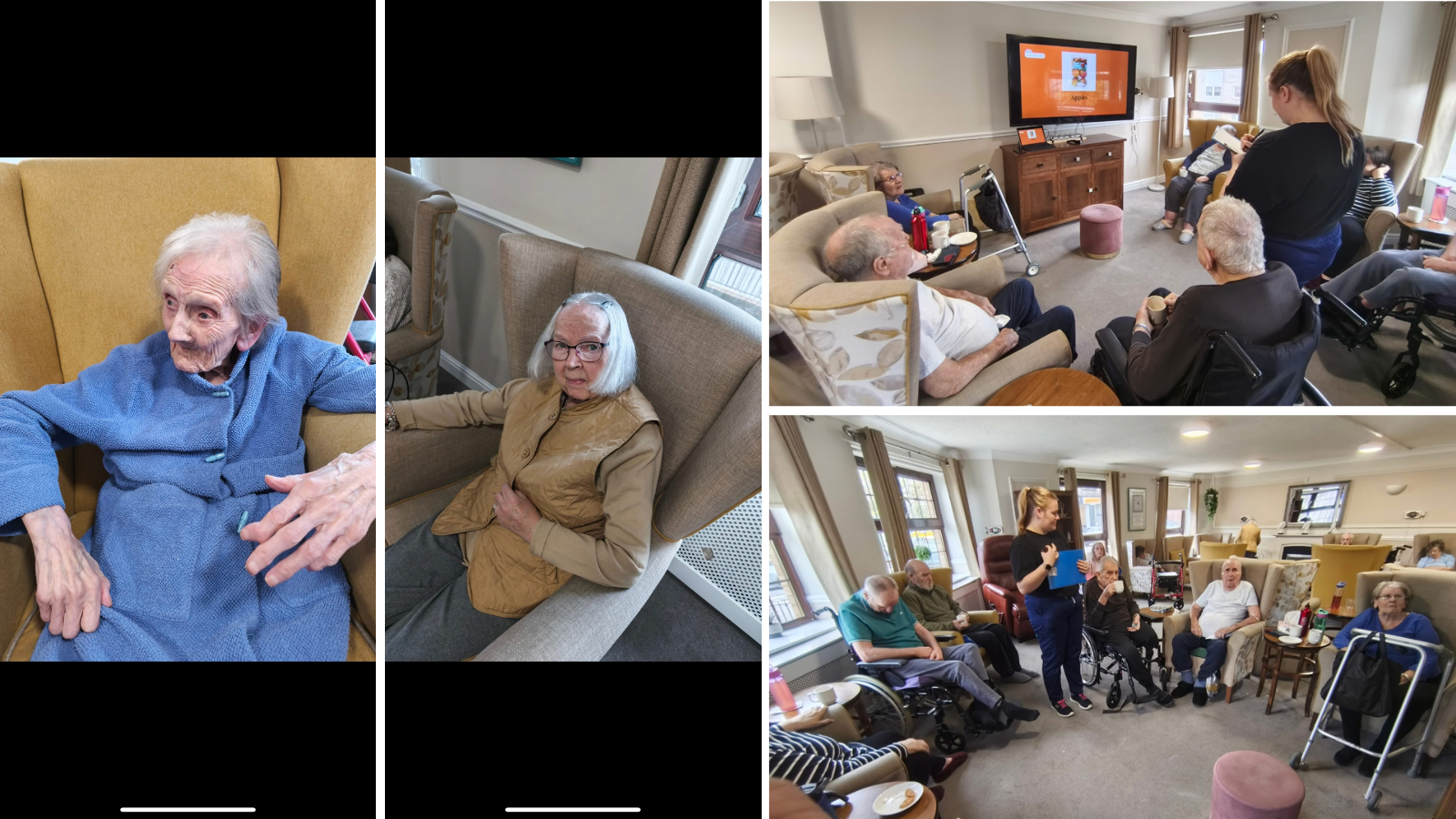
Abercorn House Care Home are always looking for new ways to bring smiles and meaningful engagement to our residents. Recently, they introduced the Oomph! Activity App, an exciting initiative from Sanctuary Care designed to enrich lives through fun, interactive and stimulating activities.

The app gives residents access to thousands of activities right on the television or tablet, from gentle exercise classes and quizzes to music sessions, reminiscence games, and even virtual tours around the world. One of the most popular has been “The Price is Right”, where residents guess the cost of everyday household items. The room fills with laughter, friendly competition, and nostalgic conversations about “how things used to be.”

“It makes me feel like I’m on TV!” one residents said with a smile, while another added, “It brings back such good memories, and it’s such a laugh trying to guess the prices!”

Staff have noticed how much the app encourage interaction and builds confidence, especially among residents who might not always take part in group sessions. It also helps staff tailor activities to each resident’s mood, interest, and ability, making every session personal and meaningful.

By embracing digital innovation like the Oomph! App, Abercorn continues to live out Sanctuary Care’s mission to enrich lives every day, creating joy, laughter and connection for our residents.

Abercorn Care Racing Team

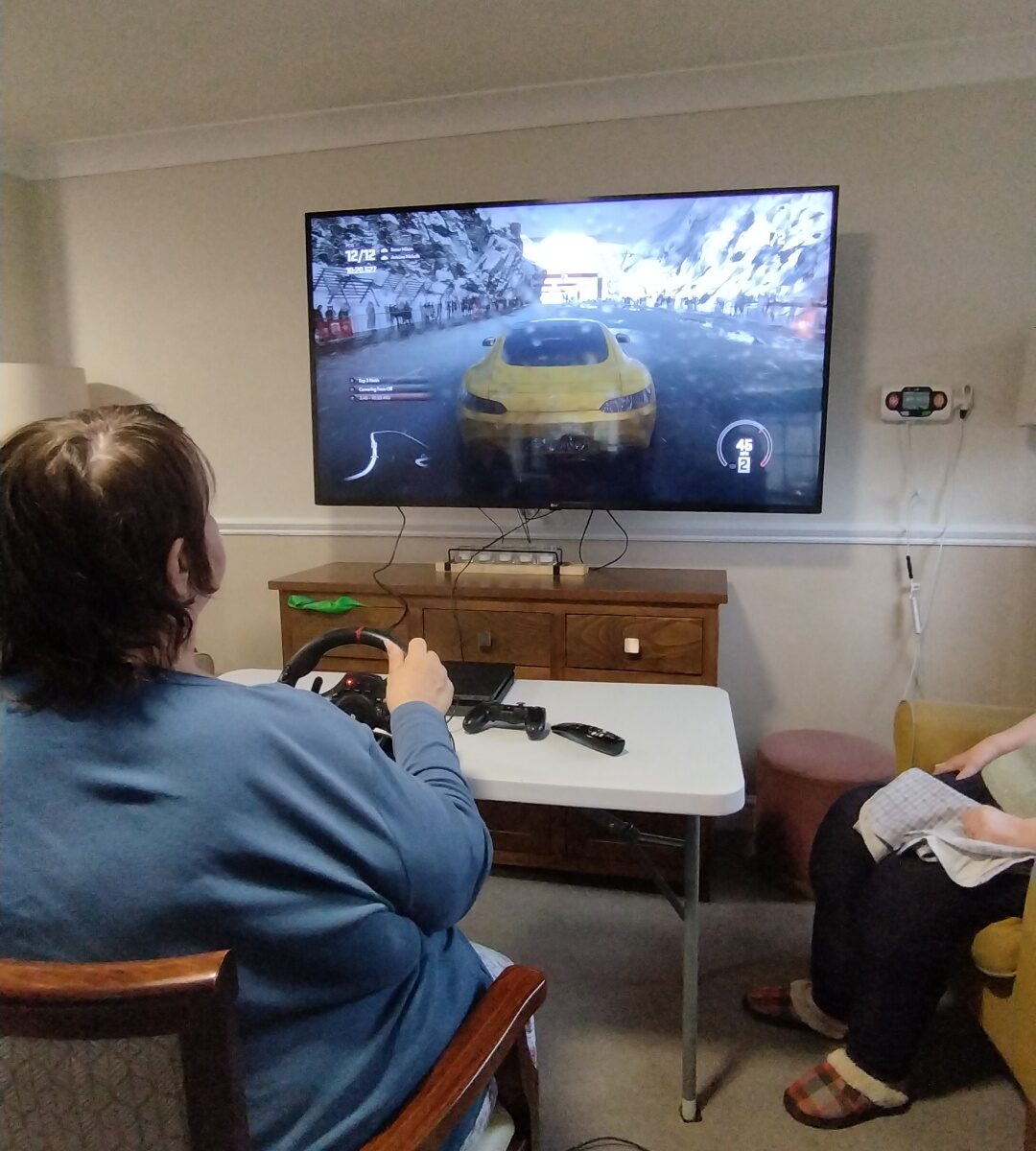
Abercorn Care Racing Team – A Virtual Driving Adventure

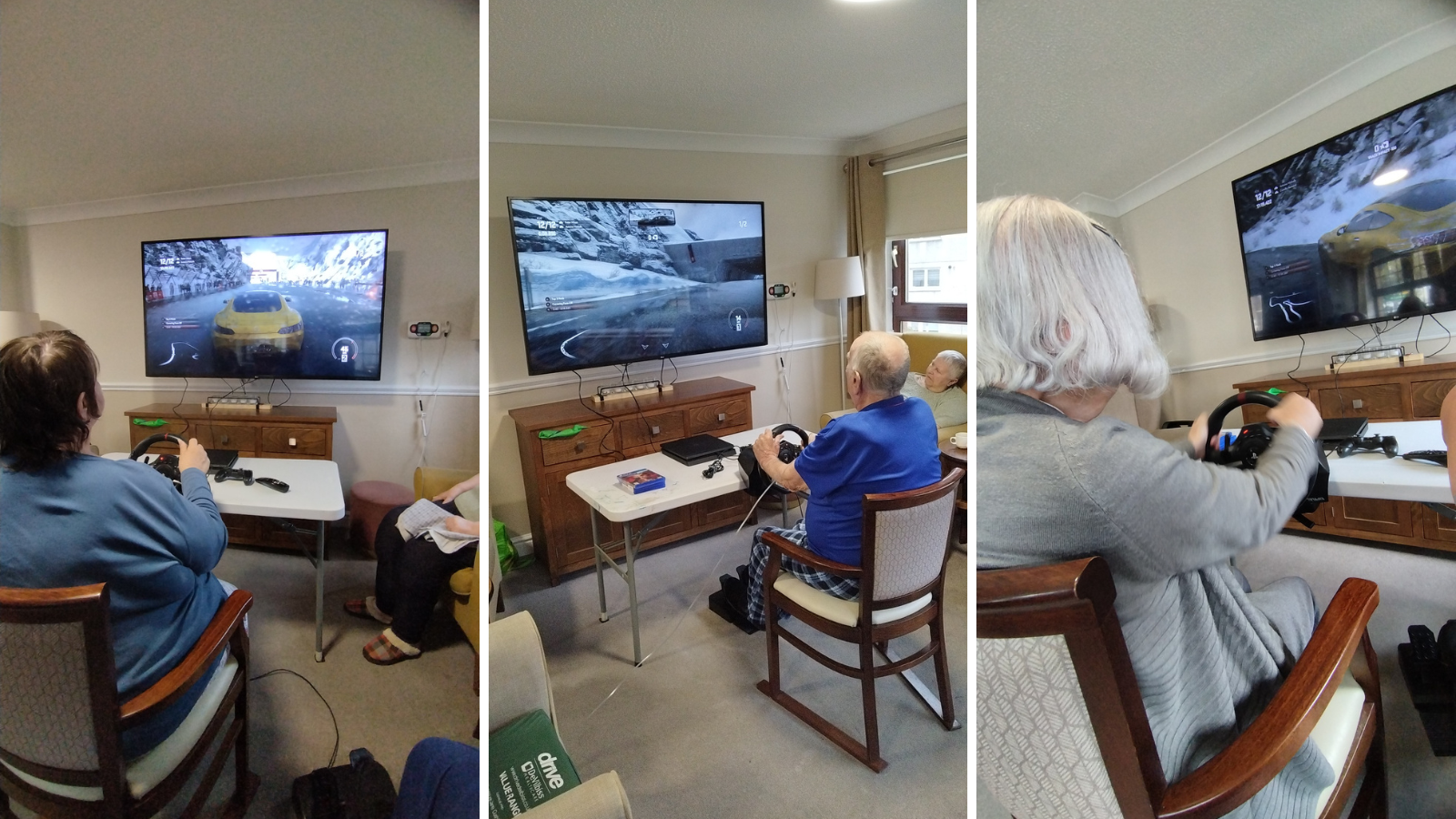
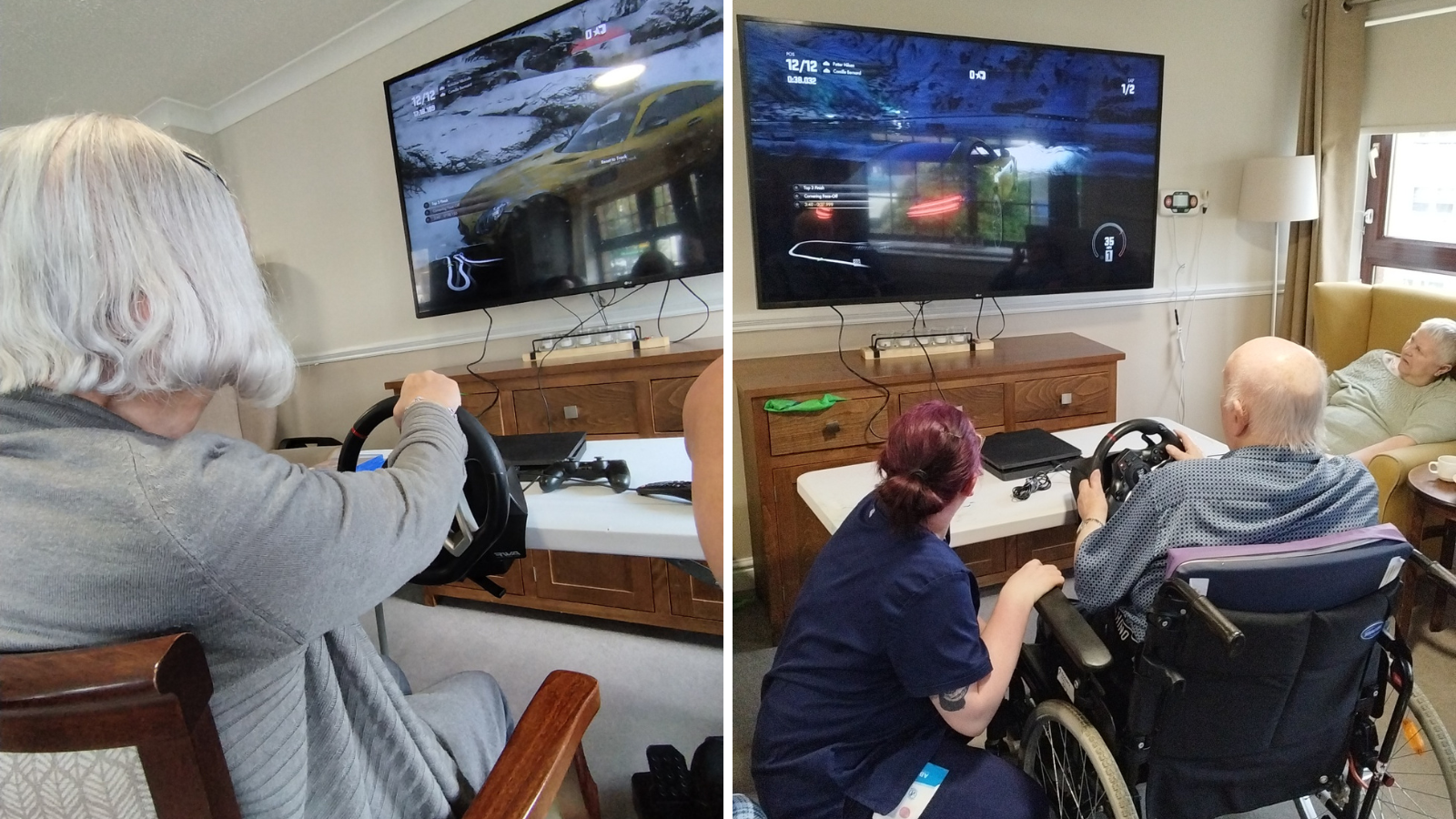
On 14th September, five residents from Abercorn House Care Home joined the Abercorn Care Racing Team for a thrilling virtual driving experience! With a gaming console and steering wheel set up, residents had the chance to get behind the wheel once again, and the smiles and laughter said it all.

For some, it was a nostalgic return to the joy of driving; for others, an exciting new challenge. The room was filled with cheers, conversation, and shared excitement as technology brought a fresh sense of fun and connection.

This activity is a wonderful example of how digital experiences can support engagement, wellbeing, and joy in care settings, keeping residents connected to the things they’ve always loved.

Abercorn House Pottery Fun

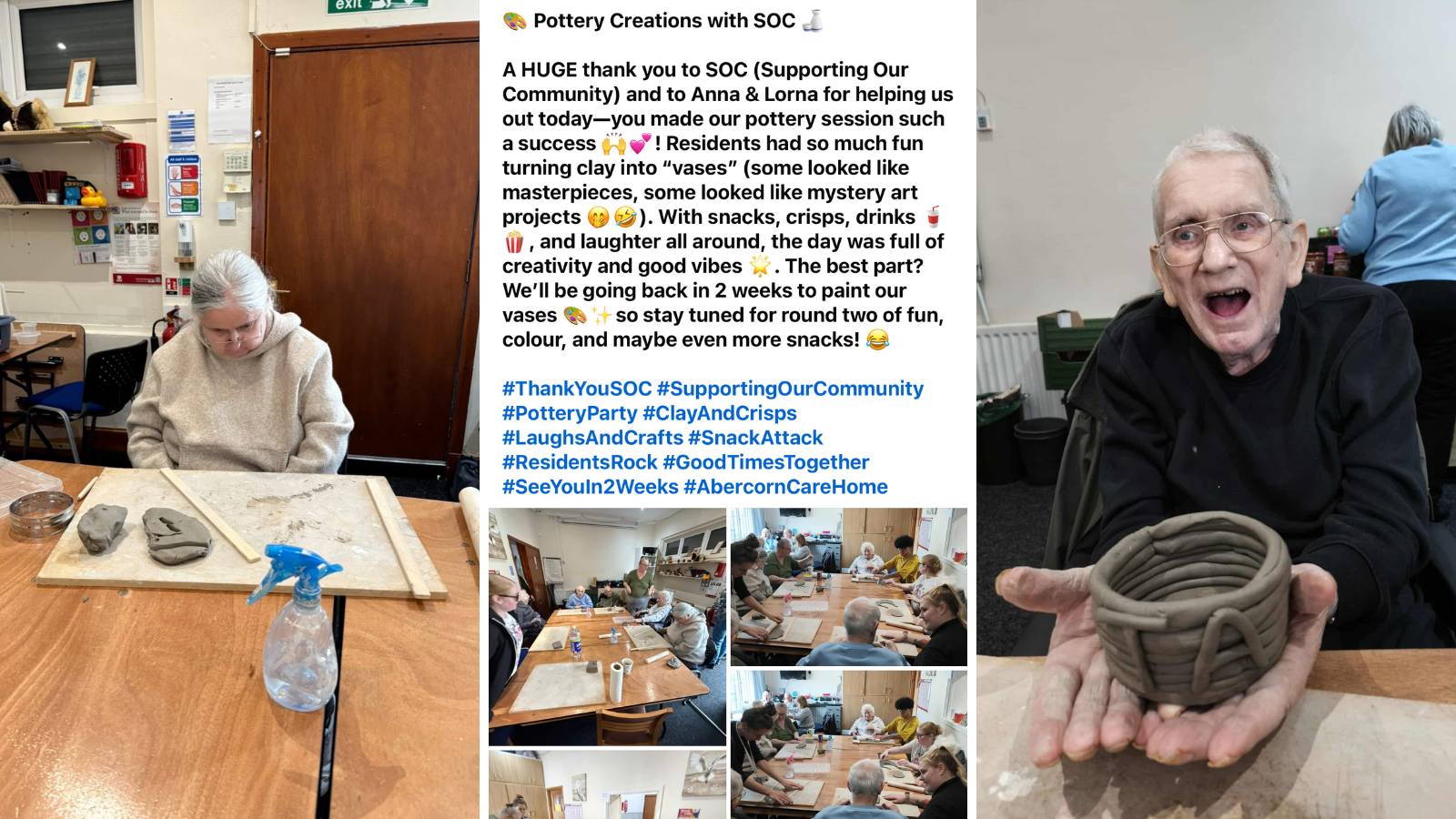
Pottery Fun with SOC – Creativity, Connection & Clay

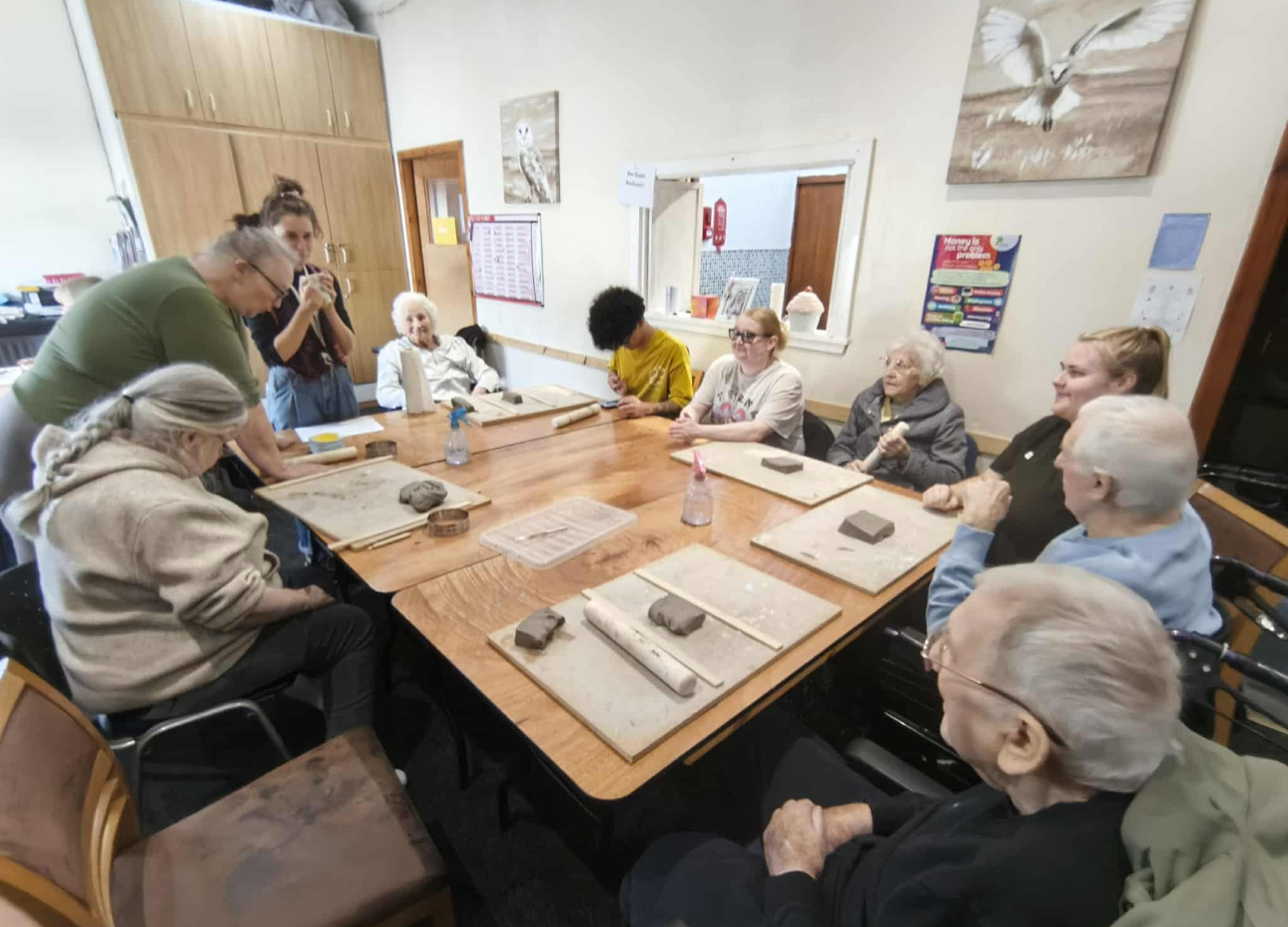
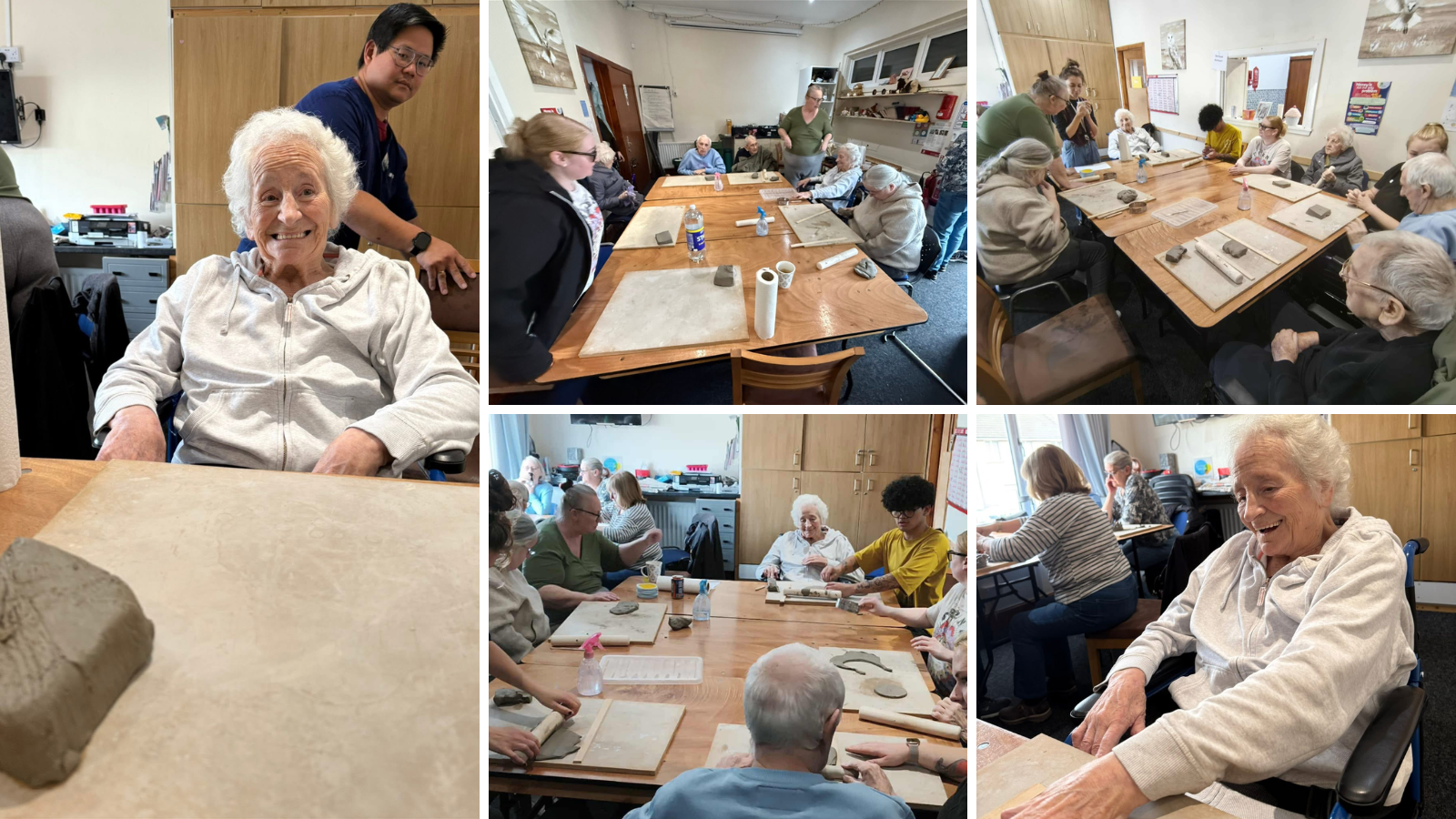
On 1st October, residents from Abercorn House Care Home enjoyed a wonderfully creative day out at the Supporting Our Community (SOC) office, where they took part in a hands-on pottery session led by the talented Anna and Lorna. With clay in hand and smiles all around, residents crafted vases ranging from elegant masterpieces to delightfully quirky “mystery art projects.”

The session was filled with laughter, snacks, and a real sense of achievement. It sparked joyful memories, encouraged new conversations, and gave residents a chance to express themselves in a relaxed, welcoming space. The impact on confidence and wellbeing was clear—and because it was such a hit,  residents will be returning in two weeks to paint their very own creations.

We can’t wait to see the finished pieces and share more moments of creativity and connection!

A Family Adventure at the Falkirk Wheel – Abercorn House Day Out

Residents from Abercorn House Care Home enjoyed a joyful day out with their families at the iconic Falkirk Wheel, please read below from Abercorn House Home Manager, Rowena Alferos.


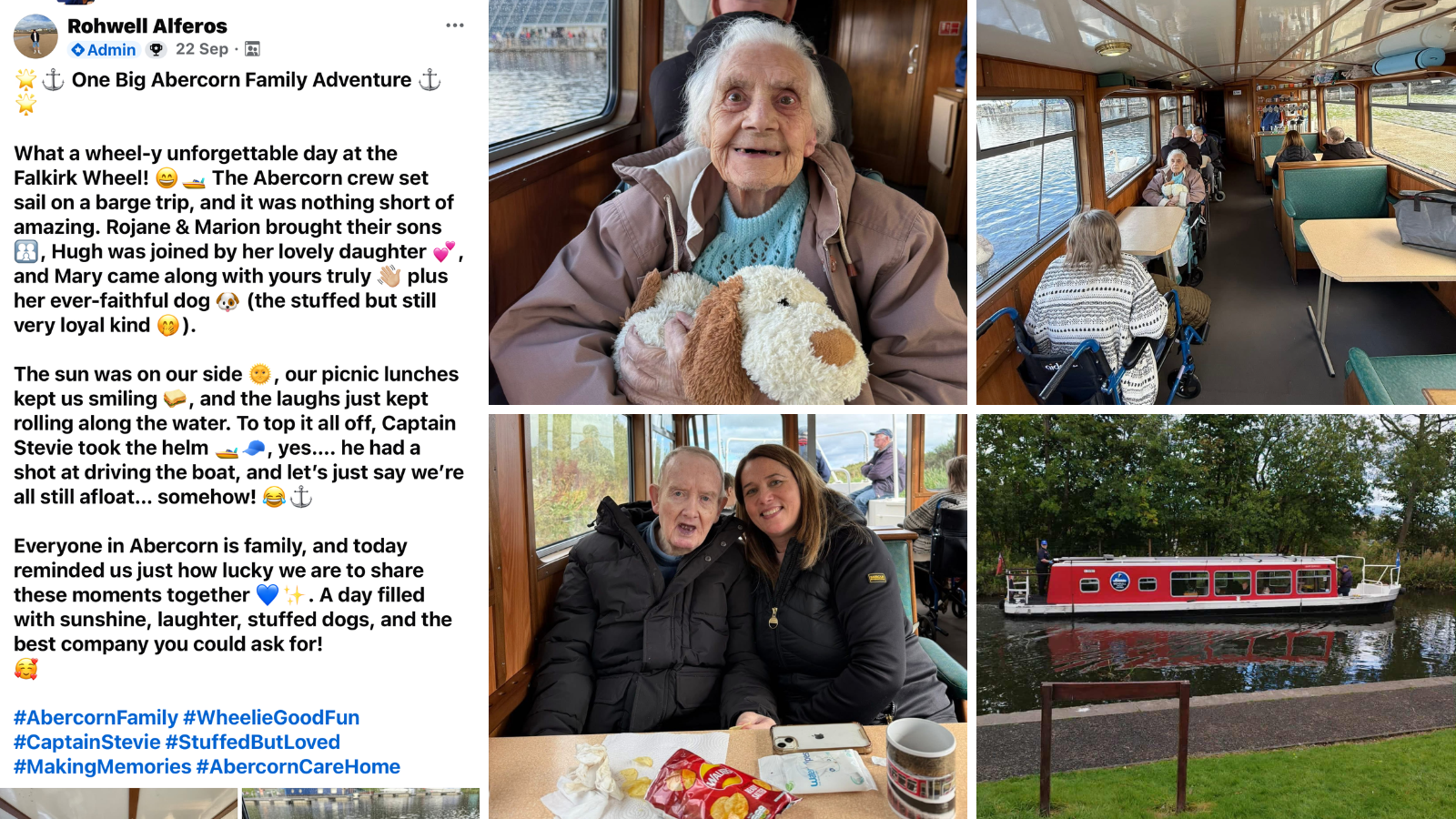
A FAMILY ADVENTURE AT THE FALKIRK WHEEL-22nd SEPTEMBER 2025

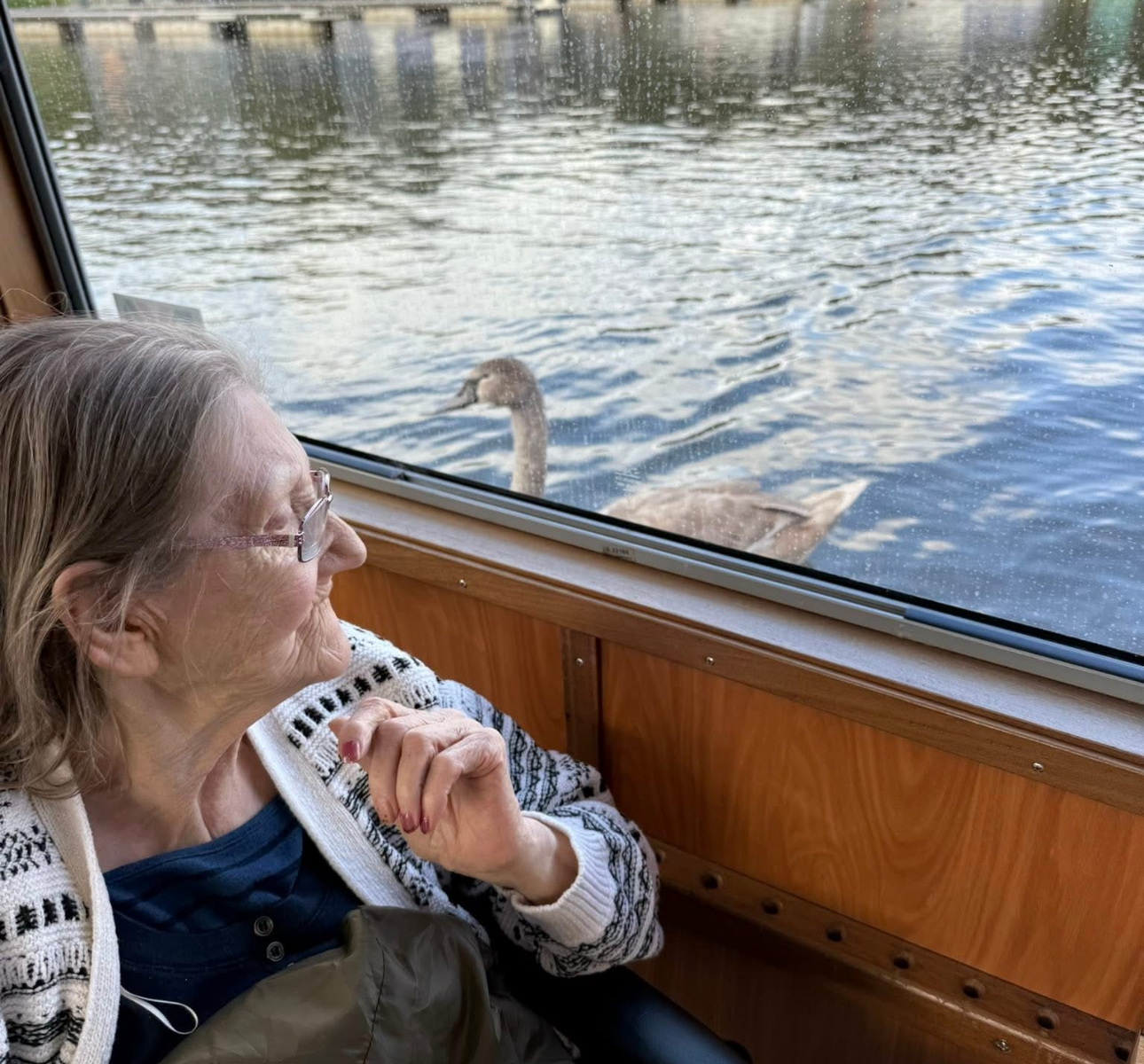
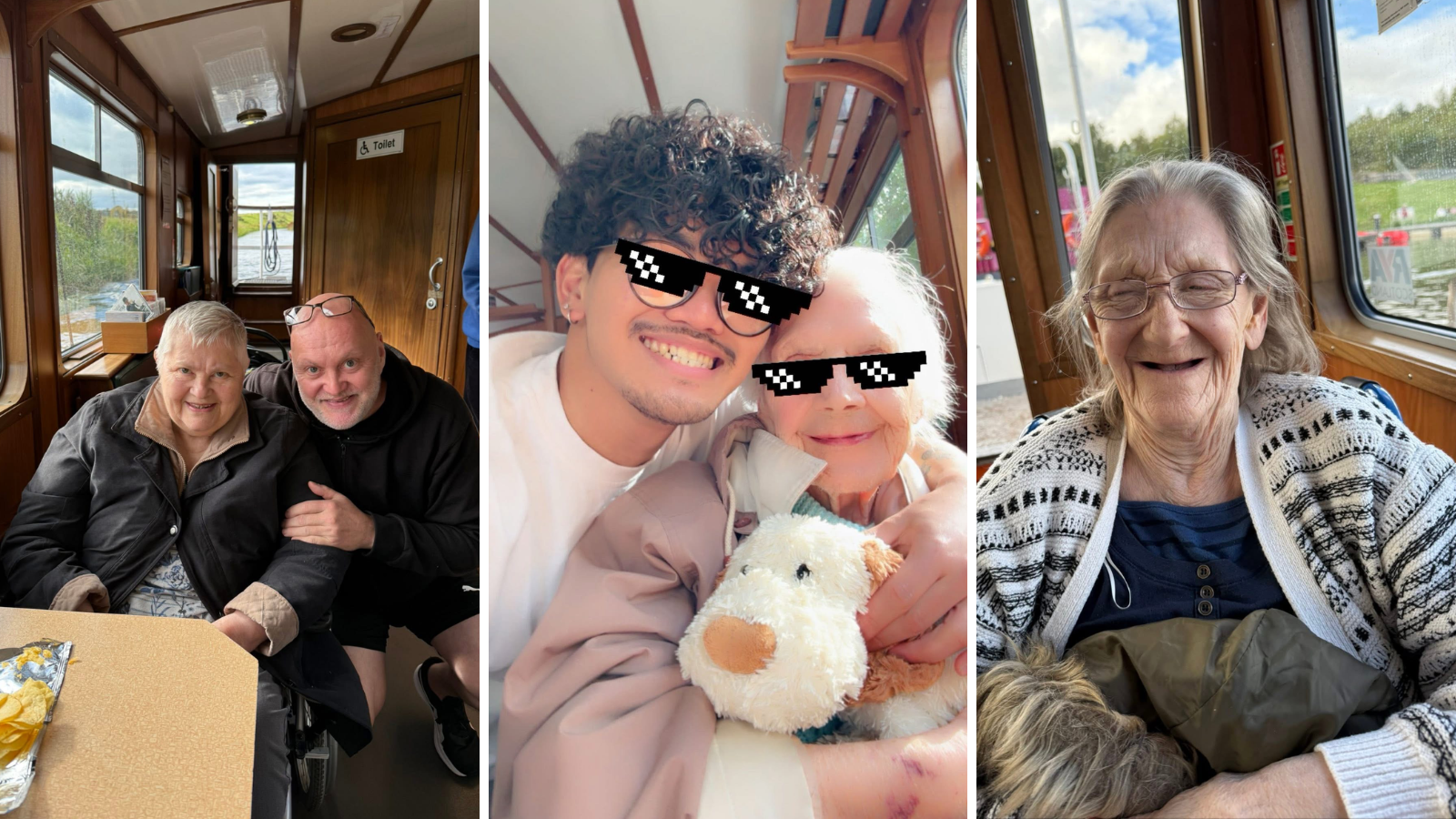
On 22nd September, our residents has a wonderful day out with their families! Supported by our Activities Team, they visited the Falkirk Wheel and enjoyed a scenic barge trip together.

Rojane and Marion brought along their sons, Hugh was joined by his daughter, and Mary came with our team, and her loyal stuffed dog, who never left her side! The sun was shining, picnic lunches were enjoyed by all, and laughter filled the air.

It was a truly special day, seeing our residents connect with their loved ones, make happy memories and simply enjoy each other’s company. Moments like these remind us why creating meaningful experiences for our residents is at the heart of everything we do.

Go4Gold 2025 Awards Ceremony

We’re delighted to share the official video of the Go4Gold 2025 Awards Ceremony, launched on 1 October to mark the International Day of Older People. This year’s Go4Gold challenge was inspired by the Highland Games, with care homes and day centres across Perth & Kinross taking part in a range of fun, inclusive physical and wellbeing activities. From creative caber tosses to themed celebrations, the event was full of energy, laughter, and connection.

Go4Gold is a joint initiative from Perth & Kinross Health and Social Care Partnership and Scottish Care, first launched in 2012 to promote physical activity, wellbeing, and community spirit among older people. After a long pause since 2019, this year’s ceremony proudly features our first live events, with over 70 people participating in person and more than 400 individuals involved overall.

The video is now available to watch on YouTube, feel free to enjoy it anytime and share it with anyone who’d love to see the joy and creativity of our care communities in action.

MasterChef joins Blanefield House Care Home

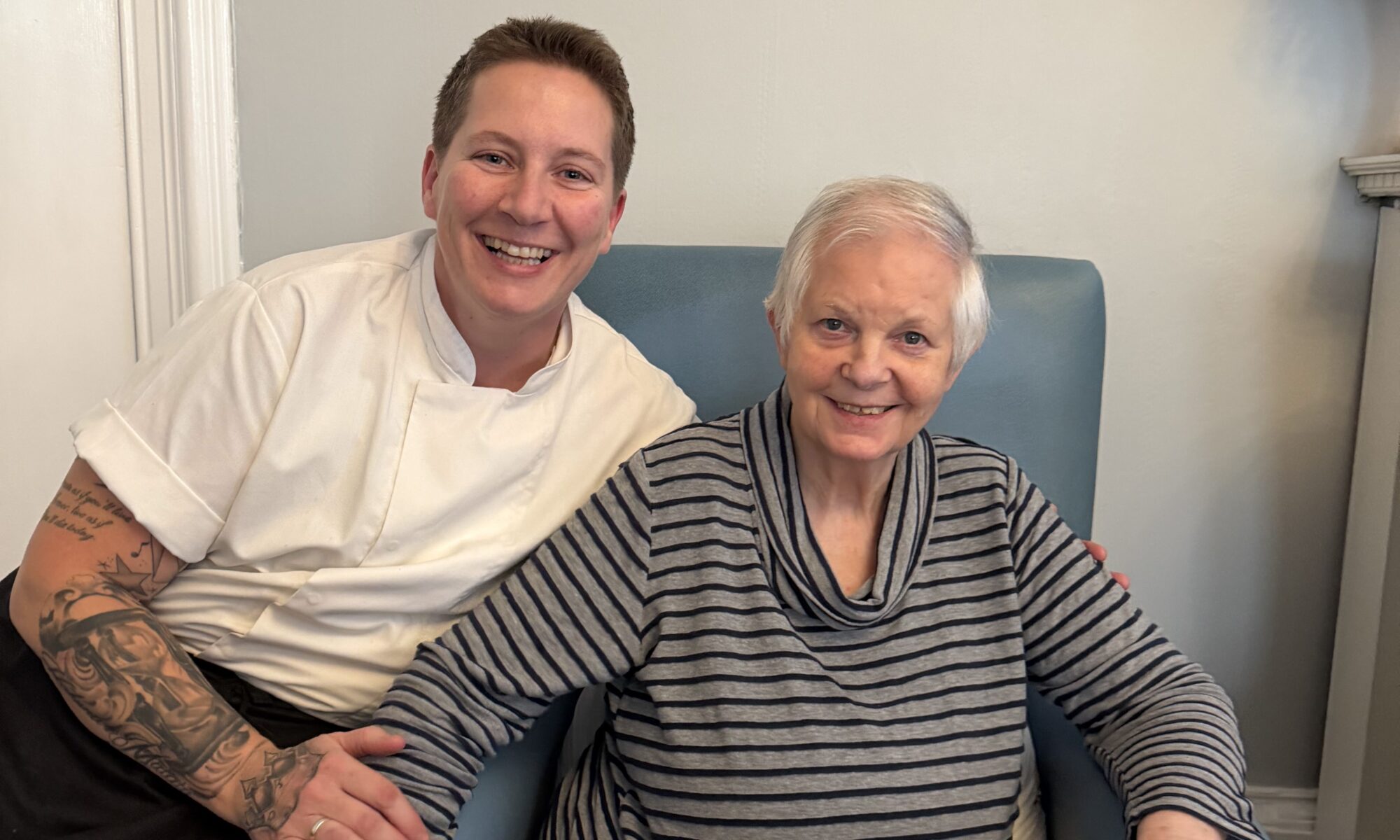
Lisa Addison , Former MasterChef Contestant, joins Blanefield House Care Home as Head Chef, bringing restaurant level training and nutrition expertise to enhance meals for the elderly 

A former MasterChef contestant has taken a pivotal role in elder care cuisine, joining Blanefield House Care Home as Head Chef. Lisa Addison, a familiar name to viewers of the BBC’s culinary competition, is now applying her expertise to improve the dining experiences for residents in Blanefield.

A familiar face to many locals, Lisa brings a wealth of experience in nutrition, caregiving, and community-minded leadership with a passion for healthy, flavourful, and nutritious meals. She previously worked as a carer, giving her firsthand insight into the unique dietary needs of older adults. At Blanefield House, she leads the kitchen team in designing menus that meet medical requirements while presenting restaurant quality meals in a care setting with thoughtful plating, colour balance, and appetising presentation while maintaining practicality and accessibility.

When asked about her appointment at Blanefield, Lisa said,

“I was running a successful private dining business as well as a domestic cleaning business, however when approached by Bobby, the care home manager, I was immediately interested in the job because of the passion she showed for the home and the residents, a further meeting with the managing director Puja, and it was an easy decision to close my two businesses and take the Head Chef job, Puja is so passionate about the kitchen being the heart of the home and that was when the decision was easy. Everything is cooked fresh every day, we have deliveries from the finest local suppliers regularly, it’s a dream job for any chef. Puja, Bobby and every single member of staff have been so welcoming, and I’m in a job where appreciation is shown regularly, and Puja is such a hands-on owner. I cannot wait to see what the future holds for the Residents of Blanefield House and the kitchen.”

Puja Poddar, Managing Director, says:

‘Lisa’s appointment aligns with a growing emphasis on nutrition-led and comfortable dining experience for our service users. Lisa provides nutrition first menus with texture modified options when needed, tailored to individual health needs. With her input and dedication to her role, our residents and families are able to enjoy themed dining experiences and storytelling to enrich the dining environment. Lisa’s blend of culinary excellence and care experience could set a benchmark for similar services in Scotland. Her leadership is expected to influence not only menu development but also staff training and family communications around dietary plans.’ 

Beyond the kitchen, Lisa is a proud mother of five and a dog lover with three dogs, attributes that underscore her community-oriented approach. When not in the kitchen, Lisa enjoys cooking, football, and giving back to the community.

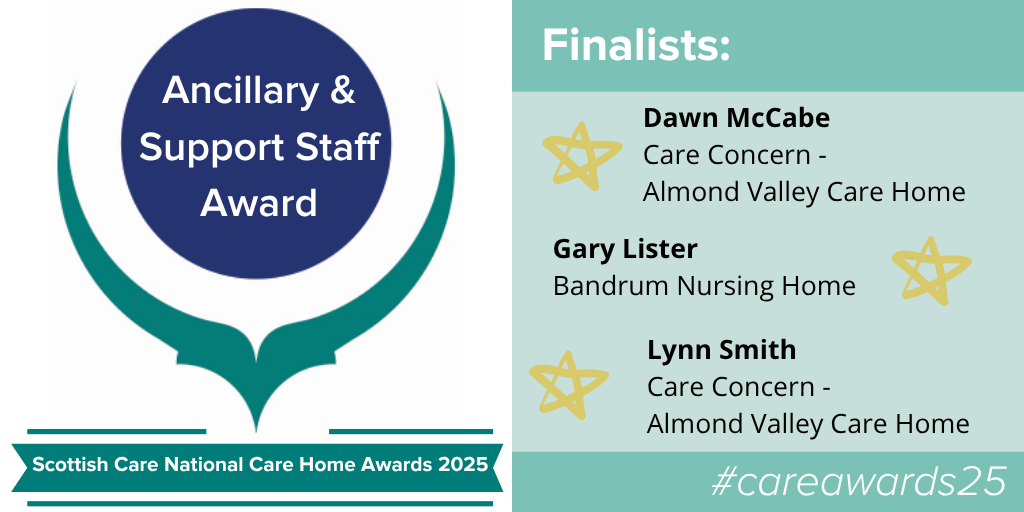
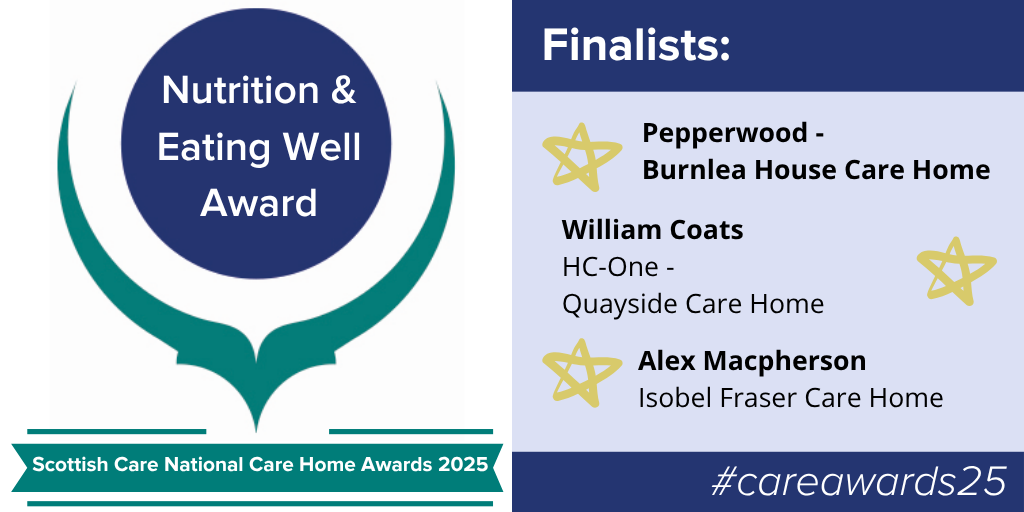
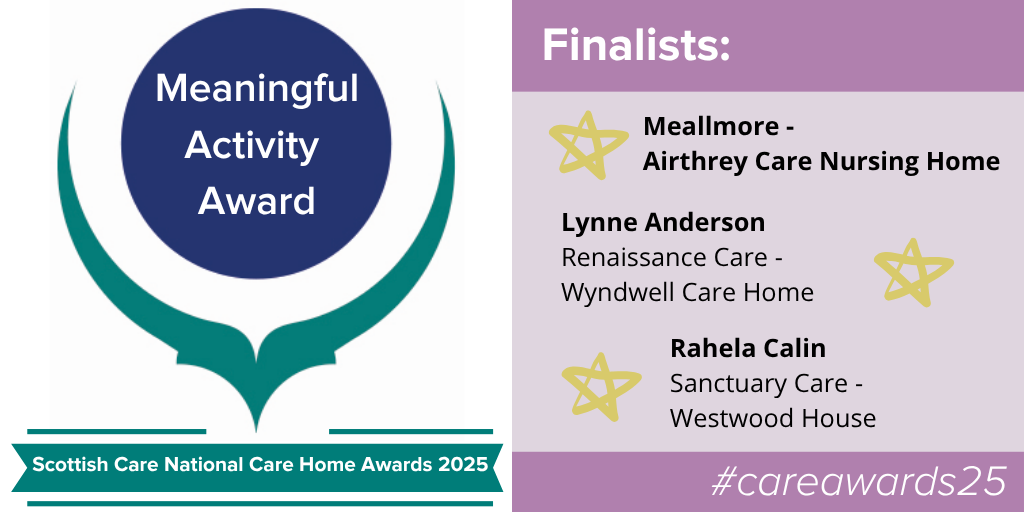
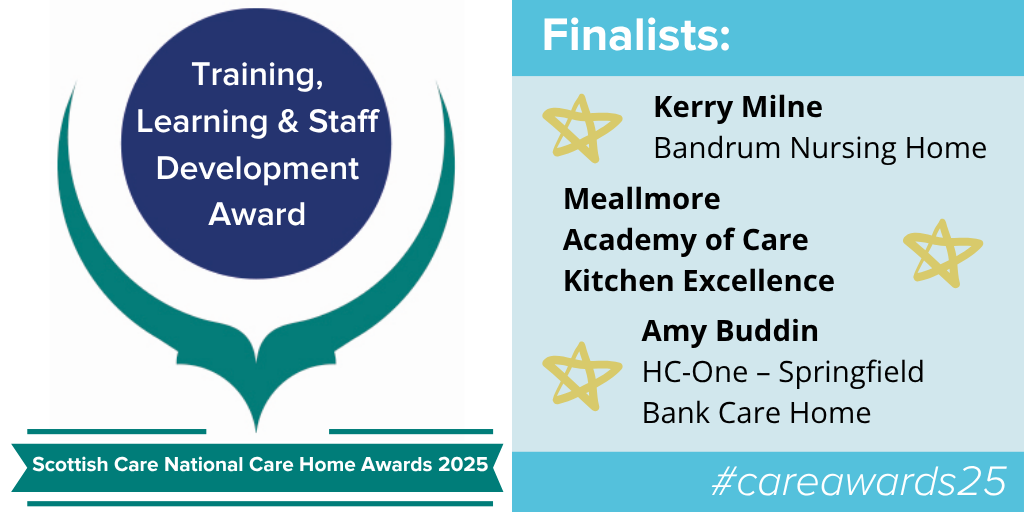
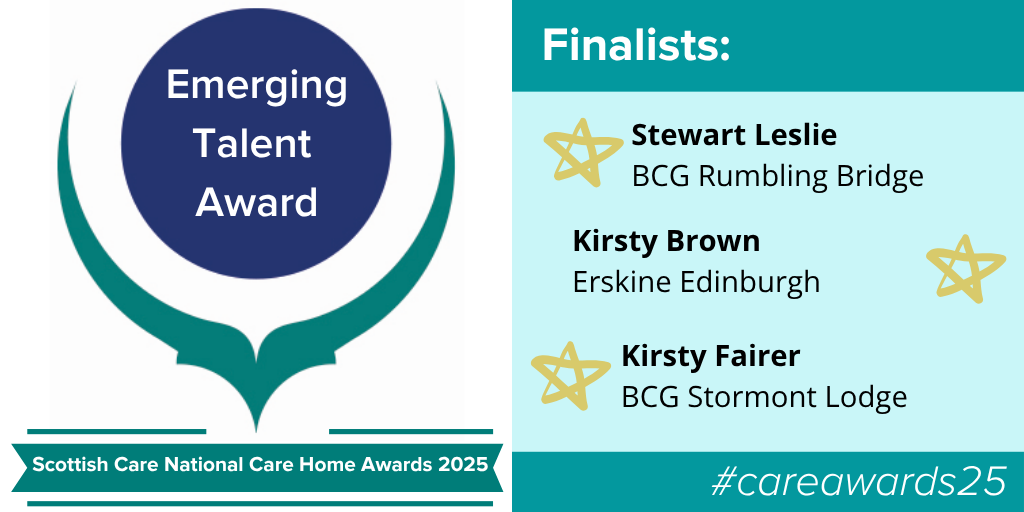
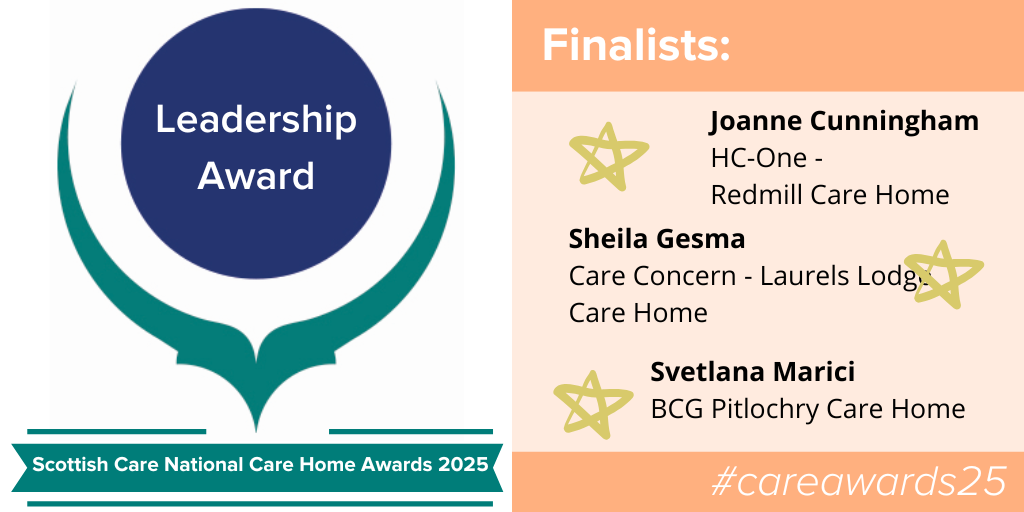
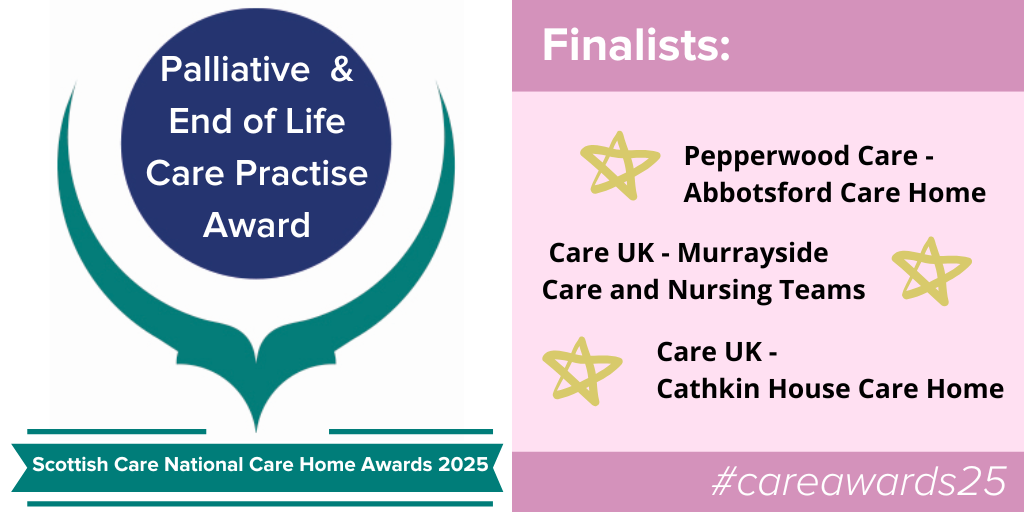
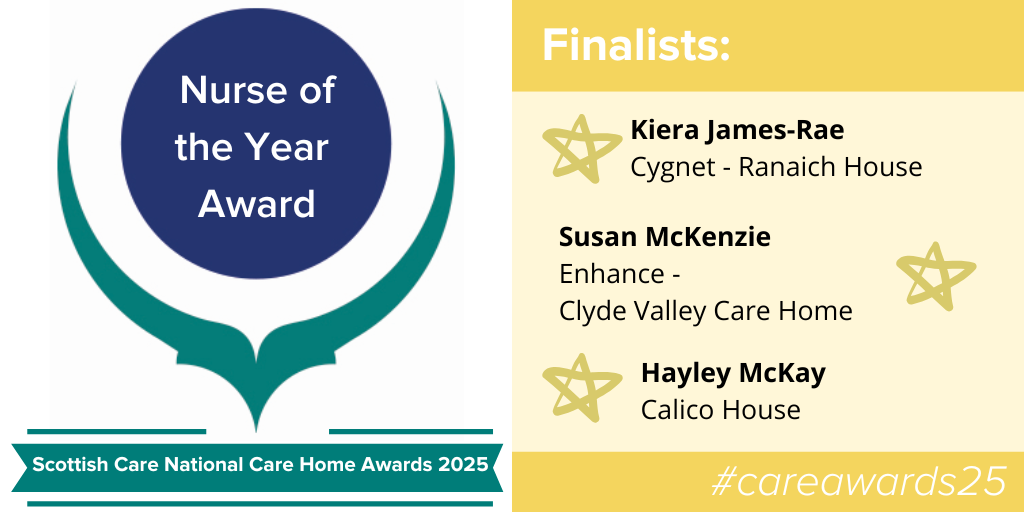
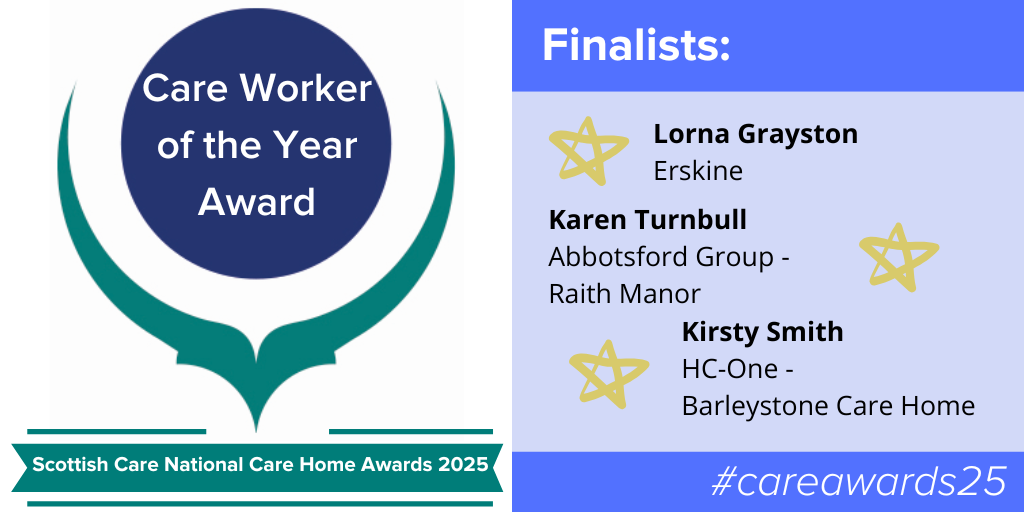
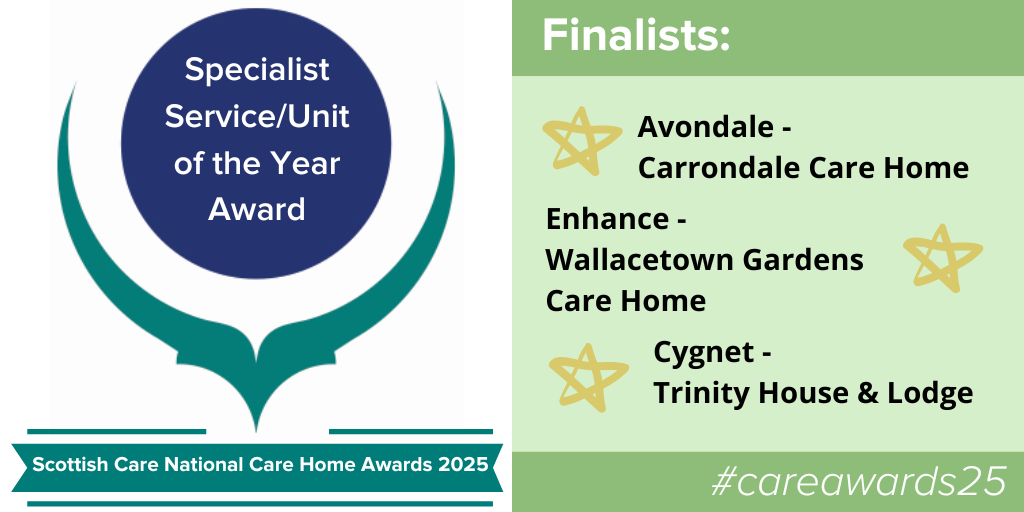
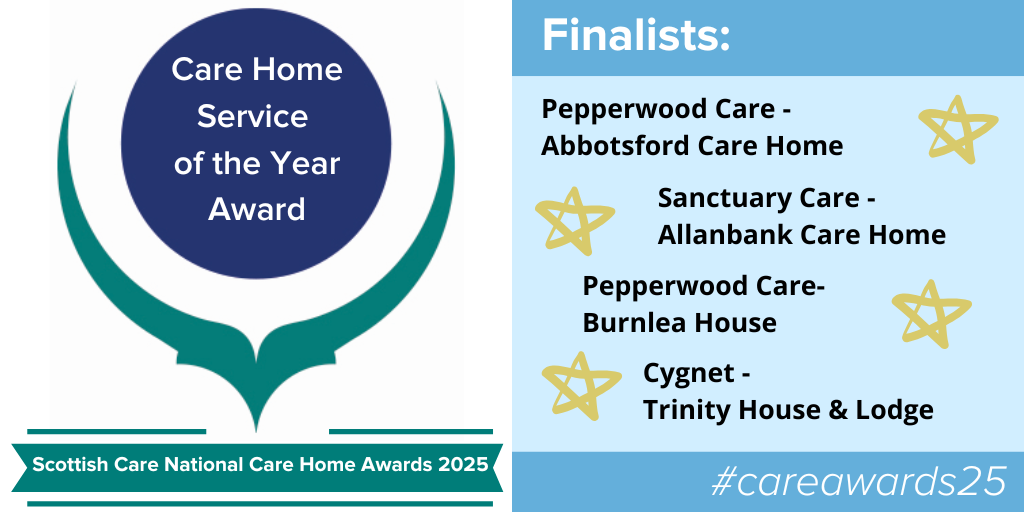
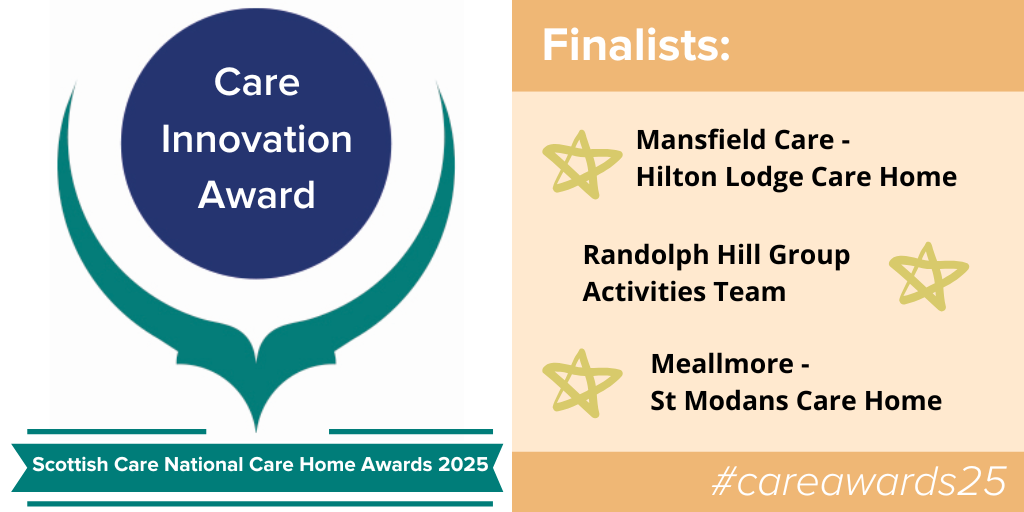
Finalists Revealed for the 2025 Care Home Awards!

We’re delighted to reveal the finalists for this year’s Care Home Awards!

A huge thank you to everyone who took the time to submit a nomination – and a massive congratulations to all our incredible shortlisted finalists!

Join us as we celebrate their achievements at the Awards Ceremony, hosted by Michelle McManus and Dr Donald Macaskill, on the evening of Friday 14 November 2025 at the Hilton Hotel, Glasgow, following the Care Home Conference.

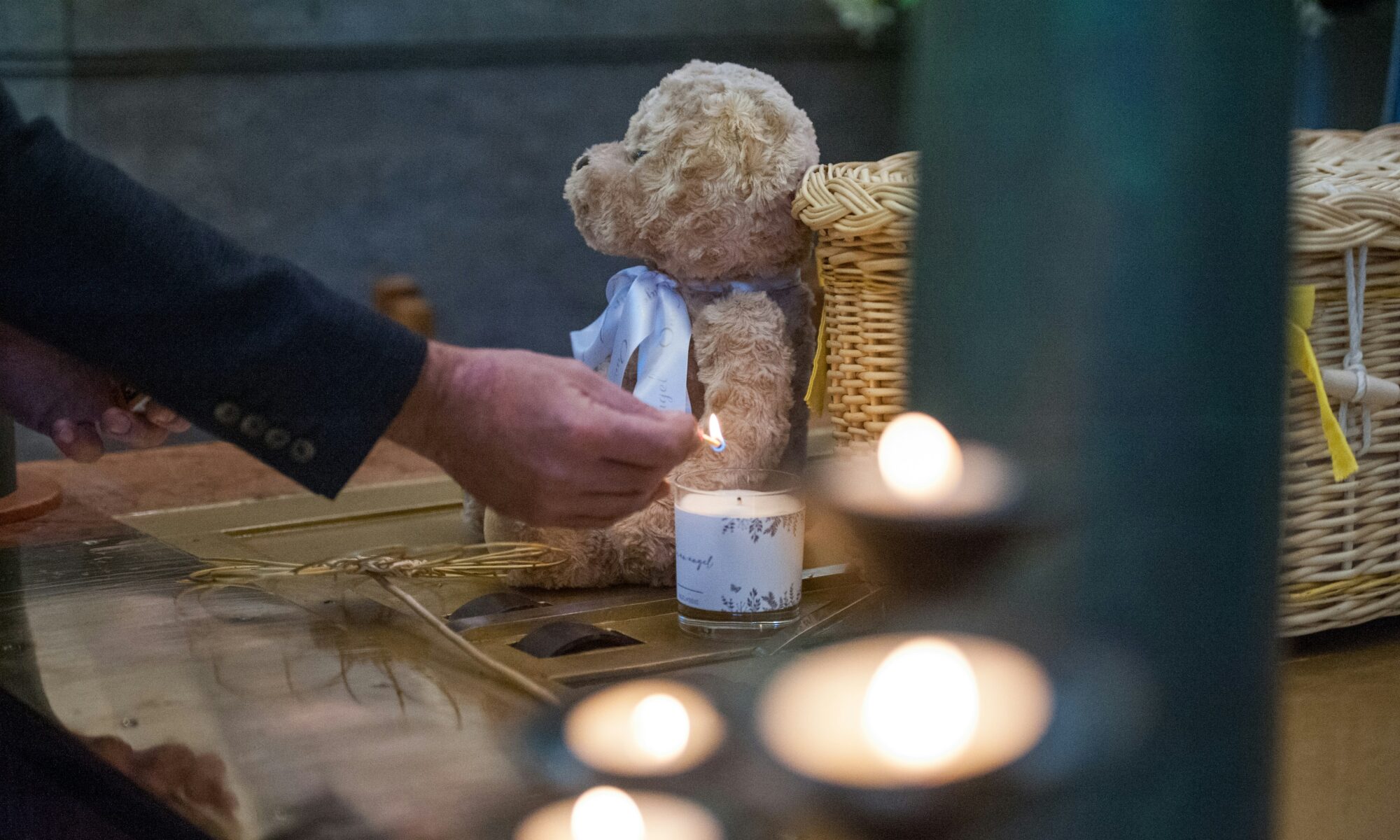
The long shadow of loss: Reflections for Baby Loss Awareness Week

Each October, Baby Loss Awareness Week asks us to pause and acknowledge the grief of parents whose children have died in pregnancy, at birth, or in infancy. It is a week held in absent silence, in candlelight vigils, in the whispered sharing of pain that is so often hidden.

Too often, when we speak of baby loss, we imagine it only as a contemporary grief. We think of the mother in her twenties or thirties, or of parents newly navigating the impossible path of loss. Yet there is another story, less often spoken. It is the story of those who experienced the death of their baby decades ago, who are now older, and who still carry that grief in ways that are both visible and unseen.

Over the years I have had the privilege of sitting with older people in care homes, in hospices, and in the quiet of their own homes. Many have told me stories that had lain untold for years. Some have spoken for the first time of the child they lost as a young woman or man – sometimes through miscarriage in an era when such things were cloaked in silence, sometimes through stillbirth when no photograph, no name, no ritual of farewell was encouraged or permitted.

The grief of baby loss is unlike any other. It is the shattering of expectation, the fracture of future. For older people, the weight of this grief has often been borne in silence. In previous generations, the language of loss was denied them; they were told to “move on,” to have another child, to “forget.” But grief does not forget. It embeds itself in memory, in anniversaries, in the way a mother looks at her grown children and quietly counts the one who is missing.

For many older people, there was little space to acknowledge loss. Hospital practices of the 1950s, 60s, and 70s often denied parents the chance to hold their baby, to name them, to bury them. The cultural silence of the time compounded the wound. The result is that many live today with an unspoken grief that has stretched across the decades.

I recall one woman in her eighties telling me, with tears on her cheeks, about the stillborn daughter she had in 1961. It was the first time she had ever spoken of her child outside her family. “I wasn’t allowed to see her,” she told me. “I wasn’t allowed to grieve.” Half a century later, the pain was as fresh as if it had happened yesterday.

Baby Loss Awareness Week should be for her too – and for the many like her whose sorrow has not diminished with time but has simply been carried.

There is something uniquely cruel in losing a baby. Unlike other bereavements, it is not only the present you mourn, but the entirety of a future denied. Older people often carry a double grief – not just for the baby they lost, but for the adult that child might have become, for the grandchildren they might have known, for the family stories never written.

In the long arc of life, that absence remains a presence. It shapes birthdays, family gatherings, even moments of joy. Many older people find that as they age, as memory sharpens around the edges of their life story, the loss of a baby comes back into sharper focus. What was buried in silence emerges again, demanding acknowledgement.

For those of us who support older people – whether as carers, nurses, family or friends – there is a responsibility to listen to these stories when they are offered. Bearing witness to long-buried grief is an act of dignity. It says: your child mattered; your love is not forgotten; your story deserves space.

Care as we know well is not only about attending to the body. It is about holding the soul in its fragility, recognising that the person before us is shaped by every joy and every sorrow they have carried. Baby Loss Awareness Week calls us to remember that grief does not age out. It does not fade with time. It remains part of the fabric of who someone is.

If we are to be a society that truly cares, we must do more to recognise the historic grief of baby loss among older people. Bereavement support today has improved enormously compared to the past, but many who experienced loss in earlier decades were denied the rituals, the recognition, and the care that parents now rightly expect. I know about and am in awe of the absolutely amazing work of “Held in our Hearts“ and can only imagine the immense support that older people could have received had such an organisation existed decades ago.

Health and social care professionals need to be alert to the presence of this long shadow of grief. Care planning, life-story work, and spiritual support should all create space for people to share these experiences if they wish. Training in bereavement care for those who work with older people must include awareness of historic baby loss.

At a policy level, baby loss strategies should explicitly acknowledge that remembrance is not time-limited. Services and charities working in this field should consider outreach to older people, enabling them to name, remember, and commemorate their children in ways they were once denied. Public rituals, memorial spaces, and acts of collective remembrance should be inclusive of all generations, not just the newly bereaved.

Recognition will not erase the loss, but it can bring comfort, healing, and dignity. It can help older people feel that their children are no longer forgotten, and that their grief is no longer borne in silence.

For many older people, remembrance is not a burden but a necessity. To remember their baby is to acknowledge that their child lived, however briefly, and that their love endures.

In marking the losses of older parents who grieve their children decades on, I am reminded of the words of Christina Rossetti in her poem Remember (1862). Though written in another age, her words capture both the longing for remembrance and the acceptance that love endures, even when speech is silenced:

Remember

Christina Rossetti


Remember me when I am gone away,

Gone far away into the silent land;

When you can no more hold me by the hand,

Nor I half turn to go yet turning stay.


Remember me when no more day by day

You tell me of our future that you planned:

Only remember me; you understand

It will be late to counsel then or pray.


Yet if you should forget me for a while

And afterwards remember, do not grieve:

For if the darkness and corruption leave

A vestige of the thoughts that once I had,

Better by far you should forget and smile

Than that you should remember and be sad.


Donald Macaskill


Photo by The Good Funeral Guide on Unsplash

Anne’s Law Consultation Survey

Consultation survey on Anne’s Law (The Care Home Services (Visits to and by Residents) (Scotland) Regulations 2026)

Background

Following the experiences of care home residents during the COVID-19 pandemic, Scottish Ministers committed to making a law to ensure that people living in adult care homes can stay connected with their loved ones. That law is known as Anne’s Law, in memory of Anne Duke, and was enacted in July 2025 as part of the Care Reform (Scotland) Act. This law requires regulations and a code of practice to guide how it will work in practice. The regulations will tell care home providers what their new duties and responsibilities are.

The survey

The Scottish Government would like your feedback on the draft regulations to make sure these are clear and practical. The survey is open to everyone. It will be particularly relevant for care home providers, staff, care home residents and their family and friends, and professionals working in the social care sector. The survey presents the draft regulations and asks you questions about them. Some of the wording of the regulations is based on the Care Reform (Scotland) Act and cannot be changed but where things are unclear further explanations and examples can be included in the code of practice.

Here is the link: Anne’s Law Regulations Survey

On average, the survey will take around 20 minutes to complete and will close on Friday 17 October.

If you have any questions relating to the survey please get in touch via the following e-mail address: [email protected].

Easy Read

An Easy Read explanation document has been produced to accompany the survey. This is to support people who have a learning disability or other condition affecting how they process information, or just need a bit of extra support to access the survey. It can be used by carers or family and friends to help individuals to share their views. Please contact the email above if you would like a copy of the Easy Read explanation document or if you require any additional support in completing the survey.