Upcoming Webinars: Care Inspectorate Powers under the Care Reform (Scotland) Act 2025

Following our recent briefing on the implementation of new Care Inspectorate powers, the Scottish Government has scheduled two webinars for CCPS and Scottish Care members.

These sessions will provide:

  • Further detail on the proposed policy and when it may be applied.
  • An opportunity for members to share feedback and ask questions.

Webinar Dates & Links

Tuesday 2 December, 15:00 – 16:00
Join the meeting here

Wednesday 3 December, 11:00 – 12:00
Join the meeting here

We encourage as many members as possible to attend. If you are unable to join, we would still welcome your feedback via email to: : [email protected]

A Budget that must care; Scotland’s social care disintegration demands action.

As the UK Chancellor prepares to deliver the Budget next Wednesday, Scotland stands at a crossroads. For too long, social care has been treated as an afterthought or as the underling of the NHS, yet it underpins everything we value: dignity in later life, support for unpaid carers, and the ability for people to live independently and participate fully in society.

This is not a marginal issue. It is the infrastructure of compassion that sustains our communities. And right now, that infrastructure is collapsing.

Scotland’s social care system is at breaking point. Workforce shortages, rising costs, and chronic underfunding have created a perfect storm.

In rural areas like the Highlands, geography compounds the crisis: delayed discharges cost millions, care homes close, and families face heartbreak as loved ones are sent hundreds of miles away because there is simply nowhere local to go. This is not dignity rather it is systemic failure.

Audit Scotland has warned repeatedly that urgent action is needed to change how services are delivered. Yet despite record allocations on paper, the reality is stark: councils and health and social care partnerships are in year debt to the region of around £500 million. Providers are closing. Skilled workers are leaving because they cannot afford to stay in a profession they love.

When I think of the two main sectors that my membership comprises both are on their knees in the majority of locations.

Homecare is the backbone of independence, but it is collapsing under financial strain. The latest Minimum Price for Homecare in Scotland, as calculated by the Homecare Association for the financial year 2025–2026, is £32.88 per hour. No Scottish council meets the minimum price. Notice it’s a minimum price not a fair price!

To add insult to injury providers report late payments averaging £300,000 per organisation, threatening viability and continuity of care. And the obscenest occurrence is the explosion in 15-minute visits when we were supposed to be seeing the end of this practice which is an absolute assault on dignity.

Every hour of care at home is an investment in human flourishing. It prevents hospital admissions, reduces loneliness, and sustains wellbeing. Yet this lifeline is fraying if not already broken.

The independent care home sector provides 86% of all registered places in Scotland yet has seen a 34% decrease in residents since 2014. Over the past decade, 476 care homes have closed or changed hands, sometimes forcing families to travel 100 miles or more to visit loved ones. This is not just inconvenient, it is cruel. Any fair analysis shows the £1,027 per resident per week for intensive 24/7 nursing residential care is a good £500-£1000 short of the true price of dignified care and even that ties return or profit to 4%, way below what most economists argue is needed to keep a business, be it charitable, not for profit or private going.

Empty beds today mean closures tomorrow, and every closure strips communities of choice and dignity.

Delayed discharge is the most visible symptom of a whole system paralysis. More than five million bed days have been lost since 2015 at a cost of £1.5 billion. Hospitals are gridlocked because social care is starved of funds.

But the invisible cost is what really matters. It’s the thousands who are waiting up to 18 weeks to be assessed for the care they need; it’s the hundreds who die without the dignified end of life care they deserve; it’s the burnt out and exhausted thousands of family and friend carers who are at their wits end with fatigue and emptiness.

And just in case you think I’m engaging in hyperbole and exaggeration – the avoidance critique of those made uncomfortable by the raw truth of political failure, others are in agreement.

COSLA, the representative body of local government in Scotland, has issued a clear warning: without fair and sustainable funding, we risk the viability of services that people rely on every single day. Their manifesto calls for an additional £750 million investment in social care and an end to 15-minute visits in homecare.

More immediately they have also called for the urgent reconvening of the Financial Viability Response Group of which providers through Scottish Care and CCPS sat on at the start of the year and which in April offered a truthful report with recommendations to the Cabinet Secretary.

Councillor Paul Kelly put it bluntly:

“Local Government cannot do this alone. Demand is increasing, costs are rising, and the workforce is under immense strain.”

Yet we have been faced with silence from the Scottish Government other than a statement to address winter pressures by giving £20 million to NHS Boards to address ‘social care’ needs. An allocation not to local authorities or HSCPs but to the sacrosanct NHS.

Scottish Care has consistently argued for a budget that values social care not one that kills reassurance and forces closures. As I said recently, people are dying because they cannot get the social care they need. This is not hyperbole; it is happening now. Services are closing, staff are being made redundant, and communities are losing lifelines.

The UK Government must also shoulder responsibility. Immigration policy changes such as scrapping social care visas, raising salary thresholds, and increasing sponsorship costs are reckless and inhumane. In rural Scotland, internationally recruited workers make up more than 25% of the workforce. Removing this lifeline will devastate communities and put lives at risk.

Both governments must act decisively. The UK Government needs to reverse damaging immigration changes, exempt social care from National Insurance hikes, and deliver Barnett consequentials that prioritise care. The Scottish Government needs to commit to COSLA’s £750m ask, deliver multi-year funding agreements, and accelerate reform that values workforce and community-led care models.

This is not about party politics – it is about people. Every delay deepens the crisis. Every cut costs lives.

Social care is not a drain on resources; it is an investment in humanity. It is the infrastructure of compassion that sustains our communities. As we await the Budget, let us demand a budget that cares; a budget that restores dignity, strengthens the workforce, and ensures that no one in Scotland is left without the support they need.

I appeal to our political leaders to stop the rhetoric and start the rescue.

To the public I say, raise your voice for those who cannot.

Social care is the foundation of a fair Scotland. If we fail to act now, we will not just lose services but inevitably we will lose lives, communities, and trust in the very idea of care. “Social care is not a cost – it is the currency of compassion.”

We cannot afford another winter of reactive measures. We cannot afford to lose more care homes, more workers, more trust. The UK Budget must deliver for social care. The Scottish Government must match ambition with action.

This is not just about funding. It is about the kind of country we want to be. One that values its elders, supports its carers, and builds communities of care rooted in dignity, belonging, and hope.

This Saturday, before the Budget, let us make one message clear: Scotland demands a budget that cares. Nothing less will do.

Donald Macaskill

Granbuddies: A Special Collaboration Between Abercorn and Hollandbush Nursery

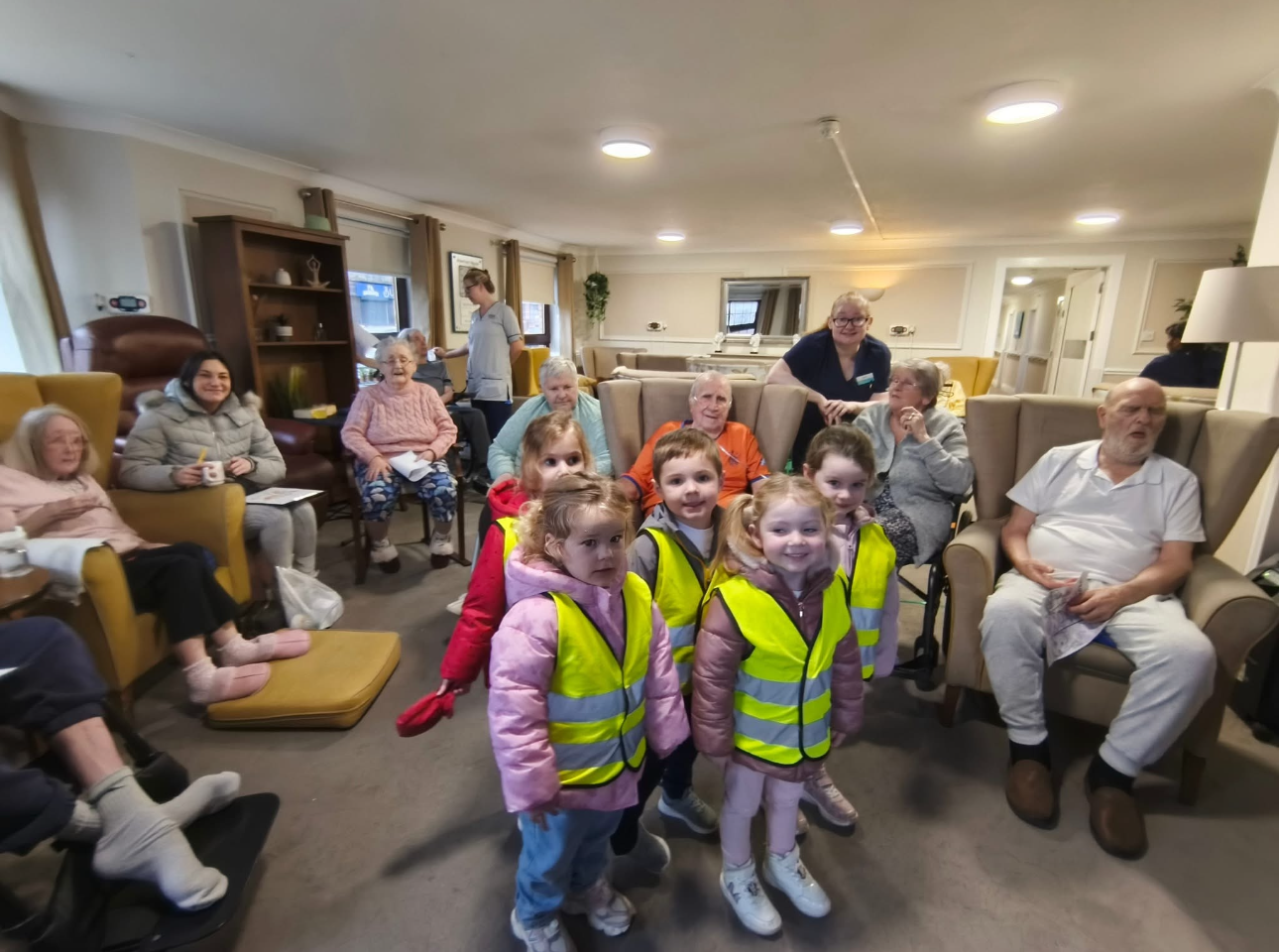
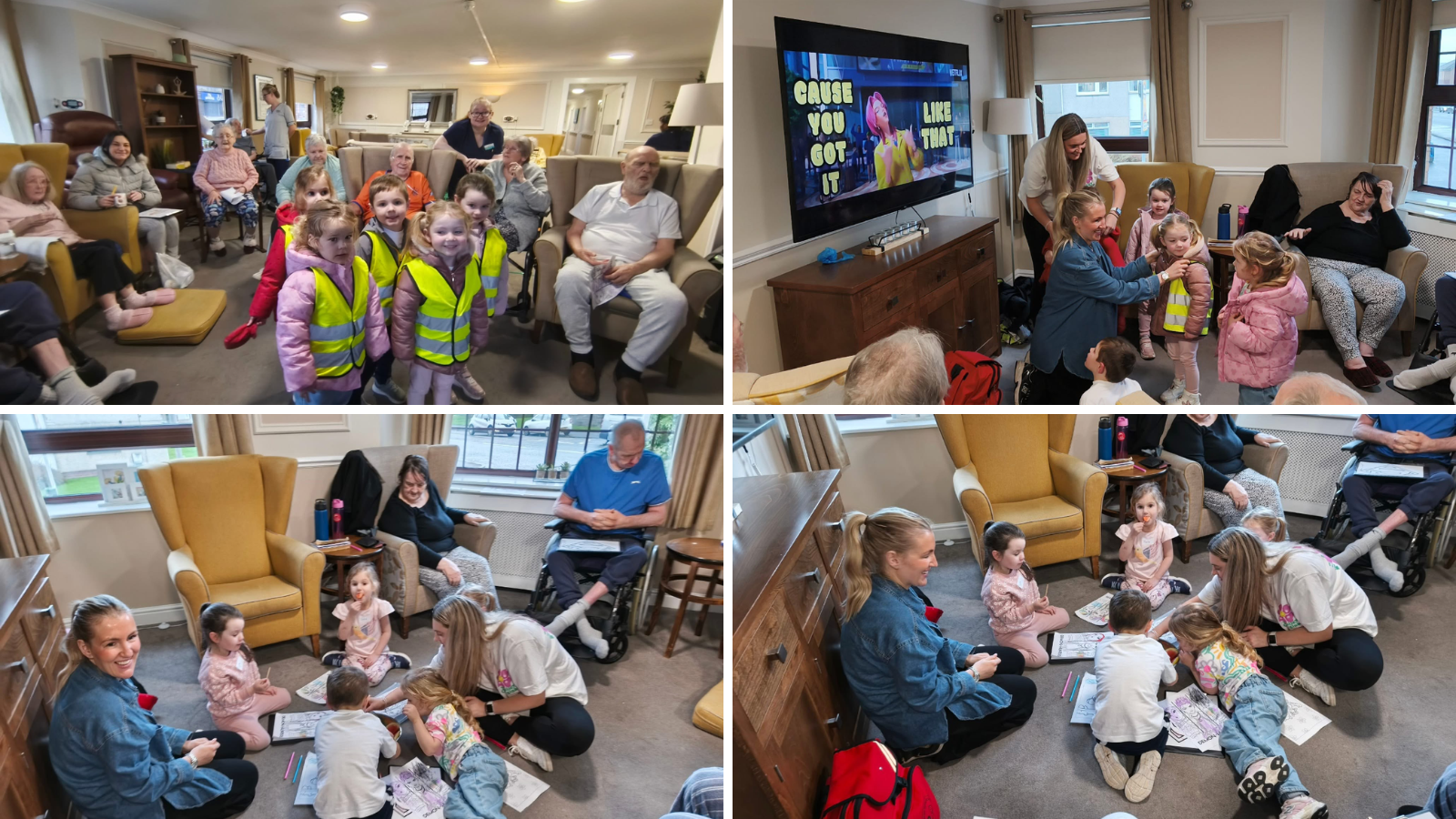
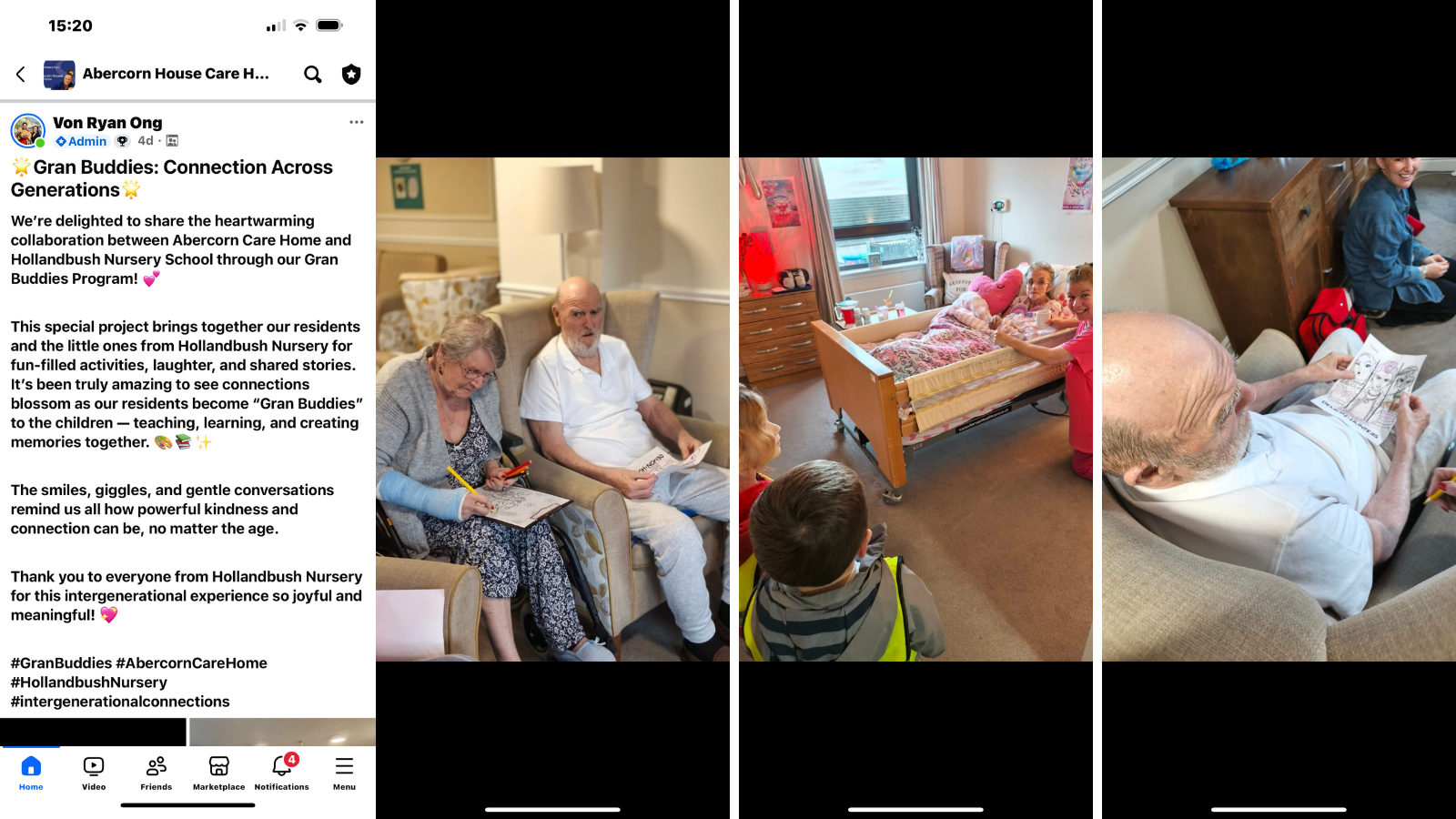
Abercorn has proudly partnered with Hollandbush Nursery School through the Granbuddies programme, a heartwarming initiative that brings residents and children together for shared activities, laughter and storytelling.

What began as a simple idea has blossomed into something truly special. Residents have become Granbuddies to the children, offering wisdom, warmth, and friendship, while the little ones bring energy, curiosity, and joy. Together, they are creating memories that span generations.

“It’s wonderful to see our residents light up when the children arrive”, said a staff member at Abercorn. “The smiles and conversations show just how powerful connection can be, no matter your age”.

Children from Hollandbush Nursery have also embraced the project wholeheartedly. One teacher shared: “The children look forward to visiting their Granbuddies. They learn patience, kindness ad respect in such a natural way. It’s teaching them that friendship doesn’t have boundaries”.

From arts and crafts to storytelling sessions, every gathering is filled with giggles, gentle conversation and moments of genuine care. The programme has not only enriched the lives of residents but also given the children a sense of belonging to a wider community.

This collaboration is a shining example of how intergenerational projects can strengthen communities, proving that kindness and connection are timeless.

Honouring Our Heroes at Bothwell Park

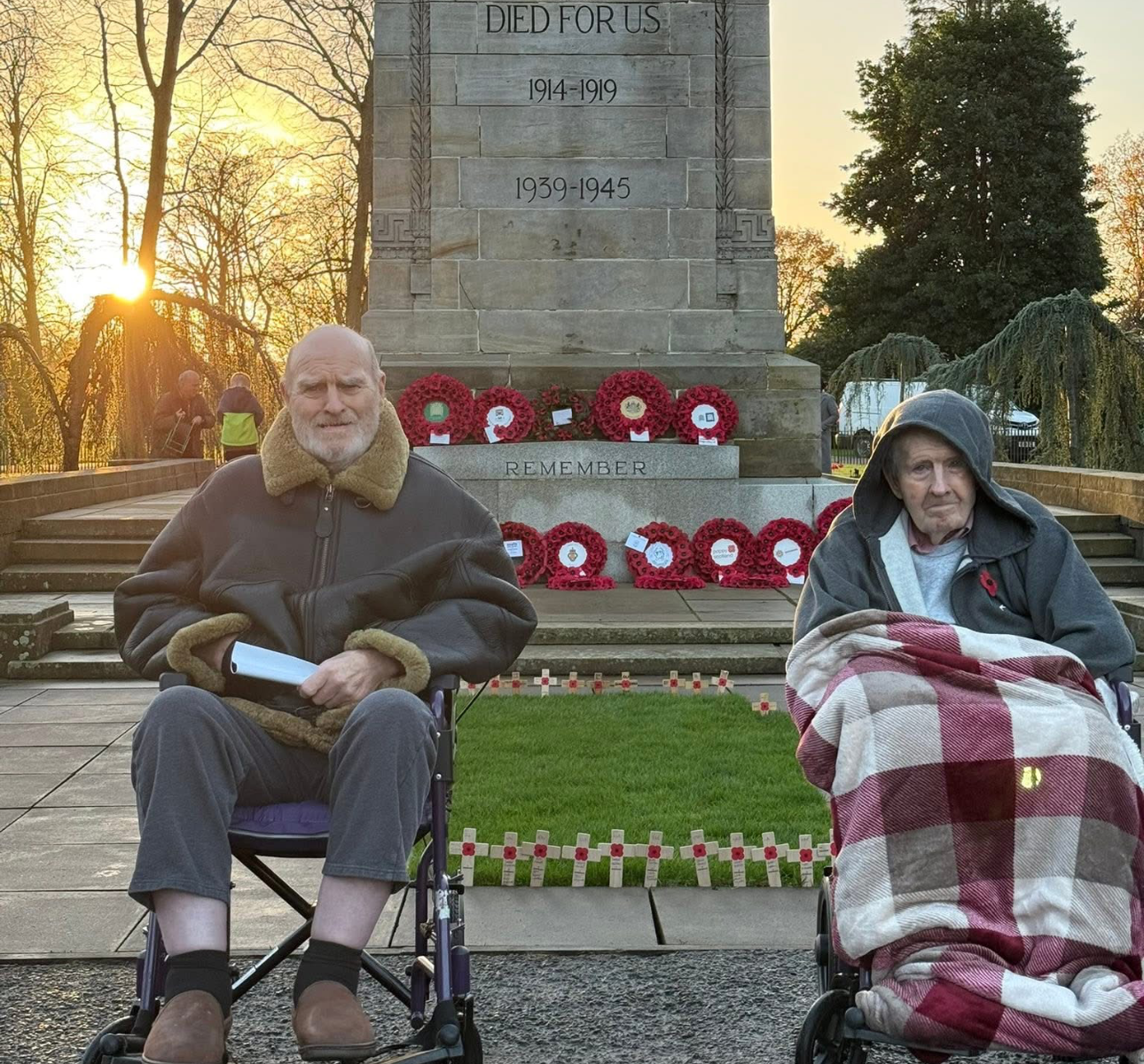
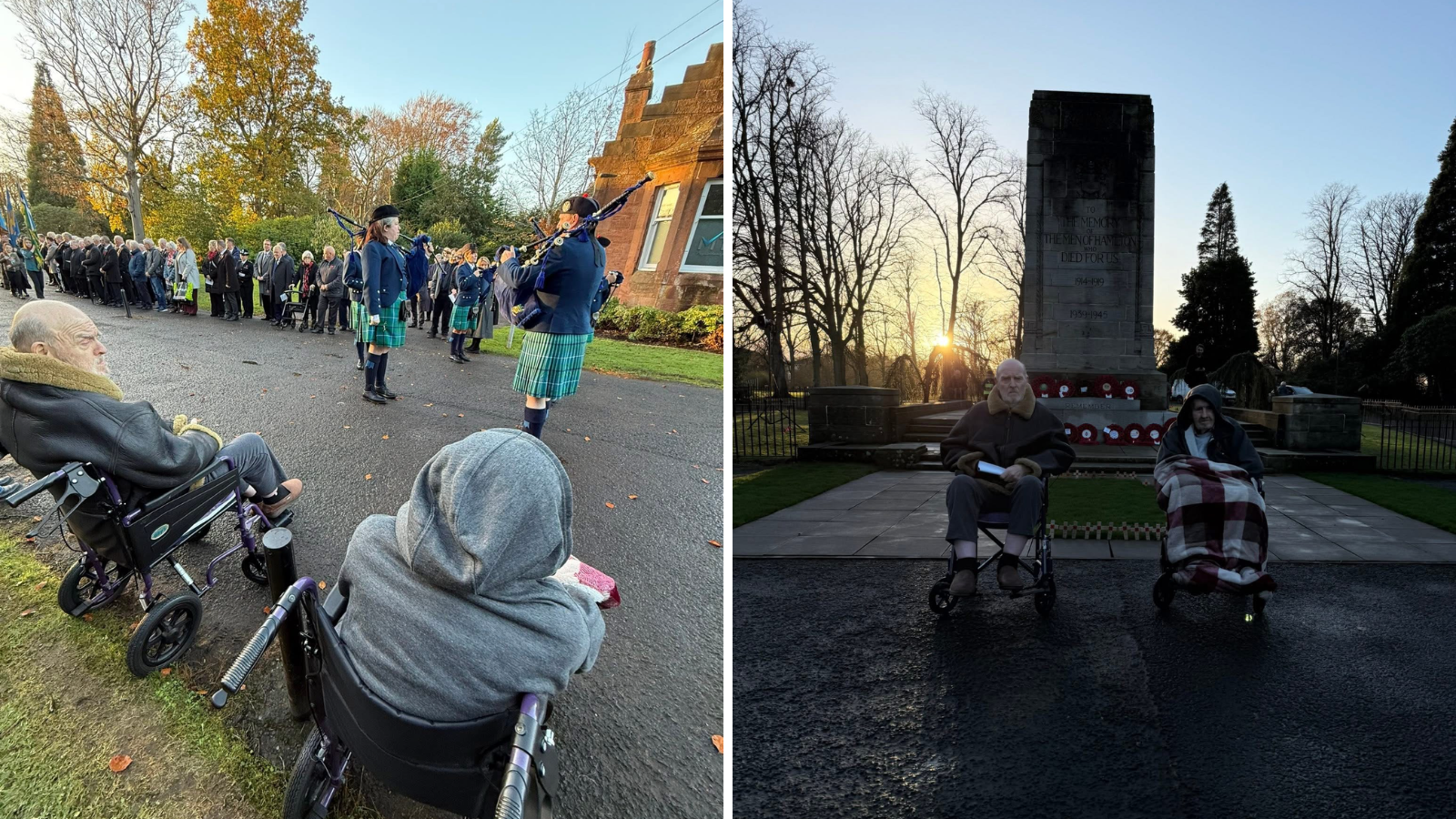
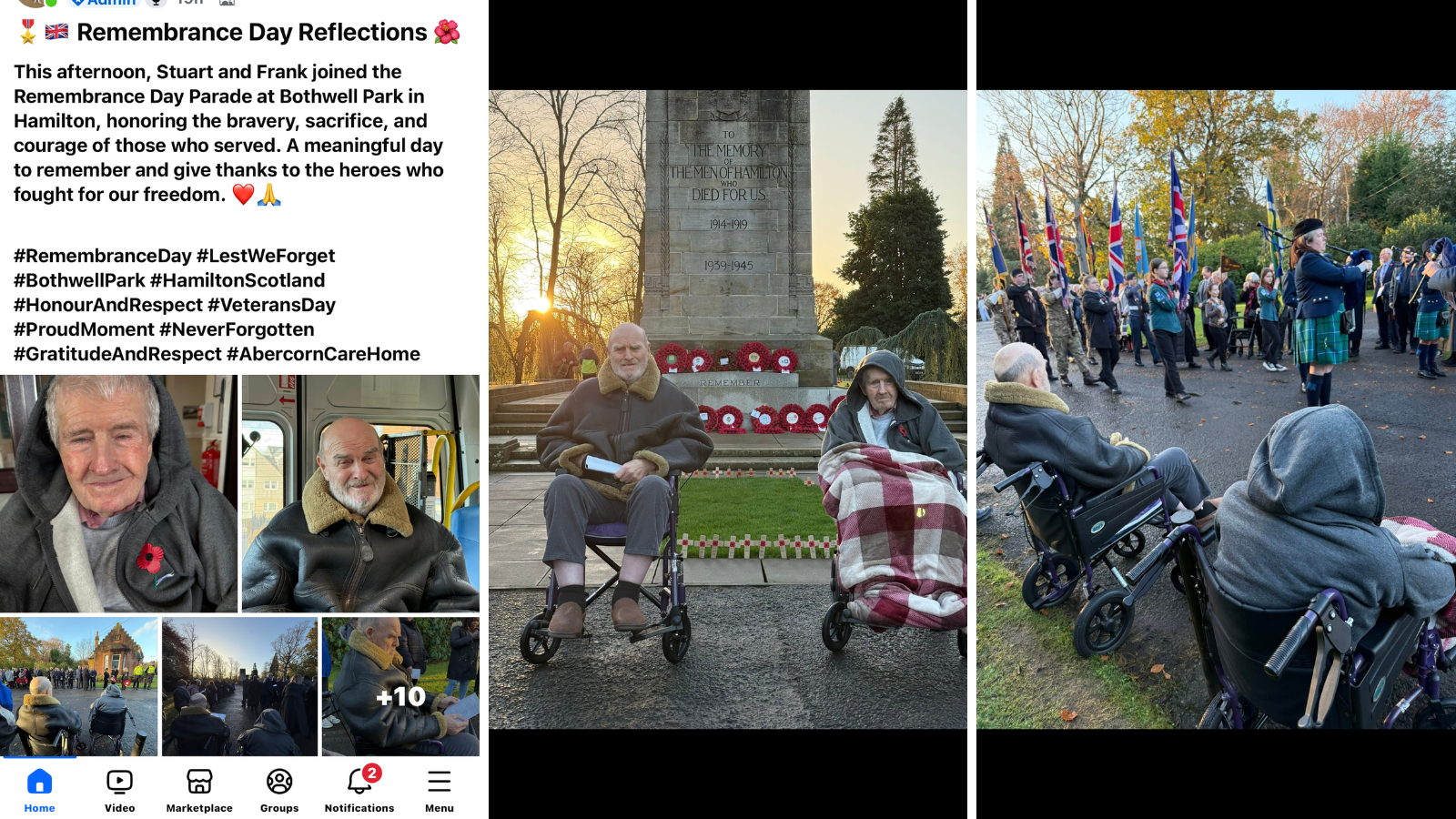
On Remembrance Day, two of Abercorn’s cherished residents, Stuart and Frank, proudly attended the parade at Bothwell Park, joining the community in paying tribute to the bravery, sacrifice, and courage of those who served.

It was a deeply meaningful day, filled with reflection, gratitude and unity. Surrounded by veterans, families and fellow citizens, Stuart and Frank watched as they honoured the heroes who fought for our freedom. The atmosphere was solemn yet uplifting, reminding us all of the enduring legacy of those who gave so much.

The team at Abercorn as incredibly proud of Stuart and Frank for representing their home with dignity and respect. Their presence was a powerful reminder of the importance of remembering, and giving thanks.

A Night To Remember at the Town House

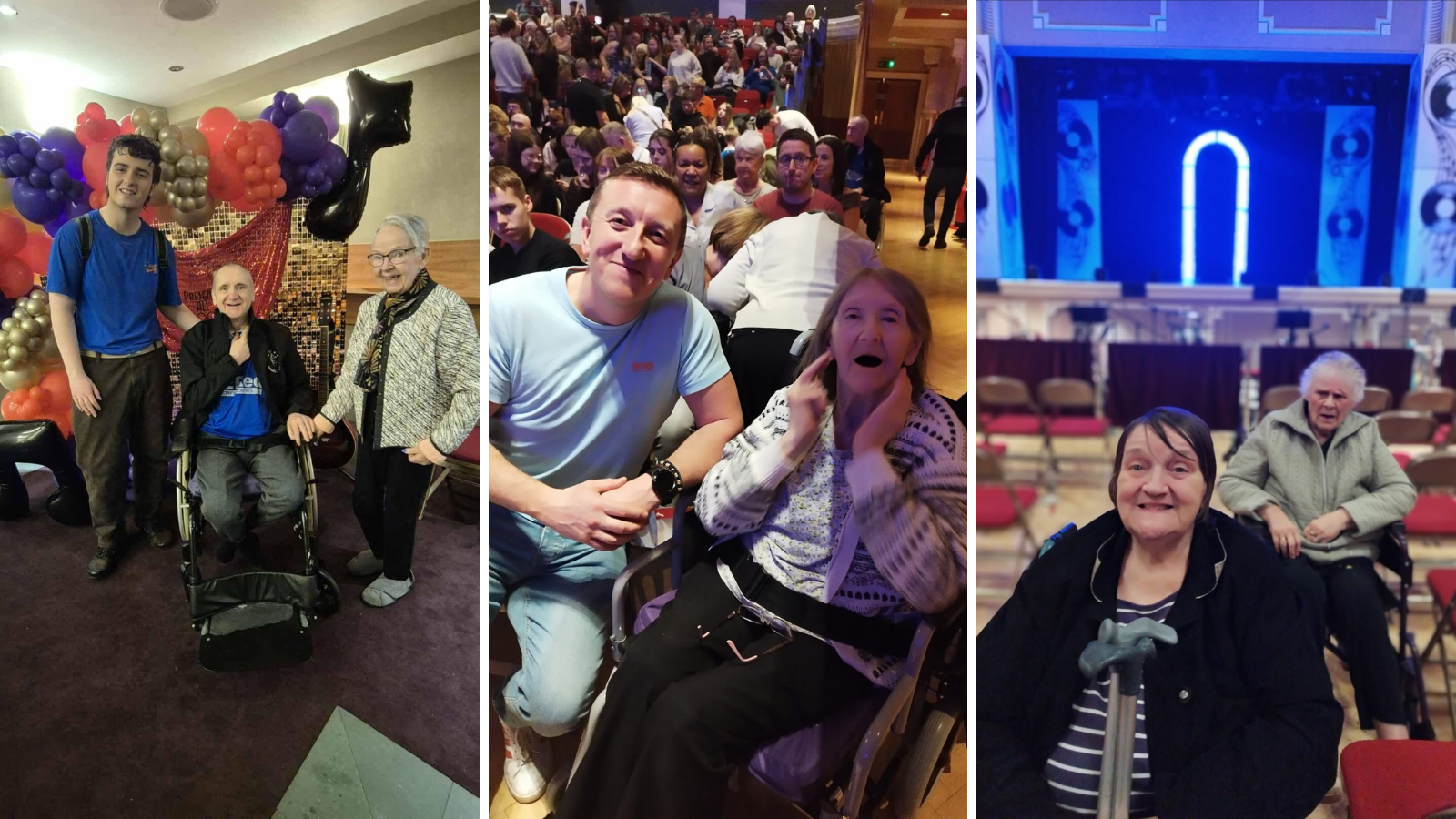
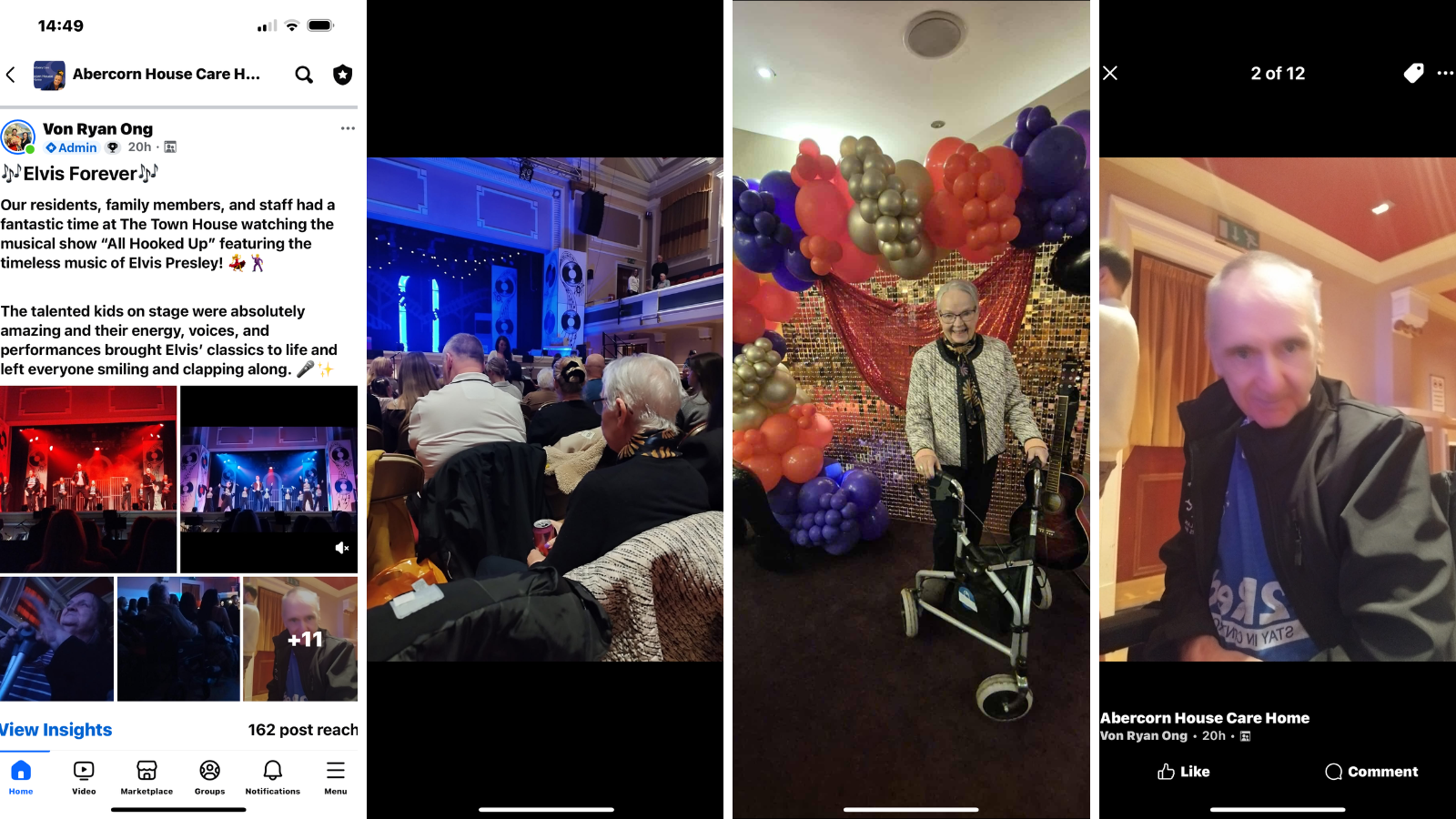
Residents, families and staff from Abercorn recently enjoyed a truly special evening at The Town House, where they attended the musical show “All Hooked Up”, featuring the timeless music of Elvis Presley.

From the moment the curtain rose, the energy in the room was electric. The talented young performers lit up the stage with their vibrant voices, dazzling choreography, and heartfelt enthusiasm. Each Elvis classic was brought to life with such joy and spirit that it had everyone smiling, clapping and even singing along.

For our residents, it was more than just a show, it was a chance to relive cherished memories, share laughter with loved ones, and feel the magic of live performance. The warmth and connection between generations, both on stage and in the audience, made the night unforgettable.

Huge thanks to the organizers and performers for creating such a joyful experience. Moments like these remind us of the power of music, community and togetherness.

Music, Movement and Smiles at Forefaulds Care Home

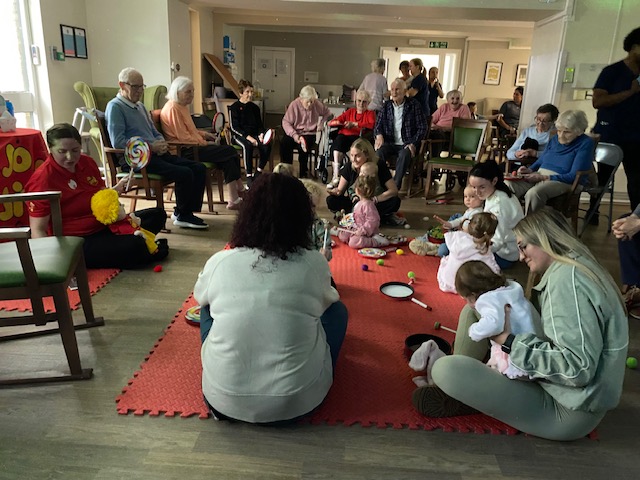
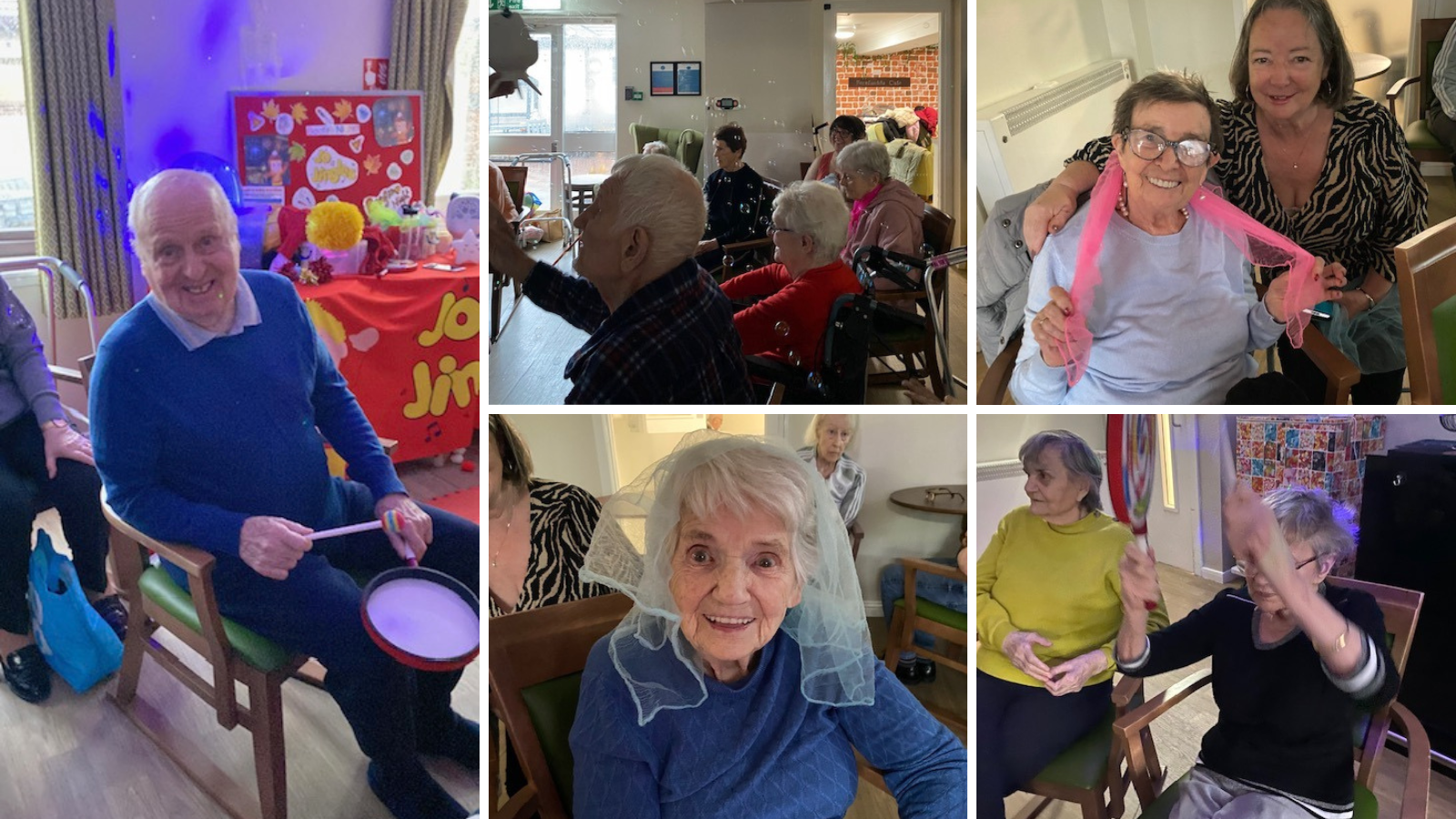
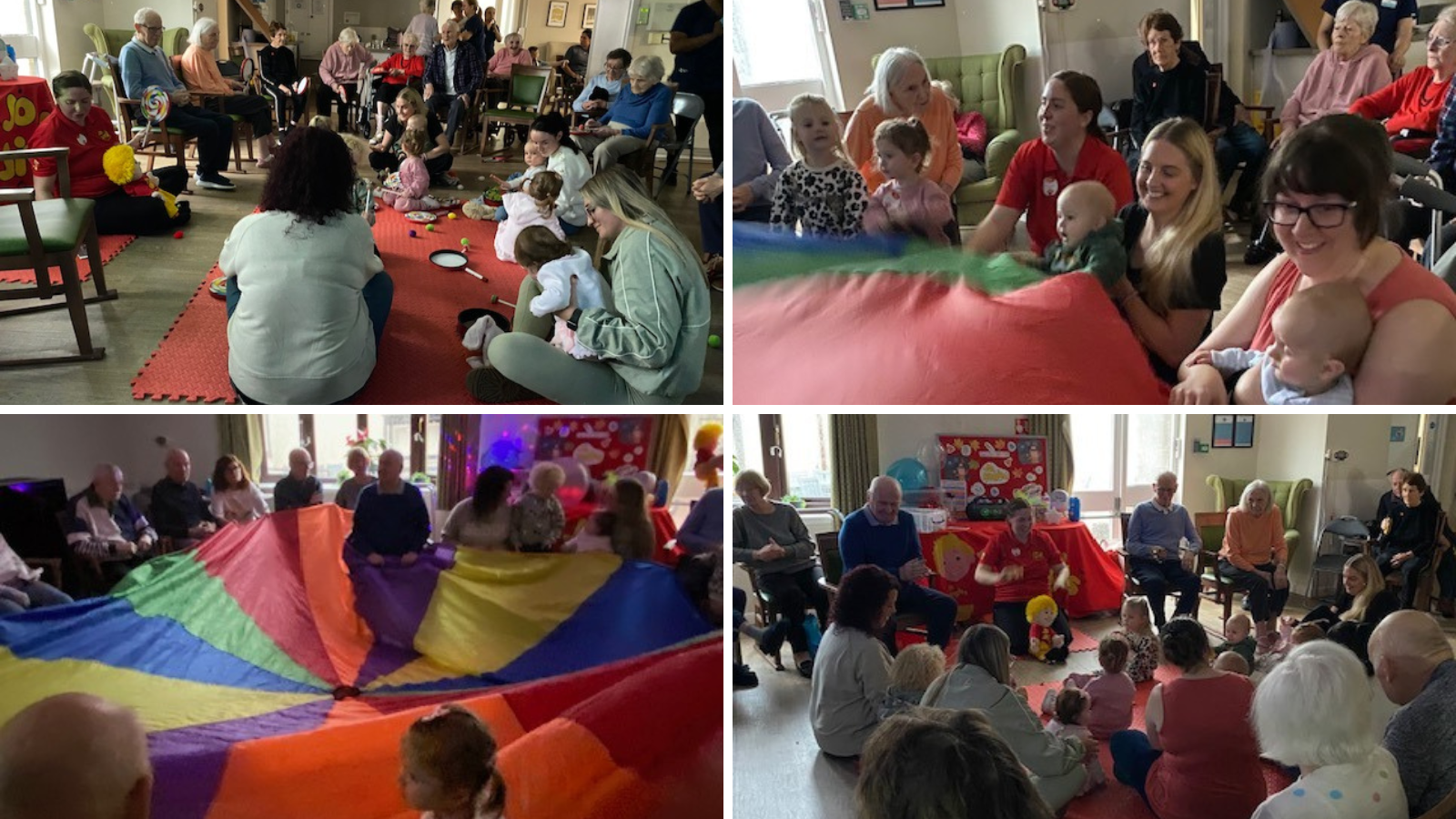
Forefaulds Care Home in East Kilbride recently hosted a heart-warming intergenerational activity that brought joy to residents and local families alike.

The home welcomed Jo Jingles, a popular music and movement class, for a lively session with residents and children ranging from babies to age five. The room was filled with laughter, singing and smiles as residents, babies and parents enjoyed the energy and warmth of the young visitors.

Media Statement: Scottish Care Responds to Covid Inquiry Module 2

Scottish Care welcomes the publication of the latest findings of the Covid Inquiry Module 2 report which covered political decision making during the pandemic.

Prof Donald Macaskill, who gave evidence during this Module commented:

“The publication of the Covid Inquiry’s Module 2 report into political decision making during the pandemic has found that the government did ‘too little, too late’.

We note that it indicated that there was a lack of coordination between the different UK administrations and that this harmed the overall response and risked mistrust amongst the population.

Of considerable concern is its assertion that older people and disabled people were not adequately considered in pandemic planning or decision making.

We note that the Report found that there was a disturbing lack of understanding about the reality of social care provision amongst those who are taking critical decisions.

We further agree with the Report that in the future it is fundamental that those who are delivering social care services at the frontline should be intimately involved in decision-making. Regretfully as far as we can see this has still not become reality in any current planning and preparedness.
Whilst we look forward to the findings of Module Six which are specific to social care, we note that this report highlights the lack of both appreciation of and sensitivity to the particular needs of care home residents and those who were living with conditions such as dementia.

We very much appreciate and recognise the Report’s recommendations that the wider non-physiological impacts of protective measures should be better understood not least as they impact on particular populations such as those living with dementia. We concur with the Report’s assessment that this lack of awareness and sensitivity introduced measures into Guidance which meant that the lives of older people in particular were so negatively impacted.”


Media Statement: Scottish Care Warns Immigration Proposals Threaten Scotland’s Care Sector

Scottish Care is deeply concerned by the Home Secretary’s proposals to extend the qualifying period for settlement for legal migrants, particularly the increase from five to fifteen years for those on health and social care visas. These changes will have a profoundly negative impact on the sustainability and quality of care and support services across Scotland.

Scotland’s care sector is already facing acute workforce shortages, with international colleagues playing a vital role in supporting older and vulnerable citizens. Forcing dedicated care workers to wait up to fifteen years for settlement, and tying their future to restrictive criteria, will deter much-needed talent from staying in Scotland and undermine the sense of security and belonging for all those already here. It is further deeply insulting to the professionalism of care organisations for those who do equivalent jobs as nurses and carers in the NHS to be treated so much better.

Such measures risk destabilising care provision, increasing turnover, and placing additional strain on already stretched services. Their impact especially in Scotland’s remote and rural communities is incalculable.

They also send a damaging message that the invaluable contributions of migrant care workers are not fully recognised or valued. Scottish Care urges the UK Government to reconsider these proposals and to work with devolved administrations to ensure immigration policy supports, rather than hinders, the future of care in Scotland.

We also urgently need Scottish Labour to come to challenge these proposals because they are insensitive to Scotland’s distinct needs and are a fundamental threat to our social care and health systems.


Coming Home: Finding Lasting Love And Care

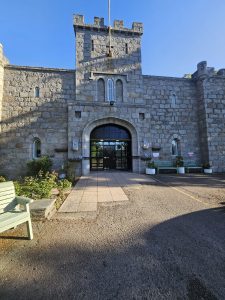
Visiting his late wife, Inez, at Renaissance Care’s Persley Castle Home, James Wood was struck by the dedication and compassion of staff.

Pictured: James with Inez

He decided that if the time came, the converted period house near Aberdeen would become his permanent home and in October, James followed in his wife’s footsteps and took up residence at Persley Castle.

“What brings me great comfort is that my late wife lived here,” says James. “I remember the very personal care she received and she loved the staff. They always had time for her, she was very well looked after.

“When I visited Inez, the staff were really good in communicating with us, letting us know how Inez was doing, the communication was great. Inez was always happy, never sad, and always looked forward to the day.”

James, 89, fondly remembers Inez’s love of nature and the time she spent in the grounds of Persley Castle, with stunning views of the River Don and surrounding woodlands.

Inez passed away in September 2023 at the age of 93 and James recalls being touched by the support of staff.

“A Thursday when I was called in, Inez was very close to leaving us, a couple of the staff members including Abby sat with me, they held my hand, they let me cry. One of the staff members put a cross on Inez’s chest which really meant a lot to me and would’ve meant a lot to her.”

James has settled into his new home and speaks of “the sense of community” provided by staff and residents.

He said a highlight was a recent visit by therapet dogs, which brought back memories of Inez.

Pictured: Inez with Pepper, a therapist dog

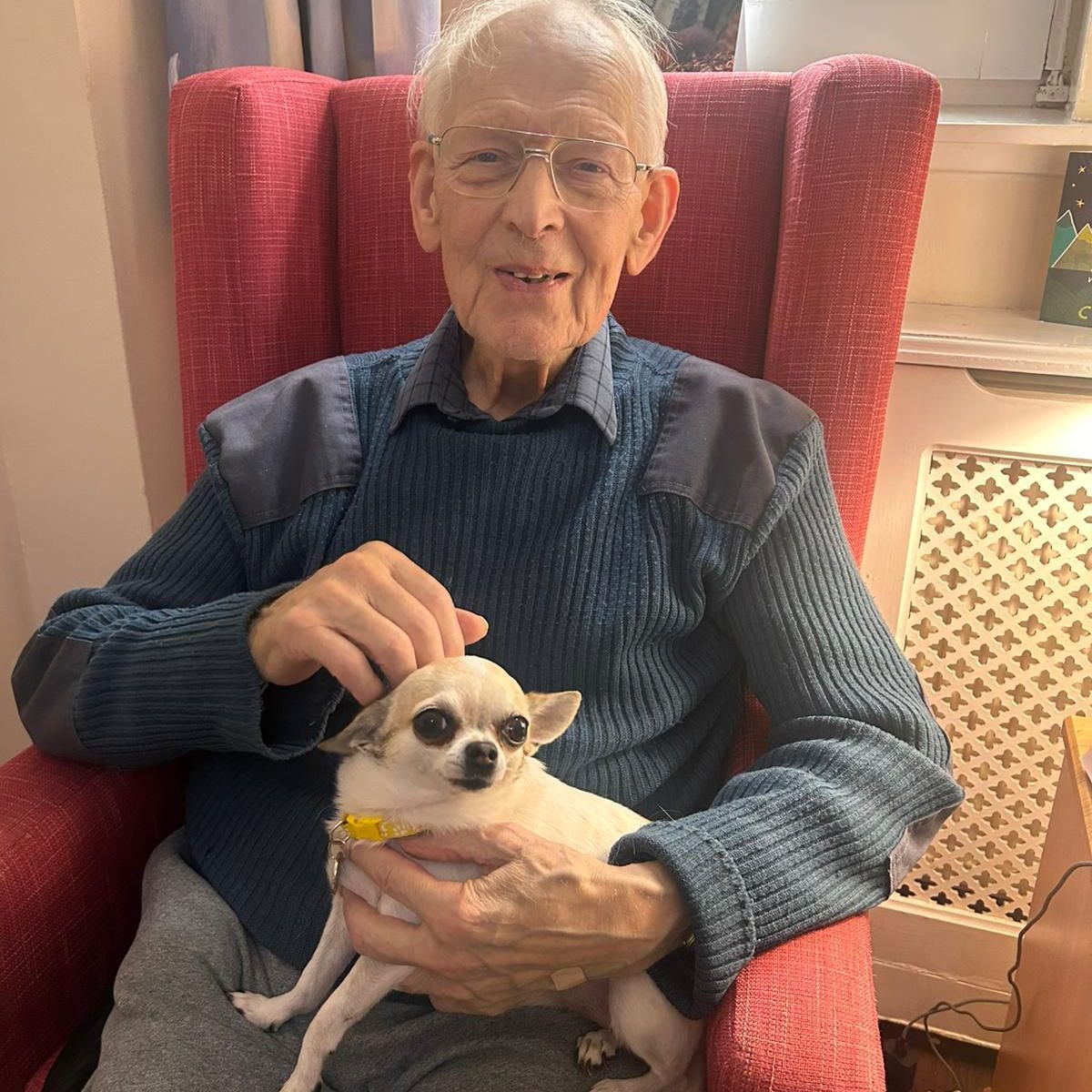
Pictured: James with Pepper

James has a picture of his wife holding Pepper, one of the animals.

“It meant so much to me seeing the dogs, remembering all about Inez holding them. I asked Abby if she could take a photo of me and Pepper so we can recreate the photo we have of Inez and Pepper. She was more than happy to do that and it means a lot to me, knowing I have that.”

James looks forward to many years at Persley Castle and said families who are considering the home for a loved one should “do it”.

He added: “I’ve been here a month now and I feel like it’s the same care, the same interest from staff. There are familiar faces which makes it so much better – and they always make sure they take time to chat to me.

“Both my and my wife’s experience has been very personalised. The staff sit and try to find out as much as they can about you, the management is fantastic, there is great communication in the home, and seeing all the friendly smiles, happy faces day in day out, just makes you so much happier.”

Rachael Hope, Home Manager, said: “It’s been an absolute pleasure to welcome James back to Persley Castle. His fond memories and great personality are a delight within the home.”

Pictured: Persley Castle Care Home

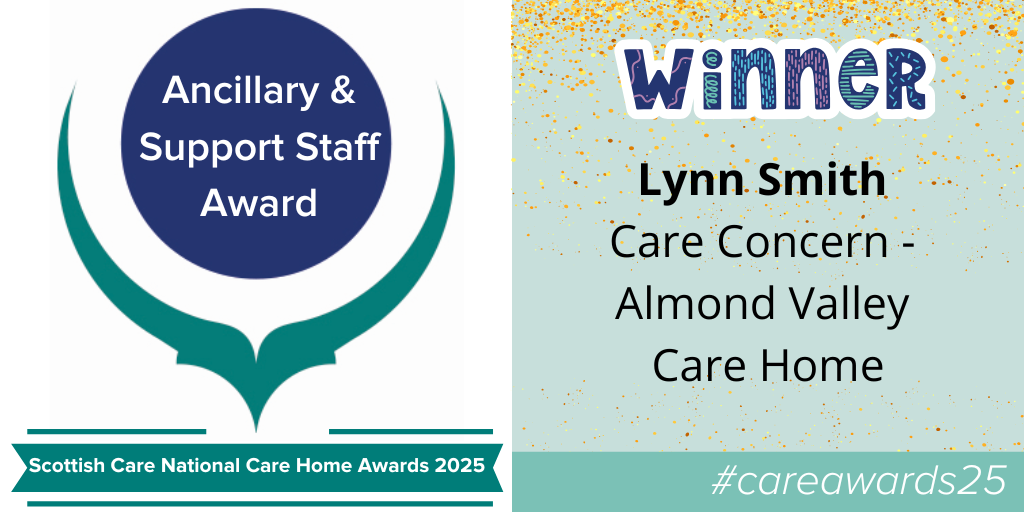
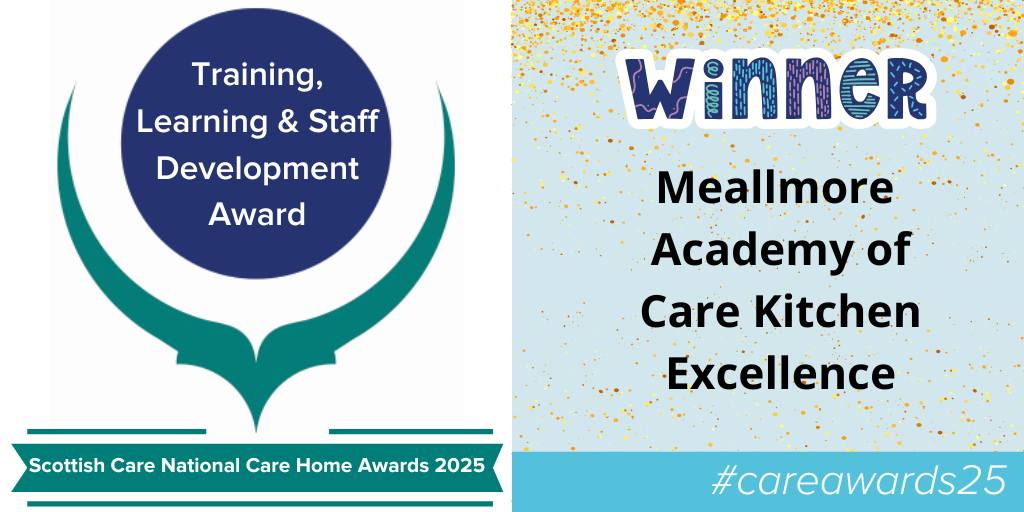
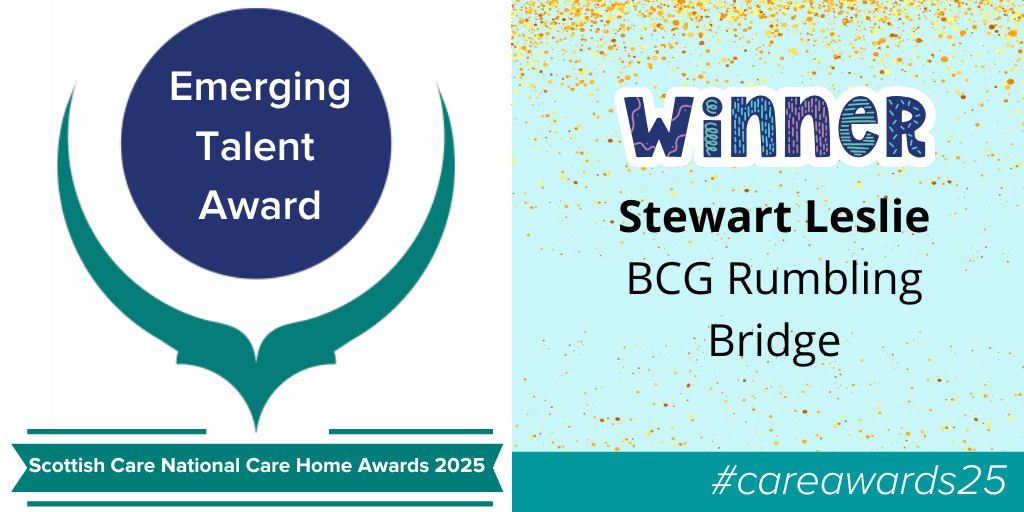
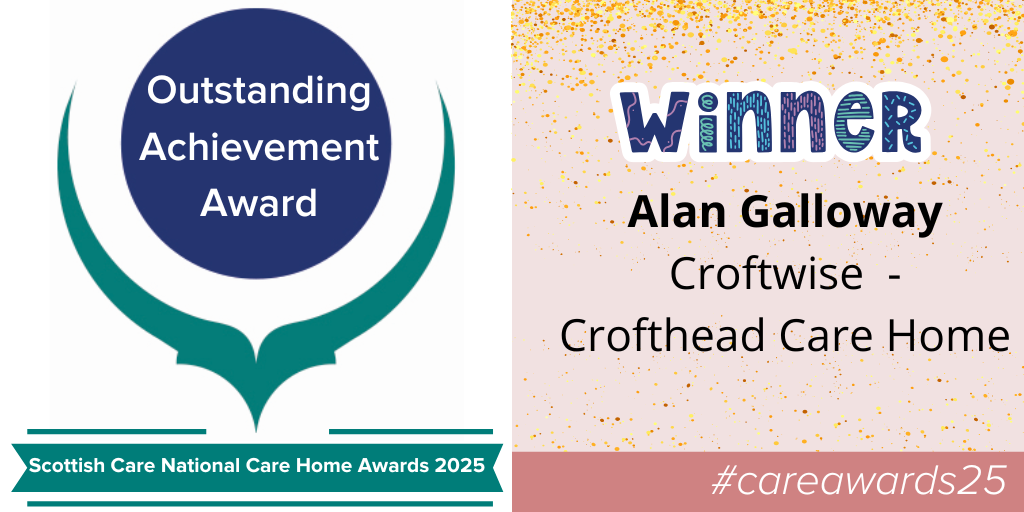
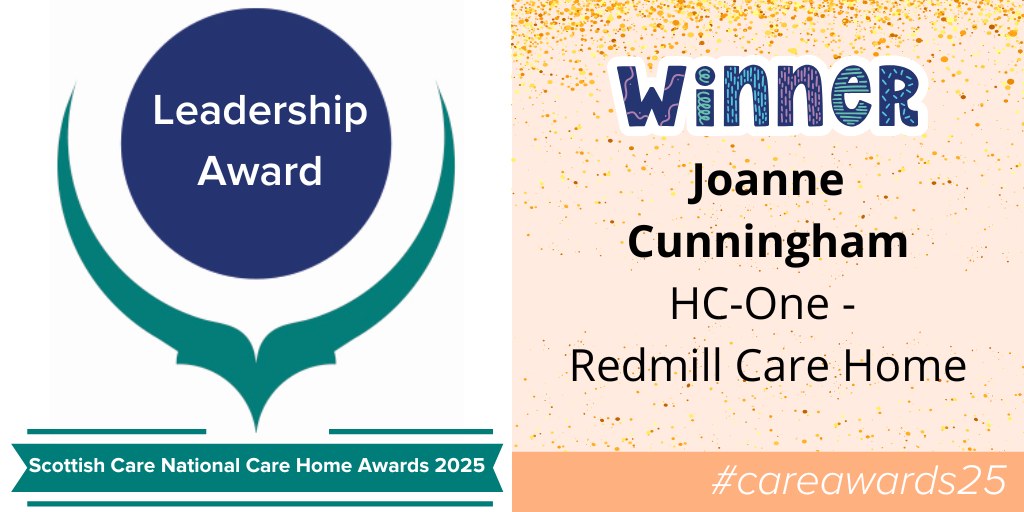
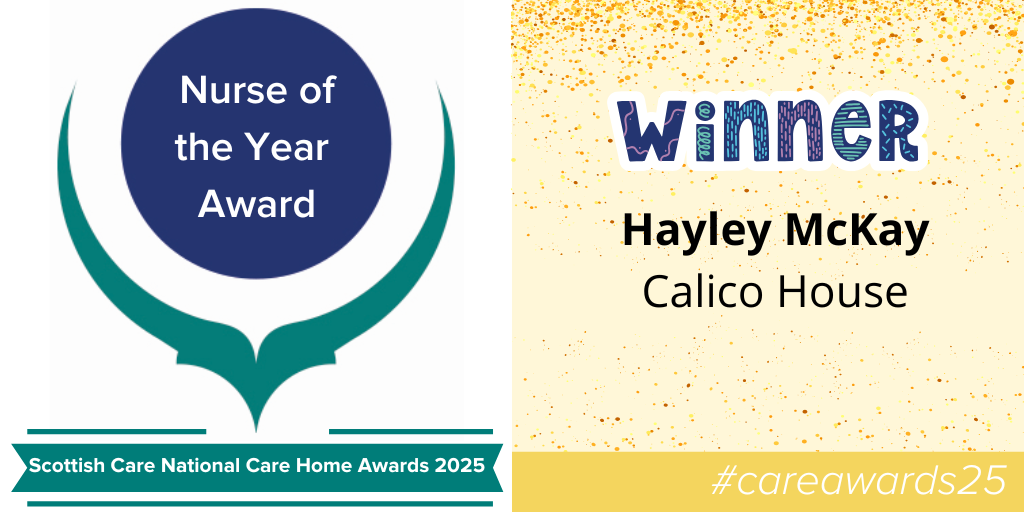
Care Home Awards 2025 – Winners Announced!

The Scottish Care National Care Home Awards 2025 took place on Friday 14 November 2025 at the Hilton, Glasgow, celebrating excellence and dedication in the care sector.

Hosted by the wonderful Michelle McManus, the evening was filled with celebration, inspiration, and heartfelt moments.

Huge congratulations to all our amazing finalists and winners! A special thanks to our Awards Sponsors for supporting the event, and to everyone who made the night so memorable.

We are especially grateful to our special sponsors:

  • The Nursing Partnership for sponsoring the arrival drinks
  • Radar Healthcare for sponsoring the table wine
  • Citation for the three surprise cash prizes hidden under lucky napkins
  • Hilton for donating a fantastic hotel stay raffle prize
  • OneCloud Healthcare for sponsoring the Dhol and Pipes welcome entertainment

Thank you to all who contributed to making the 2025 Care Home Awards such a memorable occasion.

Find out more about the finalists and winners in our Awards Programme.