The following extended blog is the substance of an address delivered to the Scottish Partnership for Palliative Care conference on the 13th November.
I want to begin not with policy, nor with strategy, not even with the practice of social care itself. I want to begin with a poem.
It is for me one of the great poems of the twentieth century, written in Gaelic, by Sorley MacLean who was born on the island of Raasay just off Skye. His work has been credited with restoring Gaelic tradition to its proper place and reinvigorating and modernising the Gaelic language.
His poem Hallaig, published in 1954, achieved an almost “cult like status” outside Gaelic-speaking circles for its supernatural representation of a village depopulated in the Highland Clearances. For those like me who had grown up with grandparents who were the children of the thousands who were ‘cleared’ off their land to make way for sheep and the profits of landowners, his words echo a truth of painfulness.
Hallaig is a poem about place, about people, about presence and absence. A poem that carries both lament and hope, both grief and rootedness.
In translation part of it reads:
“Time, the deer, is in the wood of Hallaig.
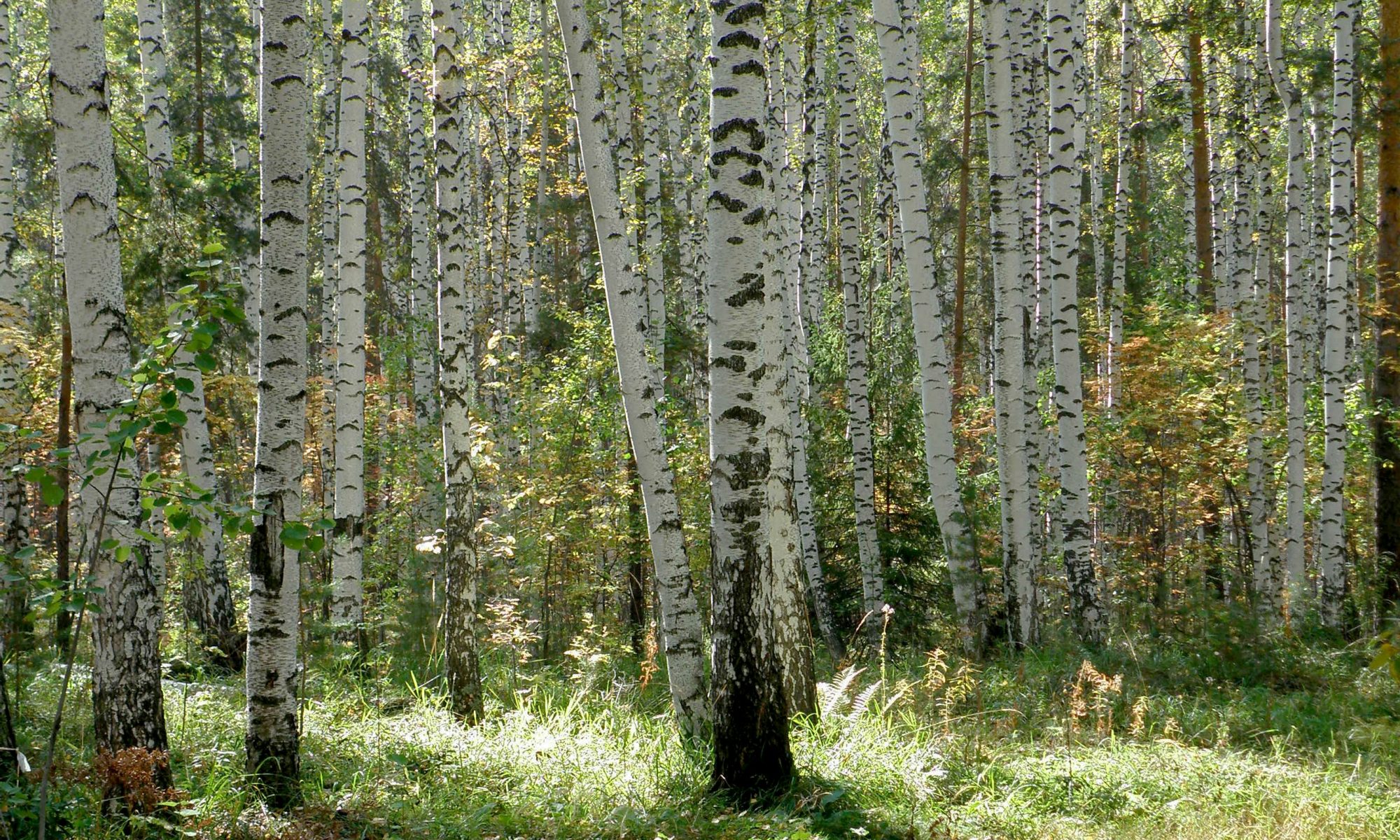
The shadow of the birch is in Hallaig,
and the trees are standing tall
where people once stood.”
When you walk into Hallaig, the cleared village on Raasay, you see no houses, no children, no hearth smoke. The people are gone. And yet in MacLean’s vision, they are still there. Their memory abides in the birch trees, in the glen, in the silence that is alive with absence.
I want to take Hallaig as our guide this morning. For in considering what social care contributes to palliative and end of life care I want to start by saying that I believe it is precisely that: presence in absence, the rootedness of memory, the holding of community when it seems no longer there.
Right at the start it is useful to say what social care is
One definition I work with is this:
“The enabling of those who require support or care to achieve their full citizenship as independent and autonomous individuals. It involves the fostering of contribution, the achievement of potential, the nurturing of belonging to enable the individual person to flourish.”
It is not about maintenance but about life in all its fulness.
It is delivered by around 212,00 people that’s over 50, 000 more than in the NHS
It is witnessed in care homes, in people’s own homes, in housing support across the country.
We do not, in Scotland, like to talk of death. We do not, if truth be told, like to talk of decline, of diminishment, of ageing, of endings.
We are a nation of euphemisms.
“She’s passed on.”
“He’s away.”
“She’s no longer with us.”
We avert our eyes. We walk on the other side of the road.
Yet absence, I believe, is not void. Absence can echo. It can hum with memory. The room of a dying person is heavy with memory, with love, with stories still untold.
Death is not avoidance. Death is presence. It is as real as breath. It is as much part of life as birth itself.
I met Mairi in a care home on Skye. She was a woman with silver hair, her mind drifting like mist – but her hands knew the old Hebridean psalm tunes. Her carer, Eilidh, sang with her each evening. When Mairi could no longer recall the words, Eilidh sang to her, and Mairi’s eyes filled. Even as memory slipped, presence remained. In that moment, social care was a sanctuary. The birch trees, living memory.
MacLean’s Hallaig captures the paradox – that absence can be full of presence. That a glen emptied of its people can still echo with their laughter, their footsteps, their lives.
And that is the role of social care in palliative and end-of-life work.
We are the companions of presence. We are those who stay when others turn away. We are those who sit in silence when there are no more words, those who hold a hand when there is no more cure, those who listen to the laboured breath and still hear the human story.
I have seen in care homes across Scotland what I can only call sacrament. A worker, exhausted at the end of a shift, bending down to kiss the forehead of a woman who is dying, whispering in her ear, “You are not alone…You are not alone.”
I have watched in a cramped tenement flat a home carer arrive with a flask of soup, not just to nourish but to bless. To remind a frail man that he is still part of a circle of care, still someone, still himself.
In those moments, social care is Hallaig. We are the birch trees. We are the presence that stands where absence seems overwhelming.
In places and at times when there are no definitive answers to profound questions the role of the carer is like the potter with raw clay – searching for the story inside, for truth to find its shape, for the moment to appear.
I think this is especially the case in the care of those who are very old and those living their end days with dementias.
I am reminded in that regard of the words of another poet David Whyte, who writes:
“The only choice we have as we mature is how we inhabit our vulnerability, how we become larger and more courageous and more compassionate through our intimacy with disappearance.”
Care, in all its forms, not least social care, – is an intimacy with disappearance. It is the daily act of standing beside someone as they change, decline, recover, or die. It is the art of presence in the face of absence. And it is in this space – this vulnerable, sacred space – that care is being created.
It is important, I think, to say something that is not always heard in the public square.
Palliative care is not only about hospices. It is not only about hospitals. It is not only about the skilled interventions of doctors and nurses, invaluable and irreplaceable though those are.
Palliative care is also, distinctively, deeply, profoundly, about social care.
What makes social care distinctive in the work of dying?
It is not equipment, though we sometimes bring that.
It is not medicine, though we often support its use.
I think it is relationship, it is ordinariness, it is continuity – all of which are about enabling presence in absence.
The carer who has washed your hair for two years is the carer who knows how to wash it when you are dying.
The support worker who has shared your laughter at Christmas is the one who knows how to comfort you when you face your final days.
The care home manager who has phoned your daughter every week is the one who phones her when you have only days to live.
This is not incidental. This is the very heart of what makes social care distinctive.
We do not walk into someone’s life at the eleventh hour. We walk alongside them through the long days of ageing, through the seasons of frailty, through the slow diminishment of memory. And when the time of dying comes, we are already there.
There is, in social care, an intimacy, an ordinariness, that is profoundly palliative.
It is in the cup of tea.
It is in the blanket tucked round legs.
It is in the song sung softly, the prayer whispered, the silence held.
Care homes at their best are communities of memory. They are places where life is lived until the very last breath. They are places where birthdays are celebrated even when candles are hard to blow out, where Christmas trees sparkle even when vision fades, where the ordinary rhythms of life continue right up to the threshold of death.
Care homes are not passive spaces – they are living, breathing communities.
At an Edinburgh care home, the staff celebrated Hamish’s 100th birthday with cake, accordion music, and stories. A month later, Hamish quietly passed away, mid-dance. No medical machinery, just life flowing to its close, and presence, still.
Home care is even more intimate. To die at home, with your own curtains, your own wallpaper, your own cat curled on the bed – this is what many people long for. And it is social care that makes that possible. It is the carer who comes at seven in the morning, at midnight, at dawn, who makes that choice real, not just theoretical.
In a Fife care home, a man called George loved fish suppers. Every Friday, for years, staff brought in a bag of chips from the local chippy. Even when swallowing grew difficult, they still brought the chips. They placed them near his bed, so he could smell the vinegar and salt, the comfort of familiarity. George died one Friday evening, with that scent in the air.
Medical charts or care records did not record that moment. But it was a palliative act – ordinary, rooted, profoundly human.
This is what the national palliative care Strategy calls “timely, co-ordinated care based on what matters.” But to me, it is simply social care – ordinary love made visible.
In all these moments, it’s not just what we do – it’s who we are. Social care brings ordinariness, relationship, continuity.
The new Scottish Government strategy, Palliative Care Matters for All, affirms a vision:
‘By 2030, everyone in Scotland, adults and children, should have equitable access to well-coordinated, timely, and high-quality palliative care, care around dying, and bereavement support based on what matters to them – including families and carers.’
The strategy also calls for Scotland to be a place where communities support each other, talking openly about serious illness, planning, dying, and bereavement. This is our calling: to turn avoidance into conversation, absence into presence.
For these ambitions to be realised in social care, workers must be seen, trained, guided, supported – and the lived, ordinary moments honoured in policy as much as the specialised ones.
When people ask me, “What does social care do in palliative care?” I answer: it makes dying human. It makes dying ordinary. It makes dying part of life.
But let us be clear: this is not just sentiment. It is not just good practice. It is a matter of human rights.
For me to die well should not just be a privilege for the few.
It is a right for all.
The right to dignity does not end when disease progresses.
The right to autonomy does not vanish when memory falters.
The right to participation does not fade when speech is lost.
As most of us in this room know the majority of people die not in hospitals, not in hospices, but in care homes and in their own homes.
Most palliative care in Scotland is delivered through social care.
- 89% of people in Scotland will need palliative care.
- Over 30,000 frail older people receive care at home each week.
- Most people in care homes are in their last 18 months of life.
And a critical part of that social care contribution is the work of unpaid carers who are the Invisible Backbone
They are the mothers, fathers, daughters, sons, neighbours, and friends who provide the majority of palliative care in Scotland – not for pay, not for recognition, but out of love and duty.
The 2025 Carers Update estimates that there are 694,000 unpaid carers in Scotland, including 27,000 young carers.
Unpaid carers carry the weight of love and loss, often in silence. They need more than our gratitude – they need our support, our policy, our resources.
And yet – and yet – policy, funding, public discourse all too often overlook the reality of both paid and unpaid social care and support.
Let us not enshrine policy without teeth. The Strategy must be backed by funding, staffing, equity. The ambition of the strategy is right. But ambition without investment is poetry without music.
Unless palliative care in social care is resourced, unless the workforce is valued, unless communities are engaged, then those words risk becoming another uninhabited village, another Hallaig of policy – present in name, absent in reality.
This is not simply unfair. It is unjust. It is a violation of rights.
And so we must ask: how do we make sure that Isa or George, are not exceptions, but expectations?
The trees of Hallaig remind us: absence does not mean invisibility. The people are still there, even when the state forgets them. And in social care, we stand with them. We make them visible.
Of course, it is not easy.
Our sector is stretched. Staff are underpaid, undervalued, exhausted. Recruitment is hard. Retention is harder.
We cannot talk about a “dignified death” while those who enable that dignity are themselves denied a dignified wage.
And we also have as everyone in this room knows only too well to acknowledge that death itself is demanding. To sit with dying day after day takes a toll on the soul. To lose people you have loved – and make no mistake, carers do love – is to carry grief upon grief.
Yet despite the hardness I also see hope.
In Inverness, a care home created a “memory tree” in its hallway. Every time a resident died, a leaf with their name was hung upon it. Families came back months later to see their loved one’s leaf still there, still part of community.
In Dundee, a team of carers took it upon themselves to bake scones every Saturday morning for a dying woman who had baked all her life. Even when she could no longer eat them, they baked. They filled the house with the smell of her past. That was hope in flour and butter.
In my own island of Skye, I have taken part in many a vigil. Neighbours gathered outside a croft as someone lay dying inside. They sang psalms in the dark, their voices carrying through the wind. Social care and community entwined, ancient and modern, grief and love in song.
This is our hope – not abstract, but real, rooted, ordinary.
I see hope despite the hardness of days.
I see it in the resilience of staff who turn up every day, who walk into rooms heavy with breath and do not flinch.
I see it in the creativity of care homes that hold vigils, that sing, that weep, that honour the dead with dignity.
I see it in the rituals of remembrance – the photographs, the memory books, the trees planted, the candles lit.
In our Gaelic and Scottish traditions, we are not strangers to grief. We have keened, we have sung laments, we have told stories round the fire. We have known how to hold loss as community.
Social care, I believe, continues that tradition.
We are the keeners of today.
We are the singers of lament in the corridors of care homes.
We are the holders of memory in the tenement flats of Glasgow, in the crofts of Skye, in the bungalows of Dundee.
And there is hope in that.
For a Scotland that can face death is a Scotland that can face life. A Scotland that can accompany the dying is a Scotland that will value the living.
In closing let me turn again to poetry, for it is in poetry that we find the language for what is hardest to say.
Sorley MacLean, in Hallaig, reminds us:
That is what social care does.
We make the dead present in memory.
We accompany the living into death with dignity.
We stand as trees in the glen of absence, rooted, ordinary, beautiful, enduring.
A poem:
Beneath the Trees
Beneath the trees, where birch and rowan speak to the wind,
the memory of people flows like the sound of water—
gentle as peat, strong as oak roots
holding the earth together.
Social care is the quiet road,
threading through the glen of living and leaving,
where human hands become branches,
offering shade, shelter,
and courage when the light draws to its close.
Palliative care is not an ending,
but a circle drawn in kindness—
a hearth of listening,
where pain is met with presence,
and loneliness with love.
Let us be the forest,
deep and interwoven,
where no one dies alone,
and where every breath is honoured
as part of the song of the hills.
Let us never forget:
Life is a forest, and every leaf matters.
Donald Macaskill