Scottish Care launches Real Living Wage & Sustainability Advocacy Pack

Scottish Care has today published a new Care at Home & Housing Support Real Living Wage (RLW) and Sustainability Advocacy Pack, alongside a national media statement highlighting the urgent financial pressures facing Scotland’s independent and not‑for‑profit social care sector.

The launch comes in response to significant concern across the sector following the Scottish Government’s recent change to the RLW uplift calculation model, which has resulted in an estimated £19 million funding shortfall. This gap leaves current contract rates unable to meet wage requirements and intensifies the fragility already felt by many providers.

A sector under unprecedented strain

Care providers are reporting growing instability due to:

  • A unilateral change to RLW uplift funding that shifts the burden of wage increases onto providers
  • Insufficient contract rates and lack of transparency in local commissioning
  • Delayed payments and inconsistent uplift application
  • Rising workforce costs, statutory obligations, and increasing service demand
  • Persistent underinvestment that threatens the viability of publicly funded care

These challenges undermine both provider sustainability and the continuity of care for individuals and families across Scotland.

What the Advocacy Pack provides

The new Advocacy Pack offers:

  • Clear background on the funding shortfall and its implications
  • Evidence from Scottish Care research, member surveys, and wider sector reports
  • Case studies, including the Falkirk Action Plan, demonstrating how local collaboration can drive improvement
  • Practical tools for providers:
    • Draft letters to HSCPs, local authorities, Scotland Excel and elected representatives
    • A draft media statement and briefing materials
    • A one‑page ministerial briefing
    • Access to additional evidence papers
  • Key messages to support coordinated advocacy in the lead‑up to the Scottish Budget and national elections

The resource is designed to support members in engaging with policymakers, highlighting risk, and calling for urgent action on fair and sustainable funding.

A call for decisive leadership

In our accompanying media statement, Scottish Care warns that providers are being placed “in an impossible position”, forced to absorb costs that should sit with the public sector and facing contract rates that fail to reflect the true cost of delivering care. Without swift action, the sector risks further service withdrawal, workforce instability, and reduced access to essential support for vulnerable people.

We are urging the Scottish Government and local authorities to:

  • Restore RLW funding
  • Review and uplift contract rates to reflect actual cost of care
  • Provide consistent, transparent commissioning
  • Commit to a sustainability mitigation plan to protect services and staff

Access the Advocacy Pack

The full Advocacy Pack can be downloaded below:

Advocacy Pack: Real Living Wage Uplift & Sustainability (Feb 2026)

Care at Home and Housing Support Awards 2026 – Open for entries!

Entries Now Open: 2026 National Care at Home and Housing Support Awards!

We’re delighted to announce that nominations are now open for the 2026 National Care at Home and Housing Support Awards! These prestigious awards celebrate the exceptional contributions of individuals and teams across the homecare and housing support sectors.

This year’s ceremony will take place on Friday 15 May 2026 at the Radisson Blu, Glasgow.

Why Enter the Awards?

This is your opportunity to recognise the outstanding talent, innovation, and dedication within our sector. With 10 award categories there’s a chance to spotlight a wide range of achievements.

Nominations close: Monday 9 March 2026, at 5:00 pm

Everything you need to get started, guidelines, tips, and the submission portal, is available here: https://scottishcare.org/cah-awards-2026/

Loneliness: Scotland’s quiet Public Health crisis


Walk any Scottish street and you will find, behind the closed doors and neat hedges, someone who feels profoundly alone. Age Scotland’s 2025 report puts it starkly: almost half of over‑50s in Scotland experience loneliness at least some of the time, and around one in ten older people live with chronic loneliness: “the equivalent of one on every street.” This is not a fringe concern or a soft social issue; it is a public health emergency that damages bodies, minds, communities, and the sustainability of our care system.

In this long read, I’ll set out why loneliness among older people in Scotland must be treated as an urgent health and social care priority, where the evidence points, and what practical, proven actions we can take, locally, nationally, and personally.

What the evidence tells us

Loneliness harms health. Robust meta‑analyses show that social isolation and loneliness are associated with a significant increase in all‑cause mortality; one 2023 synthesis across 90 cohorts (involving more than 2 million adults) found a 32% higher mortality risk for social isolation and 14% higher for loneliness. Earlier work demonstrated increased risks comparable in magnitude to other well‑established risk factors and highlighted pathways to cardiovascular disease, cognitive decline, and depression.

Internationally, the US Surgeon General has framed loneliness as an epidemic linked to cardiovascular disease, dementia, stroke, anxiety, and premature death, calling for system‑wide action to rebuild social connection. While headlines often compare chronic loneliness to “smoking 15 cigarettes a day,” experts caution that the analogy whilst useful for awareness, can oversimplify the science; the underlying message remains: loneliness carries serious health risk.

In Scotland, the scale is stark. As noted above Age Scotland’s On Every Street documents that “almost half” of over‑50s feel lonely at least some of the time. Scottish media coverage and charity analysis underline the lived reality, namely older people describing silence, bereavement, caring, poor health, and the cost‑of‑living crisis as drivers.

To be fair Scottish Government recognises the issue. Scotland was among the first countries to publish a national strategy on social isolation and loneliness, A Connected Scotland (2018) and  then in 2023 it released the Recovering our Connections delivery plan for 2023–2026, which frames loneliness explicitly as a public health issue and commits to community‑led action. Funding has followed through the Social Isolation and Loneliness Fund (2023–2026) to support local groups and third‑sector partners to reduce harm and widen connection.

Public health voices are growing louder. The Scottish Forum on Isolation and Loneliness, bringing together over 120 organisations, has called for loneliness to be formally declared a public health crisis in Scotland and for a long‑term framework to cut chronic loneliness by half in the next decade, echoing WHO’s designation of loneliness as a priority public health problem. It is high time that was the case.

Why older people are especially at risk

Loneliness can affect anyone, but older people face cumulative risks: bereavement; ill‑health and disability; retirement; reduced income; shrinking social networks; transport barriers; and digital exclusion. Scotland’s own research (HAGIS) and policy framing recognise these risk profiles and the need for targeted interventions.

Rural Scotland adds another layer: evidence reviews  including the excellent work of Impact, highlight higher prevalence and distinctive barriers for older people in rural areas, distance, transport, fewer services, and link loneliness with increased anxiety, depression, stroke, diminished immunity, and higher health costs.

Loneliness is not only painful; it is also expensive. Analyses cited by Scottish charities and public health advocates estimate that people who report being “often lonely” cost the NHS ~£900 extra per person annually, and that the excess costs for health and long‑term care can reach £11,725 per person over 15 years. Public Health Scotland’s presentations to the national forum summarise the biological, behavioural, and social pathways; stress, poor sleep, lower activity, worse diet, poorer treatment adherence all of which means that loneliness worsens health.

So faced with all this reality what helps to address these profound issues?

The Scottish Government’s delivery plan commits to empowering communities and creating opportunities to connect; the SIAL Fund operationalises this, but the third sector has continually warned of fragile volunteer bases and short‑term funding. Sustained investment and clear, national measures for reducing chronic loneliness are essential.
Link Workers in primary care can connect older people to befriending, walking groups, arts, men’s sheds, and local clubs. Evidence from the Campaign to End Loneliness points to improvements in sociability, confidence, and reduced loneliness, although long‑term outcome measurement still needs strengthening;

Transport, libraries, community halls, warm spaces, and digital support all reduce isolation even if they are not “loneliness services” on the label; Scotland’s strategy explicitly recognises the need to bolster the places and systems where connection happens.

But the current delivery plan runs to 2026. That’s both a deadline and an opportunity.

I think our experience in delivering social care to increasingly isolated individuals and communities leads me to strongly believe that we need to declare loneliness a public health crisis and set a national target to halve chronic loneliness in 10 years, aligned with WHO’s framing and as argued by Chest Heart and Stroke Scotland’s recent Forum manifesto. Alongside this we need political leadership to protect what we have, invest in Link Workers, and identify additional resource for third and community sector efforts. If not things will only get worse.

If we are serious about preventative care, we must design connection into health and social care pathways. Scotland already has the scaffolding: a national strategy, a delivery plan, targeted funds, and a skilled third sector. What’s needed now is stability, scale, and standards and the political courage to name loneliness as the public health crisis it is.

Older people do not ask for much. They want to be seen, heard, and included. The remedy to loneliness is not complicated, but it is collective: it lives in the volunteer who keeps turning up, the link worker who walks with someone to their first club, the bus that still runs after dark, the hall that stays open through winter.

It is also in the critical role that social care plays but that is not going to continue as we strip out real care and support and put in place more and more  Elastoplast services, not least the obscenity of 15 minute visits which provide neither connection or care. on the door.

On every street in Scotland there is a person waiting for the knock on the door.  In this election year let’s make 2026 the year we decide, together, to knock.

I end with a poem.

“The Last Neighbour”

He sits by the window
counting the gulls
as if they were old friends
returning by instinct alone.

The kettle clicks off,
a small applause
for another morning managed.
He pours one cup.
Only one now.

Outside, the street keeps its hurry,
but his days move like tidewater,
slow, deliberate,
reshaping the sand of routine
into something that still holds him.

He says he’s “fine,”
in the way men of his age do;
a word worn thin
from carrying too much weight.

Sometimes the phone rings
from someone paid to ask,
sometimes from someone who cares.
He hears the difference.

And in the long quiet
between dusk and the ten‑o’clock news,
he lights the lamp in the hallway,
a small act of defiance
against the gathering dark.

If you pass his house tonight,
you’ll see that low, steady glow.
It is not a signal of distress
but a soft and stubborn truth:
no life should drift alone.
No neighbour should fade unheard.

Donald Macaskill

Photo by Sasha Freemind on Unsplash

Planting what outlives us: on legacy and ageing.

There is a moment, often somewhere in our 50s or 60s when the future shifts its angle. The horizon draws closer, the noise recedes, and a quieter question makes itself heard: What do I want to leave behind?

Not the inventory of possessions, but the pattern of our presence. The imprint of our care. The courage of our convictions. The habits of kindness that might keep on happening after we are gone.

This blog is an invitation to linger with that idea of legacy: how the desire to leave something of worth shapes our older age; what the psychology says; and how we can attend to it in ourselves, in our families, and in the craft of social care.

I find myself in this space because this past week I’ve been reflecting on my own late twin brother who died 8 years ago last week. Too soon and too young, with so many left empty by his absence. As is so often the case in someone who knows that they are going to die, we did not spend the time that we could have in reflecting or speaking about what life had been like. We spent the time we had left together in laughter and remembrance, in anecdote and fondness, keeping the uncomfortable away and the fear largely unmentioned.

But this past week both because of his own early death and because of so many others who I know, and the far too frequent conversations I have, I have spent time reflecting on legacy and purpose.

It is perhaps a truism to say that there are days when life’s timetable is torn up. A diagnosis, a sudden decline, and the horizon that once stretched decades ahead now feels alarmingly near.

Psychologists have long observed that, in mid-to-late life, that many of us turn outward with a concern for the generations to follow. My old psychologist inspiration Erik H. Erikson called this generativity, the developmental pivot from “What did I achieve?” to “Whom and what did I grow?” The fruits are not just external. It is the impulse to nurture what will outlast us.

Generativity predicts better well‑being and even stronger cognition in later life, whereas its shadow which is described as stagnation can shrink our world to self-preoccupation, which is often the accusation of those in older age.

What is undeniable is that numerous sources of research show that people who engage in legacy-building, through storytelling, mentoring, or creating tangible gifts, report lower anxiety, greater sense of purpose, and improved emotional well-being, even in palliative contexts.

Legacy work is not about grandeur. It is about continuity: ensuring that something of our values, our love, our wisdom remains in the world when we cannot and perhaps especially in the lives of those whom we have loved and who mean so much to us.

Another favourite, Dan McAdams’ psychological research adds texture to the work of Erikson on legacy, arguing as he does that highly generative people tend to tell redemptive life stories, transforming setbacks into service, threading meaning through adversity; such narrative style correlates with psychological adaptation and prosocial engagement. Legacy is not only what we do; it is how we narrate what we’ve done, which is in and of itself critical because that story mobilises us to keep giving. It is the words we chose to tell the tale of our being in life.

As we grow older and age we also reorganise our motivations. Laura Carstensen’s work on Socioemotional Selectivity Theory shows that as time horizons feel shorter, we prioritise emotionally meaningful goals and relationships. Legacy work naturally fits this shift: we invest in fewer, deeper ties and do things whose meaning can be felt now and remembered later.

We can see this in clinical and care contexts as well. Life review work which was first described by Robert Butler in the 1960s, offers structured reflection that helps older adults integrate memory, resolve regrets, and move towards integrity. It’s a cornerstone in later‑life and palliative practice, and when facilitated well and sensitively, it can reduce distress and enhance a sense of coherence: a psychological soil in which legacy grows.

Then at the end of life, Dignity Therapy takes this further: a brief, guided process that invites people to record what they most want remembered. Research trials report heightened dignity, meaning, and perceived benefit for families with the legacy document becoming a tangible bridge between the living and the soon‑to‑be‑bereaved.

If we want to leave something of worth, psychology suggests two reciprocal movements: doing (generative acts) and meaning-making (stories that redeem and bind).

This past week I have been reflecting on the extent to which in residential care and in homecare in all our palliative care and support of residents and citizens whether we have properly maximised the potential of legacy work. Because even accepting all the understandable constraints of time, resource and capacity I am not sure we have. And at the same time I am equally convinced just how important for the grieving and bereavement of those we leave behind; how critical it is that we do much better at this work which is to aid the art of dying and the gifting of legacy.

For those of us whose work it is to care and support folks at the end of their lives, I think we need to get better at embedding life review and legacy work in assessments and care planning (especially in hospice, care homes, and community nursing). We need to train staff in dignity‑conserving practices; create quiet rituals for recording and returning a person’s words to their family. We need to measure outcomes beyond symptom control: track family perceptions of meaning, appreciation, and connectedness post‑bereavement.

All that might just start by asking the ‘why’ questions, however provisional they may be. An encouragement to try to write a brief “legacy sentence”: “I want the people and places I love to be more X because I was here.”  It might move on to a guided life review where time is set aside – together or alone – to walk your story: chapters, turning points, the regrets that still disquiet, the gifts you’ve given and received.

And of course, all of this means tackling head on all the barriers that silence people. Those who have spent a life convincing themselves that they have nothing to leave. This is poverty of imagination, not of worth. Those who say, “Talking about death feels morbid.” Completely understandable on the one hand but at the same time we know that shared meaning and esteem buffer anxiety. In community, we can approach finitude not with fear but with craft: rituals, conversation, song. And there is so much more practitioners of endings in care home and community can do.

Legacy is not the marble we carve; it is the meal we keep setting. It is the apprentice we welcome into the workshop; the young carer we notice and support; the foreign‑born neighbour we draw into our circle until this land is also theirs.

Our social care, when at its best, is legacy in motion: the daily transfer of attention from one generation to the next. It is where the values we say we hold are stress‑tested against reality. If we make our services places where people can remember, make meaning, and give one last time, then we will have honoured the dignity of ageing and have given space and place to a legacy that never ends.

Bequeathal

Leave not the stone with your name,
leave the path you wore through the field,
the one that knows your footfall and invites another’s tread.

Leave not the chair at the table,
leave the habit of an extra place,
the cup that finds the hand that trembles.

Leave not the answer, clean and sure,
leave the question, kindly asked,
that opens like a gate and lets the younger through.

Leave not the purse alone,
leave the skill of open hands,
and the craft of making enough into plenty.

Leave not the speech fine‑phrased,
leave the story told in kitchens,
where steam writes blessings on the window glass.

Leave not a claim on land,
leave belonging to a people,
soil in the marrow, duty turned to joy.

And when the light goes thin,
and names begin to loosen from their faces,
let what you have planted be your speaking:
the neighbourly knock; the steady chair;
the path; the cup; the open gate.


My late twin had two loves in his life – his family and his roses – after he had died, I took cuttings of some of the roses and to my great surprise managed to get them to grow in my own garden in another country from their original soil. Even after transplanting they lived on – a memory, a legacy of his creativity and so much more. Planting what outlives us in hope and love, dignity and desire, is the work we should all seek to undertake, every day.

If legacy is love with a timetable, then ageing is not the end of that work; it is the season when love gets organised. May we be found busy planting what will outlive us and may Scotland’s people and places be the richer for it.

Donald Macaskill

Photo by Amarbayasgalan Gelegjargal on Unsplash

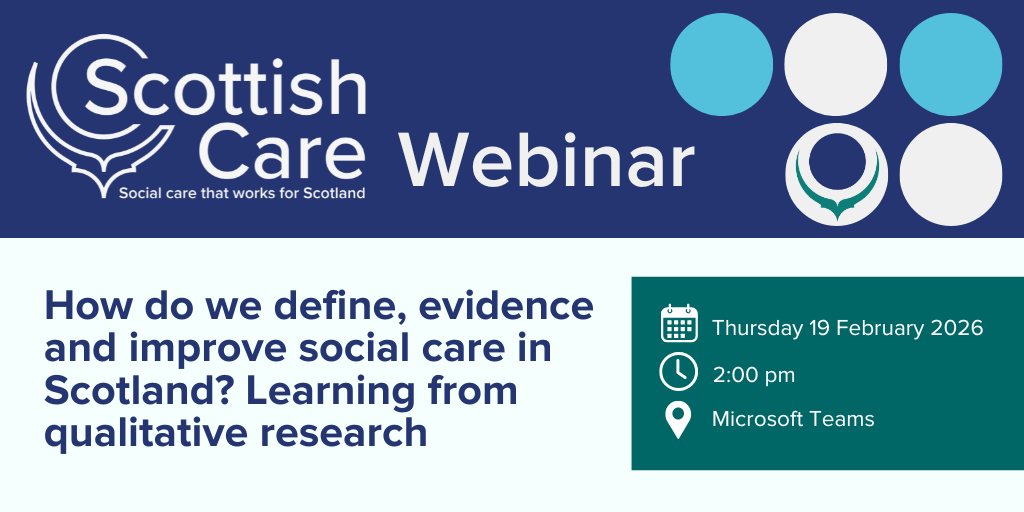
Webinar: How do we define, evidence and improve social care -19 Feb

How do we define, evidence and improve social care in Scotland? Learning from qualitative research

Thursday 19 February 2026
2:00 – 3:00 pm
Please register in the Members Area

Scottish Care welcomes Dr Jenna Breckenridge to share the findings from qualitative research she conducted in collaboration with Scottish Government. Jenna’s research involved two parts: creative workshops with over 60 social care stakeholders; and a focussed case study where she interviewed 20 stakeholders involved in developing the Healthcare Framework for Adults Living in Care Homes. She has combined the research data from both parts of the project to create the “3Rs” model, which identifies the three characteristics of good social care as: respectful, responsive and relational. In this webinar, Jenna will talk about how the “3Rs” can support discussions around designing, evidencing and improving social care and will share insights from her research about the importance of valuing different types of knowledge in social care.

About the speaker: Dr Jenna Breckenridge is a Senior Lecturer in Health Sciences at the University of Dundee. She is a qualitative researcher with a special interest in how knowledge is shared and used within and across organisations. Her research was completed as part of an ESRC funded research fellowship with the Social Care Analytical Unit at Scottish Government between February 2022 and November 2023.

SSSC Open Badges for Care Home Activity

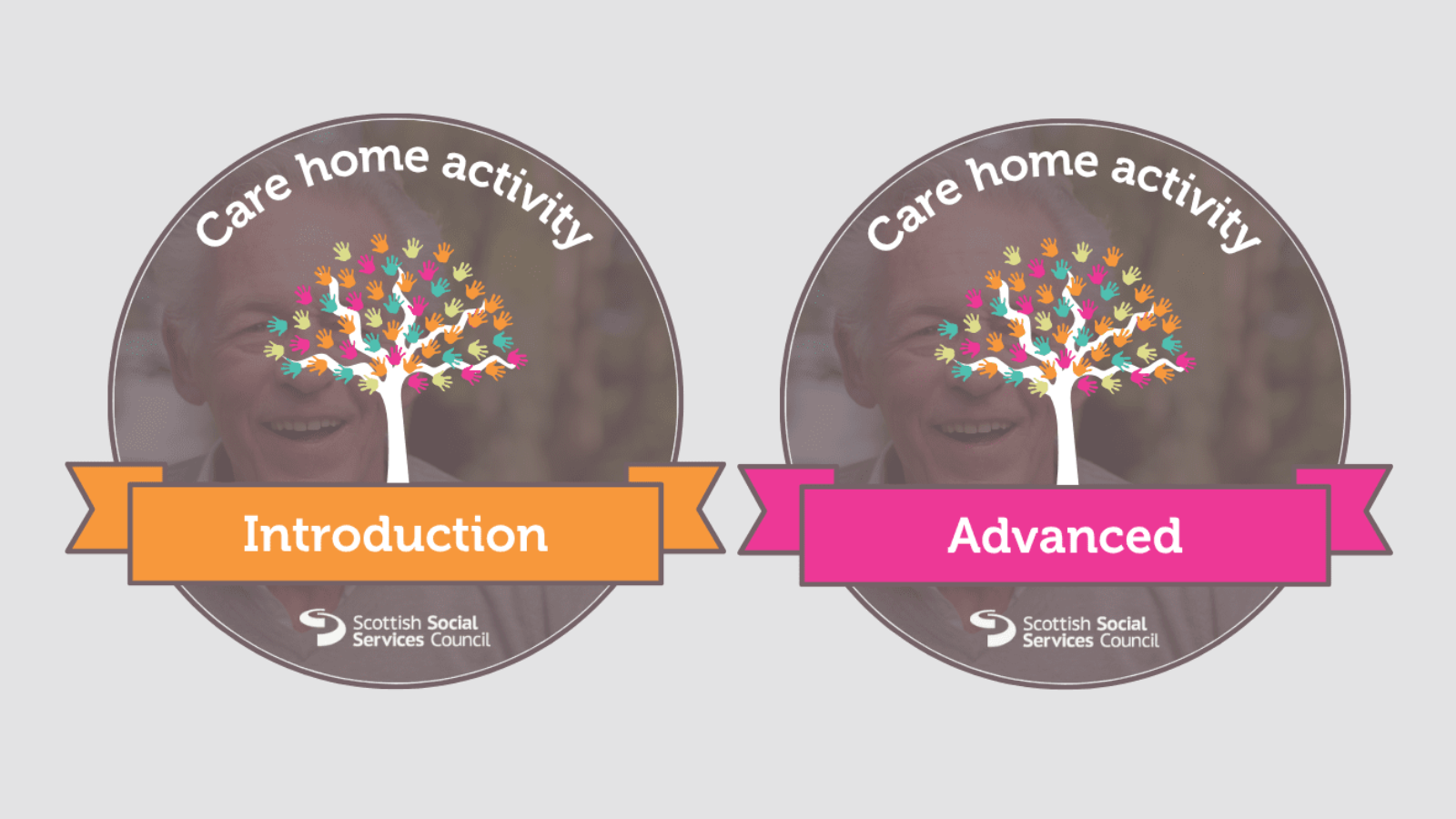
Scottish Care are excited to announce the launch of two brand-new SSSC Open Badges designed to empower care home managers and activity leads across Scotland. These badges celebrate professional growth, creativity, and the vital role of meaningful activity in care settings.

Why This Matters

Care home activities are at the heart of wellbeing. They bring joy, connection, and purpose to residents’ lives. These new badges recognise and reward the skills of those who make this happen every day.

The Badges

The badges has been developed in collaboration with the Scottish Care Independent Sector Leads for Aberdeen City and Perth and Kinross, SSSC, National Meaningful Engagement Network (NMEN) and care home activity leads.

  • Introduction to Care Home Activity – Build confidence and explore the foundations of delivering engaging, person-centred activities. Perfect for those starting out or refreshing their practice.
  • Advanced Care Home Activity – Take your expertise to the next level. Learn how to expand your knowledge and activity programmes that enrich lives and strengthen community within your care home.

Benefits for Managers and Activity Leads

  • Showcase your commitment to high-quality care and resident wellbeing.
  • Motivate and inspire your teams with recognised professional development.
  • Strengthen your care home’s reputation for excellence and innovation.
  • Gain nationally recognised badges that highlight your dedication to continuous improvement.
  • Include the badges in job descriptions

Join the Movement

These badges are more than training—it’s a celebration of the creativity and compassion that define care home life. By earning these badges, you’re not just enhancing your skills – you’re shaping brighter, more fulfilling days for the people you support.

Scottish Care and the SSSC are calling on care homes to apply now and showcase the vital difference they make every day by delivering meaningful activities. This initiative invites providers to join a growing community of badge achievers, celebrating excellence and commitment across the sector.

Suzie Kelly, Wellbeing Coordinator at Richmond House Care Home in Crieff was one of the first to have completed the advanced badge, here is what she thought:

“The open badge was so easy to access and to use the resources. 

There was three topics to choose from Physical Activity, Mental and Cognitive Wellbeing and Collaboration and Social engagement. After looking at the resources within these three headings I chose “playlist for life” as I have not done much work with this in the past that has been very successful.

With my residents we looked into our favourite music and filled out the Playlist Paperwork and uploaded this on to our interactive table so residents who don’t wish to use MP3 Players and headphones can access their tunes online.

We have also came up with the idea for a Music Appreciation group, one of the residents has taken charge of the group and organizes with other residents what concert or music documentary they would like to listen to or watch together. This has become a lovely social time and involves those that don’t often attend group activities which is great!

I have found that by completing the Advanced Care Home Activity badge has made me think about Playlists in a different way as music is such a big part of what we do as Wellbeing Coordinators. It has inspired me to think of more ways we could expand what we do with our favourite music…. perhaps the next thing will be Music Boards, a great way for staff to get to know residents and share a tune”.


More information on the Introduction to Care Home Activity Badge is available on: Https://www.mylearning.scot/badges/introduction-to-care-home-activity/

More information on the Advanced Care Home Activity Badge is available on: https://www.mylearning.scot/badges/advanced-care-home-activity/

A Magical December at Forefaulds Care Home

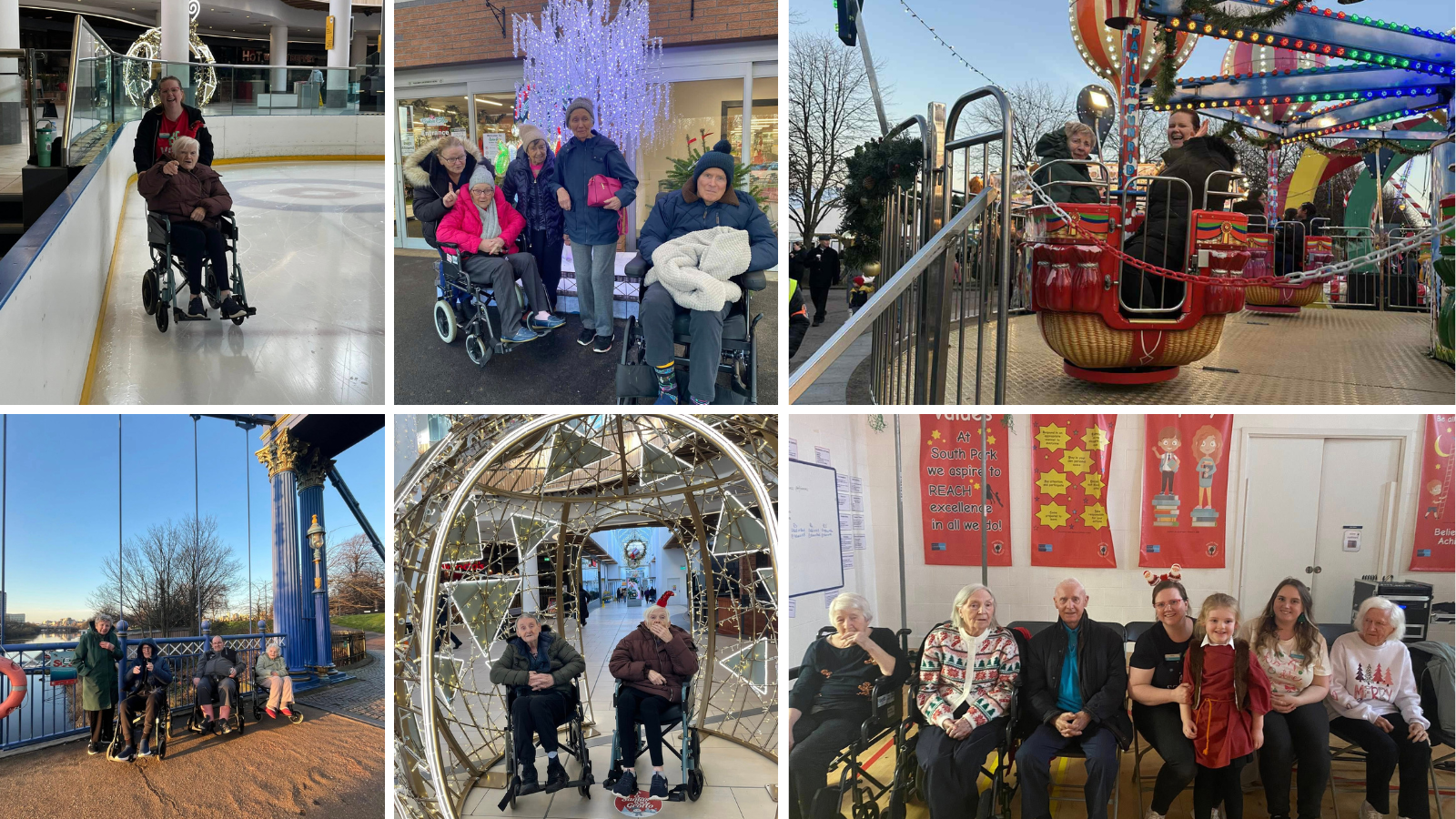
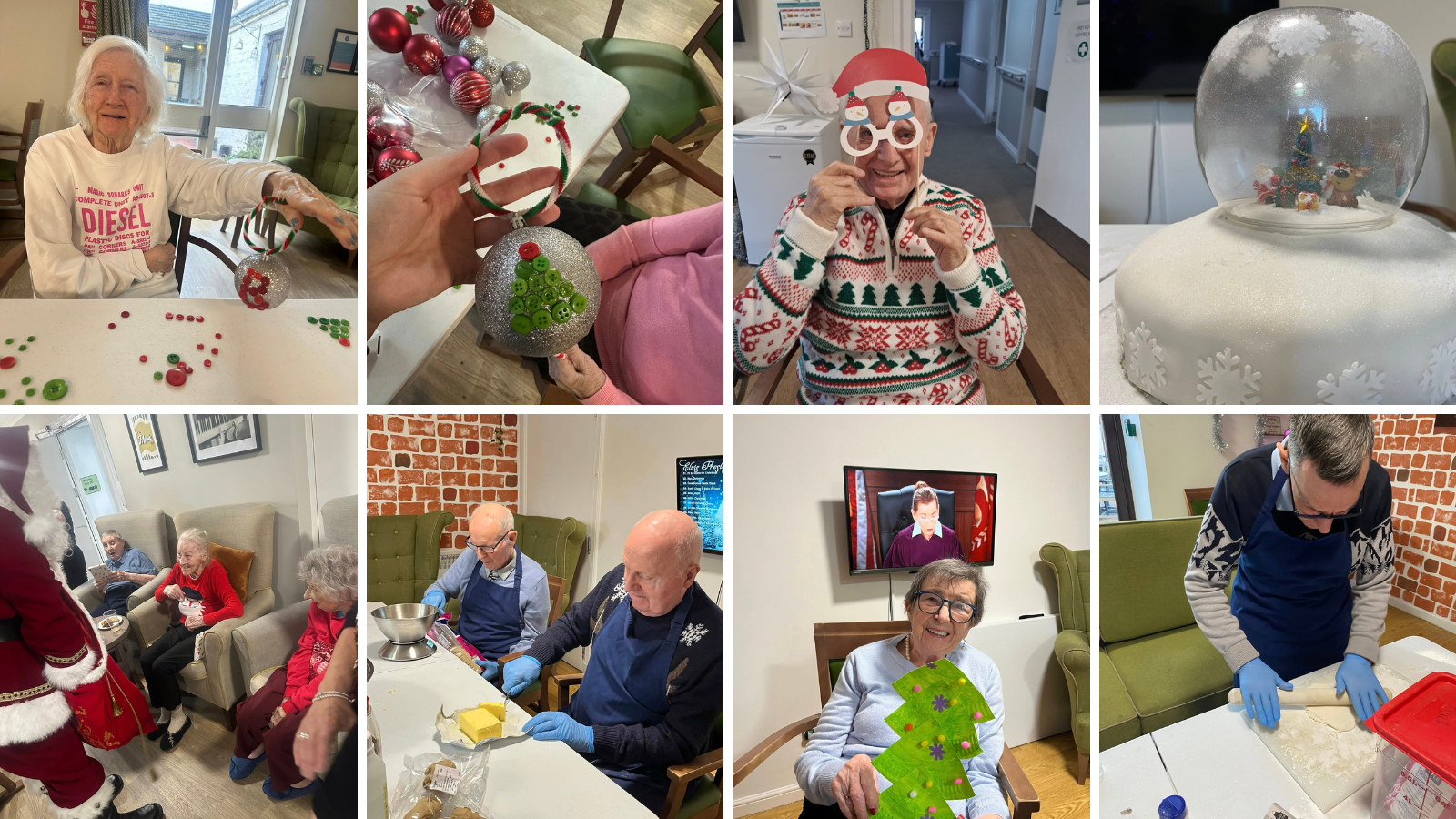
December was truly a month to remember at Forefaulds Care Home (Sanctuary Care), filled with festive fun, meaningful moments, and heart‑warming experiences both inside and outside the home.

Festive Outings & Community Connections

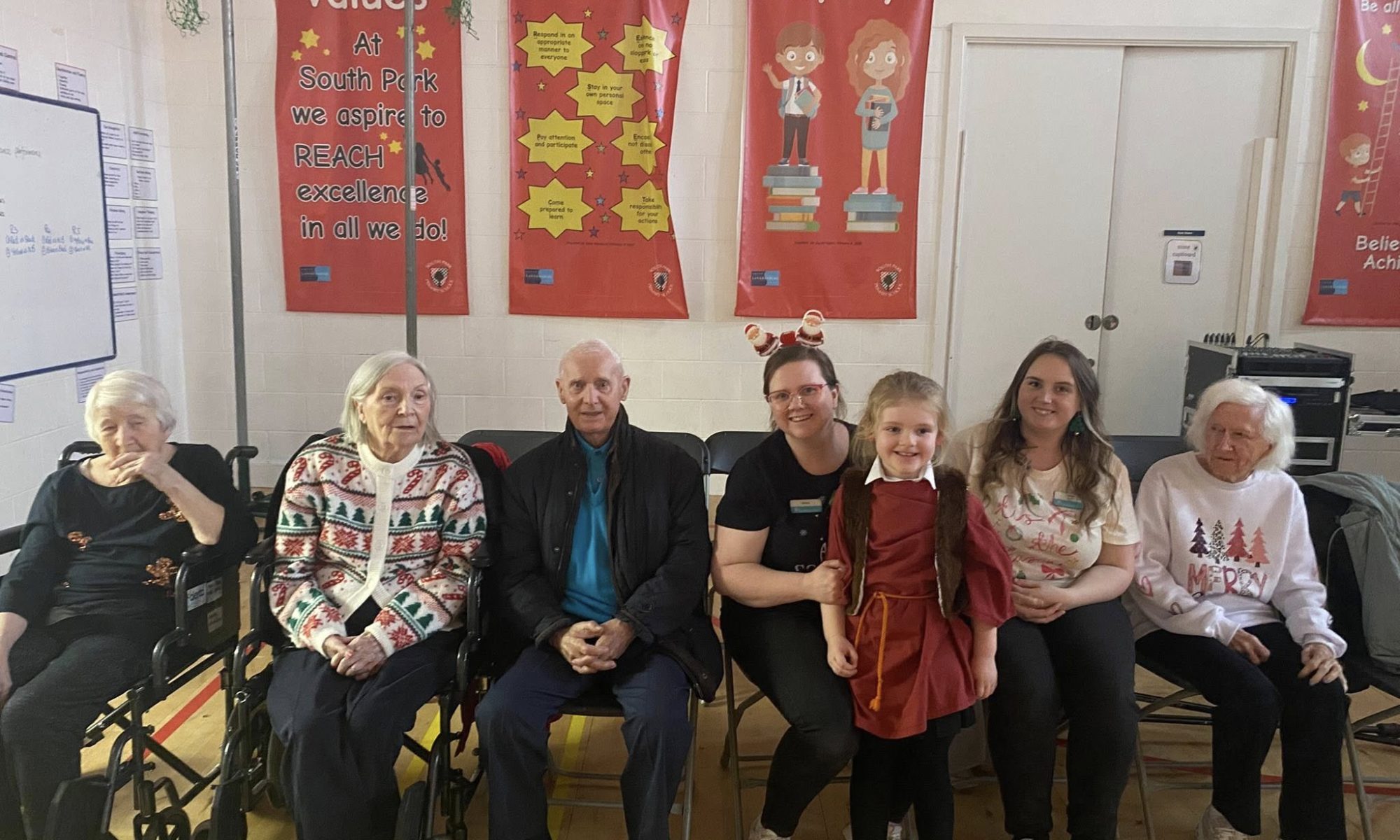
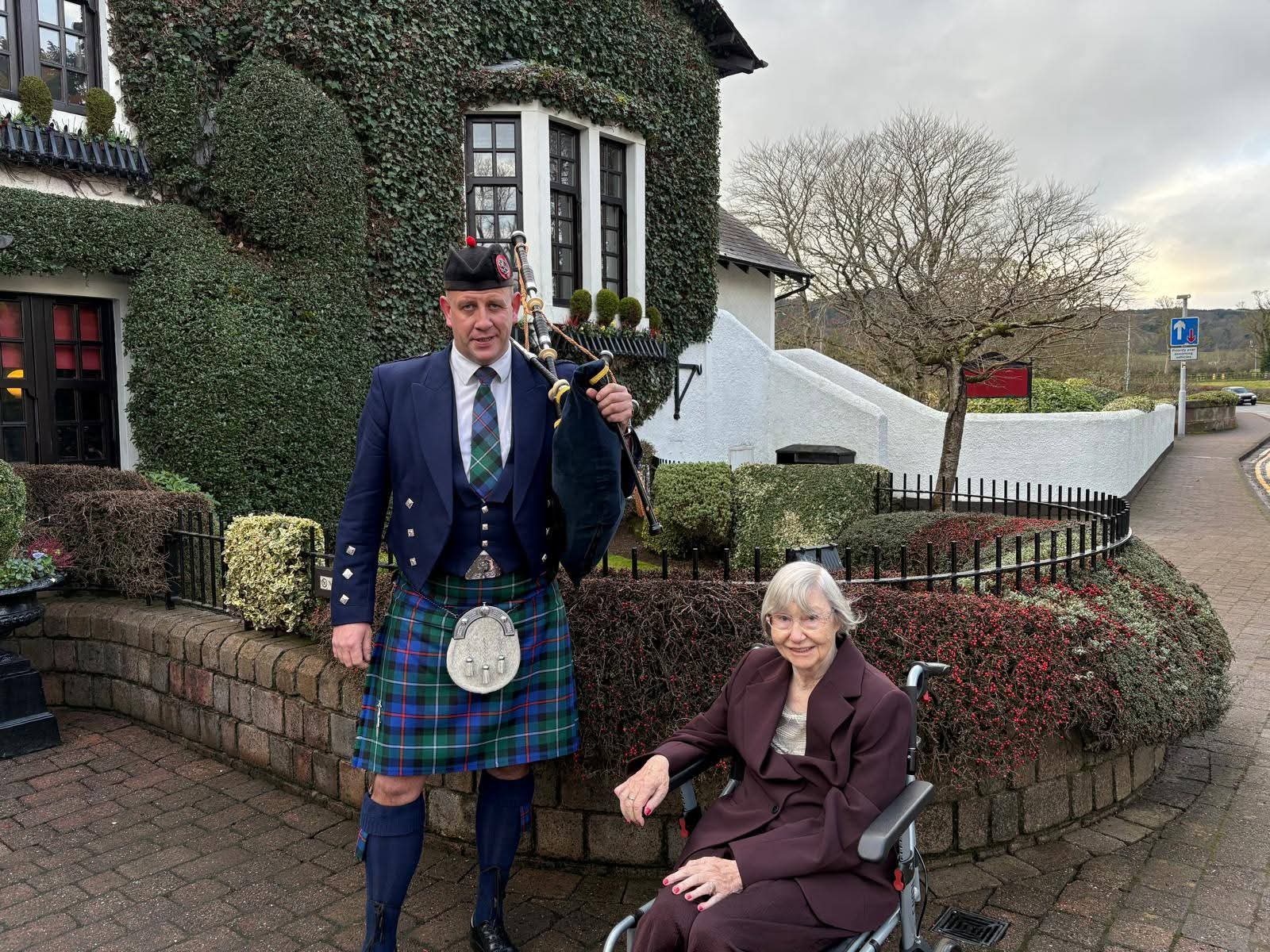
Residents enjoyed a range of wonderful outings throughout the month. A highlight was attending a lively Christmas party, where everyone embraced the festive spirit with dancing, laughter, and a well‑earned seasonal tipple. Residents also received a warm welcome at South Park Primary School, joining pupils for lunch and enjoying their delightful nativity performance, a visit filled with joy and community spirit. Their monthly ice skating trip proved as popular as ever, with residents enjoying the atmosphere and winter magic. On Christmas Eve, the team organised a very special outing for resident Jean, taking her back to the Glasgow Green area where she grew up. Jean visited her old primary school and parish church – meaningful places from her childhood and young adult years. At the Christmas markets, she even enjoyed a balloon ride, while other residents tried their hand at the festive fairground games!

Creative Fun at Home

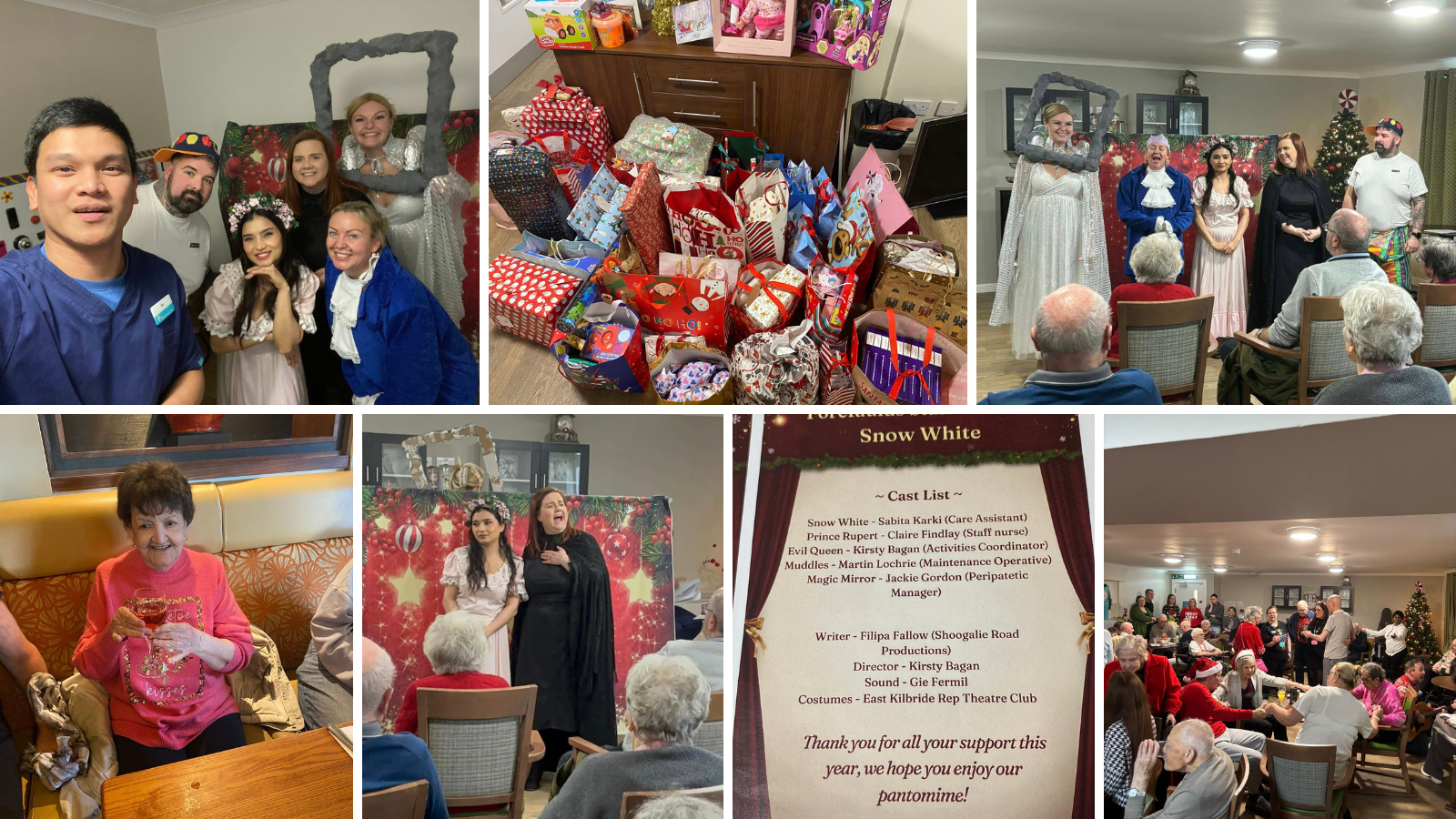
Inside the home, Christmas creativity was in full swing. Residents enjoyed plenty of festive crafting and baking, including the creation of an amazing handmade Christmas cake that everyone was proud of. The family Christmas party was a huge success, with families coming together to celebrate and even a special visit from Santa himself! To round off an unforgettable month, staff took to the stage for a Forefaulds pantomime – Snow White! The performance was packed with laughter and joy, giving residents a brilliant end to the year.

Spreading Kindness in the Community

This year, staff and relatives chose to take part in an alternative Secret Santa. Instead of exchanging gifts with one another, they each purchased a present for a child in the local community.T hanks to their generosity, Forefaulds collected over 40 gifts for Future Communities in Cambuslang. The organisation was incredibly grateful, and the team hope to make this meaningful initiative a tradition every Christmas.

December at Forefaulds was filled with love, laughter, and togetherness, a wonderful example of the vibrant community spirit that makes the home so special.

A Week of Wonderful Moments at Westwood House Care Home

It’s been a joyful and memorable week at Westwood House Care Home (Sanctuary Care), with residents enjoying special experiences that brought smiles, pride and plenty of happy memories.

Ronnie’s 80s Night Adventure

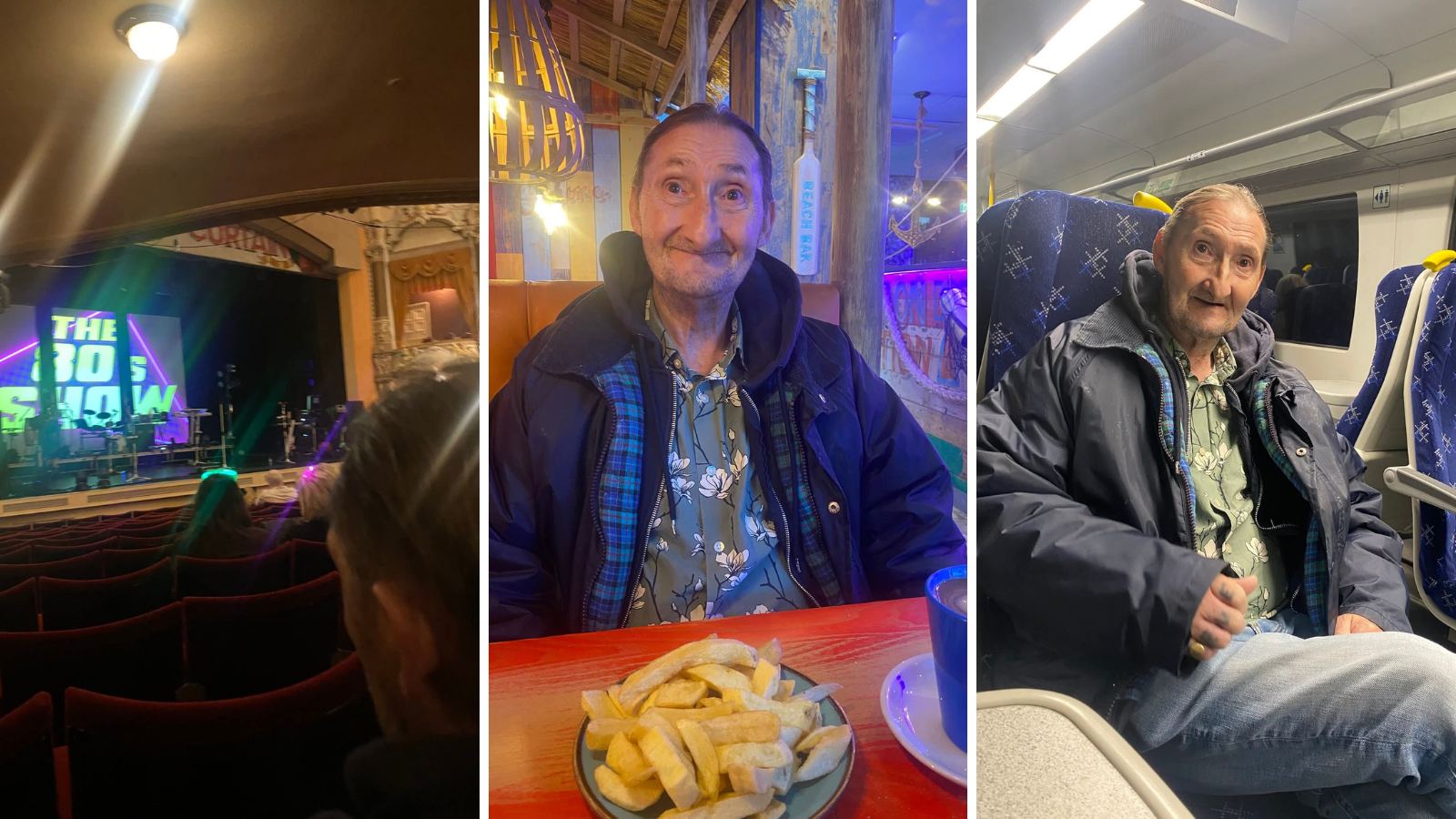
One of Westwood House’s residents, Ronnie, had an unforgettable evening when he attended an 80s-themed show at a theatre in Glasgow, accompanied by support worker Jack.

A lifelong music lover – especially anything from the 1980s –  Ronnie was buzzing from start to finish and sang along to every song.

To make the evening even more special, Ronnie travelled by train, something he hadn’t done in years, and he loved every moment of the journey as much as the show itself. A brilliant night out!

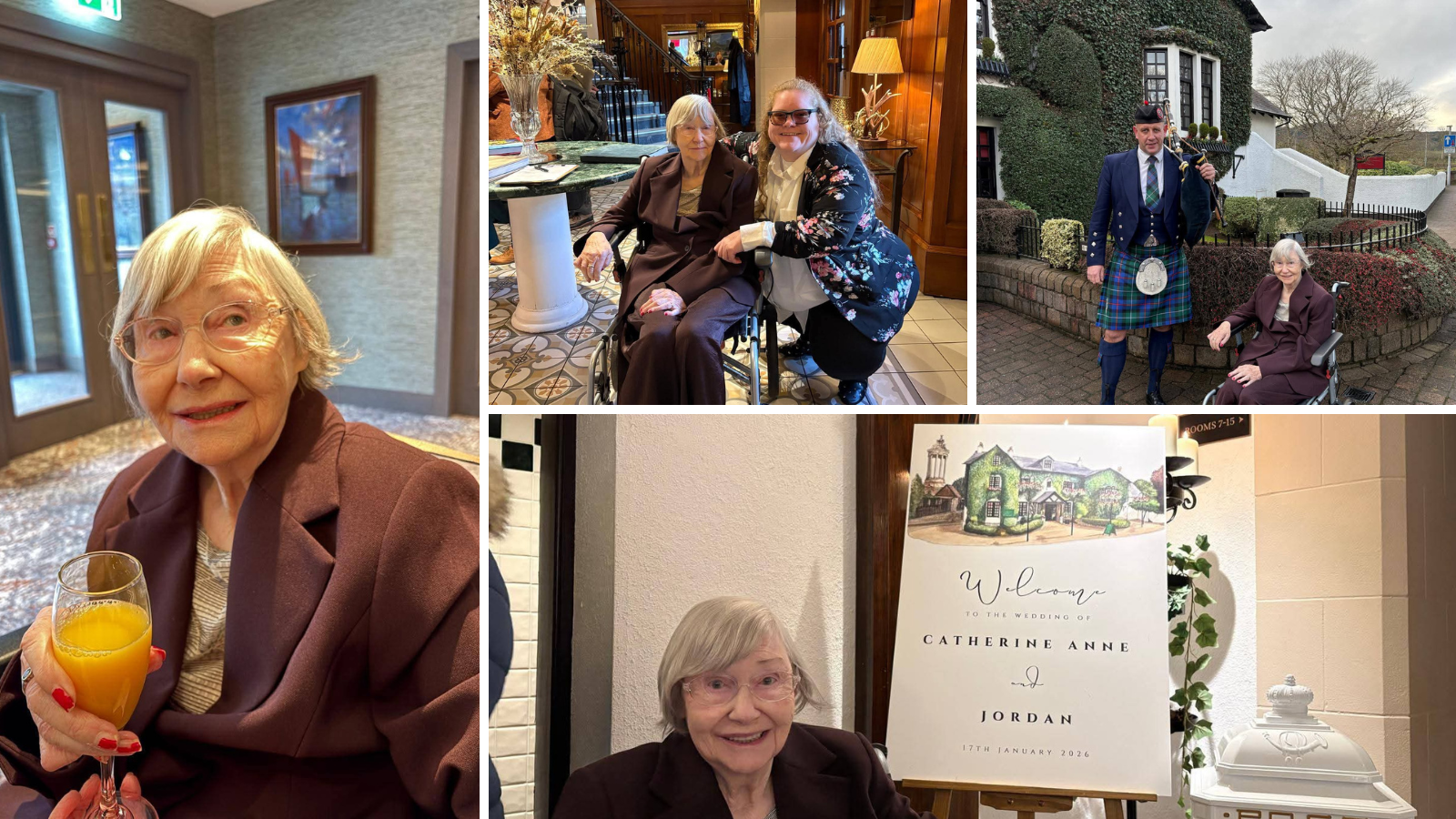
Elizabeth’s Special Family Celebration

Resident Elizabeth had a heart‑warming weekend as she proudly attended her granddaughter’s wedding. She described it as a privilege to be there, celebrating such an important milestone in her family’s life.

The day was made even more meaningful as she watched her great‑grandchildren take on starring roles as the flower girl and ring bearer. Elizabeth was “proud as punch” and came home glowing with happiness.

These wonderful moments highlight the importance of connection, joy, and community at Westwood House.

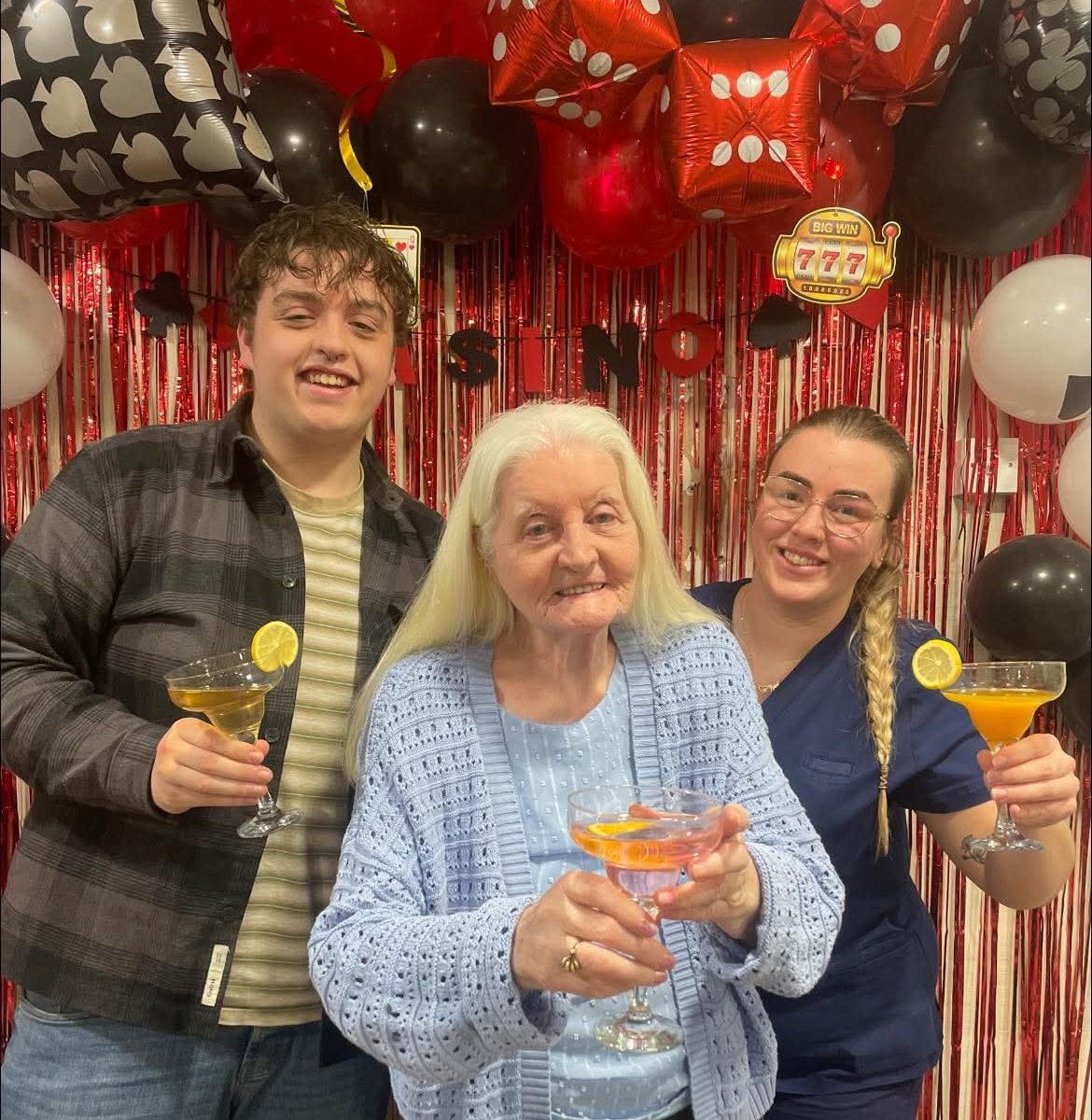
Westwood House Casino Night

Residents, staff, and families at Westwood House Care Home (Sanctuary Care) enjoyed a spectacular evening on Saturday 10 January 2026  as the home transformed into a lively casino for a themed Casino Night celebration.

The home was buzzing with excitement as everyone tried their luck at poker and blackjack, with plenty of friendly competition and laughter throughout the night. Residents enjoyed the glamour of the theme, with staff and families joining in to make the event truly special.

No casino night would be complete without a few refreshments, and there were certainly some well-enjoyed tipples on offer!

Care Creates: A Call to Action and a Vision for Scotland’s Future

The third Saturday of January 2026 arrives not with celebration, but with a heavy sense of reckoning. The Scottish Government’s newly announced Budget, for all its rhetoric of renewal, has once again relegated social care to the margins. For those of us who live and breathe social care, this is not just a policy disappointment rather it is a profound moral failing. The question before us is urgent and inescapable: What kind of Scotland do we want to create together, and why does our Government not share that vision?

Every day, in every corner of Scotland, social care is the quiet infrastructure that holds our communities together. It is not a discretionary spend, nor a luxury to be afforded only in times of plenty. It is the scaffolding that allows individuals to thrive, families to stay together, and communities to flourish. Yet once again, this Budget treats care as an afterthought: “a budget that talks about dignity but does not fund it”.

In the wake of this Budget, each of the six pillars which comprise the vision within  the Scottish Care 2026 Election manifesto Care Creates feel more like a distant aspiration than a policy reality. Rights‑based budgeting and ethical commissioning remain words on paper, not principles in practice. The workforce; already stretched to breaking, faces another year of undervaluation and uncertainty. Promises of integration and innovation ring hollow without the resources to make them real. And now, Scottish Care’s own analysis makes the picture starker: the budget “falls dramatically short of what is required to protect essential care and support services, the workforce that delivers them, and… the individuals, families and communities who rely on them.”

We cannot ignore the consequences of this chronic underfunding. Workforce shortages deepen, finances grow ever more fragile, and the scars of austerity persist. Increasingly we are relying on people to pay more and more for their own care and support whilst the Government pays less and less. Increasingly this current Government is creating a two tier social care system in Scotland whether by default or deliberate design. The Government has failed to meet COSLA’s call for an additional £750 million in core funding to stabilise and grow social care support. Instead, providers are left “delivering more with less,” absorbing unsustainable costs and shielding people from the fallout of an under‑resourced system.

“Care Creates” is not just a campaign tagline; it is a summons to action and a framework for transformation. The Scottish Care Manifesto for 2026 sets out a bold, necessary vision: six pillars that, if embraced, could reshape our nation.

  1. Rights at the heart of Social Care

Human rights are non‑negotiable. Embedding rights‑based budgeting and ethical commissioning ensures decisions reflect the voices of those who rely on support. Yet, as the Budget analysis makes clear, this Government has again offered “no ring‑fenced protection for social care support, no alignment to the true cost of care”. Human rights cannot flourish in the vacuum left by insufficient investment.

  1. Fair Pay, Fair Work, Fair Care

A thriving social care system demands a valued workforce. Fair remuneration, career progression and parity with NHS roles are essential. But “warm words will not pay the bills”. The Real Living Wage uplift, while welcome, remains inadequate without funded differentials or career pathways. With thousands of vacancies, we cannot afford to lose more skilled professionals to sectors offering better pay and lower responsibility.

  1. Integration across systems

Care cannot exist in silos. We know that integrated care teams reduce admissions and transform outcomes. But without resources, integration is rhetoric. Today we face “crisis conditions” where unmanaged pressures threaten to further reduce care packages and increase unmet need across health and social care. We are faced with the sad daily reality that people are dying whilst waiting for their care but because they are unseen by everyone except their families, they are the hidden victims of a broken system.

  1. Future‑Ready Care

Our sector has proven its capacity for innovation, from digital tools to climate‑conscious planning. Ethical AI and adaptive models offer huge potential- but only if investment matches ambition. Instead, Scotland remains “a decade behind before we even begin,” with key digital infrastructure not expected to be social‑care‑ready until 2029 – an “unacceptable delay” that entrenches inefficiency and stalls innovation.

  1. Investing like it matters

Funding care is not charity: it is a strategic, national economic investment. Every pound invested in social care returns more than double in socio‑economic value, strengthening local economies and enabling people to live well in their communities. Yet this Budget once again chooses not to unlock those benefits for Scotland.

  1. Care for people and planet

Ethical commissioning, sustainability and community wellbeing must shape every decision. But the absence of robust investment renders environmental and community ambition fragile. As Scottish Care notes, “This Budget does not meet the moment”: a moment demanding bold choices, not incrementalism.

The “Care Creates” campaign exists to shift public and political understanding: social care is not a cost to be contained, but an essential investment in Scotland’s future. It underpins health, drives economic participation, sustains communities and supports family life. Yet at a time when “providers are closing” and “workforce shortages are at crisis levels”, Scotland’s Budget has offered neither boldness nor stability.

It has chosen caution where courage was required.

It has chosen system preservation over human flourishing.

It has chosen short‑termism over Scotland’s long‑term wellbeing.

Disappointment must not become despair. Realistic positivity means acknowledging the constraints while refusing to surrender hope. It means saying: Yes, the road is hard, but it is not impassable. It means recognising that although Government has not led, we will.

As Scottish Care affirms:
“Investing in social care support is not a cost, it is a national dividend. Care creates stability. Care creates opportunity. Care creates Scotland’s future.”

Even as we face disappointment, we are never alone. Together we can influence change, support those who suffer, and celebrate the compassion, expertise and community that define our sector. With courage, creativity and solidarity, we can build the Scotland we know is possible; one where social care is not an afterthought, but the beating heart of national life.

Care creates Scotland’s future.
If our Government will not lead, then we must.

Donald Macaskill

Photo by Nick Fewings on Unsplash