Hearing the unheard: supporting older people with hearing loss in Scotland’s care sector.

World Hearing Day is held on 3 March each year to raise awareness on how to prevent deafness and hearing loss and promote ear and hearing care across the world.

This year’s theme, “Changing mindsets: empower yourself to make ear and hearing care a reality for all!” emphasises how by encouraging individuals to recognise the importance of ear and hearing health, people can be inspired to change behaviour to protect their hearing from loud sounds and prevent hearing loss, check their hearing regularly, use hearing devices if needed, and support those living with hearing loss. Empowered individuals can drive change within themselves and in society at large. Part of the outputs this year is a new WHO global standard for safe listening in video game play and sports.

Anyone working in the care home or home care sector in Scotland will know just how significant the issues of hearing loss are for so many individuals who receive care and support. Indeed, according to Scottish Government data, around 850,000 people in Scotland have hearing loss, which is roughly one in six of the population; with estimates suggesting that 70% of those with hearing loss are over 70 years old. This number is projected to increase significantly in the coming years.

The very hiddenness of hearing loss is one of the many reasons why there is less societal focus on the necessary adjustments and changes which can be made to ensure that individuals are more included and involved and to ensure that those living with hearing issues are able to play their full part as citizens in their communities.

Hearing loss is not just a health condition; it is an issue which affects virtually everything about an individual’s life and how they relate to others and their sense of belonging whether in residential care or their own community. It shapes how people experience the world, how they connect, how they express themselves, and how they are included – or excluded – from society.

For too many older people, hearing impairment is a slow erosion of connection, a gradual retreat into isolation. And in a sector that prides itself on person-led, relationship-based care, this presents a fundamental challenge and one – if I am being completely honest – in the midst of other competing priorities does not receive sufficient attention.

A recent study by the British Irish Hearing Instrument Manufacturers Association (BIHIMA) found that while many older people benefit from hearing aids, 40% of those who need them do not use them effectively. Batteries go flat. Devices get lost. Staff may lack training in how to support residents with hearing aids, leading to frustration and a loss of confidence in the very technology that should empower them.

And then there are those for whom hearing aids are not the answer – people who have been Deaf since birth or who have profound hearing loss requiring British Sign Language (BSL) or other communication support. In truth the care sector across the UK has been slow to adapt to their needs, with BSL provision remaining patchy at best and little resource allocated by commissioners and funders to release staff for training and development.

Imagine living in a care home where every conversation around you is muffled, distorted, or completely inaudible. Where announcements about mealtimes or activities do not reach you. Where staff – however well-intentioned – speak too fast, do not face you, or assume you can hear because you have a hearing aid.

The result? Many older people with hearing loss become socially withdrawn. They stop participating in group activities. They disengage from conversations. They are mislabelled as confused or unresponsive, when in reality, they simply cannot hear what is being said.

And let us be very clear: hearing impairment is a risk factor for cognitive decline, depression, and even increased mortality. This is not a marginal issue – it is central to dignity, quality of life, and fundamental rights.

So, what can we do? The answer is not complicated, but it does require cultural and systemic change. It also requires yet again a targeted resource and finance that allows people to address the discrimination that happens when resources are absent.

As a society we should develop a Charter for Inclusion – and for me the primary action for deafness is staff training and awareness raising. Every care home and homecare provider should ensure staff receive training on hearing loss awareness. This includes understanding hearing aids, learning basic communication strategies (such as speaking slowly, facing the person, and reducing background noise), and being aware of the signs of undiagnosed hearing loss.

Routine hearing checks should be part of life plans for those who receive care and support services, just as vision and oral health assessments are. Care homes should have direct referral pathways to audiology services, ensuring that hearing aids are maintained and adjusted as needed.

Not all hearing loss is the same. Some people need written communication, others benefit from visual cues, and some require BSL or lip-reading support. Care providers should be proactive in tailoring communication to each individual.

We live in an era of smart hearing technology and assistive devices. From amplified telephones to captioned video calling, there are many tools that can enhance communication – if only they are made available and integrated into care and support and fiscal resource prioritised to make their purchase and use possible.

One of the greatest failings in this space is the lack of robust data on hearing loss in Scotland’s care sector. Most of the data we have is years out of date and there has been little focus to address this.

We simply do not know how many care home residents are experiencing undiagnosed hearing loss; or how many are not using their hearing aids correctly and how many care staff have had training in communication with Deaf and hard-of-hearing individuals.

This data gap is a real system and clinical, social care failure. Without accurate information, we cannot plan services, allocate resources, or advocate for the change that is so desperately needed.

If we are serious about person-led care, then hearing loss must be on the agenda. We must listen to the unheard. We must identify adequate resource and funding to ensure real inclusion.

Despite all the undoubted challenges facing it I believe it is possible for Scotland’s care sector to lead by example. To embed hearing care into the heart of what we do. To ensure that no one in a care home or receiving homecare is left in silence.

Because in the end, this is not just about hearing – it is about being heard.

The American poet Camisha L Jones reflects on the transformative impact of hearing aids, celebrating the newfound access to sounds and the emotional resonance they bring. Being heard changes your life.


Ode to My Hearing Aids.


Then God said

let there be sound

and divided the silence

wide enough for music

to be let in and it was a good groove


And God said

let there be overflow

sent sound in all directions

pin drops & children’s laughter

phones ringing & plates clattering

and it was kind of good but too much at times


So God said

let there be volume control

let there be choice how loud life should be

and there came the power to fade

the voices, the annoyances, the noise

and that was mighty good for all the unnecessary drama


Then God said let there be surprise, startle even

at the bird’s chirp, the ice maker,

the cabinet slammed shut

let there be delight

at the first calls in months

to father & best friend

and these were such good reasons for choking back tears

that God saw

the dark & the light

dangling brilliantly from each ear

and God whispered amen

then smiled when it was heard.


From Flare (Finishing Line Press, 2017). Copyright © 2017 by Camisha L. Jones. Used with the permission of the author.


https://poets.org/poem/ode-my-hearing-aids/print

Perth & Kinross Council Announces £6.7m Social Care Investment

Perth & Kinross Council has announced a £6.7 million funding boost for social care as part of its latest budget, with the additional investment directed to the Perth & Kinross Health and Social Care Partnership (HSCP). This funding aims to help sustain vital services amid increasing financial pressures on the sector.

The investment has been welcomed by social care representatives, who recognise its importance in maintaining current service levels. However, they also highlight the ongoing challenges facing the sector. Dave Henderson, Independent Sector Lead in Perth & Kinross, said:

“I welcome the £6.7m funding from Perth & Kinross Council’s budget to support social care through this additional investment in the Perth & Kinross HSCP. While this funding will not fully address the extensive pressures across the social care system, I recognise the positive impact it will have in helping the HSCP to maintain current levels of provision and services for the people of Perth & Kinross. This, in turn, supports independent social care providers who deliver these crucial services in our area.”

However, he stressed that further national and local resources will be needed to ensure long-term sustainability.

“Like other social care providers across Scotland, they face significant financial and sustainability challenges, including the increasing burden of employer National Insurance contributions. Additional national and local resources will therefore continue to be required, and solutions identified through collaborative working, but this announcement is a positive step for local services, communities and citizens.”

The council’s investment reflects its commitment to supporting vulnerable residents and ensuring the continuation of essential social care services across Perth & Kinross.

The full announcement can be accessed here: Ambitious budget set to empower communities and support the most vulnerable – Perth & Kinross Council (pkc.gov.uk)

Hillcrest Futures recognised for creating safe spaces for women in recovery

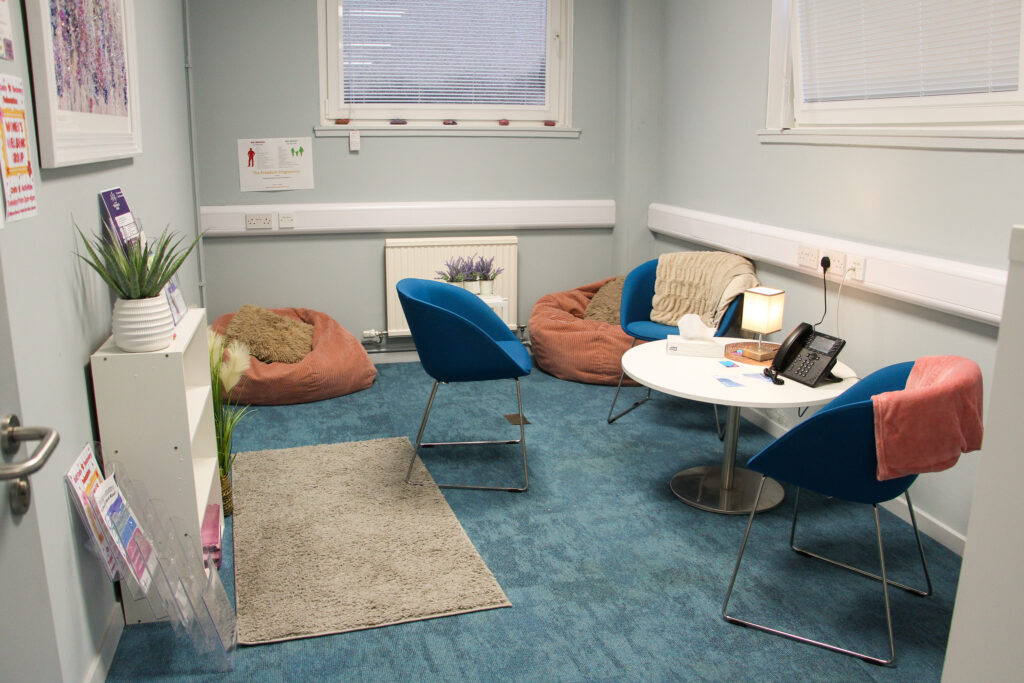
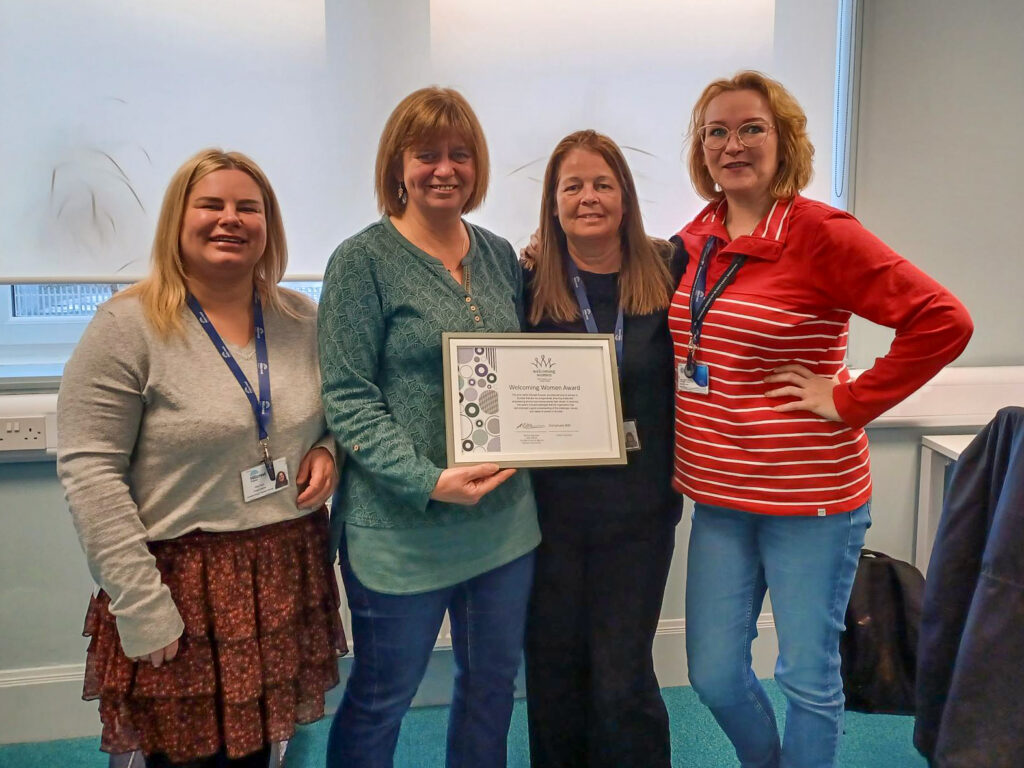
Hillcrest Futures’ Dundee services that support people with drug and alcohol use have been recognised for their commitment to supporting women by receiving the Welcoming Women Award for their work at South Ward Road.

The services were commended by the Head of Health & Community Care at Dundee Health and Social Care Partnership (HSCP) for their efforts in creating a welcoming and supportive environment for women in crisis.

The initiative was made possible thanks to funding from the Gendered Services Project, secured by Hillcrest Futures staff with support from Gendered Services Project Manager, Heather Wilkins.

The Gendered Services Project is funded by the CORRA Foundation and the Dundee Alcohol and Drug Partnership (ADP). The project, which is driven by women with lived experience of complex trauma, aims to support services to develop a gendered approach to service delivery.

Hillcrest Futures Senior Project Worker, Justyna Zalewska explains: “We know that women accessing our services are often in incredibly difficult situations. Having a space that feels safe, warm and welcoming can make a huge difference to their wellbeing.

“Thanks to the funding and feedback from women supported by our services, we have purchased cosy blankets, wall art, cushions, lamps, plants and other decorative items to make our interview rooms and recovery café feel less clinical. This award is a testament to the hard work and dedication of our teams in ensuring that women feel supported when they come through our doors.”

Lead Officer, Protecting Team, Sophie Gwyther added: “Seeing more and more services in Dundee achieve the Welcoming Women Award is fantastic. For any woman considering accessing support services, it gives them assurance that the service will respond sensitively to their specific needs as women and any barrier they may be worried about will be addressed. Well done to Hillcrest Futures for this achievement.”

One of the women who accesses support from the services shared her experience: “When I first arrived at the service, I felt so emotional. My project worker showed me to the women’s room and let me cry. I started to feel calmer in the surroundings. Having a blanket to cuddle into and the nice smell of the room also relaxed me. It felt so therapeutic while my project worker listened and let me talk.”

From left- Kelly Robb, Hillcrest Futures project worker; Heather Wilkins, Gendered Services project manager; Pauline McIntosh, Hillcrest Futures operations manager; Justyna Zalewska, Hillcrest Futures senior project worker.

Arlene Bunton announced as Finalist in Leading Women in Care Awards!

We are thrilled to share that Arlene Bunton, our Independent Sector Lead for East Ayrshire, has been named a finalist in the “Leader of the Future” category at the prestigious Leading Women in Care Awards 2025!

This recognition highlights Arlene’s dedication, innovation, and leadership in driving positive change within the social care sector!

We are also proud to recognise several Scottish Care members on the shortlist – an exceptional achievement that truly showcases the amazing female leadership within social care in Scotland. Good luck to you all!

Voting is now open and will close at midnight on Friday 28 February. Let’s show our support and celebrate the incredible leadership within our sector!

Cast your vote here: Leading Women in Care Awards Voting

A betrayal of dignity: the failure across the UK political leadership to prioritise social care.

Tuesday next (the 25th) sees the Scottish Parliament debate and vote on the Scottish Government’s Budget. It is something of a fait accompli with the votes of the Scottish Liberal Democrats and the Green Party in the bag, and Scottish Labour sitting on its hands. Any sense of self-congratulation, however, should be short lived because not for the first time this administration has seriously let down the social care sector and the tens of thousands of women and men who rely on social care services and supports.

Yet again I find myself writing about the lack of real prioritisation being given to social care by the Scottish Government – in that, however, they are not alone – the UK Government in its new Labour iteration is doing exactly the same. In Scotland there will be defence statements made that the current administration has never given as much as it is now allocating to social care – and indeed it would be churlish not to congratulate them for continuing to finance the Scottish Living Wage which comprises the largest proportion of the additional revenue that has been given to the system this coming year. But such positivity rings hollow when the perilous reality of disintegration becomes apparent.

Social care is not a luxury. It is not an optional extra or a line item to be trimmed when budgets are tight. Social care is the foundation upon which the dignity, independence, and wellbeing of thousands of older people and individuals with disabilities rest. It is the means by which we affirm the intrinsic worth of every individual, ensuring that no one is left behind, no one is forgotten, and no one is stripped of their humanity.

Yet, the 2025 Budget tells a different story. It tells a story of missed opportunities and misplaced priorities. It tells a story of a government that has chosen to turn away from those who are most valuable, those who have contributed to society throughout their lives, and those who now depend on us to uphold their rights and dignity.

The failure to prioritise social care funding is not just an economic decision – it is a moral failing. It is a failure to recognise that the right to live with dignity, to access essential care, and to participate fully in society are not privileges to be rationed, but fundamental human rights. The United Nations Principles for Older Persons and the Convention on the Rights of Persons with Disabilities are clear: states have an obligation to ensure that older people and those with disabilities can live independently, with access to the support they need. By underfunding social care, the Scottish Government is failing to meet these obligations.

I fully recognise that government is about choices and one of the most damaging choices made by the UK Government is its decisions not to exempt social care providers (and hospices I might add) from the forthcoming increases in National Insurance rates. This is a tax on jobs and a tax on care and will drive many care organisations to the wall. It is a political madness entered into with an ignorance of consequence and a lack of compassion. Despite there being a debate on the issue again on the 25th of February in the House of Lords the Chancellor remains deaf to the desperate pleas of those who care and support tens of thousands of people and those individuals themselves.

The consequences of this political failure in both London and Edinburgh are stark. Care providers, already stretched to breaking point, are being asked to do more with less. Staff, who are the lifeblood of social care, are undervalued and underpaid, leading to chronic shortages and burnout. Older people and those who use social care services are left waiting for essential support, their lives diminished by delays and inadequacies. Families are forced to pick up the pieces, often at great personal cost.

We cannot accept this. We must demand better. We must demand a budget that reflects our values, that invests in social care as a cornerstone of a fair and just society. We must demand that the Scottish Government recognises the urgency of this crisis and takes immediate action to address it.  It might not be able to do much about a deaf Westminster, but it must do more to invest the limited resources it has available to it in social care provision. Yes, it will be hard, and decisions taken will not go down well in other sectors – but a society that does not care is not one worthy to be governed. It might even mean, heaven forfend that we invest less in the NHS and take some of the resources we have to prioritise social care over acute and secondary NHS services. Budgets are all about hard decisions – I together with thousands of others cannot accept the fiscal choice that continues to marginalise social care.

Ultimately though this is not just about money. It is about who we are as a society. It is about whether we are willing to stand up for the rights and dignity of every individual, regardless of their age or ability. It is about whether we are willing to say, with one voice, that social care matters.

The time for empty promises and half-measures is over. The time for action is now. Let us not fail those who depend on us. Let us not fail ourselves.  Let us see investment and resource reallocated and let us spend on the lives of those who remain the heart of our communities. To do otherwise is a betrayal of dignity.

Donald Macaskill


Photo by Christopher Bill on Unsplash


Deadline Extension: Care at Home & Housing Support Awards 2025

Deadline Extension: Care at Home & Housing Support Awards 2025 – Enter by 10 March!

We are delighted to announce that the Care at Home & Housing Support Awards 2025 entry deadline has been extended to Monday 10 March 2025, at 9:00 am.

With our annual Care at Home & Housing Support Conference and Awards taking place on Friday 16 May 2025, at the Radisson Blu Hotel in Glasgow, this is the perfect opportunity to celebrate the dedication, innovation, and excellence across the sector.

At a time when the role of social care is more critical than ever, these awards provide a platform to honour outstanding individuals, teams, and services who make a difference every day.

Don’t miss this final chance to recognise and celebrate excellence in homecare – submit your nominations today!

Submit your entry here: https://scottishcare.org/care-at-home-and-housing-support-awards-2025/

Final Deadline: Monday 10 March 2025, at 9:00 am

We look forward to celebrating the achievements of those who make social care exceptional. Get your entries in before the final deadline!

Media Statement – “I worry about the Future” – 49% of Care Homes Report a Decrease in Placements

In January 2025, Scottish Care drew attention to the stark impact of ongoing funding pressures for the independent care at home and housing support sector, the untold stress on the sustainability of vital care providers across Scotland, and diminished access to an adequate level of person-led care. We now turn our attention to the #SocialCareCrisis facing the independent care home sector, through the significant decrease in Local Authority or Health Board placements across the country.

Scottish Care received 146 responses from our membership, overseeing the delivery of residential and/or nursing care across 403 homes in Scotland. We found:

  • A total of 1,463 placement vacancies. 
    • 4 vacancies for every home our respondents oversee.
    • 68% of these vacancies are accessible through Local Authority or Health Board placement and the subsequent National Care Home Contract (NCHC) funding model, providing an essential public service.
  • A significant decrease in the numbers of individuals placed by the Local Authority or Health Board in care homes across Scotland compared to the same period in 2022:  
    • 20.0% of respondents stated that the number of placements had decreased significantly.
    • 29.0% of respondents stated that the number of placements had decreased.
    • 45.5% of respondents stated that placements have stayed the same.
    • 6.2% of respondents stated that the number of placements had increased.

A practice of particular concern is the increased prevalence of ‘2:1’ placement policies in various localities, that Local Authority or Health Boards must recoup the equivalent money of two placements before funding the place of a new individual. Communities across Scotland should not have to wait for fellow citizens to pass away before being able to receive the care home they desire:

“Since before Christmas, there has been a big reduction in social workers seeking rooms for local authority clients. Sometimes, despite the family feeling care home is more appropriate, only homecare funding is offered”. 

Such stark results highlight the unsustainability of the independent care home sector in Scotland. There has been a 18% decrease in the number of care homes for adults in Scotland over the previous decade, and without the sufficient delivery of placements by Local Authorities or Health Boards, this trend will continue. Which each closure, an individual’s choice of and control over their care and support diminishes.

Without a robust and sustainable social care sector, able to promptly place individuals requiring and choosing residential or nursing care, delayed discharge will continue to exert immense pressure on the NHS and other services. More than five million bed days have been lost to delayed discharge since March 2015, at a cost of approximately £1.5 billion.

Never has ring-fenced funding for the social care sector, to meet service demand and support efficiencies across the NHS, been more required. Such funding is notably absent from a Scottish Government budget “that kills”, a very real risk that is summarises by one survey respondent:

“Historically, we had a system aiming to do the right thing but operating poorly, taking too much time to assess and place people appropriately. Now, whether by design or just acceptance, we have a system prepared to let people deteriorate or die without the correct care to save money”. 

We must address the #SocialCareCrisis in Scotland. This begins with the urgent delivery of ring-fenced funding for the adult social care sector to sustain the commissioning of placements within care homes. This is critical to safeguarding a care system that prioritises dignity and delivers high-quality, person-led care. One that looks forward to a future where those delivering or receiving care and support no longer worry about the future.

Dr Donald Macaskill, Chief Executive of Scottish Care, said: 

“Scottish Care’s research demonstrates the profound social injustice of how our crises-driven care home sector operates. People are desperate to move into care homes across Scotland, not least those stuck in our hospitals, and yet local authorities are choosing or simply do not have the money to pay for their care and support. Because of this underfunding, care homes across Scotland are in crisis, and empty beds will lead to care home closures. 

We need a long-term strategy which sustains the care home sector in Scotland rather than what we have at the moment, a reactive, damaging short termism. It is an indignity that we are waiting for two people to die in order for there to be money to pay for one resident.”


-Ends-

Social care is social justice.

Next Thursday is the United Nation’s annual World Social Justice Day 2025. A quick look at official calendars shows that there will be lots of events around the country and across the UK on issues of gender, migration, poverty and inclusion.  But at least for me the day asks some uncomfortable questions. In Scotland we often pride ourselves on being a nation built on fairness, dignity, and equality – the very bread and butter of social justice. We are after all the nation of ‘A Man’s a man for all that.’ Yet, when it comes to social care the sector that should be at the very heart of our social justice efforts – we continue to neglect, undervalue, and overlook it.

Social care is not just about helping people live their lives with dignity; it is a profound expression of our shared humanity. It embodies the very principles of social justice: equity, human rights, and the belief that everyone, regardless of age, ability, or background, deserves to participate fully in society. Indeed, as I have said on more than one occasion the distinctive nature of social care as understood by Scottish legislation makes explicit the social justice dimension of social care. And yet, despite all the fine words and policy commitments, social care in Scotland remains on the margins, rather than at the centre, of our social justice agenda.

For me it could not be more plain social care IS social justice and social justice without social care is empty and vacuous.

Too often, social justice is discussed in abstract terms – poverty, inequality, exclusion – without recognising that social care is where these issues play out most starkly. Social care supports older people, individuals with disability, and those living with mental health conditions. It ensures that people are not trapped in their homes, isolated from their communities, or living in fear of not having their most basic needs met. It is the safety net that allows people to thrive, not just survive.

Good social care is the difference between an individual being able to choose how they live their life and having that choice stripped away. It ensures that human rights are not just a theoretical construct but a lived reality. A society that fails to invest in social care is a society that perpetuates inequality, particularly for women, disabled people, and those in poverty, who are disproportionately affected by the gaps in the system.

So why, I ask myself, despite its fundamental role in achieving social justice, does social care continue to be underfunded, undervalued, and underappreciated – at least in Scotland? Why is it that this week we have discovered again that the economic value of adult social care to the Scottish economy is £5.2 billion; that for every £1 spent there are £2 worth of additional socio-economic benefits. Social care is not a drain but a massive driver and contributor to our economy yet it hardly ever appears in any official economic strategy as such.

I suspect the primary reason for this neglect – yet the one that most would not confess to or admit – is the uncomfortable truth that social care is still seen as ‘women’s work,’ as an extension of informal family caregiving rather than a critical professional service. The chronic undervaluation of care work – both paid and unpaid – is a stark reflection of gender inequality in our society. You can also add to this the insidious ageism which pervades attitudes to social care – only this week we have witnessed the casual stereotyping of older age and the dismissal of contribution from the elderly by some political figures including a UK Minister who had been working around adult social care!

It is also not helped by the failure to accept the critical preventative role of social care but instead to continually focus on social care as a reactive response. Instead of recognising social care as a public good, policymakers and political leaders continue to treat it as an emergency response, something to be patched up rather than properly invested in. This short-termism ensures that the system lurches from one crisis to another, rather than addressing the structural inequalities that create the need for care in the first place.

At the heart of social justice is economic justice yet whilst we often speak of fair work, of paying a real living wage, of tackling in-work poverty, we refuse to see that the low pay and poor conditions in social care are an economic justice issue. Until we properly fund social care services, we will continue to condemn thousands of care workers – predominantly women – to pay that does not reflect their professionalism, insecurity, and burnout.

And over all these the classic failure to see social care as an issue of social justice is the fact that social care has become a political football rather than a political priority. Social care in Scotland has been at the centre of political debates, particularly with the proposed National Care Service. But rather than being framed as a fundamental issue of rights and justice, it has too often been reduced to a question of bureaucratic restructuring. We need to ask: will any of these reforms (even the most recent) truly shift power into the hands of those receiving care and those providing it? Or will we continue to have a system where people feel unheard, unseen, and unvalued?

If we are serious about social justice in Scotland, then social care must be our starting point. We cannot claim to be a nation committed to fairness and equality while we continue to fail those who rely on and provide care.

On World Social Justice Day, let us move beyond rhetoric. Let us commit to:

  • Fair pay, conditions, and recognition for care workers rather than self-congratulation about the Living Wage and promises tomorrow.
  • A human rights-based approach to care that prioritises choice, dignity, and participation and has legislative bite with a new Human Rights Act and clear implementation of social care choice not the kind that is limited by budgets.
  • A shift from crisis-driven social care that is there to rescue and patch up the NHS to preventative, community-based support

Social justice is not an abstract ideal. It is something we build through action, through policy, through investment. And it starts with ensuring that no one – whether they are receiving care or providing it – is treated as disposable.

Social care is social justice. It’s time we acted like it.

I leave you with some of the poetry of the contemporary American poet Jane Hirshfield whose works are enthused with a sideways look at the essence of justice. Her poem ‘For What Binds Us’ reflects on the various forces “both physical and emotional” that connect individuals and the resilience that emerges from shared experiences and healing.

For What Binds Us

By Jane Hirshfield

There are names for what binds us:

strong forces, weak forces.

Look around, you can see them:

the skin that forms in a half-empty cup,

nails rusting into the places they join,

joints dovetailed on their own weight.

The way things stay so solidly

wherever they’ve been set down—

and gravity, scientists say, is weak.

And see how the flesh grows back

across a wound, with a great vehemence,

more strong

than the simple, untested surface before.

There’s a name for it on horses,

when it comes back darker and raised: proud flesh,

as all flesh,

is proud of its wounds, wears them

as honors given out after battle,

small triumphs pinned to the chest—

And when two people have loved each other

see how it is like a

scar between their bodies,

stronger, darker, and proud;

how the black cord makes of them a single fabric

that nothing can tear or mend.

Copyright Credit: Jane Hirshfield, “For What Binds Us” from Of Gravity & Angels. Copyright © 1988 by Jane Hirshfield and reprinted by permission of Wesleyan University Press. Source: Of Gravity & Angels (Wesleyan University Press, 1988)

This poem is available on the Poetry Foundation’s website: For What Binds Us | The Poetry Foundation

Donald Macaskill

Photo by Ian Schneider on Unsplash