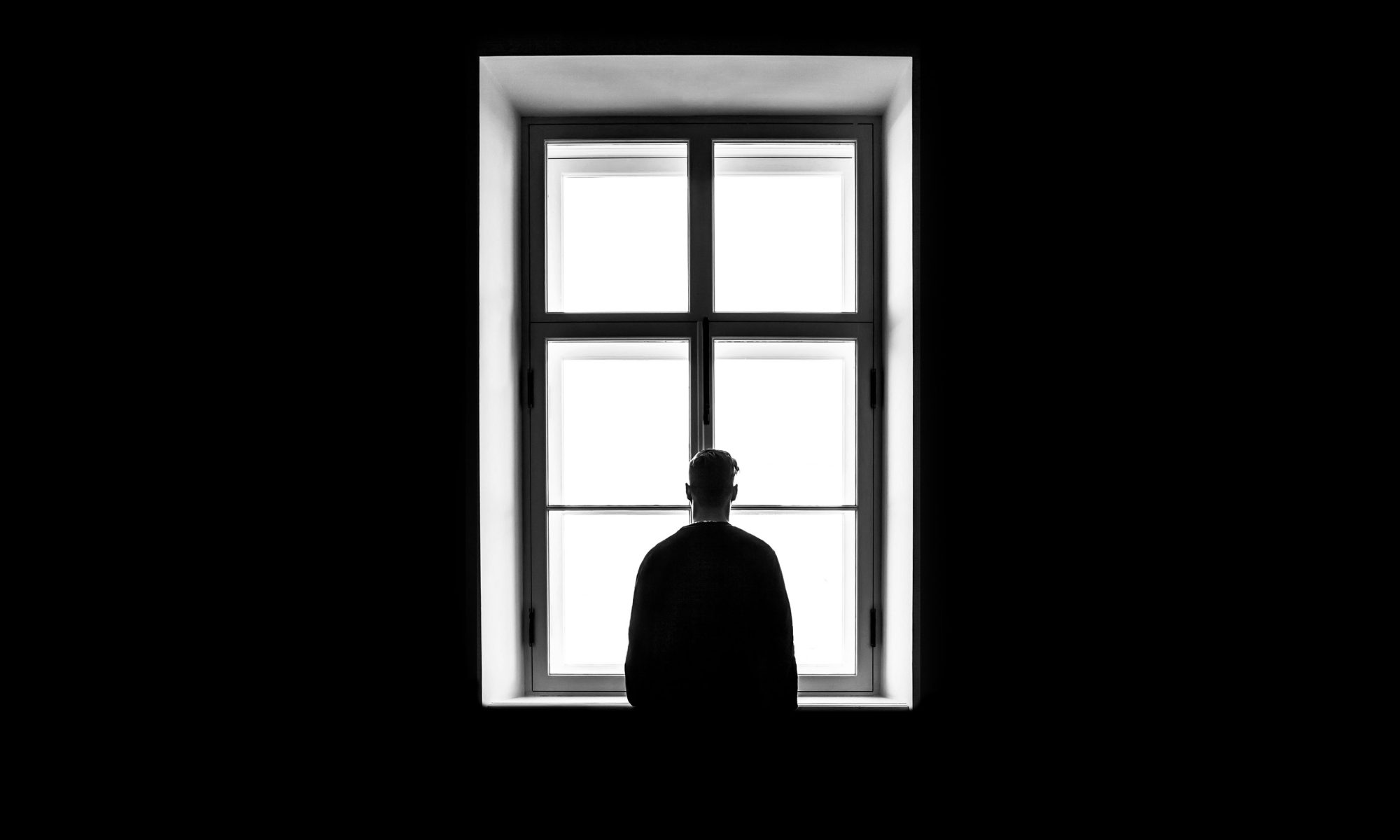
Walk any Scottish street and you will find, behind the closed doors and neat hedges, someone who feels profoundly alone. Age Scotland’s 2025 report puts it starkly: almost half of over‑50s in Scotland experience loneliness at least some of the time, and around one in ten older people live with chronic loneliness: “the equivalent of one on every street.” This is not a fringe concern or a soft social issue; it is a public health emergency that damages bodies, minds, communities, and the sustainability of our care system.
In this long read, I’ll set out why loneliness among older people in Scotland must be treated as an urgent health and social care priority, where the evidence points, and what practical, proven actions we can take, locally, nationally, and personally.
What the evidence tells us
Loneliness harms health. Robust meta‑analyses show that social isolation and loneliness are associated with a significant increase in all‑cause mortality; one 2023 synthesis across 90 cohorts (involving more than 2 million adults) found a 32% higher mortality risk for social isolation and 14% higher for loneliness. Earlier work demonstrated increased risks comparable in magnitude to other well‑established risk factors and highlighted pathways to cardiovascular disease, cognitive decline, and depression.
Internationally, the US Surgeon General has framed loneliness as an epidemic linked to cardiovascular disease, dementia, stroke, anxiety, and premature death, calling for system‑wide action to rebuild social connection. While headlines often compare chronic loneliness to “smoking 15 cigarettes a day,” experts caution that the analogy whilst useful for awareness, can oversimplify the science; the underlying message remains: loneliness carries serious health risk.
In Scotland, the scale is stark. As noted above Age Scotland’s On Every Street documents that “almost half” of over‑50s feel lonely at least some of the time. Scottish media coverage and charity analysis underline the lived reality, namely older people describing silence, bereavement, caring, poor health, and the cost‑of‑living crisis as drivers.
To be fair Scottish Government recognises the issue. Scotland was among the first countries to publish a national strategy on social isolation and loneliness, A Connected Scotland (2018) and then in 2023 it released the Recovering our Connections delivery plan for 2023–2026, which frames loneliness explicitly as a public health issue and commits to community‑led action. Funding has followed through the Social Isolation and Loneliness Fund (2023–2026) to support local groups and third‑sector partners to reduce harm and widen connection.
Public health voices are growing louder. The Scottish Forum on Isolation and Loneliness, bringing together over 120 organisations, has called for loneliness to be formally declared a public health crisis in Scotland and for a long‑term framework to cut chronic loneliness by half in the next decade, echoing WHO’s designation of loneliness as a priority public health problem. It is high time that was the case.
Why older people are especially at risk
Loneliness can affect anyone, but older people face cumulative risks: bereavement; ill‑health and disability; retirement; reduced income; shrinking social networks; transport barriers; and digital exclusion. Scotland’s own research (HAGIS) and policy framing recognise these risk profiles and the need for targeted interventions.
Rural Scotland adds another layer: evidence reviews including the excellent work of Impact, highlight higher prevalence and distinctive barriers for older people in rural areas, distance, transport, fewer services, and link loneliness with increased anxiety, depression, stroke, diminished immunity, and higher health costs.
Loneliness is not only painful; it is also expensive. Analyses cited by Scottish charities and public health advocates estimate that people who report being “often lonely” cost the NHS ~£900 extra per person annually, and that the excess costs for health and long‑term care can reach £11,725 per person over 15 years. Public Health Scotland’s presentations to the national forum summarise the biological, behavioural, and social pathways; stress, poor sleep, lower activity, worse diet, poorer treatment adherence all of which means that loneliness worsens health.
So faced with all this reality what helps to address these profound issues?
The Scottish Government’s delivery plan commits to empowering communities and creating opportunities to connect; the SIAL Fund operationalises this, but the third sector has continually warned of fragile volunteer bases and short‑term funding. Sustained investment and clear, national measures for reducing chronic loneliness are essential.
Link Workers in primary care can connect older people to befriending, walking groups, arts, men’s sheds, and local clubs. Evidence from the Campaign to End Loneliness points to improvements in sociability, confidence, and reduced loneliness, although long‑term outcome measurement still needs strengthening;
Transport, libraries, community halls, warm spaces, and digital support all reduce isolation even if they are not “loneliness services” on the label; Scotland’s strategy explicitly recognises the need to bolster the places and systems where connection happens.
But the current delivery plan runs to 2026. That’s both a deadline and an opportunity.
I think our experience in delivering social care to increasingly isolated individuals and communities leads me to strongly believe that we need to declare loneliness a public health crisis and set a national target to halve chronic loneliness in 10 years, aligned with WHO’s framing and as argued by Chest Heart and Stroke Scotland’s recent Forum manifesto. Alongside this we need political leadership to protect what we have, invest in Link Workers, and identify additional resource for third and community sector efforts. If not things will only get worse.
If we are serious about preventative care, we must design connection into health and social care pathways. Scotland already has the scaffolding: a national strategy, a delivery plan, targeted funds, and a skilled third sector. What’s needed now is stability, scale, and standards and the political courage to name loneliness as the public health crisis it is.
Older people do not ask for much. They want to be seen, heard, and included. The remedy to loneliness is not complicated, but it is collective: it lives in the volunteer who keeps turning up, the link worker who walks with someone to their first club, the bus that still runs after dark, the hall that stays open through winter.
It is also in the critical role that social care plays but that is not going to continue as we strip out real care and support and put in place more and more Elastoplast services, not least the obscenity of 15 minute visits which provide neither connection or care. on the door.
On every street in Scotland there is a person waiting for the knock on the door. In this election year let’s make 2026 the year we decide, together, to knock.
I end with a poem.
“The Last Neighbour”
He sits by the window
counting the gulls
as if they were old friends
returning by instinct alone.
The kettle clicks off,
a small applause
for another morning managed.
He pours one cup.
Only one now.
Outside, the street keeps its hurry,
but his days move like tidewater,
slow, deliberate,
reshaping the sand of routine
into something that still holds him.
He says he’s “fine,”
in the way men of his age do;
a word worn thin
from carrying too much weight.
Sometimes the phone rings
from someone paid to ask,
sometimes from someone who cares.
He hears the difference.
And in the long quiet
between dusk and the ten‑o’clock news,
he lights the lamp in the hallway,
a small act of defiance
against the gathering dark.
If you pass his house tonight,
you’ll see that low, steady glow.
It is not a signal of distress
but a soft and stubborn truth:
no life should drift alone.
No neighbour should fade unheard.
Donald Macaskill
Photo by Sasha Freemind on Unsplash