Flexible Workforce Development Fund – Open University

The Open University in Scotland

 Supporting Small to Medium-sized Enterprises

Many of Scotland’s small to medium-sized enterprises (SMEs) need to upskill or reskill their workforce – now more so than ever before, due to the impact of the Covid-19 pandemic.

The Open University’s Business Barometer 2020 report shows that 60% of employers in Scotland continue to struggle to find the skills needed to fill vacant roles.  Some report taking more than 26 months to fill vacancies.

Many have opted to recruit temporary staff.  A very costly, short-term approach, Scottish employers spent £460 million plugging short term skills gaps in 2020.  That’s a 60% increase on the previous year.

“This short-term approach is not just costly, it is also unsustainable, particularly for SMEs,” explains Suzanne McQuade, Business Relationships Manager at The Open University in Scotland.

As Scotland’s largest provider of part-time higher education, with over 50 years’ experience of providing innovative distance learning, The Open University (OU) is uniquely equipped to support SMEs to upskill and reskill their workforce.

The Scottish Government recently announced a new phase of funding to enable SMEs (organisations with less than 250 employees) across Scotland to access training up to the value of £5,000 to support workforce development, to position them to respond to the impact of the Covid-19 pandemic, to adapt to new ways of working and maximise the opportunities to restart, recover and renew.

A £1 million grant has been awarded to The OU in Scotland as part of the Scottish Funding Council’s Flexible Workforce Development Fund 2020-21: Phase 2.

SMEs can choose from a tailored suite of training for their employees, delivered online through the OU’s innovative learning platforms. It is a highly flexible way to access the training organisations need – in the workplace or from home – whilst accommodating operational requirements and optimising business efficiency.

Training options available from The OU focus on Scotland’s national skills priorities:

  • Health & social care
  • Leadership & business
  • Digital & IT
  • Green economy

With a range of selected courses at Scottish Credit & Qualifications Framework (SCQF) Level 10 – undergraduate – or SCQF Level 11 – postgraduate – or through industry recognised provision, options include OU short courses, microcredentials and modules.

 Short courses allow you to explore a subject without the time commitment, to help you build a new skillset and offer continued professional development in your career.  Individuals can choose from a range of short courses, including in-demand and transferable professional skills such as project management and finance.

For example, care workers could consider the OU’s very popular management-related short courses, to support aspirations to move into a more senior role, such as the New managers’ toolkit, Developing better teams or Developing your leadership style.  A short course in Improving diabetes management is also available.

Home Managers, deputy care managers or nurses seeking post-registration professional development may wish to consider a microcredential such as Management of uncertainty: leadership, decisions and action.  But what is a microcredential and how could one benefit you?  With a microcredential you can rapidly learn new skills and techniques that you can immediately apply and take back to your workplace.

Microcredentials are university level online programmes that are sector endorsed and designed to help you build professional skills.  They take an average of 10-12 weeks of online study to complete which equates to only 9-12 hours of learning per week.  At the end, you gain academic credit to help you advance your career as a standalone credential and the flexibility to use it towards another qualification later down the line.

Additionally, a selected range of undergraduate and postgraduate modules are available including Managing in a changing world and Making strategy with systems thinking in practice, which offer individuals the opportunity to develop higher level leadership & business and digital & IT skills.

To find out more about how The Open University in Scotland can help your SME to develop a future proof workforce through the Scottish Funding Council’s Flexible Workforce Development Fund, please visit www.open.ac.uk/business/flexible-workforce-development-fund


Climate change blog from our National Director

I originally wrote this piece in November 2019, but for a variety of reasons, it was never published. There always seemed to be a greater emergency in social care which took precedent; supporting the social care workforce, promoting human rights, challenges of financial sustainability and of course now, a global pandemic.

However, I have decided to go ahead and publish today. Not just because this afternoon I am on a panel at the Health and Social Care Alliance, as they publish their report: Sustainable Health and Social Care: Climate Change and COVID-19’ in which they call for £25 million to support a climate change innovation fund for social care, and the forthcoming hosting of COP26, but also because it is becoming increasingly obvious that the right time must be now.

Pandemic response has in many ways improved our environments, we have reduced our travel for instance and while this should be celebrated and even maintained, we must also consider the impact of increased use of chemicals and disposable equipment such as PPE. These items are of course essential but will have a long-term impact on our environment. Additional to that is the theory that with our natural resources now struggling to maintain balance, we will experience an increasing number of pandemics. Horrific to conceptualise proving to me that the time is indeed now so here is that piece from 2019, perhaps even more relevant today than ever:

In the last few weeks, the plastic cotton bud ban came into force in Scotland.

Over the last 25 years, the Marine Conservation Society has collected 150,000 plastic cotton buds from beaches in Scotland. This legislation follows the microbeads ban in 2018, with further climate environmental related legislation expected in 2021. Scotland’s Government initiative ‘Action Against Plastics’ is in line with the EU Single-use Plastics Directive, in an attempt to reduce the use of single-use plastics and the impact they are having on the planet.

The climate change issue is no more pertinent to me than on seeing the findings from a childhood friend and climate change expert who has recently returned from an expedition to East Greenland where she documented some of the irreversible changes resulting from climate change. Melting glaciers which can never be replaced, whole ecosystems disrupted. It’s funny how more real things seem when they happen to someone you know.

Originating from a perspective of infection control, single-use plastics are everywhere in social care, from cotton buds to protective equipment, to packaging for our medicines and food. There is a real opportunity for the care sector to play a role in leading the way to reduce waste, but also to find other ways to uphold safe high-quality care, in a more environmentally sound way by changing practice, and exploring new materials. The mantra of ‘Reduce. Reuse. Recycle’ has much to offer in this space and some care staff have been involved in adopting and embedding such a culture in their organisations. Via the Scottish Care Strategic Nursing Group, we will also ask the ‘Infection Control’ team at NES for suggestions and resources that they may be able to share.

However, single-use plastics are not the only contributors to the increasing climate change crisis. Health Care Without Harm estimates that measuring the greenhouse gas emissions solely related to heating and cooling the worlds healthcare providers (using the WHO definition so including social care) would make it the fifth-largest contributor in the world. Their report ‘Towards Sustainable Healthcare’ outlines 5 areas where change can be made for the sector as a whole. It covers energy, procurement practices, chemicals, pharma and food, all of which have implications and opportunity for social care. Whilst we can choose how and where we draw our energy, the chemicals we use and the food we buy, but overall, the biggest implication is currently outwith our control. Where external agencies have authority in terms of commissioning and procurement practice, it more often favours cost over quality and sustainability in all definitions.

Across the UK and beyond, organisations have been making eco-conscious changes, but this can often be more achievable at scale. Given that most care providers in Scotland are SMEs, despite desire this can seem a more daunting task.

For care homes and housing support, there are many options that providers have been implementing for over a decade – better insulation, water and lighting efficiencies such as eco taps and aerators, and LED lighting installed where they meet the expectations of creating a homely environment. Last week I met an architect with whom I discussed ‘smarter design’. They have particular expertise in optimising natural light in care homes thus reducing electricity use, but they also described to me the effect this can have on regulating body functions such as your heartbeat and even when you urinate. Design affects the widest definitions of the environment. Structural change is of course more difficult if you have an older property, as to retrofit can present challenge and cost. However, as some of these changes are cost saving in the longer-term, they may also be financially worthy of investment. Whilst access to such resource can be compromised because of the prolonged underfunding of the sector, it is clear that issues of environmental sustainability are just as important for our Commissioning Authorities as for providers and staff.

Whilst some of this also applies to homecare offices, the opportunities for care at home providers lie more in clinical consumables and PPE, and in travel. Smarter route planning can reduce emissions, as well as reducing travel time for employees and reduced vehicle costs.

Indeed, digital and technological developments such as care planning tools may be a significant answer to a range of challenges as they have the opportunity not only to reduce paper waste but also to develop into citizen-owned and controlled systems, making data sharing and data analysis much simpler to experience and access. Projects such as medicines waste reduction which can be enhanced by using digital systems such as E-MAR not only reduce waste, but significantly reduce costs, not to mention the impact of reducing the transport required to issue and deliver scripts.

Scottish Care’s Executive Committee recently revisited the communique written at the Five Nations Care Forum over a year ago, on the role of a sector already renowned for its impact on humanity in extending its activity to include sustainability. We discussed the actions of some providers towards achieving this and would like to hear from you on what you have been doing to support the sharing of good ideas across Scotland. Whilst a culture of environmental audits can help organisations to regularly review their practise, access to a resource full of ideas may offer suggestions to enable other providers to identify and act on areas for improvement. It is also a fantastic way not only to showcase your own work but to positively showcase the sector as a whole in actively addressing the challenge head-on.

I look forward to hearing from you.

Aware, Awaken, Action.

Karen Hedge

National Director

@hegeit

Independent and 3rd Sector Workforce Development within Dumfries & Galloway

RAPID RESPONSE EMERGENCY MODEL

Situation

The Covid -19 Virus has now developed with a new highly transmissible strain and a third wave has affected our communities. National and local lockdown measures have increased once again and, the risk to our HSCP social care teams has increased even further. There has been an ongoing recognition and fear within Dumfries & Galloway social care management teams that there needs to be a network established to ensure the support of their staff teams and ultimately the continued provision of services to the most vulnerable members of our community. It was understood the reliance of support from our NHS colleagues was untenable due to acute services being at their capacity and management of the vaccine rollout. To mitigate risk management to the social care sector, to protect individuals accessing the services and to protect the NHS services a test of change was required.

At multiple meetings involving the partners of the Independent and 3rd Sector Workforce Development Team, the Care Inspectorate and SSSC both at National and Local level, the HSCP of Dumfries and Galloway, National Workforce and Policy Lead and the Transforming Workforce Lead for Scottish Care, it was agreed that the development of a ‘Rapid Response Network’ was necessary and essential. Some of our Social Care providers had experienced and are experiencing large numbers of staff and at times whole teams being taken out of service due to Sickness, Test and Protect as well as isolation and shielding purposes. This increased the potential for a higher incident risk across the sector and ultimately placing more pressure on an already stretched NHS. It was established that there needed to be a system put in place to maintain the provision of a basic service to individuals in need of care. This provision of care can be provided by trained staff already working within the social care sector and across Dumfries and Galloway. Specialist providers, Care at Home and Care home managers, area and regional managers and directors have agreed to support one another during these unprecedented times. Subsequently, the Care Inspectorate, SSSC and D&G HSCP have agreed this essential service can be delivered.

This model will utilise existing staff to support the workforce and to minimize risk to patient care due to reduced workforce, by allowing providers to work flexibly with one another. This model is only for use in emergency situations and when the providers own contingency plans have been exhausted. A review of this pilot model could potentially consider options to support Home Teams with a rapid response from the social care sector. In order to access this Network providers have to be contracted with the HSCP and sign a Memorandum of Understanding agreeing to the terms. Providers are expected to follow the guidance regarding Infection Control measures in order to mitigate risk of infection.

Background

In September 2019, Scottish Care initiated Strategic Independent, Third Sector Workforce Forum, supported by Vic McDade, NHS Sustainability and Development Manager.  This forum was developed initially to bring social care providers together to work collaboratively with partners, to explore opportunities to expand the Social Care workforce, raise the profile of Social Care across Dumfries and Galloway and share experiences. It was also hoping to develop positive public perception and to evidence Career Pathways within health and social care.  This group split into a Short Life Working Group to consider an emergency response to the rapid rise in Covid cases and met on several occasions to discuss a model of support for one another.

In December 2020, guidance was published by COSLA and Scot Gov (2020) regarding financial support for social care providers. This document contains information to support the ‘potential for staff to deliver another service/support temporarily’. The guidance states that there should be collaborative working between providers and commissioners in order to facilitate a clear understanding of what is required.

It is envisaged that once this network has been established it will be able to provide support across the social care services for any emergencies when they arise. With the potential, if successful, for a National Framework to be developed. It is hoped that this collaboration of teams across Dumfries & Galloway will strengthen the social care services for the future. This proposed model also covers many of the points from the ‘9 Pillars of Integrated Care’ including ‘workforce capacity and capability’, ‘shared values and vision’ and ‘system wide governance and leadership’ (International Foundation for Integrated Care, 2020).

Modern Apprenticeship Funding – City of Glasgow College

The City of Glasgow College has funding from the Development Scotland Modern Apprenticeship Fund. This is now assessable to over 25’s to provide SVQ’s.

This provides Social Care staff with the opportunity to complete their SSSC registerable qualifications at no cost to them or their employer. As well as allowing staff members the chance to upskill and go for promoted roles.  This also allows those service providers to use their training budgets on other things and is allowing smaller providers with no training budgets to access these qualifications at no cost.

Information on this Apprenticeship Funding can be found in the leaflet below.

Social Care Funded Places_A5_flyer_Nov19

Open with Care – supporting meaningful contact in care homes: guidance

The Covid-19 pandemic has had a major impact on care homes for adults. The Covid-19 virus presents a significant risk to residents and so every possible step needs to continue to be taken to mitigate against that risk and to protect residents and staff. Managing this risk has necessarily brought enhanced protections in care homes – including recommended limits and restrictions around routine time together for residents, family and friends. Care home staff have worked tirelessly throughout the pandemic to support continued contact between residents and their loved ones but these restrictions have been hugely challenging for residents and their loved ones, as well as for care home staff and colleagues.

Protecting residents from the risk of Covid -19 has rightly been a priority for us all but we know that the consequences of the restrictions in place have been harmful for many residents, relatives and staff. Emerging and recent international evidence on Covid-19, demonstrates potential physical, emotional and cognitive harm for residents from prolonged isolation. This has also been fed back by carers and family members, for example to the Root Cause Analysis (Scottish Government, November 2020). In view of this, the WHO ad hoc COVID-19 Infection Prevention and Control Guidance Development Group has recently unanimously agreed that visiting should be supported, as long as a range of Infection Prevention and Control (IPC) measures are in place to prevent the risk that visitors may contribute to Covid-19 transmission in care homes (see Supporting Documents for details).

As the evidence continues to evolve about how to deal with the virus, so have our safeguards and protections. Alongside risk based and proportionate infection prevention and control, recognised as a core approach that must be embedded in all our practice (Scottish Government, November 2020), multiple levels of wider protections are now in place. These include: • adequate, available and properly used personal protective equipment (PPE) for care home staff and visitors; • testing of residents prior to hospital discharge and admission to care homes; • routine testing for all care home staff and visiting professionals; • care home-based testing for all designated visitors; • Covid-19 vaccination of care home residents and staff; and • support from local oversight arrangements, public health and primary care.

With these levels of protection now in place, maintained and rigorously sustained, we can actively address the harms caused from prolonged isolation and absence of meaningful contact between residents and loved ones. So it is time to return to safe, managed indoor visiting so that everyone living in adult care homes, no matter their age, health, or otherwise, can have meaningful contact with their families and loves ones for the remainder of the pandemic and beyond – provided it is safe to do so.

This guidance is available on the Scottish Government website: https://www.gov.scot/publications/open-care-supporting-meaningful-contact-care-homes/

Proud to Care: LGBT and Dementia

LGBT Health and Wellbeing has developed this toolkit to support health and social care staff to reflect on and develop their practice in working with lesbian, gay, bisexual and transgender (LGBT) people with dementia.

We are delighted to help produce this toolkit along with a range of representatives from care providers working across Scotland, Alzheimer Scotland and the Care Inspectorate.

The Impact Report for this project can be found here.

LGBT Dementia Toolkit

Briefing paper on the Independent Review of Adult Social Care

Following the publication of the Independent Review of Adult Social Care report, Scottish Care has developed the following briefing for Members of Parliament from all political parties to inform the debate that took place today (Tuesday 16 February).

Scottish Care welcomes the Review report and believes it sets a positive and constructive approach to addressing the challenges social care faces, many of which Scottish Care has been raising for a number of years.

Independent Review of Adult Social Care in Scotland - Briefing 15 Feb

Pet therapy helps care home residents enjoy a ‘paws’ in their week

Animal-loving pensioners at a city centre care home have been enjoying pet therapy sessions for more than a decade, thanks to dedicated staff and resident pup, Sophie.

Staff at Belleville Lodge in Edinburgh recognised how much joy and comfort the sessions brought to their elderly residents and made the decision to ensure they could continue throughout the pandemic.

During the sessions, residents reminisce about their pets over the years, cuddle up with Sophie, the resident west highland terrier, and look at pictures of animals and nature, while sharing stories in small groups.

The carers have found pet therapy has amazing benefits for residents with and without dementia, from increased mood and social interaction to improved nutrition and physical activity. It’s also a fun activity for residents who can share their pet histories and find out interesting facts about different animals.

Margaret Russell, Matron at the home operated by , said: “We find the sessions are excellent for our residents wellbeing and spirits. Before the pandemic we had two other dogs who visited regularly, a black lab called Orchid and a border terrier named Ruff, who residents are looking forward to reuniting with when it’s safe to do so.

“Anyone with a pet will know just how relaxing and calming spending time with an animal can be. As well as relieving the feelings of loneliness and isolation, pets can reduce stress, lower blood pressure and promote a sense of overall wellbeing.

“With such a powerful range of physical and mental benefits, it’s not surprising that pet therapy is being introduced into many care homes to improve the lives of elderly people and dementia patients across the UK.

“Even when a resident has advanced dementia, you can see the change in their face and the comfort they find when petting a dog – their faces completely light up as they stretch out their arms to welcome them.

“We’ve found it so important to keep activities that residents enjoy going throughout the pandemic, so we have made sure to incorporate pets and animals into our activity programme.

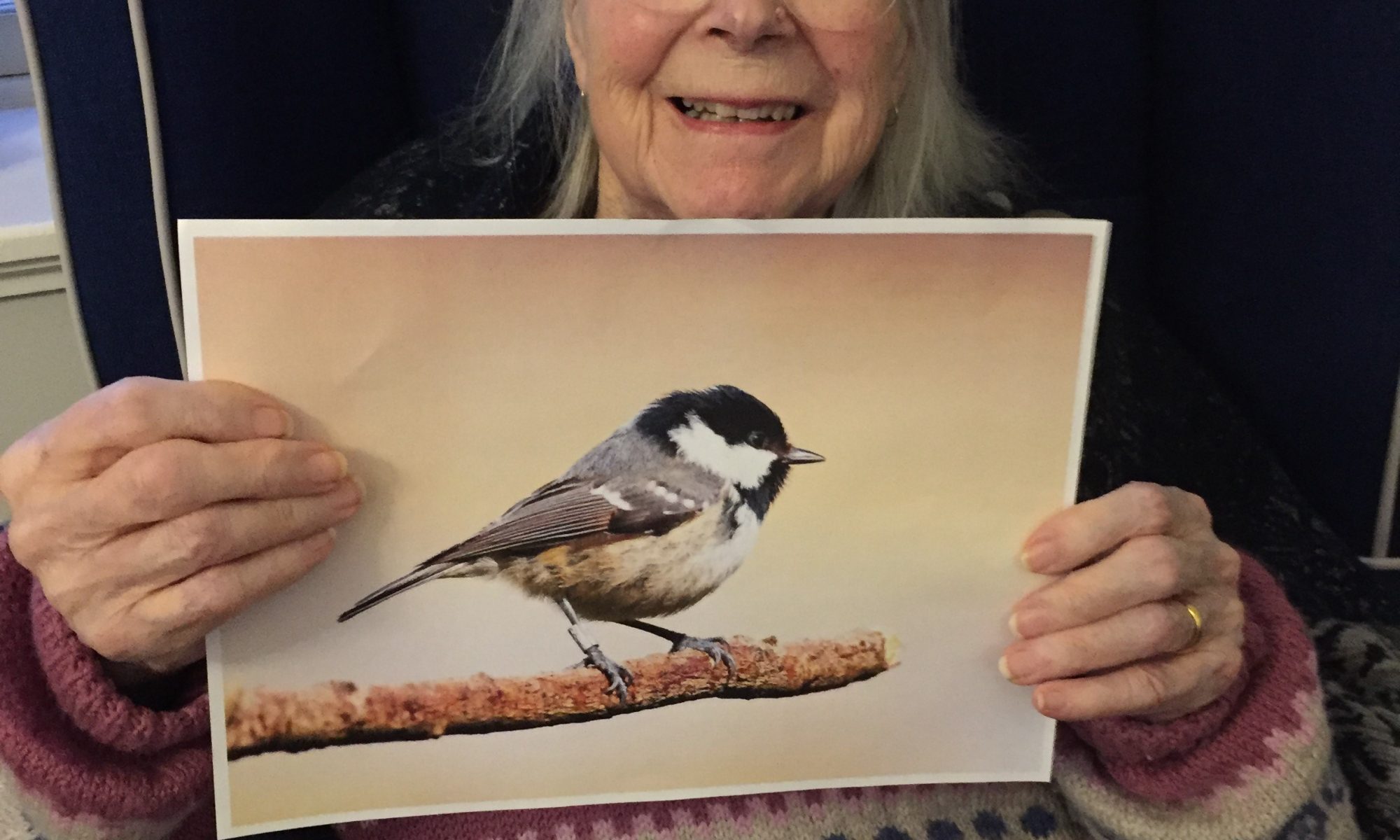
“When we couldn’t physically welcome any pets into our lounge area, we would download pictures of our residents favourite animals for our residents to talk about.

“Everyone thoroughly enjoys hearing one another’s stories and leaves the sessions feeling happy – which is the main reason why we have our extensive activity programme.”

Belleville Lodge offers space for up to 25 residents, including some twin rooms, in the heart of Edinburgh.

Mansfield Care operates 11 care homes across Edinburgh, Borders and the West of Scotland, specialising in small homes which offer bespoke, friendly care and boast state of the art facilities.

The care provider specialises in small, friendly, residential care homes across Edinburgh, Borders and West of Scotland, providing individualised care in state of the art facilities.

The Mansfield Care ethos is inspired by the kind of care many would wish for later in life – positive, empathetic, respectful and homely.

To find out more about Mansfield Care visit, https://www.mansfieldcare.co.uk/