There are moments in a nation’s life when the mirrors we hold up to ourselves begin to distort what truly matters. We start to speak in binaries: young or old, workers or dependents, contributors or recipients. We divide what was never meant to be divided.
And yet, on World Population Day, which is today, the 11th July, that mirror is steadied. It asks us to look again. Because the truth, so often obscured, is that there is only one Scotland. Young. Ageing. Becoming. Belonging.
The United Nations’ recent World Population Highlights 2026: Youth reminds us that young people are “a vital driving force in all societies,” bringing energy, creativity and innovation to the task of shaping our shared future. But it also reminds us that too many young people face barriers, whether economic, social, and structural, which limit their ability to fully participate, to flourish, and to imagine a hopeful tomorrow.
At the same time, we know both from evidence and from lived experience, that population ageing is not a discrete phenomenon affecting “other people.” It is the inevitable and profound consequence of longer lives, falling fertility, and decades of progress. And as I have frequently said that is fantastic and a cause of celebration not penitence.
But somewhere along the way, we have allowed these two realities to be framed as if they were in competition.
We hear it increasingly: that resources spent on older people come at the expense of the young; that social care is a burden on growth; that longevity is a problem to be solved. But this is a profound misreading of both economics and humanity.
The young person entering the workforce today is not a separate category from the older person receiving care. They are the same life, at different times. They are the same society, seen from different angles. The care worker supporting an older person today is building the system they themselves may rely upon tomorrow. The policymaker debating funding models is shaping not just current services but the inheritance of the next generation. The teenager questioning whether they can afford to build a family is already interpreting the signals we send about security, dignity, and hope.
Indeed, the United Nations has argued that young people themselves are not only thinking about their future children but “the world those children will inherit.” And that world includes the social care systems we choose or fail to sustain.
Care as intergenerational infrastructure
We need to begin, urgently, to describe social care for what it truly is: intergenerational infrastructure.
It is as fundamental as education, as vital as transport, as essential as housing. Because it enables participation across the life course. It allows older citizens to live with dignity, yes, but it also allows younger people to work, to create, to study, to parent, and to contribute without being overwhelmed by unrecognised and unsupported care responsibilities.
When care fails, it is not only older people who suffer. It is daughters leaving employment. It is sons carrying silent burnout. It is grandchildren witnessing anxiety instead of security. When care succeeds, it creates something far more profound than service delivery. It creates trust between generations.
The Scotland we are becoming
Scotland, like much of Europe, is an ageing nation. That is not a crisis, it is an achievement. It reflects medical progress, improved living standards, and the quiet triumph of longer life. But it does require honesty.
It requires us to recognise that population change demands social change. That systems built for a different demographic reality cannot simply be stretched indefinitely. That fairness between generations is not achieved by privileging one over the other, but by weaving their futures together.
The data tells us that globally around 24% of the population is aged under 15, while around 10% are aged 65 or over. These proportions are shifting, and they will continue to shift. But numbers alone do not define us. What defines us is how we respond. Do we retreat into narratives of scarcity and competition? Or do we lean into solidarity, creativity, and shared purpose?
The World Population Highlights 2026 report speaks of the need to ensure demographic change “contributes to a more equitable, inclusive, resilient and sustainable future for current and future generations.” That is not a technical objective. It is a moral one.
There is something deeply corrosive about the language that pits generations against one another. It erodes empathy. It diminishes shared responsibility. It fractures the very idea of community.
In social care especially, we see daily what happens when interdependence is recognised rather than denied. We see young workers bringing skill and compassion into environments shaped by experience and memory. We see older individuals offering wisdom, humour, and perspective that cannot be taught. We see, in other words, that care is a relationship, not a transaction. And relationships do not thrive on division.
One Future
So, on this World Population Day, perhaps the most important thing we can do is to change the story. To stop asking how we balance the needs of young and old as if they were competing demands. And instead to ask:
What kind of Scotland do we want to grow old in?
What kind of Scotland do we want to grow up in?
And how do we make sure they are the same place?
Because they must be. Because there is only one future.
In many ways, what we build as a society is not so different from what the poet George Mackay Brown described in The Finished House. There, the hearth is lit, the table is set, and space is made not only for those who dwell within but for “the stranger who will eat before the men of the house.” It is an image of a community that understands itself as unfinished, open, and always preparing for those yet to arrive.
That is the challenge before us in Scotland today. Social care is not simply about responding to the needs of an ageing population; it is about constructing a common home in which younger generations can see their future with confidence, and older generations can recognise their lives as valued and complete. Like Brown’s house, the Scotland we shape must be one where each generation prepares the ground for the next, not out of obligation, but out of a deep and enduring sense that our futures are shared, and that the table we set today will be one at which we all, in time, will sit.
The Finished House
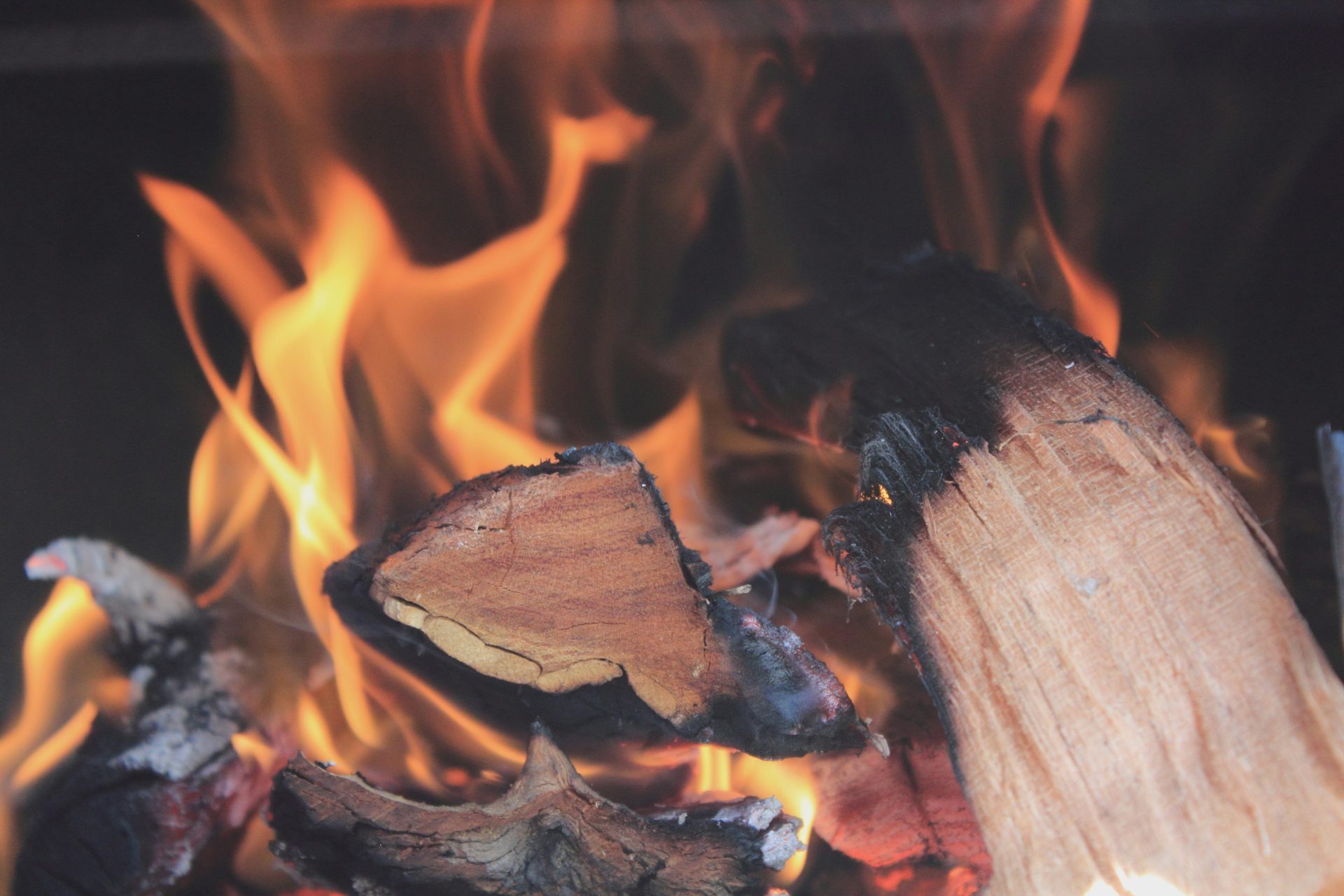
In the finished house a flame is brought to the hearth.
Then a table, between door and window
Where a stranger will eat before the men of the house.
A bed is laid in a secret corner
For the three agonies – love, birth, death –
That are made beautiful with ceremony.
The neighbours come with gifts –
A set of cups, a calendar, some chairs.
A fiddle is hung at the wall.
A girl puts lucky salt in a dish.
The cupboard will have its loaf and bottle, come winter.
On the seventh morning
One spills water of blessing over the threshold.
George Mackay Brown The Finished House by George Mackay Brown – Scottish Poetry Library
Donald Macaskill
Photo by Obed Hernández on Unsplash