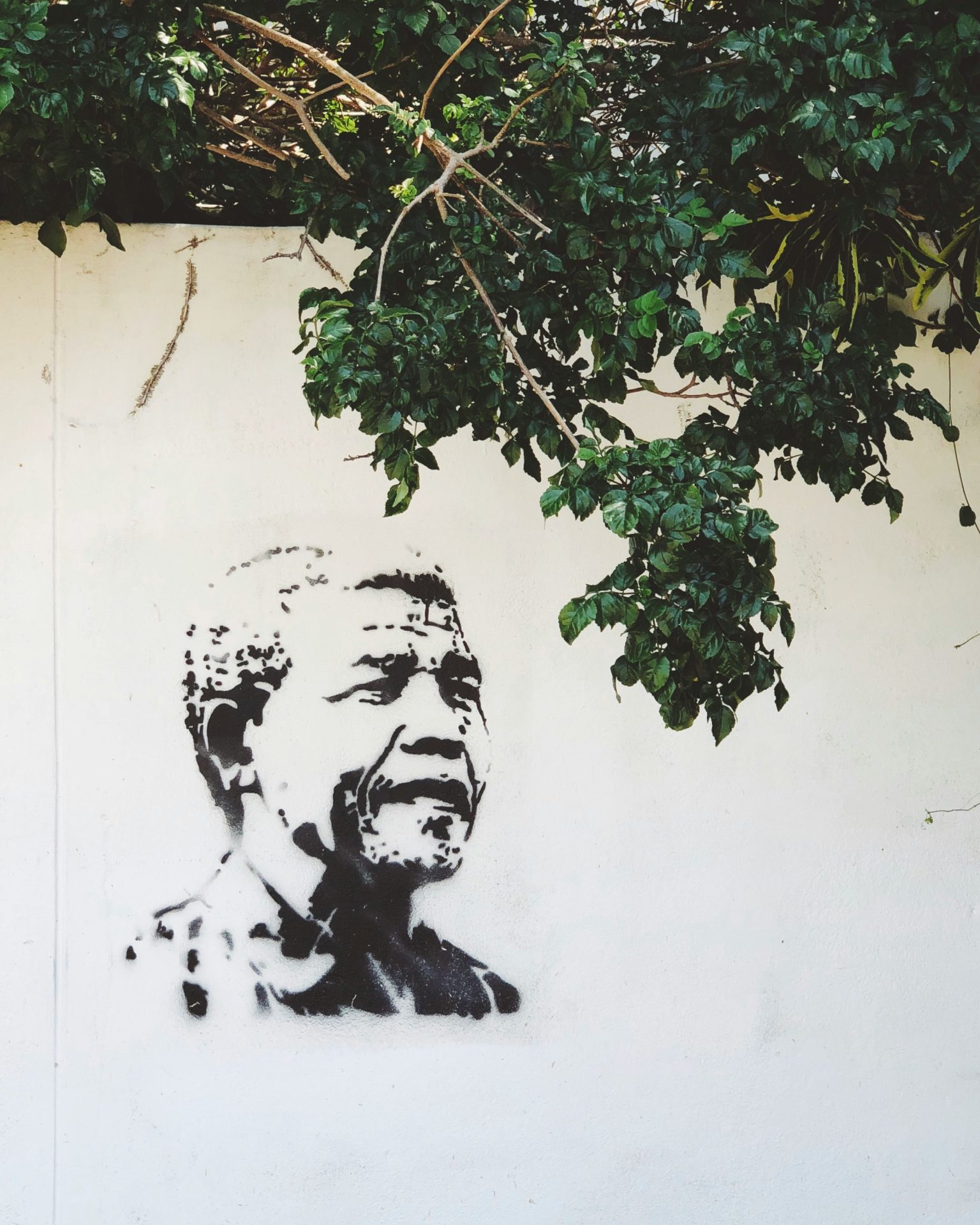
There are times in my life which are etched indelibly in my memory even when my role in the event is marginal and incidental. On a rain-soaked October day in 1993, Nelson Mandela stood in Glasgow. He had travelled from a land still trembling on the edge of democracy, into a city that, years earlier, had dared to stand with him when it was neither easy nor popular to do so. As he spoke in the City Chambers and later to thousands, including myself, who had gathered in George Square, he spoke words which remain as unsettling as they are inspiring:
“Whilst we were physically denied our freedom in the country of our birth, a city 6000 miles away… refused to accept the legitimacy of the apartheid system and declared us to be free.”
Glasgow had acted long before it was fashionable. In 1981, when Mandela was still imprisoned, it had conferred on him the Freedom of the City becoming the first in the world to do so. It renamed a street in defiance. It organised. It refused indifference.
And in 1993, Mandela came not simply to receive an honour but to acknowledge an ethic: that ordinary people, in ordinary places, can choose to stand for justice even when power hesitates.
That ethic is the heartbeat of Nelson Mandela International Day, marked each year on 18 July. Established by the United Nations, it is not a day primarily for remembrance but for action and is a call for each of us to re-enter the world as participants, not observers. The invitation is simple: to give 67 minutes of our time, one minute for each year Mandela devoted to service. 2
But beneath that simplicity lies a deeper challenge. Because the truth is this: service is easy when it is episodic. Repair is harder when it is generational.
The work beneath the gesture
It is tempting to reduce Mandela Day to an act. A visit. A donation. A moment of kindness. All of these matter. But Mandela’s life was not an accumulation of gestures. It was a sustained act of building, often unseen, often uncelebrated, frequently costly. He understood something that we in social care know instinctively: that the real work of justice is not heroic; it is patient.
It is the slow stitching together of communities. It is the mending of trust where it has been fractured. It is the daily choice to see dignity where systems have forgotten it.
In Glasgow in 1993, Mandela did not simply thank a city. He reminded it of its own identity, that it had chosen solidarity over silence, and in doing so had become part of something larger than itself. And perhaps that is where his challenge meets us now.
Because we are living in a time of fracture. A time when services are stretched and communities strained. A time when the language of care risks becoming transactional rather than relational. A time when the courage to build can feel overwhelmed by the pressure simply to sustain.
Mandela’s leadership was never about perfection. It was about repair. He emerged from 27 years of imprisonment not with a call for retribution, but with a discipline of reconciliation. Not naïve forgiveness, but a hard-won understanding that societies cannot flourish if they remain trapped in cycles of resentment. And that lesson feels acutely relevant in our own sector and at this time.
Every day across Scotland, unseen acts of repair are happening. A care worker sitting with someone whose words have been lost to dementia, but whose humanity has not. A manager holding together a fragile service despite financial uncertainty. A community choosing collaboration over competition.
These are not dramatic acts. But they are profoundly political in the truest sense: they build the polis, the shared life of the community. They say: we will not give up on one another.
The courage to build
There is a quiet line that runs through Mandela’s life, and through that Glasgow day, which is perhaps more radical than it first appears. It is this: that building is a form of courage. It takes courage to resist the pull of cynicism. It takes courage to continue when recognition is absent. It takes courage to believe that what we do, in small and local ways, has meaning beyond itself.
Glasgow’s support for Mandela was not inevitable. It was contested. It required individuals and institutions to take a stance that not everyone agreed with. In that sense, it was an act of building, a shaping of a moral identity. And Mandela recognised it as such.
What if we began to see our own work in that same light? Not as maintenance. Not as crisis response. But as nation-building in its most human form. Because social care is, at its heart, the infrastructure of belonging.
67 minutes… or a lifetime?
The invitation of Mandela Day is to give 67 minutes. But Mandela himself would surely ask a deeper question: what would it mean to give more than time, to give commitment?
The risk with symbolic acts is that they allow us to feel we have completed the task. But Mandela never saw service as something to be completed. He saw it as something to be lived. So perhaps this week is not about asking, “What can I do for 67 minutes?” but rather, “What do I need to repair, and what am I willing to build?”
There is something deeply fitting that Glasgow holds such a place in Mandela’s story. Because it reminds us that global change is always rooted in local action. A city council decision. A renamed street. A community that refused complicity. These are small things – until they are not. Until they ripple outward. Until they shape history. Until they offer a man in a prison cell evidence that he has not been forgotten.
Mandela once stood in Glasgow and recognised a truth that we would do well to remember that justice is not the work of the few, but of the many. That courage does not always roar, it often builds. That service is not an act, but a way of being in the world. And that even from a place 6,000 miles away, a community can choose to say: we stand with you.
This July, perhaps the most faithful way to honour that legacy is not simply to remember it, but to continue it.
Donald Macaskill,
Photo by John-Paul Henry on Unsplash