Sometimes it looks like sitting with someone who isn’t sure that technology is for them, and taking the time to understand their world.
That’s certainly been the experience for James, Care Technologist at Baillieston Community Care. As he puts it, “Technology is just a tool. It’s the people around it – and the relationships they build – that determine whether it makes a difference.”
- Technology that reaches people – at scale
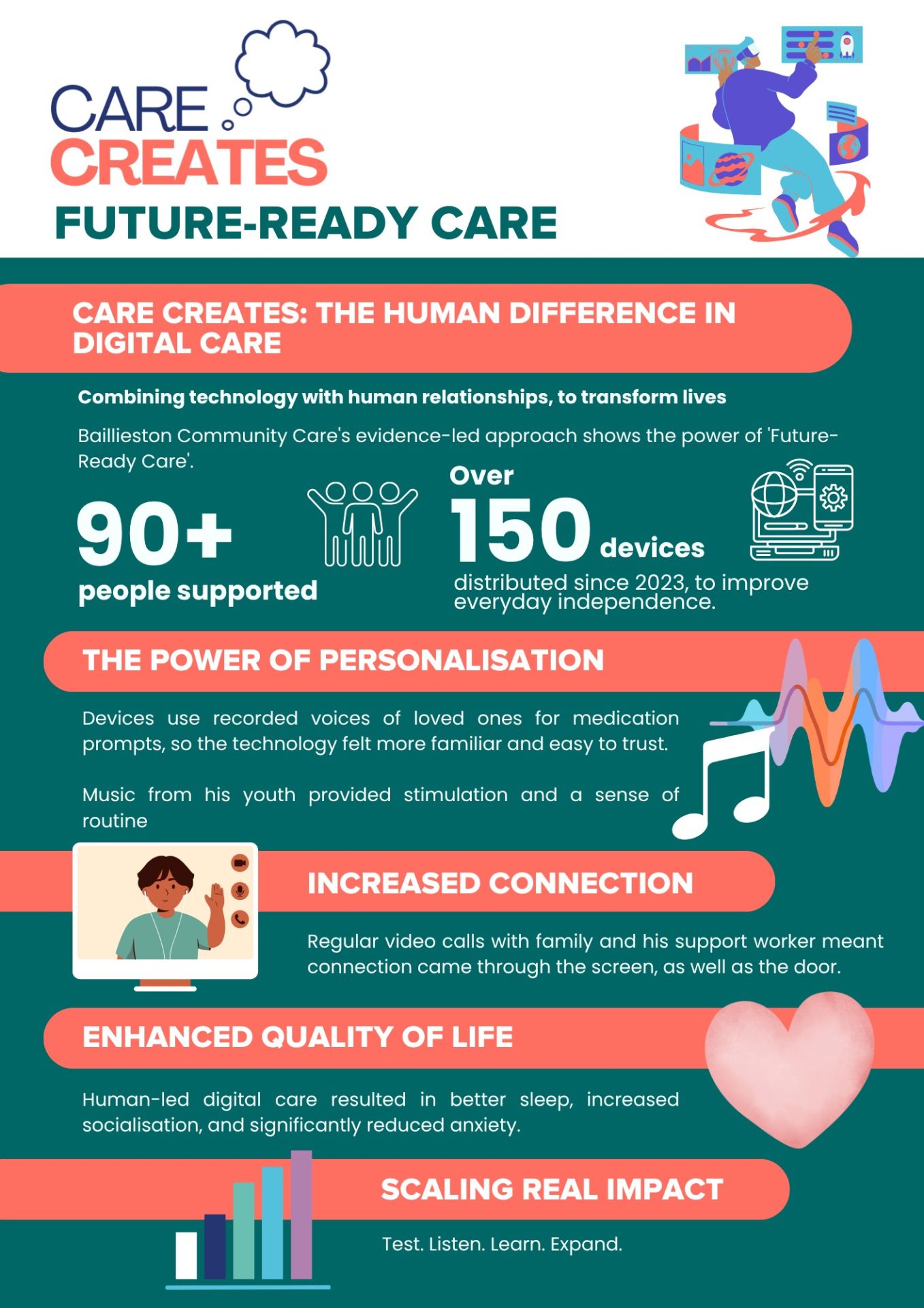
Since 2023, Baillieston Community Care has supported over 90 individuals and distributed more than 150 devices, each one chosen with a simple goal: to make everyday life feel a little easier and independence a little more achievable.
These aren’t abstract pilots. They are real people, living better lives because someone asked what technology could do for them.
- Trialling what works – and listening to the evidence
Before scaling their new reassurance service, Baillieston ran a structured trial with 20 units. Fifteen were taken up, with two individuals showing particularly strong potential.
This is what responsible innovation looks like – testing, listening, learning, and only then expanding. The Scottish Care manifesto calls for exactly this kind of evaluated, evidence-led approach to technology in care, with findings shared so the whole sector can benefit.
- From reluctance to transformation – one person at a time
One service user – initially reluctant – became the most engaged participant in the entire trial.
He lives in supported accommodation and has alcohol-related dementia. Increasing isolation had left him anxious, confused, and withdrawn.
James worked alongside his support worker to build something tailored entirely around his life. Together, they customised his daily schedule into the device. They recorded familiar voices for his medication and appointment prompts – voices he knew and trusted. They set up regular video calls with his support worker and a family member, so that connection came through the screen as well as through the door.
Within four weeks:
- He hadn’t missed a single medication dose
- He attended every GP and mental health appointment
- He was initiating conversations, smiling more, and visibly less anxious
- Staff reported he was sleeping better and more cooperative with personal care
- Interactive memory games, music from his youth, and gentle reminders of the day’s events gave him both stimulation and a sense of routine
Why this matters
The Scottish Care manifesto calls for technology that enhances – not replaces – the compassionate connections at the heart of care. It’s an argument for investment in skilled people who introduce technology with care, the time required to do it properly, and in commissioning models that recognise the value of that work.
Care creates independence – when technology is introduced with patience.
Care creates connection – when innovation is built around a person, not a product.
Care creates possibility – when we invest in people as much as we invest in devices.
#CareCreates