Care Creates… Rights at the heart of social care support – in numbers
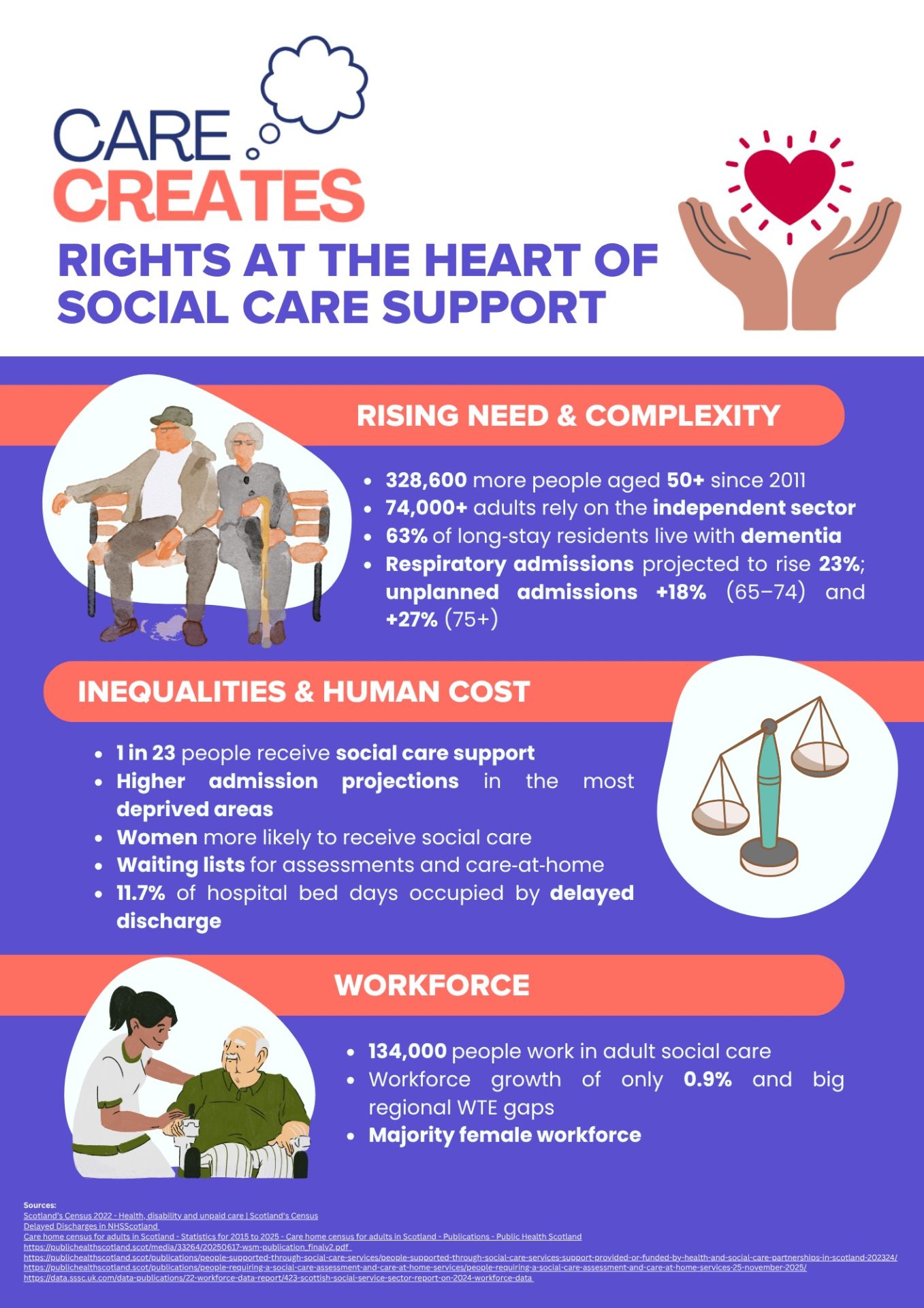
Scotland’s social care story is one of people, communities, and the everyday moments that help us live well. Our Human Rights Week infographic highlights the changing landscape of care and the opportunities we have to build a Scotland where everyone can access support that protects their dignity, independence and connection.
1. Rising Need & Increasing Complexity– and the Chance to Design Better Support
Scotland is ageing, with 328,600 more people aged 50+ than in 2011, and more than 74,000 adults relying on the independent sector for essential, life‑enabling support. As more people live longer with conditions like dementia, now 63% of long‑stay residents in care homes, and health pressures increase, we have a growing opportunity to invest in preventative, community‑based support that keeps people connected and well
2. Inequalities & Human Cost – and the Opportunity for Fairness
1 in 23 people in Scotland depend on social care, yet people experience unequal access and outcomes depending on where they live, their gender or their circumstances. By addressing delays in assessment, care‑at‑home and discharge, including the 11.7% of NHS bed days linked to unavailable care, we can build a fairer, rights‑affirming system that supports choice and community life for everyone.
3. Dedicated Workforce – and the Opportunity to Value Them
Scotland’s 134,000‑strong workforce is the heart of social care. With staffing growth at 0.9% and regional differences in capacity, there is a clear opportunity to invest in fair work, training and sustainable conditions so staff can continue creating safety, trust and meaningful relationships every day.
Why These Numbers Matter
Each statistic represents real lives – older people, families, carers, staff and communities. When systems are strained, people risk losing independence, face longer waits, or experience avoidable hospital stays. But these numbers also point to possibility.
Behind every data point is a person with hopes, relationships and rights. These statistics don’t just highlight challenges, they illuminate the potential for change, and the chance to build a future where:
- Care Creates dignity through respectful, rights‑based support
- Care Creates independence by enabling people to live the lives they choose
- Care Creates connection by strengthening communities and relationships
This is the story we’re telling together. And through the Care Creates campaign, we’re aiming to help Scotland see social care as the essential public infrastructure it is foundational, life‑enhancing and full of possibility.
#CareCreates