Well, here we are at the Easter weekend – and on that intriguing day of Easter Saturday – lying as it does between pain and promise.
Recently I’ve been doing a considerable amount of media and commentary trying to draw attention to what I consider to be the critical and perilous state of social care across Scotland.
Several of the articles and journalists have remarked upon and have indeed used the phrase that I have shown increased ‘anger’ at what is happening. Indeed, one colleague joked recently with me that I seem to be becoming much ‘angrier in my older age’. It’s made me reflect on the nature of anger and whether showing emotions of that kind are appropriate or not.
In truth there are days when frustration becomes too familiar. Days when the words spoken about social care in Scotland sound like echoes from decades ago. Strategies are launched, promises made, consultations held – and yet the needle barely moves. People wait. Carers bend under the weight of fatigue. The system holds – just – but creaks at every joint. And all the while, we wrap it in bureaucratic language and call it “complex.” But complexity should never be an excuse for injustice.
And then someone tells me to calm down. To be reasonable – not to get carried away and constantly criticise. To be patient. To wait for reform and change and new direction.
No.
There is a time for calm. But there is also a time for fire. And yes, I think and feel ever more that there has to be a time for anger.
We don’t speak enough about anger in public life – certainly not the good kind. But maybe we should. Because there is, I believe, a positive role for anger in the Scotland we are trying to shape.
I’m not talking about fury that burns everything in its path. Not the destructive kind that wounds and withers. Not the rage that lashes out in bitterness. But the righteous anger – the kind born not of ego or outrage for its own sake, but of love. Love for people who are being left behind. Love for a vision of care that is compassionate, dignified, and real – and not forever deferred to the next Parliament, the next review, the next economic upturn. The anger that refuses to accept what is as all that will be.
This is not a policy point. It is a moral one.
We grow used to the statistics, the delayed reforms, the “next budget,” the whispered apologies from policymakers that “now is not the time.” And yet – in the quiet of this Easter Saturday – I feel the growing heat of a deep, simmering anger. Because the way we treat social care in this country is nothing short of collective societal abuse.
And when all’s said and done, I suspect that there is something profoundly Scottish about a people who will not stay silent in the face of injustice – who keep going back to the doors of power, not with shouts alone, but with stories, tears, spreadsheets, and quiet fury. That kind of anger doesn’t destroy. It builds. It unearths. It refuses to let a broken system bury the truth.
I’ve just spent a few days back ‘home’ on the island of Skye and have walked some of the places, visited some of the ruined villages and empty glens where people refused simply to back down, to be silent, to go along with what was happening. Maybe it’s the oxygen of that renewal that makes me in my own ‘settled’ life angry at the intransigence, the waste, the lost opportunity, the missed connection, that so many people are having to endure by the absence of social care.
And here is the truth: social care in Scotland is not broken because we lack evidence or expertise. It is broken because we have not yet decided, as a country, that care matters enough to act. That it is not a burden but a foundation. That it is not an afterthought but a starting point.
Public opinion matters. But public opinion only shifts when it is unsettled. When it is stirred. When it is forced to confront what it would rather ignore.
And anger – held well, spoken wisely – can be the match that lights that shift.
We have seen flashes of it: in care workers refusing to be treated as second-class citizens; in families fighting for support that should be their right, not their reward; in campaigners who turn grief into grit.
That anger is not dangerous. It is necessary.
It is the anger that refuses to accept the underfunding of human dignity.
It is the anger that sees the gap between rhetoric and reality – and calls it out.
It is the anger that remembers the names of those who died waiting
We are not asking for charity. We are demanding justice.
So let us not apologise for our fire. Let us tend it. Let us use it to forge something better. Because if we are to move public opinion, we must first speak with the voice of conviction – not as technicians of reform, but as citizens who care too much to stay quiet.
Anger, rightly held, is the voice of conscience.
And right now, Scotland needs to listen.
This Easter weekend I leave you with the words of the late American poet Adrienne Rich and her poem What Kind of Times Are These
‘There’s a place between two stands of trees where the grass grows uphill
and the old revolutionary road breaks off into shadows
near a meeting-house abandoned by the persecuted
who disappeared into those shadows.
I’ve walked there picking mushrooms at the edge of dread, but don’t be fooled
this isn’t a Russian poem, this is not somewhere else but here,
our country moving closer to its own truth and dread,
its own ways of making people disappear.
I won’t tell you where the place is, the dark mesh of the woods
meeting the unmarked strip of light—
ghost-ridden crossroads, leafmold paradise:
I know already who wants to buy it, sell it, make it disappear.
And I won’t tell you where it is, so why do I tell you
anything? Because you still listen, because in times like these
to have you listen at all, it’s necessary
to talk about trees.’
https://www.poetryfoundation.org/poems/51092/what-kind-of-times-are-these
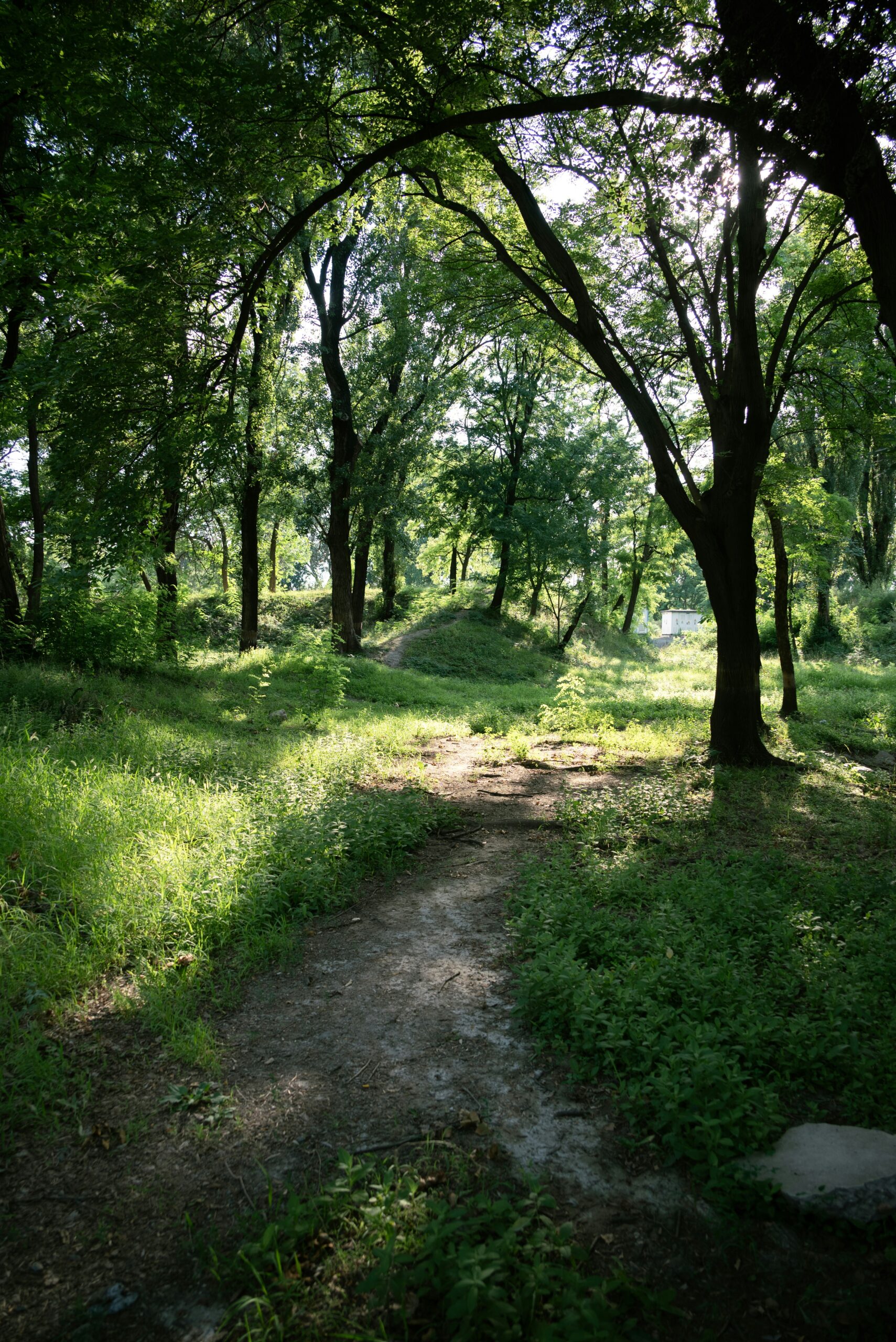
Photo by ran liwen on Unsplash
Donald Macaskill