One of the words I use an awful lot in the work I do, perhaps too easily, is home.
We speak of care homes, of homely environments, of supporting people to remain at home. We build policy, services and expectations around this idea of home as if its meaning were fixed, universally understood and uncomplicated.
But for many, home is not a place of ease. It is something that has been lost. Something carried in memory rather than experienced in the present.
Today, as we mark World Refugee Day we are invited to reconsider what we mean by home, by sanctuary, belonging and welcome. And in doing so, we are asked to recognise, I believe, that care is not simply about attending to need, but about restoring what has been fractured: safety, continuity, identity, and the deep human sense of being held within a place and by a people.
I recognise that this day comes at the end of concerning days in the last few weeks where there has been a growth both in racist incidents and where the fear of many has been palpable. Language about asylum and refugees, about immigration and what it means to be community have not always felt safe or easy for many. At the heart of all this, I believe, is our understanding of what home is and what we want our home and communities to be. So, on this day I want to spend some time reflecting on these themes and on what home means.
For those who are displaced whether by conflict, persecution, climate, or collapse, home becomes something both intensely personal and profoundly fragile. The United Nations defines a refugee as someone who has been forced to flee their home and country because of a well-founded fear of persecution, conflict or violence. But definitions alone rarely capture experience.
Being a refugee tears at the heart of what home is. It is no longer defined by walls or geography. It becomes a story told to oneself. A set of tastes, sounds, languages and relationships remembered and reassembled across distance.
To be a refugee is to live with interruption, to have life divided into a “before” and an “after”. It is to carry loss that is often invisible but never absent.
When someone arrives in a country seeking sanctuary, the work of rebuilding does not begin with systems. It begins with encounter. With how a door is opened. With how a welcome is given or withheld. With whether a person is seen as a burden, or recognised as a bearer of story, skill, and dignity.
Research reminds us that for individuals who have been forced to flee, the loss of home and community is one of the deepest wounds. Rebuilding belonging is essential to wellbeing, yet profoundly difficult when starting again in unfamiliar environments. In this sense, belonging is not a passive state. It is actively created.
And here is where I think care, not just as a system, but as a human practice, becomes critical. Social care is one of the few spaces in society where the question of welcome and what home really is is lived out daily.
In care homes, in homecare visits, in supported housing, in community services, we are constantly, quietly answering the question: Who is this place for? At its best, care does not require sameness. It does not ask individuals to shed their past in order to fit the present. Instead, it creates space for memory. For the languages that are spoken at bedside. For the foods that carry history. For the rituals that sustain identity. In doing so, care can become a place of arrival, not just physically, but emotionally and culturally.
But I cannot reflect on this particular day without also acknowledging a truth which I believe we must speak more clearly. And that is that across the UK, our care system is profoundly shaped and sustained by people who themselves have crossed borders.
Migrant care workers represent a significant proportion of the workforce. Scottish Care has stated that some organisations have over 80% of international staff in their workforce. Hundreds of women and men have come from across the world to support lives in Scotland and beyond. They bring with them skills, experience, resilience, and often their own stories of movement, adaptation, and dislocation. Without them, our system would struggle even more deeply than it already does. And yet, too often, they remain insufficiently recognised. Too often, their contribution is framed in terms of labour rather than relationship.
But care is never just labour. It is relational presence. It is emotional work. It is the offering of stability and kindness in moments of vulnerability. And those who provide it, whether born locally or arriving from afar, are part of a shared story of care that transcends borders.
Hospitality is often misunderstood. We imagine it as generosity extended from those who have to those who lack. But true hospitality is something more mutual. It recognises that welcome is not one-directional. That communities are not simply hosts but are themselves changed by those who arrive.
Refugees are not only recipients of care. They are contributors to our communities, our economies, our systems of support. They bring perspectives that deepen understanding. They remind us of the fragility of security we often take for granted. They call us back to a more fundamental truth: that safety, dignity and belonging are not entitlements of some, but rights for all.
I have long been intrigued by the idea of sanctuary, not least having lived in a village in West Lothian whose medieval church marked the area within which a penitent could receive sanctuary and the right to fair justice. But sanctuary has many meanings. Sanctuary is not simply the absence of danger.
It is the presence of recognition. It is knowing that you will not be turned away. That your story does not have to be justified. That your past, however painful, is not erased.
In the context of care, sanctuary means creating environments where people can begin to heal. And healing, for those who have experienced trauma, is rarely linear. Many refugees carry experiences of violence, separation and profound loss, with emotional and psychological consequences that can endure long after arrival.
Care, therefore, is not only about meeting physical need. It is about creating the conditions where trust can slowly be rebuilt. Where stability can take root. Where hope can return.
World Refugee Day asks us to honour the courage and resilience of those who have been forced to flee. But it also asks something more uncomfortable too. It asks us to examine ourselves. To consider how we respond when difference arrives at our door. To reflect on whether our systems and our attitudes truly enable people not just to survive, but to belong.
Because welcome is not achieved in words. It is realised in structures. In policy. In practice. In everyday interaction.
Perhaps, then, we need to radically rethink what we mean by home in the context of care. Not as a fixed place. Not as a memory that cannot be recovered. But as something we build, together, through relationship, recognition and respect.
A place where people can arrive and not feel temporary. Where identity is not diminished. Where difference is not merely tolerated but valued. A place where sanctuary is lived, not promised.
I want to end this reflection on home, sanctuary and belonging with some words I came across in a scrap of paper in a book. I have no idea who wrote them and try as I can cannot find out, but for all their anonymity they speak, I feel, a loud truthfulness.
The house that stays open
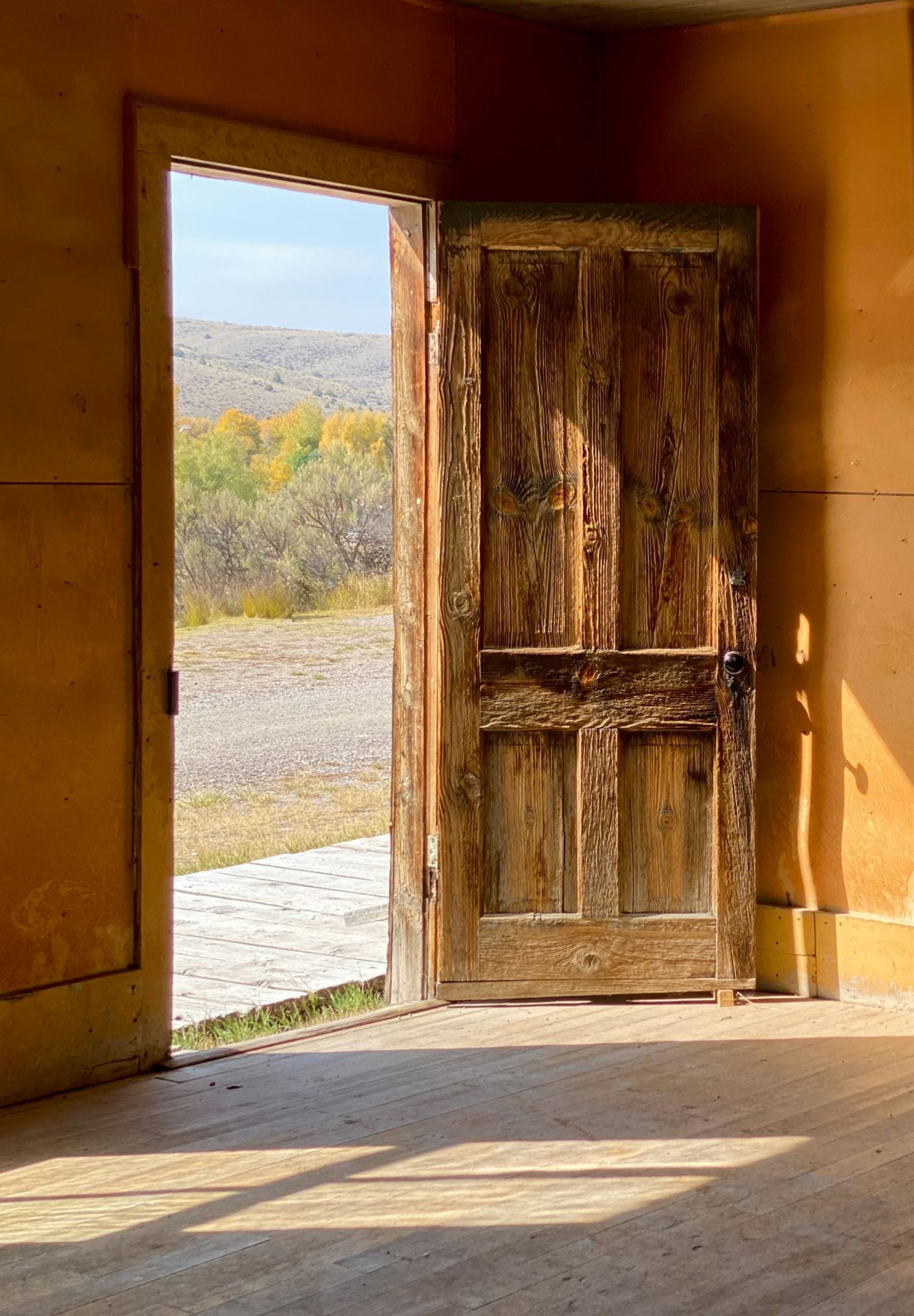
There is a house that stays open at the edge of every town. It has no lock. The door leans on its hinge like a question.
A child enters carrying nothing. A woman arrives with a story she cannot yet tell. A man steps inside with silence where his past should be.
No one asks for proof. No one names the loss. They are given water, a chair, a moment to breathe.
In this house, memory is not erased. It is held – gently – until it can be spoken.
And in the quiet of that room, home begins again.
Donald Macaskill
Photo by Donald Merrill on Unsplash