There are certain voices which seem to arrive at exactly the right moment in a nation’s life.
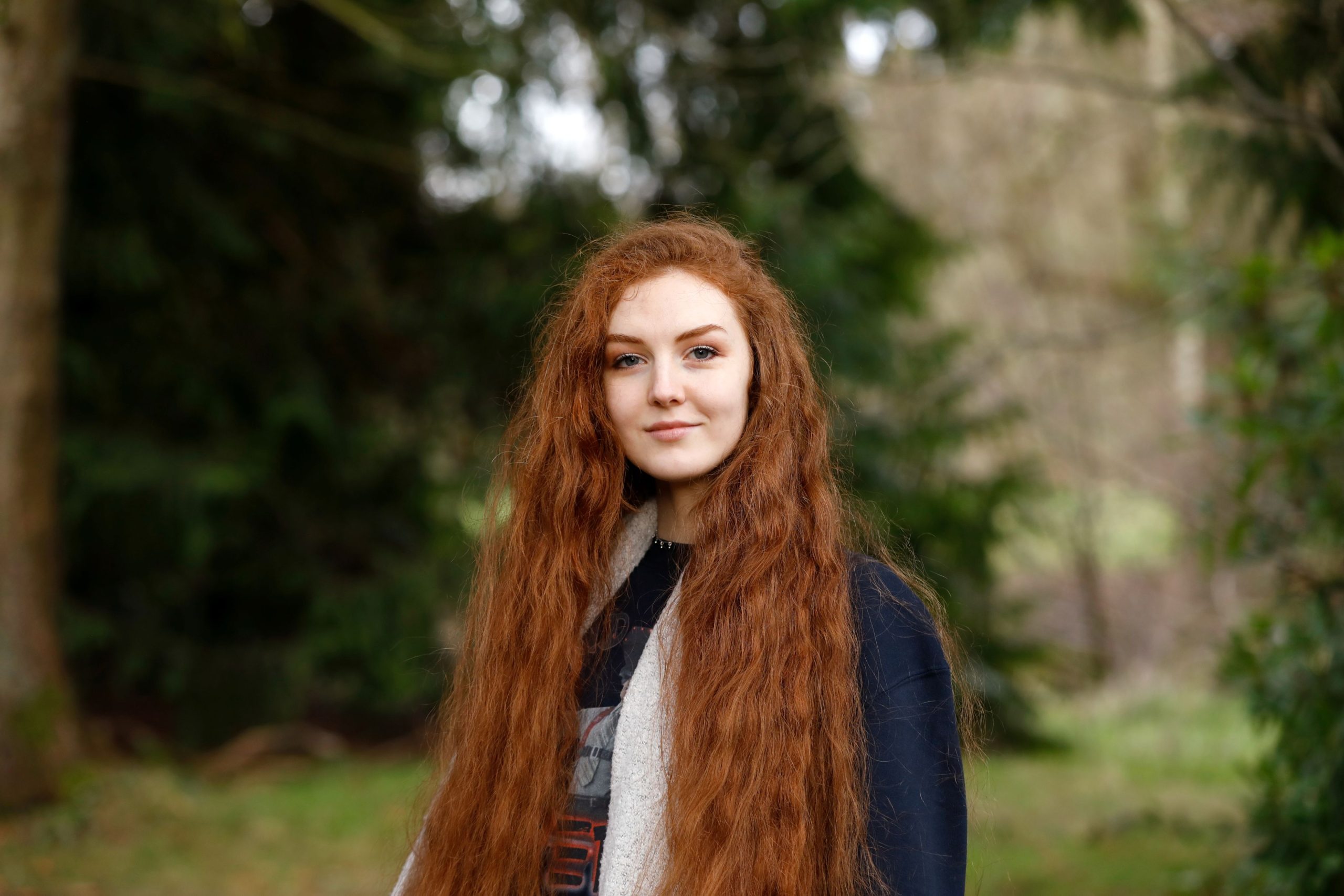
I think Len Pennie is one of those voices.
I am therefore delighted that she will be joining us at the Scottish Care Care Home Conference on Friday coming, because her presence offers something rather different from the usual conference contribution. Of course, she will bring her poetry, her humour and her extraordinary command of language. But she also brings something that Scotland needs just now: a confidence in who we are, how we speak, and how we tell our stories.
Len Pennie has become one of the most compelling literary voices of her generation, writing poetry predominantly in Scots and using her platform to champion the dignity and value of a language that many for years were encouraged to leave behind. Alongside that advocacy she has written with remarkable honesty about domestic abuse, mental health and personal resilience, demonstrating how poetry can illuminate painful experiences without ever surrendering to despair.
Her work has reached audiences far beyond traditional poetry circles because it connects with something profoundly human: the desire to be recognised in the language of our own lives. There is, I think, a profound significance in that achievement.
For generations Scotland has carried a certain awkwardness about its own voice. Too often the languages and dialects that shaped communities, families and places were treated as somehow less sophisticated, less worthy, or less important than the language of institutions and authority. Many people can remember being corrected for how they spoke rather than celebrated for it. What Len Pennie has done is challenge that assumption directly. Through poetry, social media and public advocacy she has helped create a renewed confidence in Scots, particularly amongst younger generations who have discovered that the language they inherited is not something to apologise for but something to cherish. Yet her achievement is about more than language alone.
The best poetry always helps us see ourselves afresh. It gives shape to experiences that can otherwise remain hidden. Across her work, Len Pennie explores questions of identity, survival, vulnerability, and recovery. Her poems speak openly about trauma and abuse, about the challenges of mental ill-health, and about the complex work of healing. For me, what makes them resonate so deeply is their refusal either to sensationalise suffering or to diminish it. Instead, they bear witness. They tell the truth. They create space for experiences that are too often pushed to the margins.
Perhaps that is one reason why I have always found myself drawn to poetry. Not simply as a reader, but as someone who has repeatedly discovered that poetry has an uncanny ability to accompany us through experiences that otherwise seem beyond expression. Over the years, as many of you know, I have written and spoken about poetry and grief, about the way a few lines of verse can become a companion during bereavement, a shelter during uncertainty, or a means of expressing emotions that prose cannot adequately contain. There are moments in life when explanation feels insufficient. Moments when argument fails; when all that remains is a carefully chosen gathering of words that enables us to keep going.
My own love of poetry, however, owes much to my mother. She grew up in an era when speaking Gaelic was not encouraged but discouraged. In school on Skye, as happened to so many children across the Highlands and Islands, the language of home was treated as something that should be left behind. The language spoken at the kitchen table, in the croft, at worship, in the intimate exchanges of family and community life, was regarded by too many as something lesser than the language of authority and advancement.
The consequence of that was not simply linguistic loss. It left emotional scars. It taught generations of people that a part of who they were was somehow less valuable than it ought to be. That the language that held their stories, carried their humour, cradled their grief and nurtured their memories was somehow not fit for public use.
My mother carried some of that experience with her throughout her life.
I have written before about how I had to learn English as a second language – to ‘speak properly’ in order to be ‘educated.’ Such dissonance of tongue and value has consequences. It is one reason why I feel such a profound resonance with the work that Len Pennie is doing today. The circumstances are different, but there are echoes. For many Scots speakers too, there has been an assumption that their language should be softened, hidden or set aside.
What Len Pennie has achieved is not merely literary. She has helped countless people reclaim confidence in their own voice. She has demonstrated that Scots is not a curiosity or relic but a living language capable of expressing every dimension of human experience, from outrage to tenderness, from grief to joy.
Looking back, I realise that poetry taught me something I have spent much of my professional life trying to understand: that words matter because people matter. That insight lies at the heart of care.
Social care exists because human life is fragile. Every day we encounter loss, uncertainty, transition and grief. We support people whose lives have altered through illness, disability or age. We accompany families through some of the most difficult periods they will ever experience. Yet alongside all of that we also encounter extraordinary resilience, courage, humour and hope. We witness lives that continue to create meaning despite adversity. We discover again and again the remarkable capacity of human beings not merely to survive but to flourish.
This is why poetry matters in care.
Not because it offers solutions but because it creates understanding. Not because it resolves complexity but because it allows complexity to be lived with. Time and again I have seen the transformative power of poetry, music and creativity in the lives of older people. I have witnessed individuals living with dementia respond to a remembered poem when conversation seemed impossible. I have seen families find comfort in a verse at the end of life. I have come to believe that the arts are not an optional addition to ageing well but one of the ways in which we remain connected to ourselves and to one another.
Poetry, at its best, does not remove pain. It allows us to carry it. It creates space for grief without letting grief have the final word.
Len Pennie’s work holds that same quality. Her poems do not shy away from trauma, vulnerability or hurt. They are often rooted in difficult experiences. Yet they are never defeated by them. Instead, they insist upon survival, resilience and hope. They recognise the reality of suffering while refusing to surrender our humanity to it.
Yet there is also another reason why her voice feels especially relevant to social care. As someone shaped by Gaelic culture and Highland traditions, I recognise in her advocacy for Scots something that reaches beyond any single language. The Scots language and Gaelic are distinct tongues with different histories, but they share an understanding that language is never merely functional. Language carries memory. It carries landscape. It carries identity. It holds within it ways of seeing and understanding the world that have been handed from one generation to the next.
What Len Pennie understands so powerfully is that language is inseparable from dignity. Her work is not merely about preserving Scots vocabulary. Rather, it is about affirming that local stories matter, that inherited voices matter, and that people should never be made to feel ashamed of the language that shaped them. In that sense, her poetry is not simply artistic. It is cultural stewardship. It is an act of remembering.
In care settings we understand this almost instinctively. Long after many other things have faded, people often retain the rhythms and cadences that shaped their earliest years. Such moments remind us that memory is not stored solely in the mind. It resides in sound, rhythm and language. They remind us that identity runs deeper than cognition. At its heart, this truth sits close to both poetry and care. Both begin with listening.
The poet listens for the hidden story beneath the surface of words. The carer listens for the person beneath the diagnosis, the record or the care plan. Both require attentiveness. Both require patience. Both are rooted in the conviction that every individual has a voice worth hearing and a story worth telling.
As we prepare to welcome Len Pennie, I hope we do so not simply because she is one of Scotland’s most celebrated contemporary poets, but because her work reminds us of something that care understands better than many: that identity matters, language matters, and every human story matters.
In an age often characterised by speed, noise and reduction, her poetry invites us to pause. It asks us to listen. It challenges us to recognise that people are more than labels and more than categories. They are bearers of stories, memories, hurts, loves, dreams and inheritances.
Her poetry reminds us that language can heal, challenge, provoke, comfort and accompany. Above all, it reminds us that people deserve to be heard in their own voice.
In Gaelic there is a saying: tha cànan na dhachaigh. Language is a home. Not simply a means of communication, but a dwelling place for memory, belonging and inheritance.
Perhaps that is why the poetry of Len Pennie resonates with so many. It gives people permission to return to that home; to value the words they grew up with, the stories they inherited and the identities they carry. And perhaps that is why her voice speaks so naturally to those who spend their lives caring for others.
For ultimately the work of care and the work of poetry share a common conviction: that every human life deserves to be heard in its own voice.
Sometimes those voices carry memory across the generations. Sometimes they help us bear grief. Sometimes they remind us who we are. And sometimes, if we listen carefully enough, they carry us home to ourselves.
Donald Macaskill