The following is based on a short address on Wednesday 23rd September at the Golden Jubilee Hospital, Glasgow at the launch of the Scottish Government’s Infection, Prevention and Control Strategy.
There are some areas of public policy which seem, at first sight, to belong almost exclusively to specialists. Infection Prevention and Control is often treated as one of them. The language we associate with it is technical and procedural; we think of surveillance systems, clinical guidance, audits, governance structures, personal protective equipment, outbreak management and risk assessments. These are all undeniably important. Indeed, they are essential. Lives are protected and illnesses prevented because people work tirelessly to ensure that such systems function well.
Yet there is a danger that when we speak about infection prevention solely in technical terms, we lose sight of its deeper purpose. We can become so focused on the mechanics of safety that we forget why safety matters in the first place. The question is not simply how we prevent infection. The more profound question is how we protect life whilst preserving what makes life meaningful.
That, for me, is why Scotland’s new Infection Prevention and Control Strategy is significant. Its importance lies not only in the practical measures it proposes or the ambitions it sets out for the years ahead. Rather, it lies in an emerging recognition that infection prevention is not merely a clinical challenge but a human one, and that any lasting approach to protection must be grounded as much in questions of rights, dignity and belonging as it is in evidence, science and regulation.
One of the most important starting points is the simple acknowledgement that infection does not recognise the boundaries we have created between organisations, professions and sectors. The individual who is admitted to hospital may have been receiving support at home the day before. They may have attended a community activity, visited a GP surgery, relied upon homecare support or lived in a care home. Likewise, those who support them move constantly across settings and systems. Families, communities, social care staff, nurses, therapists and clinicians all inhabit the same interconnected reality.
Life itself is integrated, and because life is integrated, the challenge of infection prevention is integrated too.
This might seem obvious, but for decades we have often organised our thinking around division rather than connection. Healthcare and social care have been discussed as though they occupy separate worlds. We have spoken of treatment on one hand and support on the other, of clinical need here and wellbeing there. Yet people do not experience their lives in such fragmented ways. A person living with frailty, dementia, disability or chronic illness does not stop being a citizen when they require support. They do not divide their identity according to whichever service happens to be involved on a given day. They remain a whole person whose life extends beyond the reach of any single organisation or professional discipline.
Perhaps that is where social care brings its most valuable contribution to discussions about infection prevention.
Social care has always understood that the quality of a life cannot be measured solely through clinical outcomes. It has always recognised that wellbeing is rooted not only in physical health but also in relationships, purpose, participation and belonging. These are not optional extras that can be considered once safety has been secured. They are constitutive elements of human flourishing itself.
Nowhere is this clearer than within care homes. During the pandemic, one of the recurrent mistakes in public discussion was the tendency to regard care homes principally as healthcare environments. Certainly, healthcare is important within them and many people living in care homes have complex medical needs. Yet a care home is not fundamentally a healthcare facility. It is somebody’s home. It is where they wake each morning, where their possessions hold memories, where friendships are formed, where families gather, and where the routines and rituals of ordinary life continue.
The distinction is not semantic. It is profoundly important.
Because once we recognise a care home as home, the ethical challenge changes. The task is no longer simply to prevent infection. Rather, it becomes the challenge of preventing infection whilst simultaneously preserving the relationships, freedoms and connections that make a home worth living in.
This was perhaps the hardest lesson of the COVID years.
When the pandemic first emerged, societies across the world understandably focused on controlling transmission and preventing death. Extraordinary measures were introduced at remarkable speed. Given the uncertainty and fear of those early months, many decisions were taken with the best of intentions and under immense pressure. Yet with the perspective afforded by time, another reality has come into focus.
The harm caused during the pandemic was not limited to infection itself.
For many individuals, particularly older people, the greatest suffering arose from separation. Families were unable to visit loved ones. Residents were denied the ordinary intimacy of touch and closeness. Important moments of celebration, companionship and farewell disappeared. Whilst infection prevention undoubtedly saved lives, we also witnessed the profound impact that isolation can have upon physical, emotional and psychological wellbeing.
Increasingly, the evidence confirms what many instinctively sensed. The World Health Organisation now identifies social isolation and loneliness as major public health concerns, emphasising that strong social connections are fundamental to both mental and physical health and to longevity itself. Around one in six people globally experience loneliness, with older adults among those particularly vulnerable to its effects. Studies continue to associate loneliness and social isolation with increased risks of cardiovascular disease, depression, cognitive decline, dementia and premature mortality.
These findings matter because they challenge a simplistic understanding of safety. They remind us that wellbeing is about more than the avoidance of infection. Human beings require connection as surely as they require protection. We need relationships, meaning, reciprocity and belonging. A life disconnected from others may be biologically safer in some circumstances, but it can also become diminished.
This is why I have increasingly come to believe that human rights are not peripheral to conversations about infection prevention; they lie at their very heart.
Unfortunately, rights are sometimes portrayed as though they exist in tension with protection. A false narrative emerges in which safety and freedom are regarded as competing priorities, as if increasing one inevitably requires diminishing the other. Yet a human rights approach rejects that simplistic framing. Properly understood, human rights do not weaken infection prevention. They strengthen it. They do so because they place the person at the centre of decision-making.
Rather than asking solely what risks need to be managed, a rights-based approach asks what matters to the individual. It encourages us to seek responses that are proportionate rather than excessive, collaborative rather than imposed, and enabling rather than restrictive. It reminds us that people receiving care remain citizens and rights-holders, possessing the same inherent dignity and worth as every other member of society.
The United Nations made precisely this point during the pandemic when it emphasised that responses to COVID-19 must respect the rights and dignity of older people. Protection remained vital, but it could never justify abandoning principles of autonomy, participation or personhood. Older people, the UN argued, possess the same rights to life, health and dignity as everyone else, and no person should ever be viewed as expendable.
These debates will not disappear as the memory of COVID recedes. If anything, they may become more urgent. The next decade is likely to bring fresh challenges, including the growing threat of antimicrobial resistance. The World Health Organisation has repeatedly described antimicrobial resistance as one of the most significant global public health threats of our age, warning that drug-resistant infections risk undermining many of the achievements upon which modern healthcare depends.
Responding to such threats will undoubtedly require vigilance, preparedness and robust infection prevention measures. Yet the challenge will be ensuring that our response remains grounded in the values we seek to protect. The test for Scotland will not simply be whether we reduce transmission, strengthen resilience or improve preparedness. It will be whether we can do so whilst continuing to honour the dignity, agency and humanity of those who receive care.
Ultimately, that is why I welcome the direction of this new Strategy. It recognises that health and social care are not parallel systems but interconnected parts of a shared endeavour. It acknowledges that protection and rights are not opposing forces but complementary responsibilities. Most importantly, it understands that the purpose of infection prevention extends beyond the prevention of illness itself.
The goal is not merely to avoid harm. The goal is to create the conditions in which people can live well. Because when we strip away the language of policy and procedure, that is surely what good care has always sought to achieve. Not simply the extension of life, but the enhancement of living. Not merely the reduction of risk, but the nurturing of relationships, participation, purpose and belonging.
The future of infection prevention will depend on our ability to hold all of these truths together. We must remain ambitious about reducing avoidable infection and responding to emerging threats, but equally we must remain committed to ensuring that safety never comes at the expense of personhood.
For in the end, the purpose of infection prevention is not simply to protect people from disease.
Its deeper purpose is to create the circumstances in which people can flourish, connected to those they love, secure in their dignity and confident in their worth.
To protect life, certainly.
But also, and always, to preserve our humanity.
Donald Macaskill
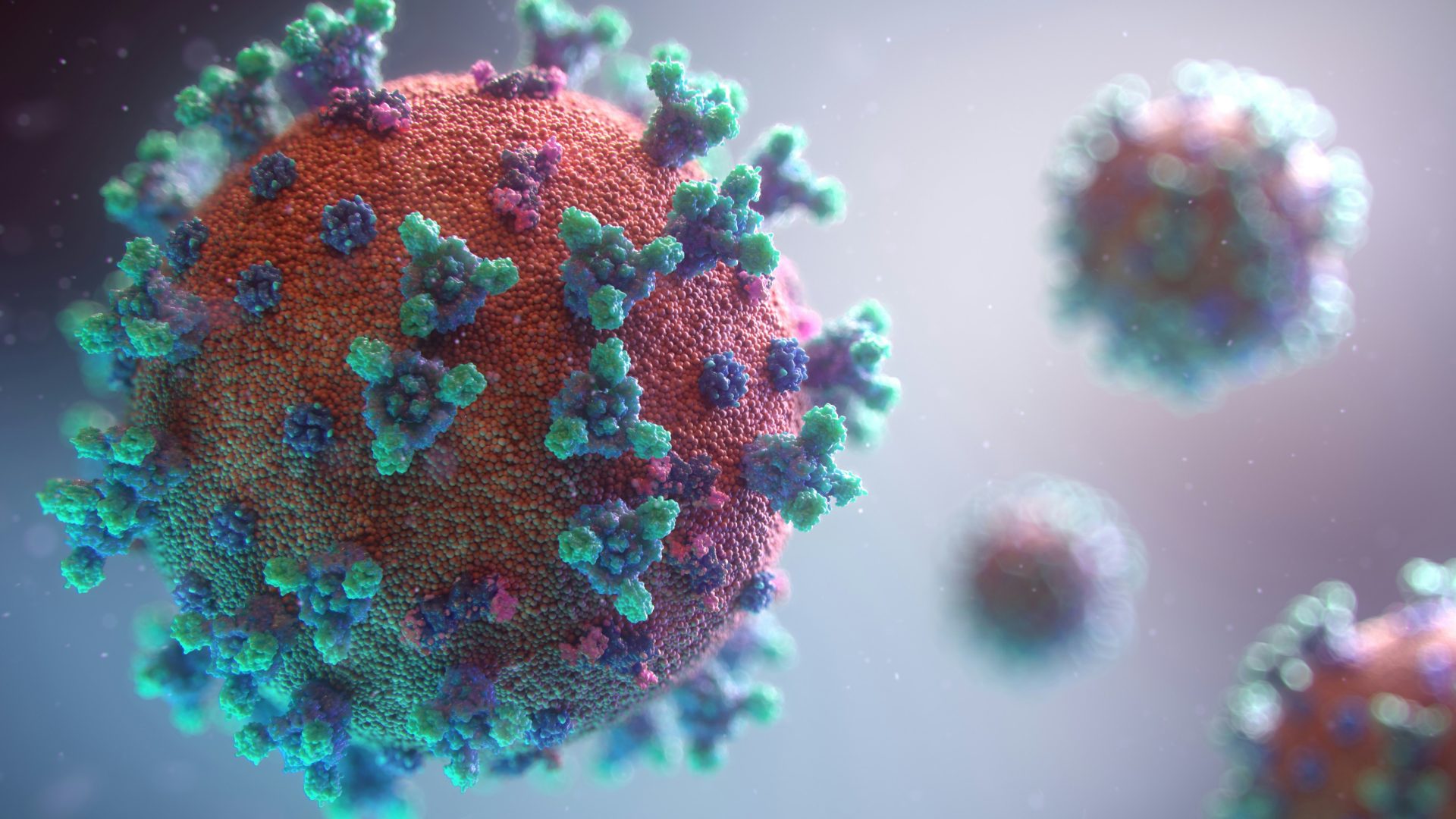
Photo by Fusion Medical Animation on Unsplash