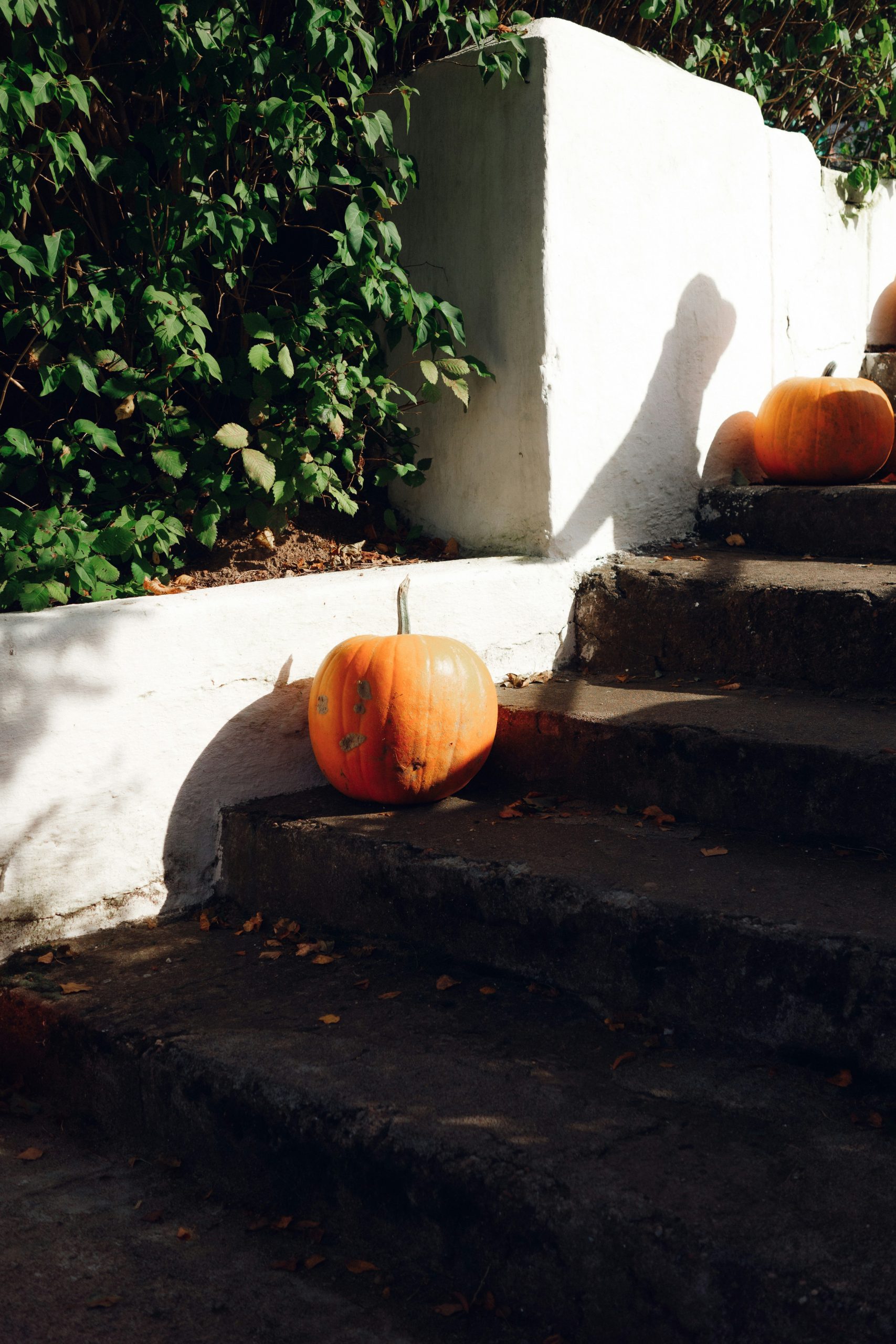
As I prepare to leave Philadelphia this Halloween, I find myself in a city that delights in stories of the unseen. Historic streets echo with tales of hauntings and mystery, while visitors gather for ghost walks through neighbourhoods where the past never seems entirely settled. Shop windows are crowded with witches’ hats and pumpkins, storytellers speak of spirits and shadows, and there is a palpable sense that this is a season when memory walks a little closer beside us. This is a city that takes Halloween very seriously!
Yet what has occupied my thoughts during these final days in Pennsylvania has not been the folklore of ghosts or witches, but something altogether different.
Philadelphia and the wider Pennsylvania region possess a long tradition of folk healing, sometimes known as powwowing or Braucherei, a practice which combined Christian prayer, Native American practice, herbal knowledge, practical wisdom and community care. The details are distinctive to this place, but the underlying instinct feels remarkably familiar: the belief that in moments of vulnerability, healing comes not only through medicine but through human presence, faith, knowledge passed from generation to generation, and the willingness of one person to walk alongside another. These traditions often sat alongside organised religion whilst occupying an uneasy relationship with emerging professional medicine, respected by many, questioned by some, but sought out whenever uncertainty entered a household.
Thinking about that tradition has drawn my mind repeatedly across the Atlantic, back to the communities that shaped me and to two women whose influence upon my life continues long after they have gone.
My great-grandmother was known for her knowledge of herbs and remedies. My grandmother carried a different but related wisdom. She was a comforter, a woman whom others called upon when life became uncertain or difficult. When a child was due to be born, when illness entered a household, or when death approached, she was often among those who arrived at the door. Neither woman would ever have considered herself remarkable. Both were deeply religious and would have viewed their gifts as an expression of faith, compassion and responsibility rather than anything extraordinary. Yet looking back, I recognise that they occupied a place of profound significance within the communities they served.
Growing up, I simply heard stories. Stories of remedies prepared from plants gathered and known by name. Stories of neighbours arriving in the middle of the night seeking advice or comfort. Stories of births welcomed and of deaths accompanied. In island communities like Skye such things were woven into everyday life. Only later did I begin to appreciate the immense trust that people placed in women such as these, and the weight of responsibility they carried.
What strikes me now is that both spent much of their lives at the thresholds of human experience.
They were present at beginnings and endings, accompanying families through moments when certainty gave way to vulnerability. They understood that birth is not merely a biological event but a profound transition, just as dying is not only a medical reality but a deeply human experience. They moved through those spaces with a quiet confidence born not of formal authority but of accumulated wisdom, practical experience and an instinctive understanding of people. If there was a crisis, they appeared. If there was fear, they calmed it. If there was grief, they sat beside it. They were women whose lives were shaped by the ability to remain present when others did not know what to do.
Perhaps that is why I find myself reflecting on them at this time of year. For beneath modern Halloween’s costumes and commercial celebrations lies the much older memory of Samhain, a recognition that life is shaped by crossings and transitions and that some moments carry us from one state of being into another. Long before Halloween became a festival of pumpkins and costumes, Samhain marked the movement from light into darkness, from harvest into winter, from one season into the next. It was a time when boundaries were imagined to be thinner, when people became more conscious of mortality, memory and the fragility of life itself.
The women I remember lived much of their lives within those liminal spaces. They were not figures of authority in any conventional sense, nor did they enjoy the status accorded to those whose achievements are recorded in books or commemorated in public life. Yet they practised a form of care without which no community could flourish. They offered comfort where there was fear, reassurance where there was uncertainty, companionship where there was loneliness, and hope where despair threatened to overwhelm. In doing so they contributed to the wellbeing of countless people in ways that were seldom measured and rarely recognised.
The older I become, the more convinced I am that history often overlooks precisely those individuals upon whom communities most depend. We celebrate leaders, innovators and pioneers, and rightly so. But there has always been another group of people whose contribution is less visible and whose influence is therefore easier to forget. These are the people who remain when there is little that can be fixed, who offer their presence when solutions are scarce, and who understand that the simple act of accompanying another person can itself be transformative.
The women of Pennsylvania’s folk-healing tradition occupied a similar place. So, too, did the women of the Highlands and Islands whom I knew through family stories. They may have carried different names and worked within different cultures, but they inhabited remarkably similar territory. They were healers in the broadest sense of the word. Not because they possessed secret powers, but because they understood that human beings are more than bodies. They knew that illness affects families as well as individuals. They knew that fear can sometimes be more debilitating than pain. They knew that hope matters. Above all, they knew that no one should face life’s most difficult moments alone.
In truth, the distinction between curing and healing lies at the heart of what my grandmother and great-grandmother understood so well. A cure removes illness. Healing enables us to live with what remains.
Modern medicine has gifted us extraordinary advances that previous generations could scarcely imagine, and we should never romanticise a past that lacked so many of the treatments we now take for granted. Yet even within the most advanced healthcare systems there remain situations where healing takes a different form. It is found in conversation, in reassurance, in dignity preserved and in the knowledge that nobody need face difficult circumstances alone.
That understanding feels especially relevant to those of us involved in social care. The finest care I encounter is rarely dramatic. More often it is expressed through attentiveness, patience and relationship. It can be seen in a care worker sitting beside someone living with dementia who has become frightened and confused, in a member of staff remaining with a resident whose life is drawing to a close, or in the countless acts of kindness that happen every day behind front doors and within care homes across the country. Such moments rarely attract public attention. Yet they reveal something of our best selves. They remind us that caring is not merely a task but a relationship and that dignity often depends less on what we do than on how we choose to be present.
Perhaps this is why the stories of Pennsylvania’s healers have resonated with me during my visit. Although separated by geography, culture and history, they speak to something universal. Communities across the world have always found ways of caring for one another during times of vulnerability. Different traditions emerged, different names were used, and different beliefs informed those practices, but beneath those differences lay a common recognition that healing is relational. We are sustained not only by knowledge and expertise but by companionship, care and connection.
Tomorrow I shall leave Philadelphia and begin the journey home. I will take with me memories of a remarkable city and a renewed appreciation of the generations of ordinary people whose quiet acts of care helped sustain the communities in which they lived. Yet my thoughts will remain with those two women from my own family history whose wisdom never appeared in medical journals, whose names were never recorded in textbooks and whose contribution was never formally acknowledged, but whose influence shaped countless individuals, nevertheless.
They lived, in many respects, at the edge of community life, occupying those uncertain spaces between faith and medicine, between joy and sorrow, between arrival and departure. Yet in another sense they stood at the very centre of what mattered most, because they were present during the moments we remember for the rest of our lives.
Long after remedies have been forgotten and stories faded, what remains is often the memory of those who stayed. Those who entered a room when others withdrew. Those who sat beside grief rather than fleeing from it. Those who recognised that care begins not with expertise, but with the willingness to remain alongside another person through whatever lies ahead.
Perhaps that is why they still walk with me.
Not as ghosts to be feared.
But as companions.
As reminders.
As quiet witnesses to a truth that every generation must learn anew: that healing is often less about fixing and more about accompanying, less about certainty and more about presence, less about what we know and more about how faithfully we remain.
The women who stayed
They carried no titles,
raised no monuments,
left behind no books upon a shelf.
Their wisdom lived in hands
that soothed a frightened brow,
in feet that crossed a moor at midnight,
in eyes that knew when silence was enough.
They stood where life unfolded,
at cradle and at bedside,
at kitchen table and graveside gate,
keepers of thresholds,
guardians of the ordinary sacred.
When fear arrived, they stayed.
When grief arrived, they stayed.
When hope seemed small and fragile,
they stayed.
And though their names are spoken now
only in memory’s softer voice,
their gift endures:
the simple, stubborn grace
of remaining with another soul
through darkness,
until the light returns.
Donald Macaskill