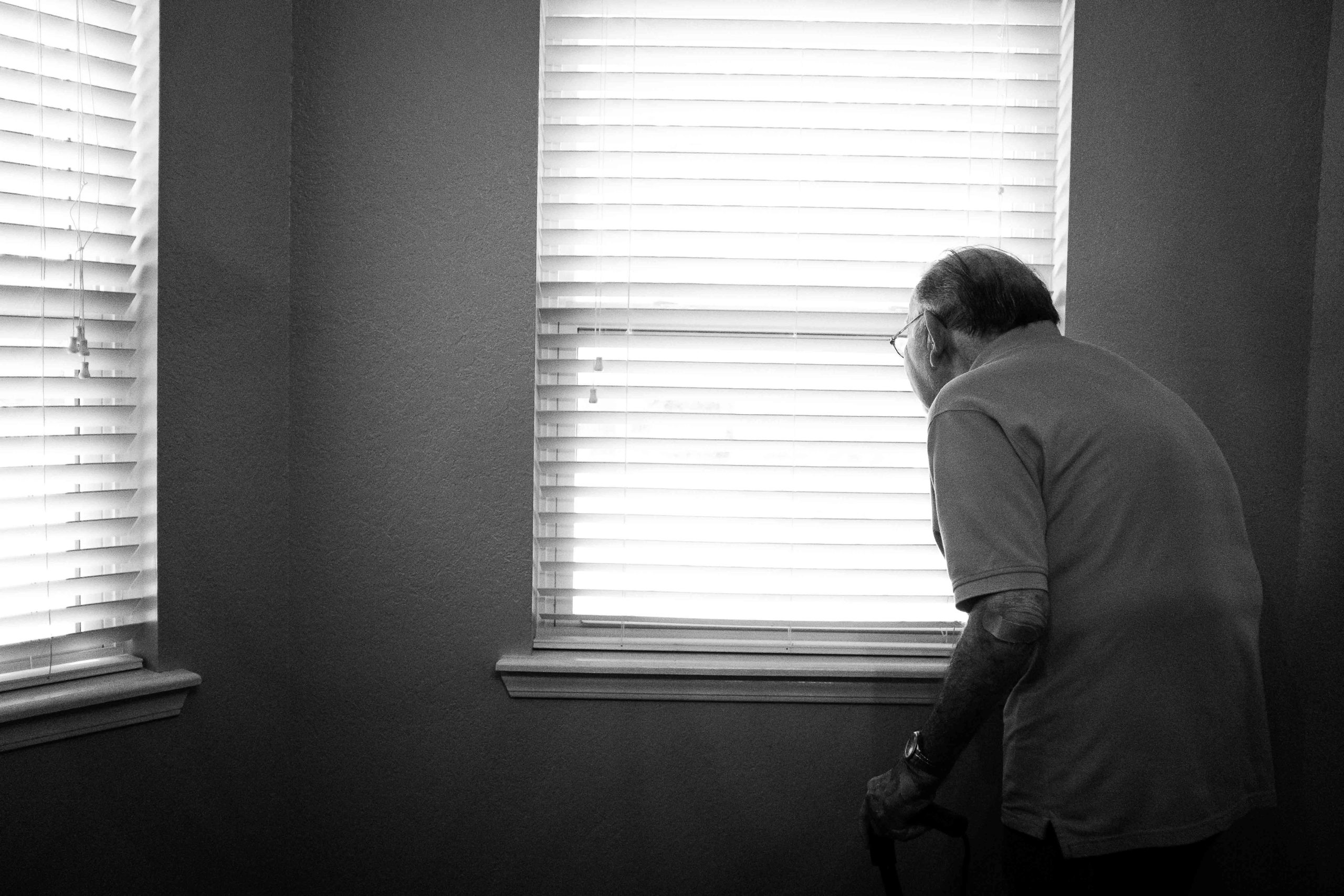
Every society chooses what it pays attention to.
What we notice shapes what we value and what we value shapes what we measure. And what we measure determines where we direct our energy, resources and compassion.
In recent years there has been a welcome and necessary focus on poverty not least by this Scottish Government. Statisticians and researchers study and publish data all the time to tell us about the extent and nature of poverty. We have become better at counting hardship than perhaps at any other point in our history.
And yet I find myself wondering whether there are forms of poverty that lie beyond our measures. Whether there are deprivations which profoundly diminish human flourishing but which rarely appear on dashboards, strategy documents or political debates.
The International Day for the Eradication of Poverty is today the 17th October and it rightly asks us to confront the scandal of material deprivation. No civilised society should tolerate children growing up hungry, families choosing between heating and eating, or individuals denied the necessities required to live with dignity and security.
But perhaps we have also reached a point where we need to ask a more uncomfortable question. What if some of the deepest poverties in our society are not primarily economic? What if there are forms of deprivation which cannot easily be represented in percentages, charts and fiscal reports, but which are no less damaging to the human spirit?
For poverty, at its heart, is not merely the absence of money. Poverty is the absence of the resources necessary to flourish as a human being. Money is one such resource. But it is not the only one.
A person may possess financial security and yet live in profound poverty of relationship. They may occupy a comfortable home but experience intense loneliness. They may have access to every convenience modern society can provide and yet end each day without meaningful conversation, companionship or affection.
We know this reality well.
Before I go further, it is important to challenge one of the most persistent myths of our age: that most older people are somehow comfortably wealthy. Certainly, there are individuals who enjoy financial security in later life, just as there are in every generation, but the reality for many older Scots is very different. Hundreds of thousands of older people live on modest, fixed incomes, vulnerable to rising energy bills, housing costs and the increasing expense of everyday life. Many are making difficult choices about heating, food and social participation. Others who do not fall beneath official poverty thresholds nevertheless live precariously, with little resilience to absorb unexpected costs or crises. The poverty experienced in older age often remains hidden from public debate, overshadowed by a rightful concern for child poverty. Yet if we are serious about creating a just society, we must recognise that poverty can accompany us throughout the life course. Growing older does not confer immunity from financial hardship. Indeed, for many, age can deepen vulnerability rather than diminish it. Therefore, in talking about the poverties we do not measure, I am not seeking to replace concern for economic poverty, but to broaden our understanding of the many forms of deprivation that shape people’s lives.
Across Scotland there are older individuals whose financial circumstances may be relatively stable but whose days are marked by isolation. There are people whose social circles have gradually diminished through bereavement, illness, retirement and age. They have enough to sustain life but too little to nourish it. There exists a poverty of relationship. There is also a poverty of belonging.
Human beings are not designed for isolation. We flourish through connection to place, community, memory and one another. Throughout history people have known who they belonged to. They knew the stories of their families. They participated in shared rituals and common life. They experienced themselves as part of something larger than their individual existence. Today many feel increasingly detached from those sources of identity. Communities have become more fragmented. Neighbourhoods can exist without neighbourliness. We may live among many yet feel known by few.
And then there is a poverty of time.
Perhaps one of the paradoxes of modern existence is that societies become wealthier while individuals often become busier. We save time through technology only to discover that we have filled every available moment with new obligations. Families struggle to spend time together. Professionals race from task to task. Carers feel constantly stretched between competing demands. The language of efficiency permeates almost every aspect of our lives.
Yet some of the most important human experiences require the very thing we increasingly lack. Listening requires time. Friendship, love, care and grief all require time.
There is also a poverty of attention.
In an era defined by information abundance, attention has become one of the rarest resources of all. We know more about one another than previous generations could have imagined. We collect data continuously, we monitor outcomes, behaviours, preferences and activities. But being known is not the same as being understood. Being observed is not the same as being seen. Being recorded is not the same as being listened to.
Some of our greatest social challenges emerge not because people are invisible, but because they are visible only through categories, labels and metrics. Their stories become secondary to their statistics. The danger is that people become data points rather than persons.
Perhaps nowhere is this more evident than in the poverty of care. Care is one of the most precious gifts human beings offer one another. It encompasses love, patience, presence, skill, gentleness and commitment. It affirms the dignity of another person not because of what they can achieve, but because of who they are. Yet increasingly we risk treating care as though it were simply a series of tasks. Minutes replace relationships; transactions replace encounters; performance indicators replace presence. The result is a poverty of care which affects both those receiving support and those seeking to provide it. The tragedy is not always an absence of activity. Sometimes it is an absence of connection.
And finally of the poverties that are not measured there is the poverty we rarely speak about at all.
The poverty of the final chapter of life. What of the individual who dies alone and remains undiscovered for days? What of the person whose medical needs are expertly managed, but whose final months are characterised by profound loneliness? What of those whose lives end not in crisis but in quiet abandonment?
These are questions that trouble me. For surely a society should be judged not only by how it distributes wealth amongst the young, but by how it honours dignity amongst the old. A person nearing death may not require economic prosperity. But they do require companionship. They require comfort. They require meaning. They require the assurance that their life mattered and that their passing will matter also.
The measure of a compassionate society is not simply whether people survive, but whether they are enabled to live and die with dignity.
None of this is an argument against tackling income poverty. Far from it. Rather it is an invitation to widen our understanding of what poverty truly means.
On this International Day for the Eradication of Poverty, we should absolutely continue the work of addressing economic hardship and inequality. We should continue to challenge injustice and create opportunities for those denied them. But perhaps we should also ask what forms of deprivation we have become blind to. Perhaps we should ask whether a person surrounded by wealth can still experience profound poverty.
And perhaps we should recognise that some of the most important human resources are things that cannot easily be bought, counted or measured. They are belonging, attention, friendship, purpose, love, care and dignity. For when these are absent, we discover that poverty is much larger than we imagined. And when they are present, even amidst hardship, we often find the beginnings of abundance.
The Census
We measured the pounds and counted the coins.
We mapped the debts, the missing meals, the cold rooms of winter.
We drew careful graphs and coloured the losses.
But nobody counted
the chair that sat unvisited for weeks,
the hand that reached for another and found only air,
the name no longer spoken aloud,
the story with no listener.
Nobody measured
the silence after bereavement,
the Sunday afternoon without a knock on the door,
the long corridor between one conversation and the next.
We counted wealth and counted want,
yet missed the woman rich in possessions and poor in company,
the man whose cupboards were full but whose heart echoed like an empty house.
There are poverties
that leave no receipt,
make no headline,
trigger no alarm.
They arrive quietly.
A fading friendship.
A forgotten neighbour.
A final year without belonging.
And still they diminish us.
So let us learn a different arithmetic.
Let us count kindness.
Measure presence.
Gather companionship.
Invest in attention.
And reckon wealth not only by what we own,
but by what we share,
until nobody lives unseen,
and nobody dies
believing
they did not matter.
Donald Macaskill