On World Mental Health Day, much of the public conversation will understandably focus on services, diagnoses and treatment. All of these matter enormously and, for many people, they are life-changing. Yet our mental wellbeing is also shaped by something less visible: the stories we tell ourselves about what it means to live well, to be resilient, to find purpose and to make sense of the world around us.
Many of those stories are rooted in assumptions about certainty and control. We imagine that a good life is one in which doubts are resolved, questions are answered and the future becomes increasingly clear. We strive to arrive at a place of confidence where ambiguity has been overcome and understanding is complete. Yet the older I become, the less convinced I am that human flourishing grows from certainty alone.
When we are young, many of us imagine age as a distant place where the loose threads of life will finally be gathered together. We assume experience will bring clarity and that wisdom and certainty will somehow walk comfortably side by side. But life rarely unfolds according to the maps we draw for it. One of the surprises of growing older is that certainty often becomes harder rather than easier. The more we experience, the more aware we become of the complexity beneath the surface of things. We learn that choices are rarely straightforward, that consequences are seldom predictable and that even our deepest convictions must be carried with humility.
Increasingly, I find myself admiring those who resist easy conclusions. Some of the wisest people I have encountered possess remarkably few certainties, yet they are far from lacking conviction. They know what matters to them. They are rooted in values, guided by principle and sustained by commitments tested over many years. But they have also learned to live graciously with ambiguity. They seem less interested in possessing every answer than in understanding more fully the questions life places before them.
There is, I think, a profound difference between certainty and wisdom. Certainty seeks closure, whereas wisdom remains open. Certainty persuades us that reality is simpler than it is, while wisdom recognises complexity without becoming paralysed by it. Certainty divides the world into neat categories; wisdom knows that much of human life is lived in the spaces between, where joy and sorrow, strength and fragility, hope and fear often wrestle and sit together.
This understanding lies close to the heart of the work of Michael Polanyi. Writing in an age increasingly captivated by scientific rationality and objective measurement, Polanyi challenged the idea that knowledge could ever be entirely detached or complete. Human beings do not stand outside the world observing it from a safe distance. We participate in it. What we know is shaped by our relationships, communities, cultures and experiences. Every act of understanding involves judgement. We are not detached observers assembling reality into a flawless whole. We are travellers within the landscape, trying to discern its shape while at the same time standing in the midst of it.
Such a way of thinking requires humility. Don’t get me wrong – it is not an argument against truth, nor an invitation to abandon conviction. Polanyi remained deeply committed to the pursuit of truth. His challenge was to the illusion that any one of us could ever hold the whole of it in our hands. John Keats arrived at a similar insight from a very different direction. Reflecting on creativity and imagination, he wrote of “negative capability”, the capacity to remain “in uncertainties, mysteries, doubts, without any irritable reaching after fact and reason.”
It is one of those ideas that seems to deepen as we grow older. We rush to categorise and explain because uncertainty unsettles us. We search for definitions when what may be required is attentiveness. We reach for answers when the more important task may simply be to remain present to the question itself. That is not easy in the world we have created. Public discourse frequently rewards certainty over nuance. The loudest voice is often mistaken for the wisest and complicated realities compressed into simple slogans. Yet the willingness to pause, to listen and to reconsider may be among the most responsible things any of us can do.
Life itself resists simplicity. Human beings are rarely as consistent as we would like them to be. Communities contain both profound generosity and painful selfishness. Love may be intertwined with disappointment. Grief can sit beside gratitude, and joy can arrive carrying the faintest shadow of sorrow.
The world does not become neater as we age. If anything, its colours deepen and its boundaries become less distinct. Yet ageing, at its best, teaches us not to fear that untidiness. We discover a freedom in no longer feeling compelled to produce an immediate answer to every question or a final judgement on every person. Some of the most meaningful conversations happen when nobody is trying to win. Some of the deepest relationships flourish because they have made space for contradiction, change and complexity. Some of the richest experiences of our lives emerge not because we have understood everything but because we have encountered something larger than explanation.
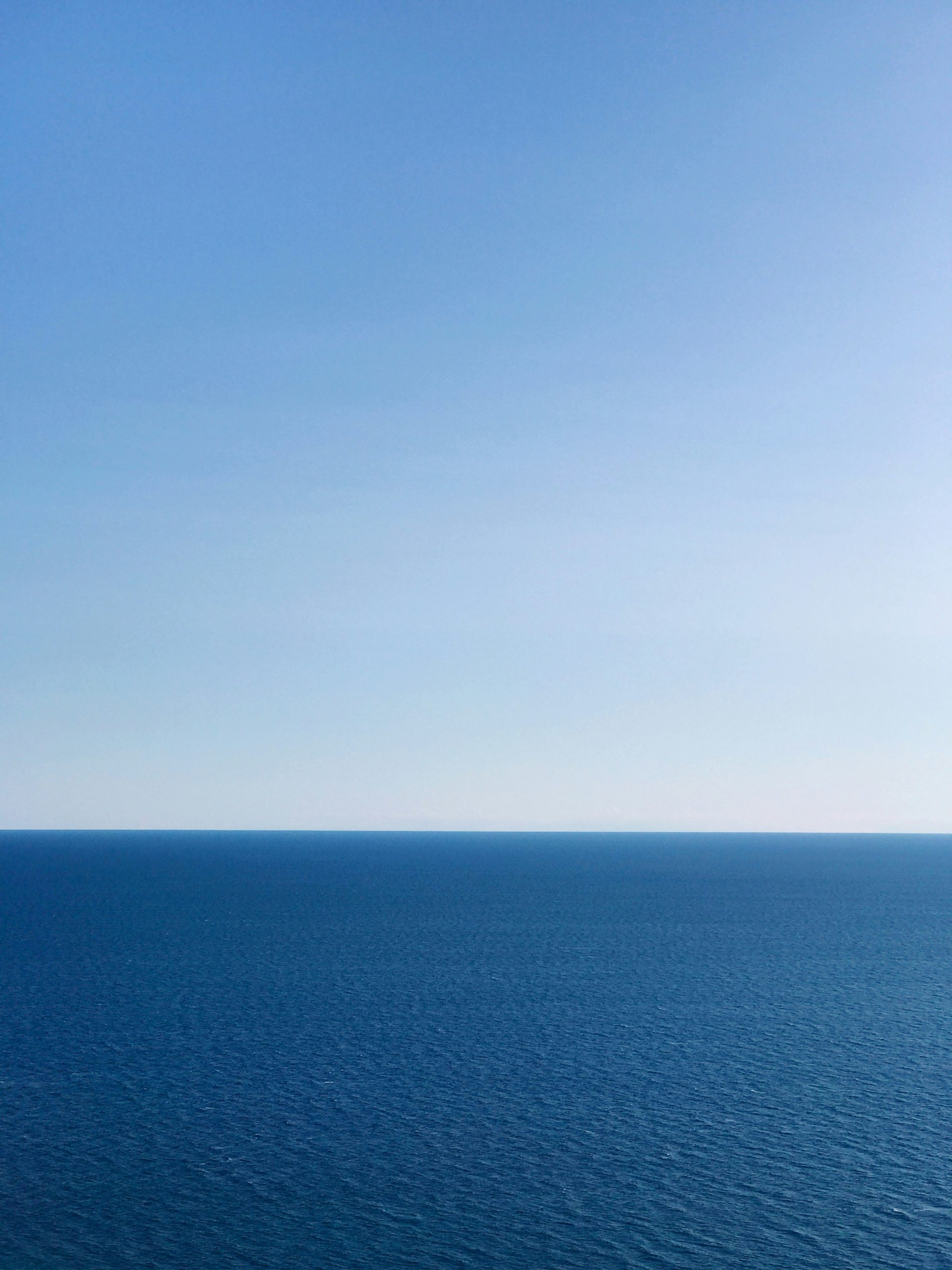
The landscapes we have known and loved over many years teach us this as well. Anyone who has stood beside the sea will recognise that there are days when the horizon is sharp and vivid and other days when rain or mist causes that boundary to disappear almost completely. Neither vision is less real. Each reveals something different about the world.
The mist-shrouded horizon may offer the deeper lesson. It reminds us that an absence of clarity is not an absence of reality. The land remains beyond the drifting grey. The sea continues its movement even when we can no longer distinguish where one element ends and another begins. Life often resembles that horizon. We cannot always see what lies ahead, nor do we always understand the significance of what has gone before. We make decisions with incomplete information, offer trust without guarantees and continue walking without certainty about the destination.
Perhaps wisdom begins when we abandon the pretence that life should be otherwise. Perhaps maturity is not the achievement of a final set of answers, but the development of the resilience, patience and courage needed to live faithfully with unfinished questions. What makes a life meaningful? How should we treat one another? What do we owe to those who come after us? What does it mean to belong to a place, a people or a community? How do we remain hopeful when familiar landmarks disappear into mist? These questions persist not because those who came before us failed to answer them but because they are larger than any single answer. Each generation, and indeed each life, must approach them anew.
The older people I most admire seem to understand this instinctively. Their calmness comes not from certainty but from perspective, from having lived long enough to know that reality is spacious enough to contain paradox. They have learned not to seek refuge in simplistic explanations because life has taught them that every human being is more complicated, more fragile and more wondrous than any easy judgement allows. There is wisdom in such restraint and generosity in such openness.
In a world that increasingly demands rapid judgement, there is something quietly radical about refusing to close the door too quickly. Perhaps this is what Polanyi and Keats, in their different ways, were inviting us towards. Not ignorance or indecision but a deeper form of confidence: the confidence to inhabit uncertainty without fear, to recognise that our understanding will always be incomplete and to continue seeking truth while knowing it will remain larger than our grasp. If that is so, then ageing may indeed offer us a remarkable gift. Not the comfort of final answers but the discovery that a life can still be lived richly, generously and wisely without them.
And in a world where so many people are exhausted by the demand to appear certain, perhaps mental wellbeing begins not when every question has been answered, but when we discover that we can live peacefully, hopefully and humanly beside those that never will be.
Horizon
We set our course by distant lines
where sea and sky appear to meet,
knowing all the while
that we shall never reach them.
Mist gathers.
The landmarks fade.
The shore behind grows quieter.
Yet still we walk.
Not because we know the way,
but because something within us
has learned to trust the road.
The horizon keeps its secrets,
offering enough light for the next step,
never enough for the whole journey.
Perhaps that is wisdom:
not standing still until certainty arrives,
but moving forward with gentleness,
through weather we did not choose,
towards a future we cannot fully see,
and discovering, along the way,
that the horizon was never a destination,
only an invitation.
Donald Macaskill
Photo by Sime Basioli on Unsplash