
Reflections after International Day of Older Persons
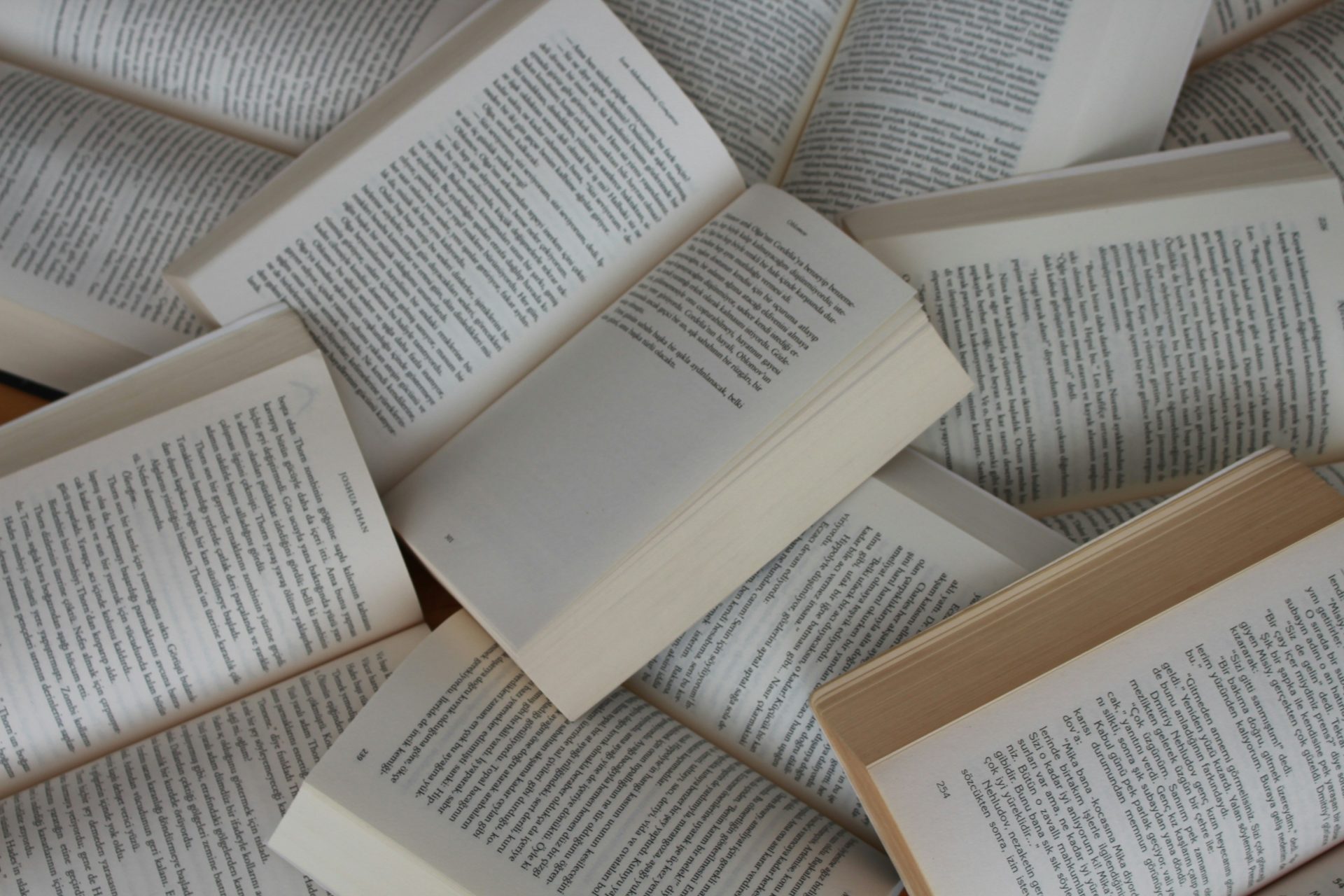
There is something quietly intriguing about the books people choose to read.
If you were to judge contemporary society by what appears in the media alone, it would be easy to conclude that the highest aspiration of modern life is visibility. We live amidst a constant celebration of achievement, influence and distinction. The stories most readily amplified are those of disruption, innovation and success. We applaud scale. We admire reach. We are encouraged, often relentlessly, to build lives that stand out from the crowd and leave some measurable imprint upon the world.
And yet, when people retreat from the demands of work and the noise of public life, when they settle into an armchair at the end of the day or take a novel to bed before sleep, many seem drawn towards rather different stories.
Recent bestselling fiction offers an interesting example of this tendency. The Wedding People, for instance which is a huge bestseller this year, is not a tale of conquest or triumph, but a story concerned with the fragile business of making sense of your life amidst disappointment, chance encounters and unexpected friendships. Its characters are recognisable not because they are exceptional but because they are not. They are bruised by experience, carrying private losses and unrealised hopes, attempting in their different ways to navigate the untidiness of ordinary existence.
Nor is it alone. Novels such as All the Colours of the Dark and The List of Suspicious Things have similarly captured readers through their attention to relationships, communities, memory and the overlooked dramas of everyday life. They remind us that beneath the headlines and spectacles which dominate contemporary culture lies another realm altogether, one inhabited by people whose struggles, joys and disappointments seldom attract public notice but nevertheless constitute the substance of most human lives.
The more I reflect upon this phenomenon, the more curious it becomes. Why are readers repeatedly drawn towards stories of ordinary lives at precisely the moment when wider culture seems increasingly obsessed with extraordinariness?
Perhaps because literature has always understood something that society periodically forgets.
The great novelists rarely concerned themselves with the people who appeared to matter most. Jane Austen found inexhaustible richness within drawing rooms and village society. George Eliot discovered moral and emotional universes within provincial towns. The enduring power of these writers resides in their refusal to accept that significance belongs only to the famous, the wealthy or the historically important. They recognised that every life contains depths. Every individual carries an inside world of memory, longing, contradiction and desire. The ordinary person, viewed closely enough, becomes endlessly fascinating. Indeed, you might argue that the novel itself emerged as a form dedicated to rescuing ordinary lives from obscurity.
History, after all, tends to concern itself with rulers, wars, revolutions and institutions. As Jane Austen once said, it is ‘his’ story not my story. Literature moves in the opposite direction. It steps away from the palace and into the parlour, away from the battlefield and into the kitchen, away from public events and towards private experience. It insists that what happens within a marriage, a friendship, a family or an individual conscience may be every bit as profound as the events that fill history books. This is not merely an aesthetic preference. It contains within it a particular understanding of human value.
Much of contemporary culture encourages us to view significance through the lens of visibility. What attracts attention appears important. What is unseen risks being ignored. Increasingly we are surrounded by measurements of influence, metrics of engagement and rankings of achievement. The language of modern life often implies that worth can be counted, displayed and compared. Literature quietly resists such assumptions.
A good novel invites us into lives that would never merit public recognition. Often very little happens in conventional terms. No empire rises or falls. No great discovery is made. No grand victory is achieved. Instead, we encounter people wrestling with grief, searching for companionship, living with regret, sustaining affection, confronting frailty or simply attempting to endure. Yet by the time we close the final page we frequently feel we have witnessed something of great consequence.
The paradox is telling. Perhaps what matters most in life and what attracts most attention are not always the same thing.
The continuing popularity of fiction may itself be evidence of a hunger for this deeper recognition. Recent publishing data show fiction performing strongly within the UK book market, even as other categories have faced greater challenges. Readers continue to devote time to stories despite the unprecedented availability of information and entertainment in countless other forms.
Why?
Part of the answer may lie in the fact that novels restore a sense of proportion. They remind us that the texture of human existence is woven from experiences that rarely make headlines. The quiet conversation that alters a relationship, the chance encounter that changes a life, the private grief carried over many years, the act of forgiveness, the persistence of hope despite disappointment: these are the elements from which most human stories are composed.
The extraordinary has its place, of course. Human beings need heroes and visionaries, explorers and inventors. But perhaps we need something else as well. We need reminders that a life need not be remarkable in order to matter. That dignity does not depend upon achievement. That meaning is not conferred by public recognition.
The novel has always known this. Indeed, it may be one of the last cultural spaces where ordinary existence is granted the attention it deserves. In its pages, lives that might otherwise pass unnoticed are treated with seriousness and care. Their complexity is honoured. Their struggles are acknowledged. Their joys are celebrated.
Perhaps this is why readers continue to return to fiction. Not because novels allow us to escape reality, but because they return us to it. They remind us that beneath all our fascination with success and prominence lies a simpler truth: most human lives unfold away from the spotlight, and it is there, in the unrecorded moments of ordinary days, that much of what is deepest and most enduring is to be found.
The Unrecorded Life
The years passed quietly.
The world called it ordinary.
The kettle boiled.
The leaves fell.
The dog waited by the door.
A letter arrived.
Someone remembered a birthday.
Someone forgot.
A friendship altered by a sentence.
A marriage sustained by thousands.
Years passed almost unnoticed until one day they became a life.
Not an extraordinary life.
Merely the only life that was ever given.
And somehow that is enough.
Donald Macaskill
Photo by Gülfer ERGİN on Unsplash