There is a question I have heard asked many times over the years. “What difference does a diagnosis make?”
Sometimes it is asked by a family member exhausted by waiting lists and uncertainty. Sometimes it comes from someone who fears what a diagnosis might mean for their future. And increasingly it emerges in conversations about those who are already living in care homes. “They are receiving care now. Why does a diagnosis still matter?”
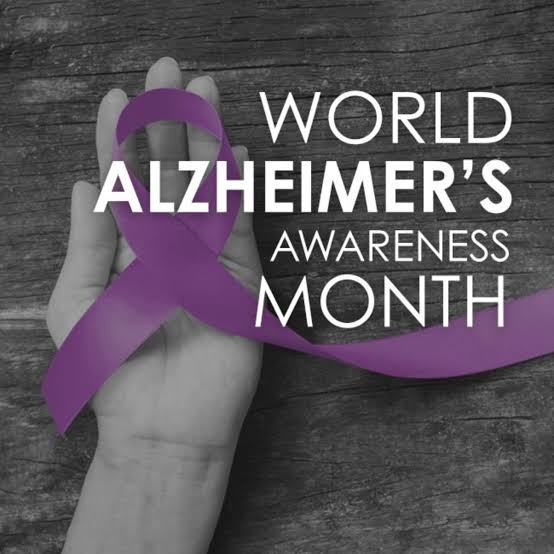
As we mark World Alzheimer’s Month, that question deserves our attention. This year’s international theme is a simple but powerful one: The Earlier You Know, The More You Can Do: A Dementia Diagnosis Matters.
Yet behind those words lies a much deeper challenge. Because for too many people, particularly those living in care homes, dementia remains hidden in plain sight.
Recent Scottish research led by Dr Jenni Burton has highlighted the reality that many people living in care homes continue to face barriers to obtaining a dementia diagnosis and to accessing the support which should follow that diagnosis. Her work exploring post-diagnostic support found significant variation across Scotland and raised concerns about the way people living in care homes are often excluded from services that others can access.
The findings build upon wider work commissioned by Alzheimer Scotland examining dementia in Scottish care homes. That research revealed that 61.5% of responding care homes were supporting people they believed were living with dementia but who did not have a formal diagnosis. In other words, thousands of individuals may be experiencing the realities of dementia without the recognition, understanding and support that a diagnosis can unlock.
These findings should concern us. Not because diagnosis changes who a person is. A diagnosis does not alter the love of a husband for his wife of fifty years. It does not erase a lifetime of achievements, friendships or memories. It does not diminish a person’s humanity or worth. What it does do is provide recognition.
It offers an explanation for confusion which may have been growing for months or years. It provides a framework through which families can understand changes in behaviour, memory or communication. It allows professionals to plan more effectively. And perhaps most importantly of all, it enables a person to participate in decisions about their own future whilst they are still able to do so.
A diagnosis is not the end of a story. It is often the beginning of support.
Too often we have treated diagnosis as if it were a destination. We celebrate diagnostic targets and percentages but pay less attention to what comes afterwards. Yet diagnosis is only meaningful if it opens doors. It should lead to conversations, information, practical assistance, emotional support and community connection.
That is why the findings from Dr Burton’s work are so important. Her survey identified that only a minority of geographical areas currently provide dedicated post-diagnostic support for people living in care homes. The consequence is that access to support can depend not on need but on where an individual happens to live. That inequity should challenge us all.
If somebody develops dementia in their own home, we increasingly recognise the importance of timely diagnosis and early intervention. We understand the value of helping people prepare, adapt and live as well as possible. Yet somehow when an individual crosses the threshold into residential care, we can allow ourselves to think differently. The assumption can creep in that diagnosis no longer matters. That somehow support is less necessary. That because care is already being provided, further understanding serves little purpose. Nothing could be further from the truth.
The reality is that people living in care homes often have some of the most complex experiences of dementia. They deserve access to specialist support, to meaningful post-diagnostic pathways and to services which recognise their rights as equal citizens. Indeed, where someone lives should never determine whether they are seen, heard and supported.
One of the most striking observations emerging from the Alzheimer Scotland research was the acknowledgement from many care home staff of just how difficult it can be to secure a diagnosis for residents. Some described lengthy waits and challenges accessing assessment. Others reflected on the frustration of knowing that dementia was present yet struggling to obtain formal recognition.
And yet care home staff continue to provide support every day. They adapt communication. They respond to distress. They help individuals remain connected to their identity and life story. They offer reassurance to families navigating uncertainty and loss. They do so with professionalism, compassion and immense skill.
Imagine how much more effective that support could be if every person had equitable access to diagnosis, specialist expertise and comprehensive post-diagnostic care.
At its heart, this is not simply a healthcare issue. It is a matter of human rights. A diagnosis does not confer personhood. Every individual already possesses that in abundance. But a diagnosis can be a gateway to services, resources, adaptations and supports that make it easier for someone to live well. Without diagnosis, people risk becoming invisible within systems which rely on formal recognition before support can be unlocked.
As we mark World Alzheimer’s Month, therefore, our challenge is not simply to improve diagnostic rates. It is to ensure that diagnosis leads somewhere meaningful. It is to build systems where every diagnosis opens a door rather than closes one. It is to ensure that post-diagnostic support is available regardless of postcode, geography or circumstance. And it is to recognise that receiving a diagnosis is not about defining a person through a condition. Rather, it is about understanding them well enough to support them to continue living with dignity, purpose and connection.
For knowledge on its own is never enough. Its true value lies in what we do with it. And in dementia care, perhaps the greatest act of wisdom is ensuring that understanding becomes action, and that recognition becomes support, for every person, in every place, and at every stage of their journey.
Donald Macaskill