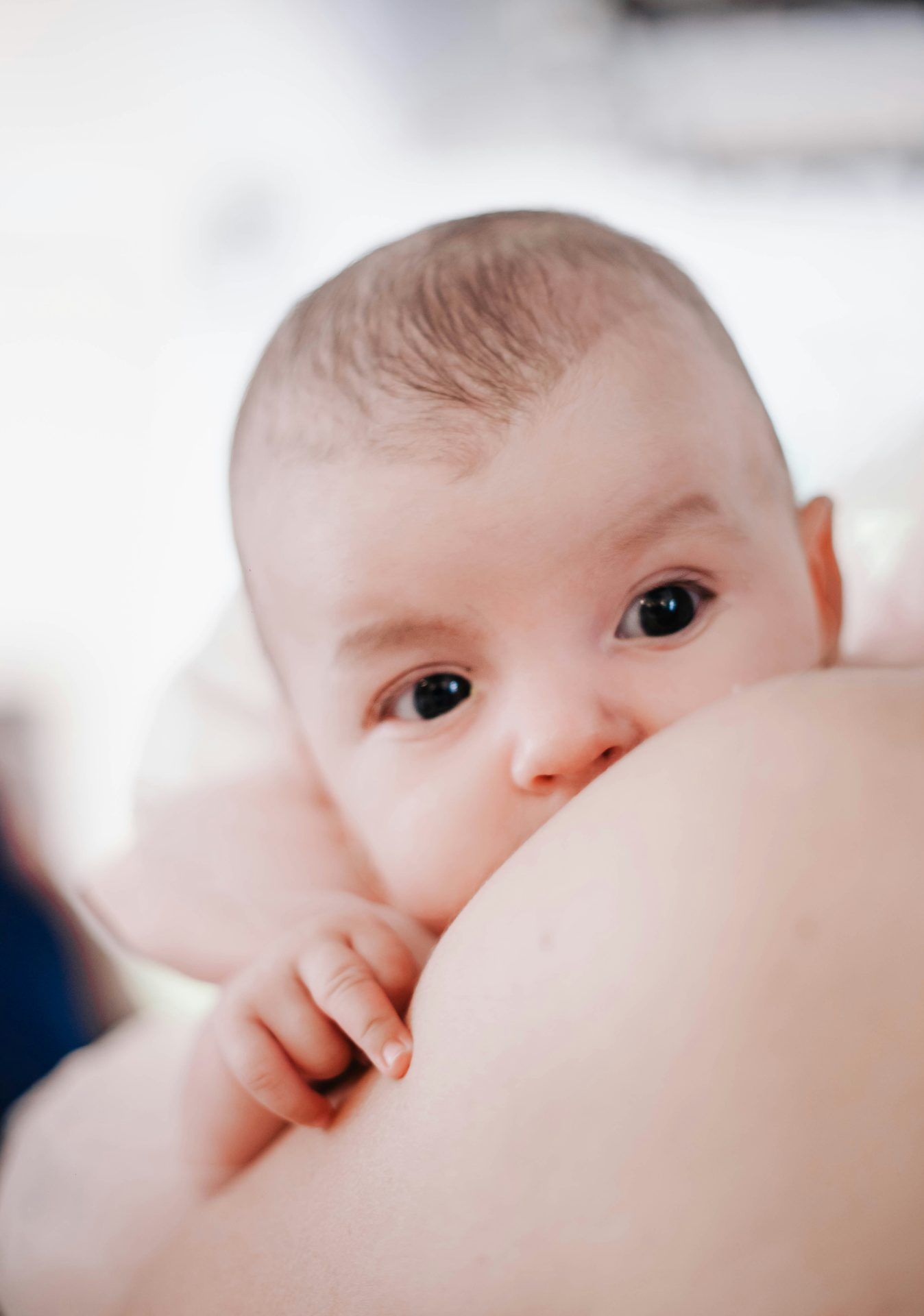
At the very start of life there is a tiny moment which we rarely see, rarely name, and yet we spend the rest of our years trying to recreate. It is not dramatic. It is not loud. It is a small act of holding, of offering, of response. A child cries. Someone answers. And in that answering, a relationship begins.
From the 1st to 7th August, the world marks World Breastfeeding Week, a global campaign supported by organisations such as WHO and UNICEF to promote the conditions that allow infants and families to thrive. In 2026, the theme calls us to focus on “Breastfeeding for a Sustainable Start in Life: Strengthen What Works”, a recognition that the earliest acts of care are not incidental, but foundational to human health, development, and equality. But this is not, and should never be, only a conversation about feeding. It is a conversation about what it means to begin well.
The first relationship teaches something more profound than nourishment. It teaches trust. Long before language, before memory is fully formed, the infant body learns whether the world is reliable. Whether hunger will be answered. Whether distress will be noticed. Whether presence can be depended upon.
These earliest exchanges build what we might call the architecture of trust, the emotional and neurological foundations upon which all later relationships rest.
Contemporary developmental science increasingly supports what parents, grandparents and communities have always known intuitively. Researchers studying attachment, early brain development, and infant wellbeing have found that responsive caregiving does not simply comfort a child in the moment; it helps to shape the developing architecture of the brain itself. Secure attachment in the earliest months and years is associated with better emotional regulation, stronger relationships, improved educational outcomes, and greater resilience in later life. What may appear to be an ordinary act of responding to distress is, in reality, part of the slow formation of a human being’s capacity to trust both themselves and others.
This should make us wary of reducing breastfeeding or early parenting to questions of individual choice alone. Human development is profoundly social. The capacity to nurture depends upon whether families themselves are supported. As UNICEF and WHO have repeatedly argued, successful early care requires enabling environments around parents and carers: adequate income, time, health support, social connection, and communities that recognise care not as a private concern but as a shared public good.
These early bonds matter deeply. Breastfeeding, where it is chosen and possible, can strengthen that connection, supporting health, immunity, and emotional development, while also enhancing maternal wellbeing. But the deeper truth is not confined to a single act or method. What matters most is this: that care is present, responsive, and sustained.
In Scottish Care we often argue that care is infrastructure, no less essential than roads, energy, or digital networks. World Breastfeeding Week widens that argument. Because what it shows us, with stark clarity, is that care begins long before the systems we typically measure. It begins in homes, in bodies, in the unseen labour of families. It depends on policies, workplaces, community support, and cultural permission.
Indeed, the 2026 theme explicitly calls for “strengthening what works”, not through short-term encouragement, but by building reliable, integrated, and equitable systems of support around families. And that is the language of infrastructure. Paid leave. Accessible health support. Communities that do not isolate but accompany. Workplaces that understand that productivity cannot be separated from humanity. When these are absent, the consequences are not confined to infancy. They echo across lifetimes.
We live in a culture that too often fears dependency. We equate independence with success, autonomy with worth, self-sufficiency with strength. Yet the truth of our beginning tells a different story. We are all, at first, completely dependent. And more than that – we are meant to be. We do not begin life self-sufficient, nor are we meant to. We come into the world needing others and are shaped by their response. Through that response we learn safety, belonging, and love. The tragedy is not our need of one another; it is the assumption that such need can be ignored, hidden, or carried alone
The philosopher Alasdair MacIntyre once described human beings as “dependent rational animals”, reminding us that vulnerability is not an exception to life but one of its defining conditions. We begin life dependent, many of us will end life dependent, and most of us will move through periods of dependence in between. Yet modern societies often organise themselves around the myth of the self-sufficient individual. The result is that those who give and receive care are too frequently rendered invisible. World Breastfeeding Week gently but powerfully challenges that illusion. It reminds us that every independent adult was once wholly reliant upon the devotion of others.
And it is precisely because our lives are shaped by such dependence that support matters. Because when human need is not met with adequate support, when families are left to struggle alone, when care is privatised into individual burden rather than shared societal responsibility, we fracture something fundamental. We weaken the very conditions that allow life to flourish.
At first glance it may seem a long way from the fragile exchange between a newborn and a parent to the later years of life which form so much of Scottish Care’s focus. Yet I have come to believe that the distance is smaller than we imagine. Indeed, I do not believe it is a distance at all. The same questions persist: Will someone respond when I call? Will I be seen? Will I be known? Will I be held, physically or metaphorically, when I am most vulnerable? The care home resident calling out in the night and the infant crying at the start of life are not so different. Both are asking: can I trust this world? And both deserve an answer.
There is a growing body of research showing that loneliness, insecurity, and social isolation can have profound consequences for health throughout the life course. Yet the antidote remains remarkably consistent. Across infancy, adulthood, disability, illness, and older age, human flourishing is rooted less in individual achievement than in meaningful connection. The need changes its form but not its substance. We continue to require relationships that assure us that we matter, that we belong, and that we will not face vulnerability alone.
The invitation of this week is not simply to celebrate breastfeeding, important though that is. It is to look honestly at what works in care and to strengthen it wherever we find it. To recognise that small acts of consistent presence are as important as grand policy. To understand that investing in early life is inseparable from investing in later life. To build systems that do not abandon people at the very moments they most need connection.
Because if we get the beginning right, if we create conditions where care is reliable, valued, and supported then we do something extraordinary. We build a society where trust is not fragile. Where belonging is not accidental. Where care does not need to be constantly fought for but is simply expected.
Perhaps, at its heart, this week is about remembering something we all once knew but have forgotten: That the first language of humanity is not speech. It is care. And if that is so, if care comes before speech, if relationship is our first knowing, then perhaps we need a different way of naming what it means to begin.
Perhaps that is why the earliest experiences of care remain with us long after memory has faded. They become the hidden grammar by which we understand trust, belonging, and love throughout our lives.
Poetry, in its own way, takes us back to that place before explanation, where meaning is felt before it is spoken.
Before We Speak
Before we have words
there is the body
not as concept
but as need,
the small cry
shaping the air
into a summons.
No language yet
to explain hunger,
no grammar
for fear,
only the reaching out
of something unfinished
towards another
who must answer.
And someone does.
Not always perfectly,
not without falter,
but enough
enough that the world
holds.
A hand lifts,
a chest warms,
a rhythm steadies
against a listening heart.
Milk, perhaps.
Or simply presence.
The child does not know
what this is called
does not name
care,
or safety,
or love
but learns them
nonetheless,
through skin,
through breath,
through the patient repetition
of being met.
And this is the first covenant:
that before we speak
we are spoken to,
before we understand
we are understood,
before we belong
we are held.
All the rest,
our arguments,
our policies,
our fragile certainties,
come later,
trying, again and again,
to translate
that earliest knowledge:
that life begins
not in independence,
but in the quiet,
faithful answer
of one human being
to another.
Donald Macaskill
Photo by Bia Octavia on Unsplash